Learn How to Make Fast Money by Learning diffrent Strategies in Forex Trading and Different Investment Options
Forex Basics: Complete Beginner’s Guide to Currency Trading
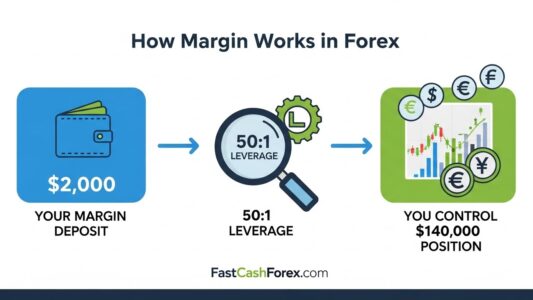
Forex basics give you the foundation to read currency quotes, place orders, and manage risk. This guide explains what forex is, what you trade, how pairs and pips work, and how margin, leverage, and order types fit together—with simple examples. One of the key components of forex trading is understanding leverage in forex, as it allows traders to control larger positions with a smaller amount of capital. By using leverage, you can potentially amplify your profits, but it also increases the risk of significant losses. Therefore, it’s crucial to grasp how leverage works and to manage it effectively to safeguard your investments. Understanding forex trading fundamentals is essential for successful navigation in the market. By grasping these concepts, traders can make informed decisions, strategize their trades, and effectively manage their investments. As you delve deeper into the world of forex, you’ll discover how these principles apply to real-world trading scenarios.
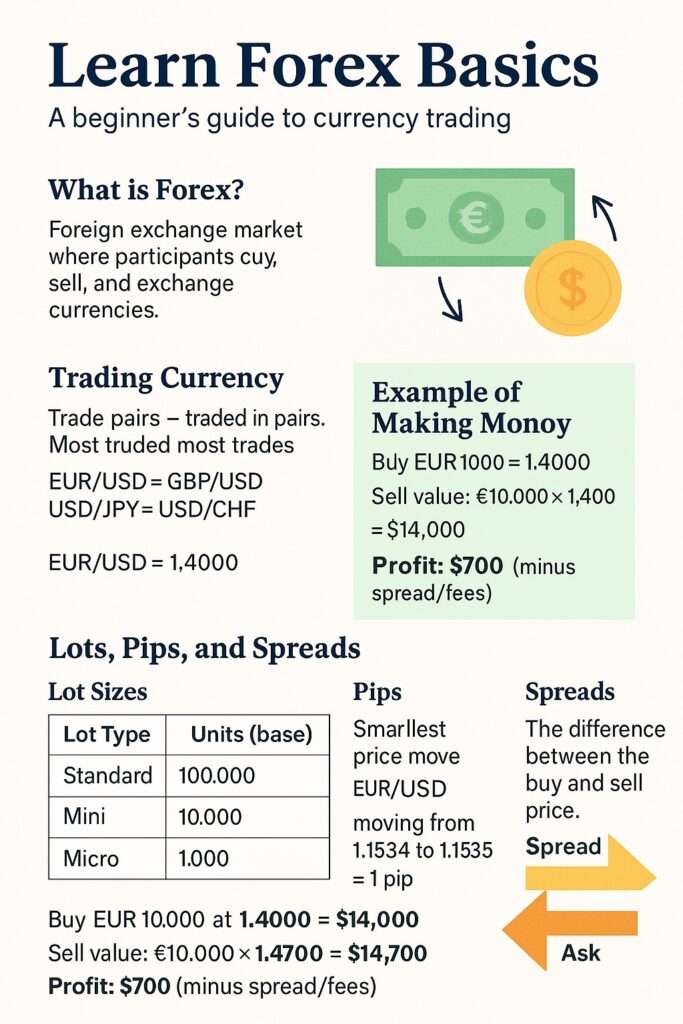
The foreign exchange market (forex) is the world’s most liquid financial market, where participants buy and sell currencies. Traders exchange one currency for another, aiming to profit if the price moves in their favor. Compared with many markets, forex offers high liquidity, easy access, and 24-hour trading. Traders often utilize various online currency trading strategies to navigate the complexities of the market and maximize their potential returns. These strategies can include technical analysis, fundamental analysis, and automated trading systems, each catering to different risk appetites and trading styles. As the forex market continues to evolve, staying informed and adaptable is crucial for success.
Why Trade Forex?
Liquidity: Tight spreads and fast execution on major pairs.
Access: Trade from standard platforms with small accounts.
Choice: Major and cross currency pairs, plus metals and some CFDs via certain brokers.
Risk control: Position sizing, stop-loss orders, and defined strategies.
What Do You Trade?
You mainly trade currency pairs. The first currency is the base; the second is the quote (or counter) currency. A price of EUR/USD = 1.2000 means €1 costs $1.20.
Major Pairs (vs. USD)
EUR/USD (euro vs U.S. dollar)
GBP/USD (British pound vs U.S. dollar)
USD/JPY (U.S. dollar vs Japanese yen)
USD/CHF (U.S. dollar vs Swiss franc)
AUD/USD, USD/CAD are also widely traded
Crosses (non-USD)
Pairs like EUR/GBP, EUR/JPY, GBP/CHF. Cross rates are derived from the majors and can be more volatile.
Metals, Indices, Crypto (via some brokers)
On common platforms (e.g., MT4/MT5), you may also access gold/silver, selected indices, and cryptocurrencies through CFDs offered by some brokers. Availability, costs, and risk vary by broker and regulation.
How a Currency Trade Works (Simple Example)
Suppose you buy €10,000 at EUR/USD 1.4000. Two weeks later EUR/USD is 1.4700. If you close the trade:
Buy value: €10,000 × 1.4000 = $14,000
Sell value: €10,000 × 1.4700 = $14,700
Profit: $700 (minus spread/fees)
Lots, Pips, and Spreads
Lot Sizes
Lot Type
Units (base)
Approx. Pip Value (EUR/USD)
Standard
100,000
$10 per pip
Mini
10,000
$1 per pip
Micro
1,000
$0.10 per pip
What Is a Pip?
A pip is the usual minimum price increment of a currency pair (often the fourth decimal place, e.g., EUR/USD 1.1335 → 1.1336 = 1 pip). For JPY pairs it’s typically the second decimal place (e.g., 108.84 → 108.85 = 1 pip). Many brokers also display fractional pips (a fifth/third decimal place) called “pipettes.”
What Is the Spread?
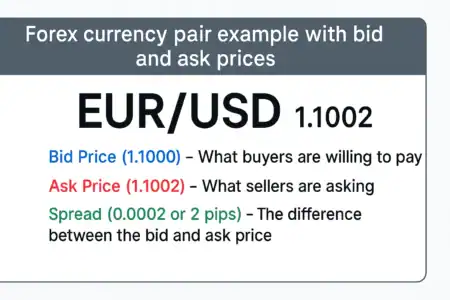
The spread is the difference between the bid (sell) and ask (buy) price. You “pay” the spread when entering a trade; tighter spreads reduce trading costs.
Base vs. Quote Currency (Buy/Sell Logic)
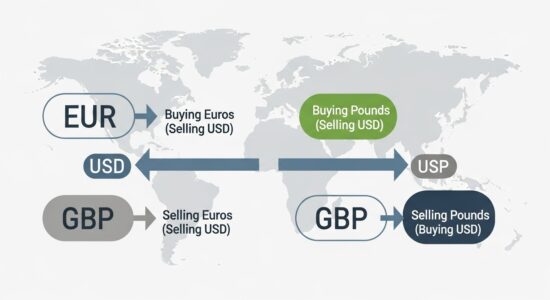
Buying a pair (going long) = buying the base and selling the quote. You expect the base to strengthen.
Selling a pair (going short) = selling the base and buying the quote. You expect the base to weaken.
Margin and Leverage (Core Concepts)
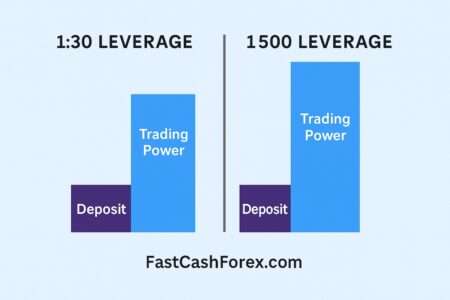
Leverage is a ratio (e.g., 1:30, 1:50, 1:500) showing how much exposure you control per unit of margin. Margin is the cash deposit set aside to open/maintain a trade.
Required Margin ≈ Notional ÷ Leverage
Equity = Balance ± Open P/L
Free Margin = Equity − Used Margin
Example: To open a $10,000 position at 1:30 leverage, margin ≈ $333.33. At 1:500, margin ≈ $20. Higher leverage lowers margin required but raises risk of fast losses and stop-outs if price moves against you.
What Are the Essential in Forex Basics in Currency Trading?
Understanding currency trading strategies is crucial for beginners. Start with learning fundamental concepts like currency pairs, pips, and leverage. Familiarize yourself with different types of analysis—technical and fundamental. Developing a solid trading plan and risk management techniques will enhance your confidence and effectiveness in the dynamic world of currency trading.
This guide provides a quick overview of forex basics to get you started. For a comprehensive, in-depth explanation of forex trading including detailed strategies, broker selection, and advanced concepts, see our complete beginner’s guide