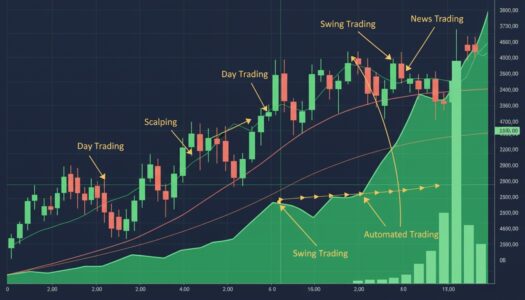
Algorithmic trading, often called algo trading, uses computer programs to execute trading strategies based on predefined rules and mathematical models. Unlike manual trading where you make decisions in real-time, algorithmic systems analyze markets and execute trades automatically at speeds impossible for humans.
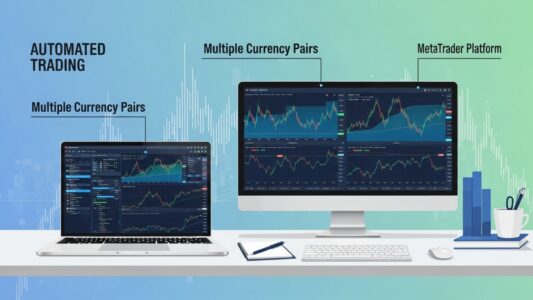
The appeal is obvious: eliminate emotions, trade 24/7 without watching charts, execute complex strategies across multiple currency pairs simultaneously, and potentially achieve consistency that eludes most discretionary traders. However, algorithmic trading isn’t a magic solution. It requires technical skills, realistic expectations, and substantial time investment to develop strategies that actually work.
This guide explains what algorithmic trading is, how it differs from Expert Advisors, the skills and tools you need to get started, common algorithmic strategies, and the significant challenges you’ll face.
This is part of our Automated Forex Trading & Expert Advisors: Complete Guide, covering MQL4/MQL5 programming, EA development, backtesting, and optimization strategies.
What Is Algorithmic Trading?

At its core, algorithmic trading means using computer code to make and execute trading decisions automatically. You define the rules—when to enter, when to exit, position sizing, risk parameters—and the algorithm follows those rules without human intervention.
The key components of any algorithmic trading system include market data feeds providing real-time price information, the algorithm itself analyzing that data according to programmed logic, risk management rules controlling position sizes and maximum losses, and execution systems sending orders to your broker.
Algorithmic trading exists on a spectrum. Simple algorithms might execute a moving average crossover strategy on one currency pair. Complex institutional algorithms might manage billions of dollars across hundreds of instruments using machine learning models, statistical arbitrage, and high-frequency trading techniques that execute thousands of trades per second.
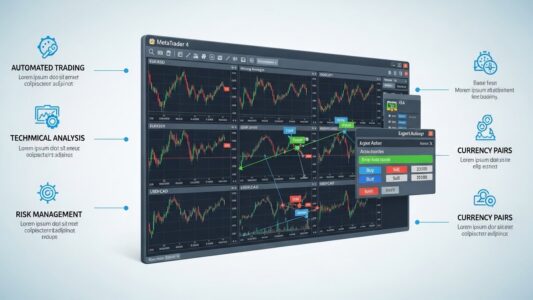
For retail forex traders, algorithmic trading typically means developing and running automated strategies in platforms like MetaTrader using MQL programming languages, though other platforms and languages exist.
Algorithmic Trading vs. Expert Advisors
Many traders confuse algorithmic trading with Expert Advisors. While related, they’re not identical.
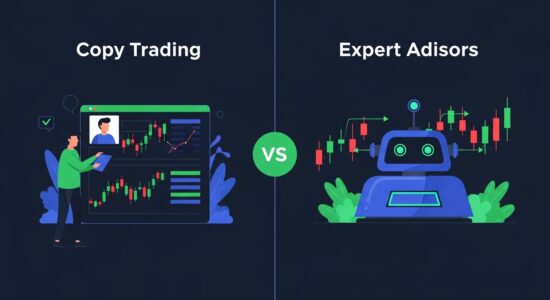
Expert Advisors are pre-built trading robots you can purchase or download, attach to your MT4 or MT5 platform, and run without coding knowledge. You might adjust some parameters, but you’re not developing the strategy—you’re using someone else’s algorithmic system. For comprehensive EA information, see our Expert Advisors guide
Algorithmic trading, in the broader sense, means developing your own trading algorithms from scratch. You’re writing the code, testing the logic, and creating custom strategies tailored to your trading philosophy.
The distinction matters because using an EA requires minimal technical knowledge but gives you no control over the underlying strategy. True algorithmic trading requires programming skills but provides complete control over every aspect of your system.
Many successful algorithmic traders start with Expert Advisors to understand how automated systems work, then progress to coding their own algorithms once they identify strategies worth automating.
Skills Needed for Algorithmic Trading
Getting started with algorithmic trading requires developing several interconnected skills.
Programming Knowledge:
You need to code your strategies. For MetaTrader platforms, that means learning MQL4 (for MT4) or MQL5 (for MT5). For other platforms, you might need Python, C++, or platform-specific languages.
MQL4 and MQL5 are relatively beginner-friendly if you have any programming background. The syntax resembles C, and MetaQuotes provides extensive documentation. If you’ve never programmed before, expect several months of learning before you can code functional strategies.
For platform tutorials covering the basics, see our MT4 guide and MT5 guide
Trading Strategy Knowledge:
Algorithms don’t create strategies—they automate them. You need profitable trading ideas before you can code them. Study technical analysis, understand market behavior, and develop systematic rules that work when executed manually before attempting to automate.
Many aspiring algorithmic traders make the mistake of learning to code first, then trying to code their way to profitability. This backwards approach rarely works. Start with a profitable or promising manual strategy, then automate it.
Statistics and Mathematics:
Understanding probability, statistical significance, and basic mathematics helps you evaluate whether your backtested results represent genuine edge or just random noise. You don’t need a PhD, but comfort with concepts like mean, standard deviation, and correlation is valuable.
Backtesting and Optimization:
Every algorithmic strategy requires rigorous testing before live deployment. You need to understand how to backtest properly, interpret results, avoid curve fitting, and conduct walk-forward analysis. For comprehensive backtesting guidance, see our backtesting guide
Risk Management:
Algorithmic systems can lose money spectacularly fast when something goes wrong. Understanding position sizing, maximum drawdown limits, and correlation management protects you from catastrophic losses. For risk management principles, see our risk management guide
Common Algorithmic Trading Strategies
Certain strategy types lend themselves particularly well to algorithmic implementation.
Trend Following:
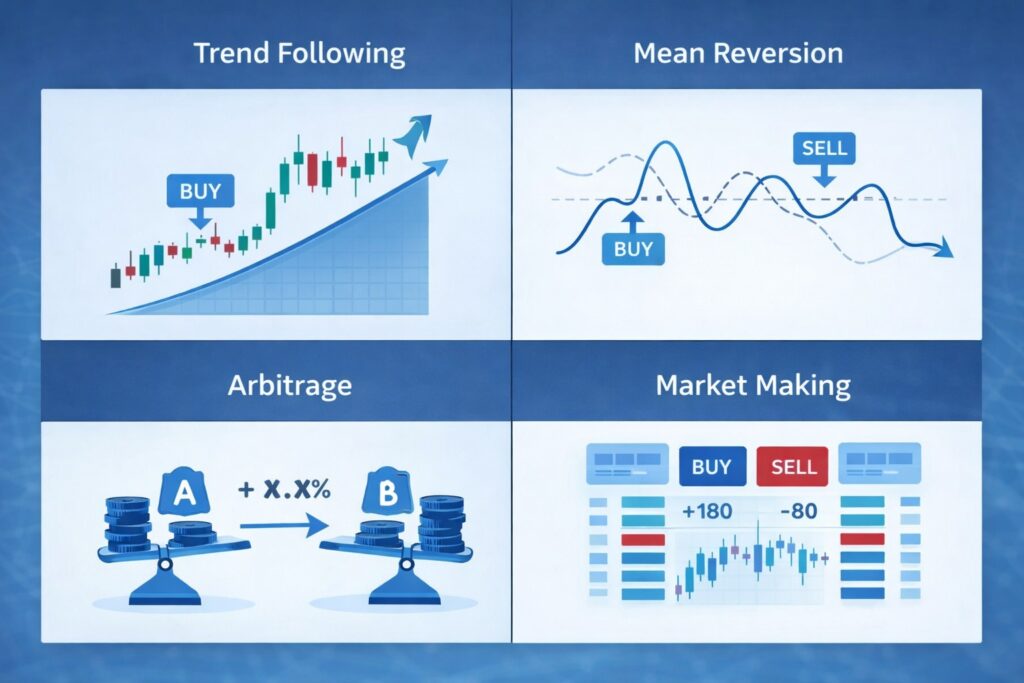
Algorithms excel at identifying and trading trends systematically. Moving average crossovers, breakout systems, and momentum strategies can be coded precisely and executed consistently without emotional interference.
Example: Buy when price crosses above the 50-period moving average and the 14-period RSI is above 50. Exit when price crosses below the 20-period moving average. An algorithm executes this exactly the same way every time.
Mean Reversion:
These strategies assume price returns to average levels after extreme moves. Algorithms can monitor multiple pairs for oversold or overbought conditions and enter reversal trades systematically.
Example: When Bollinger Bands squeeze to unusually narrow levels and price touches the lower band, buy. Exit when price reaches the middle band.
Statistical Arbitrage:
These strategies exploit price discrepancies between correlated instruments. An algorithm might monitor EUR/USD and USD/CHF relationships, entering trades when the correlation temporarily breaks and the instruments diverge beyond normal ranges.
This requires sophisticated mathematical models and fast execution, making it more suitable for experienced algorithmic traders with quality data feeds.
News-Based Trading:
Some algorithms parse economic calendar data and execute trades around news releases based on actual versus expected data. For example, if US Non-Farm Payrolls beat expectations by a certain threshold, buy USD immediately.
This is technically challenging and faces significant slippage during volatile news events, but some traders successfully implement it.
High-Frequency Trading (HFT):
This involves executing thousands of trades per second to profit from tiny price discrepancies. HFT requires specialized infrastructure, direct market access, co-location near exchange servers, and substantial capital.
HFT is essentially inaccessible to retail traders due to infrastructure costs and competition from institutional players.
Programming Platforms and Languages
Different platforms offer different advantages for algorithmic trading.
MetaTrader 4 and MT5 (MQL4/MQL5):
The most accessible entry point for retail forex algorithmic trading. MT4 and MT5 are free, widely available from most brokers, and include built-in backtesting tools. MQL4 and MQL5 documentation is extensive, and large communities provide support and code examples.
The limitation: you’re restricted to forex and CFDs offered by MetaTrader brokers. You can’t easily trade stocks, futures, or options using these platforms.
Python:
Python has become extremely popular for algorithmic trading due to its readable syntax and extensive libraries for data analysis, machine learning, and statistical computing. Libraries like pandas, numpy, and scikit-learn simplify complex calculations.
The challenge: connecting Python to live trading platforms requires additional setup. You’ll need APIs from your broker or third-party bridge software to execute trades from Python code.
C++ and C#:
Professional algorithmic traders often use C++ or C# for speed and efficiency. These languages execute faster than Python or MQL, critical for strategies requiring minimal latency.
The tradeoff: significantly steeper learning curve. If you’re starting from scratch, C++ and C# are probably too complex for initial learning.
Platform-Specific Languages:
rSome platforms have proprietary languages. TradeStation uses EasyLanguage. NinjaTrader uses NinjaScript (C# based). cTrader uses cAlgo (also C# based).
Choose based on your broker’s available platforms and which language appeals to you.
Getting Started: Your First Algorithm
The path from zero to running a live algorithm has several stages.
Stage 1: Learn Basic Programming (1-3 months):
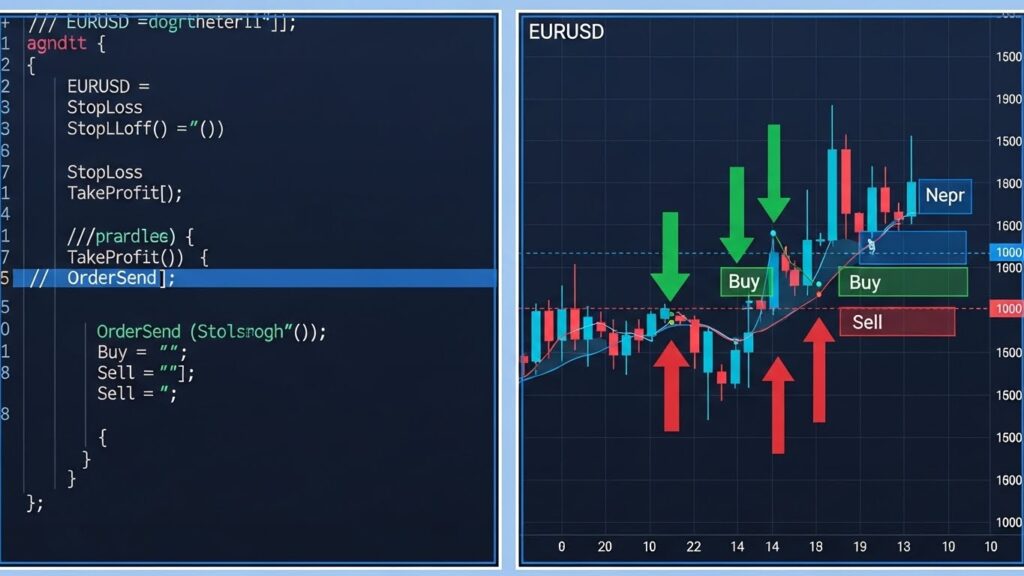
Pick a platform and language—MQL4 is probably the easiest starting point for forex traders. Work through tutorials, write simple programs, and understand syntax, variables, functions, and control structures (if/then statements, loops).
Don’t try to write trading algorithms yet. Master the programming basics first.
Stage 2: Code Simple Indicators (1-2 months):
Before coding full strategies, practice by creating custom indicators. Code a moving average, then an RSI, then a MACD. This teaches you how to access price data, perform calculations, and display results.
Stage 3: Code a Basic Strategy (2-4 months):
Start with something simple like a moving average crossover. Code the entry logic (when price crosses the moving average), exit logic (opposite cross or fixed stop loss/take profit), and position sizing rules.
Don’t expect this first strategy to be profitable. You’re learning the mechanics of algorithmic trading, not building a money printer.
Stage 4: Backtest Rigorously:
Run your algorithm through several years of historical data. Examine results critically. If it loses money in backtests, it will definitely lose money live. Even if it shows profits, be skeptical—curve fitting is easy and honest backtesting is hard.
Stage 5: Paper Trade (1-3 months):
Run your algorithm on a demo account with real-time data. Monitor it daily. Watch for bugs, unexpected behavior, and performance that matches your backtest expectations.
Never skip this stage. Even simple algorithms can behave unexpectedly when encountering real market conditions.
Stage 6: Start Micro Live Trading:
If demo results look reasonable, deploy on a live account with the smallest position sizes available. Risk tiny amounts while you verify the algorithm handles live execution, order fills, and broker-specific quirks.
Many traders stop here permanently, continuing to refine strategies in micro-size until they achieve consistent profitability before scaling up.
The Reality Check: Why Most Algorithmic Traders Fail
The algorithmic trading industry is filled with failed attempts. Understanding why helps you avoid common pitfalls.
Curve Fitting:
The easiest mistake is optimizing your algorithm on historical data until it shows amazing results, then discovering it fails completely in live trading. You’ve created an algorithm that perfectly fits the past but has no predictive power.
Solution: Use walk-forward analysis. Optimize on one data period, test on a subsequent period you haven’t optimized on. If performance degrades significantly, you’ve curve-fit.
Unrealistic Backtesting:
Many backtests assume perfect fills at your exact prices with fixed spreads. Real trading includes slippage, spread widening during volatility, and order rejections. These factors can turn a profitable backtest into a losing live system.
Solution: Use conservative backtest assumptions. Add slippage, use realistic spreads that widen during news, and model execution delays.
Overfitting to Recent Market Conditions:
An algorithm optimized on the last two years might work beautifully because those two years were trending. When markets shift to ranging conditions, the algorithm fails spectacularly.
Solution: Test across multiple market regimes. Include trending periods, ranges, high volatility, low volatility. An algorithm should show reasonable performance across various conditions.
Ignoring Transaction Costs:
Algorithms that trade frequently can be destroyed by spreads and commissions. A strategy showing 5-pip average profit per trade might be profitable in backtests with 0.5-pip spread but lose money when real 2-pip spreads are applied.
Solution: Include all transaction costs in backtests. Calculate your total trading costs per trade and ensure your algorithm’s edge exceeds those costs.
Technological Failures:
Internet outages, platform crashes, broker server issues, and computer failures can leave algorithms unable to manage open positions or execute planned trades. What happens when your algorithm can’t close a position at your stop loss because your internet disconnected?
Solution: Use Virtual Private Servers (VPS) for stability, implement emergency stop-loss orders at the broker level, and never leave algorithms completely unmonitored.
Capital Requirements for Algorithmic Trading
How much money do you need to start algorithmic trading? The answer depends on your approach.
Minimum for Learning:
You can learn programming and backtest strategies with zero capital. MetaTrader is free, historical data is free, and you can paper trade indefinitely on demo accounts.
Minimum for Live Trading:
Many brokers allow accounts as small as $100-$500. You can run algorithms live at this scale using micro lot sizes (0.01 lots).
However, small accounts face challenges. Transaction costs consume larger percentages of capital. One unexpected loss can wipe out weeks of small gains. Psychological pressure is high when your entire account value fluctuates with each trade.
Realistic Starting Point:
For meaningful algorithmic trading where you can weather normal drawdowns and transaction costs don’t dominate returns, $5,000-$10,000 is more realistic. This allows proper position sizing, diversification across multiple algorithms if desired, and the ability to survive the inevitable learning losses.
For position sizing guidance, see our position sizing guide
Professional Level:
Institutional algorithmic traders manage millions or billions. At that scale, infrastructure costs (data feeds, co-location, development teams) become viable. Retail traders don’t need this scale, but understanding that profitable algo trading attracts massive capital explains why edges erode—everyone’s competing for the same opportunities.
Maintaining and Monitoring Your Algorithms
Launching an algorithm isn’t the end—it’s the beginning of ongoing maintenance.
Daily Monitoring:
Even fully automated algorithms require daily checks. Verify trades executed as expected, confirm positions match what the algorithm should be holding, check for error messages or unusual behavior.
Performance Tracking:
Compare live results to backtest expectations. If your algorithm showed 55% win rate in backtests but shows 40% win rate in live trading, something’s wrong. The algorithm might be curve-fit, or your backtest assumptions might have been too optimistic.
Market Condition Awareness:
Markets change. An algorithm performing well during trending EUR/USD might fail when the pair enters a prolonged range. Monitor market conditions and consider pausing algorithms when conditions shift outside their design parameters.
Code Updates:
Brokers change platforms, programming languages get updated, and bugs emerge. Your algorithm might need periodic code updates to maintain compatibility and fix issues.
Strategy Evolution:
Successful algorithmic traders continuously develop new strategies while retiring underperforming ones. Treat algorithmic trading as an ongoing research and development process, not a one-time effort.
Final Thoughts on Algorithmic Trading
Algorithmic trading offers genuine advantages: consistency, emotionless execution, ability to trade complex strategies, and freedom from watching charts constantly. For traders with programming skills and realistic expectations, it’s a viable path to systematic trading.
However, it’s not easier than manual trading. You’ve traded emotional challenges for technical challenges. Instead of fighting fear and greed, you’re fighting bugs, curve fitting, and the constant need to adapt to changing markets.
Don’t approach algorithmic trading as a shortcut to wealth. Approach it as a long-term skill development journey. Expect to spend months learning to code, more months developing testable strategies, and potentially years before you’re consistently profitable.
The traders who succeed in algorithmic trading typically have strong programming backgrounds, deep understanding of markets, statistical knowledge, and patience to test thoroughly before going live. They accept that most strategies will fail and view algorithm development as a process of elimination—creating many systems, discarding what doesn’t work, and refining what shows promise.
If you’re willing to invest the time and accept the learning curve, algorithmic trading can complement or replace manual trading. But if you’re looking for passive income with minimal effort, you’ll be disappointed. Successful algorithmic trading is active, engaging, and demanding—it just demands different skills than discretionary trading.
Start small, learn systematically, test rigorously, and scale slowly. With patience and discipline, algorithmic trading can become a valuable tool in your trading arsenal.