This guide explains how AI in forex trading actually work.
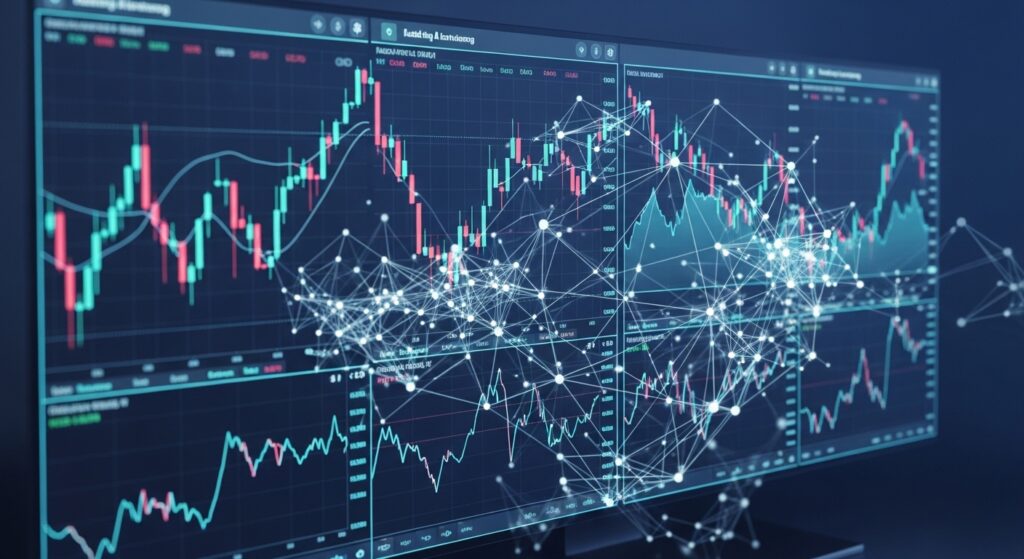
Artificial intelligence is transforming forex trading beyond traditional Expert Advisors. While EAs execute predefined rules, AI in forex trading systems can potentially learn from data, adapt to changing market conditions, and identify patterns humans might miss. Machine learning, neural networks, and algorithmic trading powered by AI represent the next evolution in automated forex trading.
However, AI in forex trading is surrounded by hype, misconceptions, and overblown promises. Many systems marketed as “AI-powered” are simply traditional algorithms with buzzword labels. Understanding what AI actually means in trading context, how it differs from conventional automation, and what realistic expectations look like helps you evaluate whether AI tools offer genuine value or just clever marketing.
This guide explains how artificial intelligence applies to forex trading, the difference between AI and traditional EAs, current AI trading technologies available to retail traders, limitations and risks, and whether AI trading delivers on its promises.
This guide is part of our comprehensive Automated Forex Trading & Expert Advisors series, which covers everything from programming to testing and optimizing your own EAs.
What Is AI in Forex Trading?
AI in forex trading refers to systems that learn from data and improve performance over time without explicit programming for every scenario. Unlike traditional EAs that follow fixed rules, AI In Forex Trading systems analyze historical patterns, identify relationships between variables, and adjust their approach based on feedback.AI in forex trading refers to systems that
True AI trading involves machine learning algorithms that process vast amounts of market data, recognize patterns correlating with profitable outcomes, and generate trading signals or decisions based on those learned patterns rather than programmer-defined rules.
The key distinction: traditional EAs do what programmers tell them. AI systems discover what works through data analysis and learning algorithms. An EA might execute “buy when RSI crosses above 30.” An AI system might discover through analyzing thousands of trades that RSI crosses above 30 are profitable only when combined with specific volume patterns, time of day, and recent volatility levels—relationships a human programmer might never explicitly code.
For comparison with traditional automated trading approaches, read our automated forex trading guide….
AI vs Traditional Expert Advisors
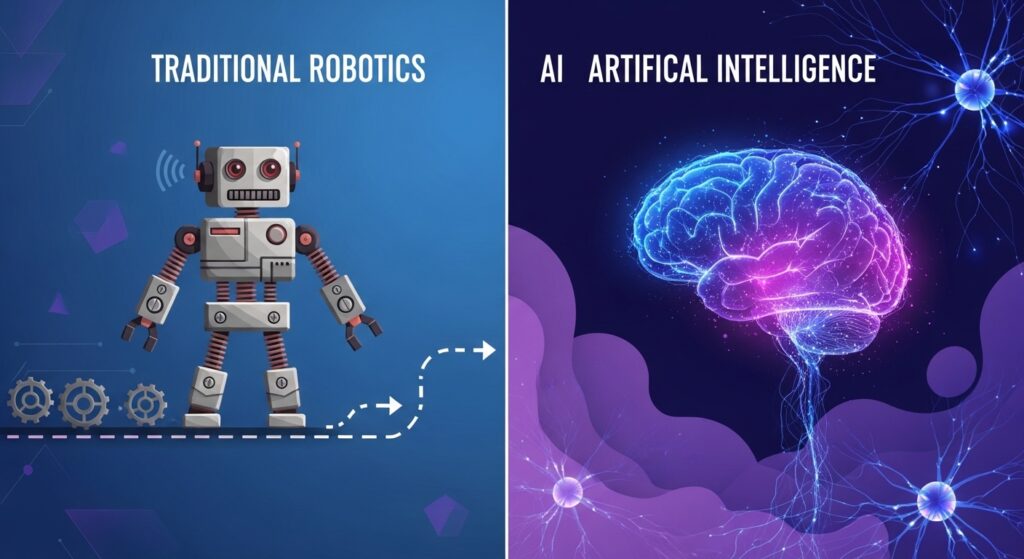
Understand traditional EAs before exploring AI: 10 Types of Expert Advisors
Understanding the fundamental differences between AI systems and conventional EAs clarifies what AI actually offers.
Rule-Based vs Learning-Based
Traditional EAs follow explicit rules programmed by developers. If market conditions change and those rules stop working, the EA continues executing them until a human intervenes and modifies the code.
AI systems learn from data and can theoretically adapt when market patterns shift. If the AI detects that previously profitable patterns are failing, it might de-emphasize those signals and discover new patterns showing better current performance.
Static vs Dynamic
EAs are static—they execute the same logic today as when first deployed unless manually updated. Their behavior is predictable and consistent.
AI systems are dynamic—their decision-making evolves as they process more data. This adaptability is both strength and risk, as the AI might adapt in unexpected or undesirable ways.
Transparency
Expert Advisors offer complete transparency if you have the source code. You can examine exactly what conditions trigger trades and how the system manages positions.
AI systems, particularly complex neural networks, often function as “black boxes.” Even their creators might not fully understand why the AI makes specific decisions, as the learned patterns emerge from data analysis rather than explicit programming.
For detailed EA information including how they work and their limitations, read our Expert Advisors guide
Development and Testing
Creating EAs requires programming skills but follows straightforward logic. You define rules, code them, backtest, and deploy.
Developing AI trading systems requires machine learning expertise, substantial computational resources, large high-quality datasets, and sophisticated validation methods to ensure the AI learned genuine patterns rather than fitting to historical noise.
Types of AI Used in Forex Trading
Several AI technologies apply to forex trading, each with different capabilities and complexity levels.
Machine Learning Algorithms
Machine learning encompasses various techniques teaching computers to learn from dataCommon algorithms include:
Decision trees analyze market conditions through branching logic, learning which combinations of factors correlate with profitable outcomes. Random forests combine multiple decision trees, improving accuracy and reducing overfitting risk.
Support vector machines identify optimal boundaries separating profitable from unprofitable trading conditions in multi-dimensional space.
Gradient boosting builds prediction models sequentially, each new model correcting errors from previous models.
These algorithms can discover non-obvious relationships between indicators, timeframes, and market conditions that human traders might miss.
Neural Networks
Neural networks, inspired by brain structure, consist of interconnected nodes processing information in layers. Deep neural networks with many layers (deep learning) can identify extremely complex patterns in market data.
Neural networks excel at pattern recognition—identifying chart patterns, price structures, or indicator combinations associated with profitable trades. They can process multiple inputs simultaneously, weighing the importance of each factor dynamically.
However, neural networks require massive amounts of training data, substantial computational power, and careful validation to avoid overfitting.
Natural Language Processing (NLP)
NLP algorithms analyze text data—news articles, social media posts, earnings reports, central bank statements—extracting sentiment and meaning relevant to market movements.
NLP-powered trading systems might analyze Federal Reserve statements detecting hawkish or dovish tones that historically correlate with currency movements. They process news faster than humans, potentially capturing market-moving information milliseconds before manual traders.
Sentiment analysis tools gauge market mood from Twitter, Reddit, financial news, and other sources, generating trading signals based on collective emotional states.
Reinforcement Learning
Reinforcement learning trains AI through trial and error, rewarding profitable actions and penalizing losing ones. The AI learns optimal trading strategies by experimenting in simulated environments, discovering which actions lead to best long-term results.
This approach mimics how humans learn from experience, potentially developing sophisticated strategies through thousands of simulated trading iterations.
AI Trading Tools Available to Retail Traders
Despite the advanced technology, several AI-powered tools have emerged for individual forex traders.
AI-Powered Signal Services
Some signal providers use machine learning algorithms to analyze markets and generate trade recommendations. These services process multiple data sources, identify patterns their AI learned correlate with profitable trades, and send signals to subscribers.
Quality varies enormously. Many “AI-powered” signal services use traditional analysis with AI buzzwords for marketing. Verify any AI signal service through third-party performance monitoring before trusting them with real money.
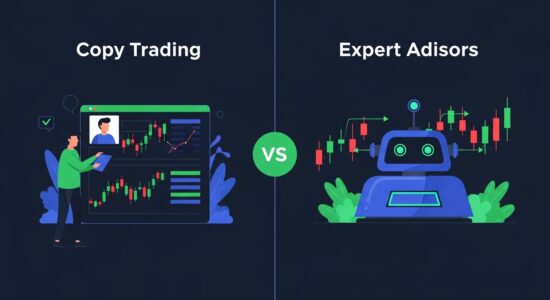
Robo-Advisors and Copy Trading Platforms
Several platforms use AI to match traders with copy trading providers based on risk preferences, trading style, and performance history. The AI analyzes thousands of traders, identifies those whose approaches align with your parameters, and recommends copying allocations.
This differs from the AI making trading decisions directly—it’s using AI for trader selection and portfolio optimization.
Algorithmic Trading Platforms with ML Integration
Platforms like QuantConnect, Quantopian’s successor, and others provide frameworks for building machine learning-powered trading strategies. They offer historical data, backtesting environments, and deployment capabilities for retail algorithmic traders.
These require programming knowledge and machine learning expertise but provide accessible infrastructure for implementing AI strategies without building everything from scratch.
Chatbots and Trading Assistants
AI chatbots analyze your trading history, identify patterns in your wins and losses, and provide feedback on improving your manual trading. They’re not executing trades but offering AI-powered analysis and coaching.
For understanding algorithmic trading fundamentals that often incorporate AI techniques, Read our algorithmic trading guide….
Advantages of AI in Forex Trading
AI in forex trading offers several potential benefits over traditional trading approaches when implemented properly.
Pattern Recognition at Scale
AI systems analyze millions of data points identifying subtle patterns humans would never notice manually. They might discover that certain indicator combinations only work profitably during specific volatility regimes, times of day, or seasonal periods.
This capability to process vast data and extract meaningful signals provides edge that manual analysis can’t match.
Adaptation to Changing Markets
Markets evolve continuously. Strategies working for years can suddenly stop performing as market structure changes. AI systems can theoretically detect these shifts and adjust their approach, maintaining effectiveness as markets evolve.
Traditional EAs continue executing outdated logic until humans recognize the problem and update code.
Emotion-Free Decision Making
Like traditional automation, AI eliminates emotional interference. However, AI goes further by potentially improving decision quality through learned experience, not just executing fixed rules consistently.
Processing Multiple Data Sources
AI systems integrate various data types—price action, volume, sentiment data, economic indicators, seasonal patterns—weighing each factor’s current relevance dynamically. Humans struggle to consciously process so many inputs simultaneously.
Speed and Efficiency
AI analyzes markets and executes decisions in milliseconds, capturing fleeting opportunities before they disappear. Combined with learning capabilities, this speed advantage compounds over time.
Limitations and Risks of AI Trading
Despite impressive capabilities, AI in forex trading faces significant challenges and risks retail traders must understand.
Data Requirements
Training effective AI models requires massive amounts of quality data. Forex historical data is abundant, but ensuring it’s clean, representative, and relevant is challenging. Garbage in, garbage out—AI trained on poor data learns poor patterns.
Overfitting Risk
AI’s pattern recognition strength becomes a weakness when the system “learns” random noise rather than genuine market relationships. Overfitted models show excellent backtest performance but fail in live trading because they memorized historical peculiarities that don’t repeat.
Preventing overfitting requires sophisticated validation techniques, substantial out-of-sample testing, and expertise most retail traders lack.
Black Box Problem
Complex AI models, particularly deep neural networks, make decisions through learned patterns that aren’t easily interpretable. You might not understand why your AI system entered a particular trade, making it difficult to evaluate whether decisions make sense or trust the system during drawdowns.
This opacity creates risk—the AI might have learned relationships that seemed profitable in training data but don’t represent genuine market logic.
Computational Requirements
Training and running sophisticated AI models requires substantial computing power. Cloud computing makes this more accessible, but costs accumulate quickly when processing real-time market data through complex algorithms.
VPS hosting for traditional EAs costs $20-40 monthly. Running AI trading systems can cost hundreds monthly in cloud computing fees.
False Marketing and Hype
The “AI” label sells. Many systems advertised as AI-powered use conventional algorithms with minimal machine learning. Distinguishing genuine AI from marketing buzzwords requires technical knowledge most retail traders don’t possess.
Regulatory and Ethical Concerns
As AI trading becomes more prevalent, regulatory scrutiny from agencies like the CFTC increases. Systems creating market manipulation, even unintentionally through learned behaviors, could face restrictions. The evolving regulatory landscape creates uncertainty for AI trading adoption.
Realistic Expectations for AI Trading
Separating AI in forex trading reality from marketing hype requires grounded expectations about what current technology actually delivers.
AI Doesn’t Guarantee Profits
No AI system eliminates trading risk or guarantees returns. Markets are partially random, influenced by unpredictable events, and competitive. Even sophisticated AI competes against other AI systems, institutional algorithms, and fundamental factors AI can’t predict.
The best AI systems might offer modest edge—perhaps improving risk-adjusted returns by several percentage points annually compared to conventional approaches. Anyone promising 50%+ annual returns or consistent profits from AI is lying.
AI Requires Ongoing Management
AI trading systems need monitoring, validation, and periodic retraining as market conditions evolve. They’re not truly “set and forget” solutions despite adaptive capabilities.
You still need to understand risk management, position sizing, and when market conditions might challenge any automated system. For risk management principles applicable to all trading including AI, see our risk management guide…
Simpler Often Works Better
Complex AI models don’t automatically outperform simpler approaches. Sometimes a straightforward moving average crossover EA with proper risk management produces better risk-adjusted returns than a sophisticated neural network.
Complexity introduces more ways things can fail, more parameters to optimize (increasing overfitting risk), and more computational costs. Start simple before adding AI complexity.
Access Barriers Remain
Institutional traders with millions in capital, teams of PhDs, and proprietary data access will always have advantages over retail traders using publicly available AI tools and data.
While AI democratizes some capabilities, assuming you’ll match institutional performance with retail-accessible AI is unrealistic.
Building Your Own AI Trading System
For technically skilled traders, developing custom AI trading systems is increasingly accessible, though still challenging.
Learning Requirements
You need programming knowledge (Python is most common for AI/ML work), understanding of machine learning concepts and algorithms, statistics and probability fundamentals, and trading strategy knowledge.
Expect months to years of learning before creating functional AI trading systems if starting from zero.
Data Acquisition and Preparation
Obtain quality historical data covering sufficient timespan and market conditions. Clean the data removing errors, gaps, and anomalies. Engineer features from raw price data—technical indicators, statistical measures, derived values the AI will learn from.
Feature engineering—deciding what data to feed the AI—often matters more than algorithm selection.
Model Selection and Training
Choose appropriate ML algorithms for your strategy goals. Split data into training, validation, and testing sets to detect overfitting. Train models iteratively, adjusting parameters and features based on validation performance.
Backtesting and Validation
Test your AI system on completely separate data it never saw during training. Use walk-forward analysis—training on one period, testing on the next, retraining, testing again—to simulate real-world deployment where you periodically retrain as new data arrives.
For proper backtesting methodology preventing misleading results, read our backtesting guide
Deployment and Monitoring
Deploy with small capital initially, monitor performance closely comparing live results to backtest expectations, and retrain periodically as you accumulate new trading data.
The Future of AI In Forex Trading
AI trading technology continues evolving rapidly, with several trends shaping its future.
Increased Accessibility
AI trading tools become more accessible to retail traders as cloud computing costs decrease, pre-built ML platforms simplify development, and educational resources proliferate.
However, increased accessibility means more competition using similar tools, potentially eroding any edge from AI adoption.
Regulatory Evolution
Regulators worldwide are grappling with AI in financial markets. Expect increased scrutiny, transparency requirements, and potentially restrictions on certain AI trading practices as regulators understand the technology better.
Hybrid Approaches
Rather than pure AI or pure traditional algorithms, hybrid systems combining human expertise, conventional algorithms, and AI-powered components might become standard. Each element contributes its strengths—human judgment for context, traditional algorithms for reliability, AI for pattern recognition.
Democratization vs Specialization
AI makes sophisticated analysis available to individual traders, democratizing capabilities previously exclusive to institutions. Simultaneously, the most advanced AI requires such specialized expertise and resources that the gap between elite institutional AI and retail AI might actually widen.
Final Thoughts on AI Forex Trading
AI in forex trading represents genuine innovation in automated trading offering pattern recognition, adaptation, and data processing capabilities that traditional approaches can’t match. However, it’s not magic—AI faces limitations, requires expertise to implement effectively, and doesn’t eliminate trading’s fundamental uncertainties.
For most retail traders currently, traditional Expert Advisors and systematic approaches provide more practical automation solutions than complex AI systems. The technology, data, and expertise requirements for effective AI trading exceed what most individuals can deploy profitably.
That said, AI trading will likely become more accessible and effective over time. Traders willing to invest in learning machine learning fundamentals, programming skills, and statistical analysis position themselves to leverage AI as tools improve and barriers lower.
Approach AI trading with healthy skepticism toward marketing claims, realistic expectations about performance, and recognition that successful implementation requires substantial learning investment. The traders profiting from AI trading today typically have technical backgrounds, significant development time invested, and modest expectations aligned with reality rather than hype.
Whether AI in forex trading suits your situation depends on your technical skills, learning willingness, available time, and whether the edge AI might provide justifies the complexity compared to simpler automated approaches.
For most traders, mastering fundamental trading skills, implementing sound risk management, and using conventional automation effectively generates better results than chasing sophisticated AI systems they don’t fully understand or can’t implement properly.
For comprehensive overview of automated trading approaches including both traditional and AI-powered systems, see our automated forex trading guide
For understanding the programming foundations that support AI trading development, read our guides on algorithmic trading and Expert Advisors
Whether using AI or traditional automation, proper setup is critical: Setting Up Automated Trading