Learn How to Make Fast Money by Learning diffrent Strategies in Forex Trading and Different Investment Options
How to Backtest Trading Strategies: Complete Guide to Testing Before Trading
Before you risk a single dollar on a Backtest Trading Strategies, you should test it on historical data to see if it would have been profitable. This process, called backtesting, helps you identify whether your strategy has genuine edge or whether you’re about to lose money systematically.
Backtesting isn’t perfect. Historical performance doesn’t guarantee future results, and backtests can mislead you if done incorrectly. However, a strategy that loses money consistently in backtests will almost certainly lose money in live trading. Backtesting acts as a filter, eliminating obviously bad strategies before they damage your account.
This guide explains what backtesting is, how to backtest manually and with software, how to interpret results properly, and the common mistakes that make backtests worthless.
Backtesting means applying your trading rules to historical price data to see what results they would have produced. If your strategy says “buy when the 20-period moving average crosses above the 50-period moving average,” you scroll through charts identifying every time that condition occurred, then track what would have happened if you’d entered those trades.
The goal is answering a simple question: would this strategy have made or lost money in the past? If it lost money consistently during various market conditions, it will likely lose money going forward. If it showed profits across different periods and market types, it might have genuine potential worth testing further.
Backtesting doesn’t prove a strategy will work in the future. Markets change, volatility shifts, and correlations break down. But backtesting does show whether your strategy has any logical basis for profitability. Without backtesting, you’re essentially gambling, hoping your untested ideas happen to work.
How to Backtest Trading Strategies Manually: The Educational Way
Manual backtesting involves scrolling through charts bar by bar, identifying trade setups according to your rules, and recording what would have happened. It’s time-consuming but teaches you more about your strategy than automated backtesting.
Setting Up for Manual Backtesting:
Choose a currency pair and timeframe. If you plan to day trade EUR/USD on the 1-hour chart, backtest on EUR/USD 1-hour data.
Define your strategy rules with precision. Vague rules like “enter when momentum is strong” won’t work. You need specific, objective criteria: “Enter long when RSI crosses above 30 and MACD histogram turns positive.” For RSI strategies, see our RSI guide
Decide on your lookback period. Testing six months to one year provides reasonable data without taking forever. Include different market conditions if possible—trending periods, ranging markets, high volatility, and low volatility.
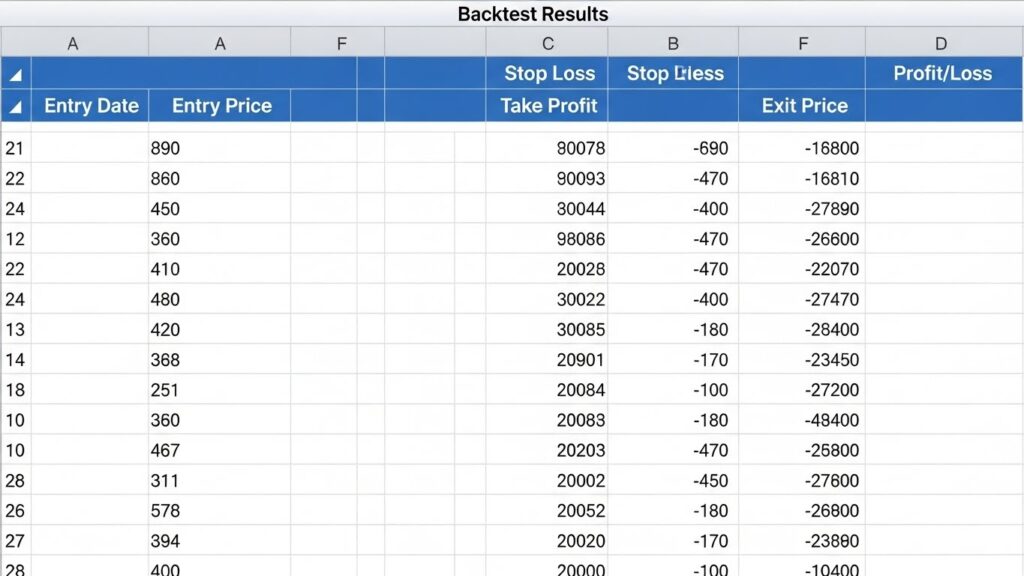
Prepare a spreadsheet to record results. Columns should include: entry date, entry price, stop loss, take profit, exit date, exit price, pips gained/lost, and notes about market conditions.
The Manual Process:
Open your chart and scroll back to your starting date. Move forward one bar at a time (or one day at a time on daily charts), examining each bar for your entry conditions.
When your entry conditions trigger, record the trade details. Mark your entry price, where you would have placed your stop loss, and where you would have set your take profit. For position sizing principles, see our position sizing guide
Continue scrolling forward bar by bar until either your stop loss or take profit is hit. Record the exit and calculate your profit or loss.
Move forward and repeat this process through your entire testing period. Yes, this takes hours. That’s why automated backtesting exists.
Benefits of Manual Backtesting:
You learn your strategy intimately. After manually backtesting 100 trades, you understand exactly when your strategy works and when it fails.
You spot nuances automated backtests miss. You might notice your strategy performs better during certain sessions, or that winning trades share characteristics not captured in your rules.
You develop intuition about market behavior. Watching hundreds of setups play out builds pattern recognition that helps your live trading.
Drawbacks:
It’s extremely time-consuming. Backtesting one year of data might take 10-20 hours depending on your timeframe and strategy complexity.
Human error creeps in. You might miss a setup, misidentify a signal, or make calculation mistakes.
It’s limited to one pair and timeframe at a time. Testing your strategy across multiple pairs requires repeating the entire process.
Automated Backtesting with MT4/MT5 Strategy Tester
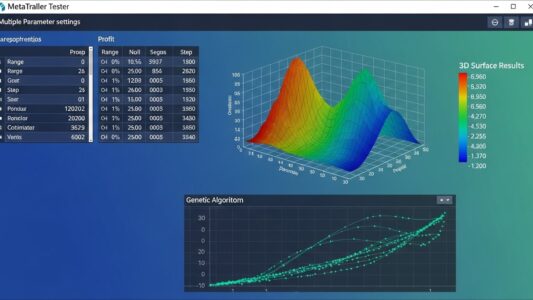
MetaTrader platforms include built-in strategy testers that backtest Expert Advisors automatically. Even if you’re not using an EA for live trading, you can code your strategy into an EA purely for backtesting purposes.
Accessing the Strategy Tester:
In MT4 or MT5, go to View → Strategy Tester or press Ctrl+R. The Strategy Tester window appears at the bottom of your screen.
Select your Expert Advisor from the dropdown menu. If you’re backtesting a strategy without an EA, you’ll need to code one first or use manual backtesting.
Choose the currency pair and timeframe you want to test.
Select a date range. One year provides a good balance between comprehensive data and reasonable testing time. For shorter-term strategies, six months might suffice. For longer-term approaches, test two to three years if data is available.
Set the modeling mode. “Every tick” is most accurate but slowest. “1 minute OHLC” is faster but less precise. “Open prices only” is fastest but unreliable for most strategies.
Configure spread settings. Use a realistic spread for your broker and pair. If you’re backtesting EUR/USD with a broker offering 1 pip spreads, set the spread to 10 points (1 pip = 10 points).
Running the Test:
Click Start and wait. Depending on your settings, backtests can take anywhere from seconds to hours. The visual mode shows each trade on the chart as it executes, which is educational but slow. Non-visual mode is much faster.
Reviewing Results:
After completion, the Results tab shows every trade: entry time, type (buy/sell), lot size, entry price, stop loss, take profit, exit time, profit/loss, and balance.
The Graph tab displays your account equity curve over time. This is crucial for understanding drawdowns and equity growth patterns.
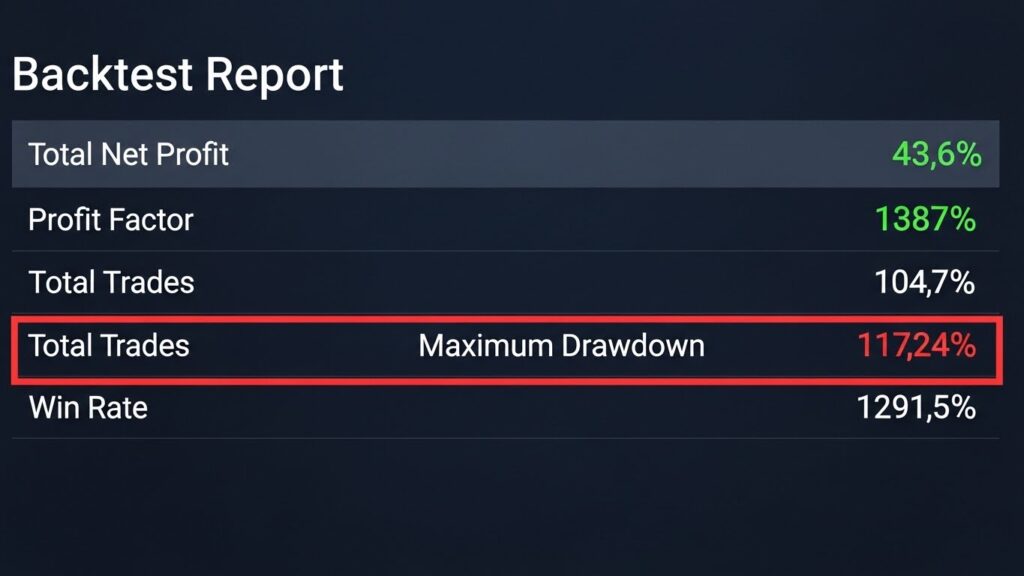
The Report tab summarizes key metrics including total net profit, profit factor, total trades, winning percentage, maximum drawdown, and more.
Understanding Backtest Results
Raw profit numbers tell only part of the story. Proper result interpretation requires examining multiple metrics.
Total Net Profit:
The bottom line—did the strategy make or lose money? Positive is good, but dig deeper before celebrating.
Compare net profit to maximum drawdown. A strategy showing $10,000 profit with $2,000 maximum drawdown is far better than one showing $10,000 profit with $9,000 drawdown.
Profit Factor:
This divides gross profit by gross loss. A profit factor above 1.0 means the strategy is profitable. Above 1.5 is decent. Above 2.0 is excellent. Below 1.0 means the strategy lost money.
Be wary of profit factors above 3.0 in backtests. Such results often indicate curve fitting or unrealistic assumptions about spreads and slippage.
Total Trades:
How many trades occurred during the test period? Strategies with fewer than 30 trades lack statistical significance. You can’t draw meaningful conclusions from 10 trades.
Ideally, you want 100+ trades across your testing period to have confidence the results aren’t just luck.
Win Rate:
The percentage of trades that were profitable. Don’t chase high win rates. A strategy with 40% win rate but excellent risk-reward can be very profitable. A 70% win rate with poor risk-reward might lose money.
Win rates above 80% in backtests usually indicate Martingale strategies or other dangerous techniques that will eventually blow up.
Maximum Drawdown:
The largest peak-to-valley decline in account equity. This shows the worst-case scenario during your test period.
If maximum drawdown is 30% and you’re trading a $10,000 account, you experienced a $3,000 loss at one point before recovering. Can you psychologically and financially handle that drawdown? If not, the strategy isn’t suitable for you regardless of its profitability.
Average Win vs. Average Loss:
Compare your average winning trade size to your average losing trade size. Profitable strategies typically have average wins larger than average losses, or very high win rates if average losses are larger.
Consecutive Losses:
How many losses in a row did the strategy experience? If it showed 12 consecutive losses, that’s what you should expect in live trading eventually. Can you continue trading after 12 straight losses? Most traders can’t, making the strategy psychologically unsuitable.
Common Backtesting Mistakes That Invalidate Results
Backtests mislead when done incorrectly. Avoid these errors that make results worthless.
Mistake 1: Curve Fitting (Overfitting)
This is the deadliest mistake. Curve fitting means optimizing your strategy parameters to produce the best possible backtest results on historical data, then assuming those optimized settings will work going forward.
Example: You backtest a moving average crossover strategy. You test 20/50, 10/30, 5/20, 15/45, and 25/75 combinations. The 17/43 combination shows amazing results—80% win rate and profit factor of 3.2. You declare success.
The problem: You found parameters that happened to work on that specific historical data. They’re unlikely to work going forward because they’re tailored to past prices, not to any underlying market logic.
Solution: Keep parameter optimization minimal. If your strategy requires extensive optimization to show profits, it probably doesn’t have real edge. Test with standard, logical parameter choices (like 20/50 moving averages) rather than hunting for magic numbers.
Mistake 2: Ignoring Spread and Commissions
Many backtests assume zero spread and zero commission, making them wildly unrealistic. A scalping strategy showing 5-pip average profit per trade looks great until you add 2-pip spread, cutting profits by 40%.
Always include realistic spread and commission costs. Check your broker’s actual spreads during different market conditions and use conservative estimates.
Mistake 3: Using Insufficient Data
Testing a strategy on three months of data proves nothing. The market might have been trending, ranging, highly volatile, or calm during that period. You have no idea if results will persist in different conditions.
Test at least one year, preferably two or three years. Include different market regimes to see how your strategy handles various conditions.
Mistake 4: Look-Ahead Bias
This occurs when your backtest uses information that wouldn’t have been available at the time of the trade. For example, using today’s close to make a trading decision that would have occurred before today’s close.
Ensure your backtesting process only uses data that would have been available when the trade decision was made.
Mistake 5: Survivorship Bias
If you’re backtesting stocks or other instruments where some have been delisted, excluding the delisted instruments creates survivorship bias. Your results only reflect winners, not the losers that went bankrupt or were removed.
In forex, this is less of an issue since currency pairs don’t get delisted, but be aware of it if testing other instruments.
Mistake 6: Cherry-Picking Time Periods
Testing your strategy only on a period when it would have worked is meaningless. If you backtest a trend-following strategy on a year-long uptrend, of course it looks good. Test it on ranging markets and downtrends too.
Include at least one full market cycle in your testing period if possible.
Forward Testing: The Critical Next Step
A strategy that passes backtesting must still prove itself in forward testing before you use real money.
Forward testing (also called paper trading or demo trading) means running your strategy on current market data in real-time without risking actual capital. You’re not looking back at what would have happened; you’re executing your rules as the market unfolds.
Why Forward Testing Matters:
It eliminates look-ahead bias completely. You can’t cheat when you don’t know what happens next.
It reveals execution issues. Backtests might assume perfect fills at your exact prices. Forward testing shows you real spreads, slippage, and order rejections.
It tests your psychological ability to follow the strategy. Backtesting is emotionless. Forward testing with demo money still triggers some emotions, especially when watching consecutive losses mount.
How to Forward Test:
Open a demo account with your broker. Fund it with the same amount you plan to use for live trading.
Trade your strategy exactly as you would with real money. Every signal gets a trade. Every stop loss and take profit is honored. No selective entry or exit.
Continue for at least 30 trades or three months, whichever comes first. This provides enough data to see if backtested expectations match forward results.
Comparing Results:
Your forward test results should roughly match backtest expectations, though some variance is normal. If your backtest showed 45% win rate and 1.8 profit factor, seeing 42% win rate and 1.6 profit factor in forward testing is reasonable.
If forward testing shows drastically different results—say 30% win rate and 0.9 profit factor—your backtest was likely flawed or the strategy was curve-fit to historical data.
A profitable backtest doesn’t guarantee future profits. It simply suggests your strategy had logical edge in the past and might have edge going forward if market conditions remain similar.
A losing backtest is more definitive. A strategy that lost money consistently across multiple years and market conditions will likely continue losing. Don’t assume you can “tweak” it into profitability through minor adjustments—that leads to curve fitting.
The best use of backtesting is eliminating obviously bad ideas before they cost you real money. If 80% of trading strategies lose money, backtesting helps you avoid that 80% without having to lose actual capital proving they don’t work.
Use backtesting to develop realistic expectations. If your strategy showed 25% maximum drawdown in backtests, expect at least 25% drawdown in live trading, possibly more. If it generated 100 trades per year in backtests, expect similar frequency going forward.
Never trust a backtest that shows unrealistic results—90%+ win rates, minimal drawdowns, consistently high returns with low risk. These signal curve fitting, unrealistic assumptions, or outright fraud.
Backtesting for Different Trading Styles
Different trading approaches require different backtesting considerations.
Scalping Strategies:
Backtesting scalping is particularly difficult because spread and slippage costs dominate. A strategy targeting 5-pip profits can be destroyed by 2-pip spread widening during news events.
Use the most accurate tick data possible. Test during different market sessions to see how spreads vary. Include realistic spread widening during volatile periods.
Day Trading Strategies:
Day trading backtests should include different market sessions and weekdays. Monday markets behave differently than Friday markets. European session dynamics differ from US session.
Test across at least six months to capture various market moods.
Swing Trading Strategies:
Longer holding periods mean fewer trades in backtests. You might only generate 50-80 trades in a year. Test multiple years to get adequate sample size.
Include weekend gap risk in your analysis. Swing traders often hold through weekends when unexpected news can create gaps.
Position Trading Strategies:
Very long-term strategies might generate only 10-20 trades per year. Test across 3-5 years minimum to get statistically meaningful results.
Ensure your backtest accounts for rollover costs (swap fees) if you’re holding positions for weeks or months.
Final Thoughts on Backtesting
Backtesting is an essential tool but not a guarantee. Use it to filter out obviously flawed strategies and develop realistic expectations about those that show promise.
The best backtesting approach combines automated testing with manual review. Let the computer crunch numbers on thousands of bars, but manually examine the actual trade setups to understand when and why your strategy works.
Never skip forward testing. A strategy must prove itself in real-time conditions before you risk actual capital. The transition from backtest to demo to small live account to full position sizes gives you multiple checkpoints to catch problems before they become expensive.
Remember that markets evolve. A strategy working beautifully in backtests might stop working if market structure changes. Continue monitoring performance even after your strategy goes live, and be prepared to stop trading it if it stops performing.
Backtesting won’t make you a profitable trader by itself, but it will prevent you from wasting time and money on approaches that have no logical basis for success. Combined with proper risk management, realistic expectations, and disciplined execution, backtesting helps you identify strategies worth trading—and that’s the first step toward consistent profitability.