Learn How to Make Fast Money by Learning diffrent Strategies in Forex Trading and Different Investment Options
Copy Trading vs Expert Advisors
Automated forex trading offers two primary approaches for retail traders: copy trading, where you replicate the trades of experienced traders, and Expert Advisors, which are software programs executing predefined strategies. Both eliminate the need for constant manual trading, but they work differently and suit different trader profiles.
Copy trading connects you with human traders whose decisions you follow, benefiting from their expertise and analysis. Expert Advisors rely on programmed algorithms executing rules consistently without human emotion or discretion. Understanding the differences helps you choose the approach that matches your goals, risk tolerance, and involvement level.
This guide compares copy trading vs expert advisors across key factors including cost, control, transparency, performance potential, and practical implementation to help you decide which automated approach suits your situation.
Still deciding? Read the detailed comparison below.
What Is Copy Trading?
Copy trading vs expert advisors, Copy trading platforms connect you with traders who share their positions publicly. When the trader you’re copying opens a position, your account automatically opens a proportional position. When they close, your position closes. The copying happens in real-time with minimal delay.
Popular copy trading platforms include eToro, ZuluTrade, NAGA, and broker-specific solutions from companies like IC Markets and Pepperstone. Each platform operates slightly differently but follows the same core concept: automated replication of another trader’s positions.
You select traders to copy based on their historical performance, trading style, risk level, and other factors displayed in their profile. You allocate a portion of your capital to copying each trader—for example, $2,000 copying Trader A and $3,000 copying Trader B from a $10,000 account.
Position sizing scales proportionally. If the copied trader opens a position risking 2% of their account, your account opens a position risking approximately 2% of the capital allocated to copying them. This maintains similar risk exposure despite different absolute account sizes.
The key appeal is accessing trading expertise without developing your own strategies or spending hours analyzing markets. You’re essentially outsourcing trading decisions to someone presumably more skilled or experienced.
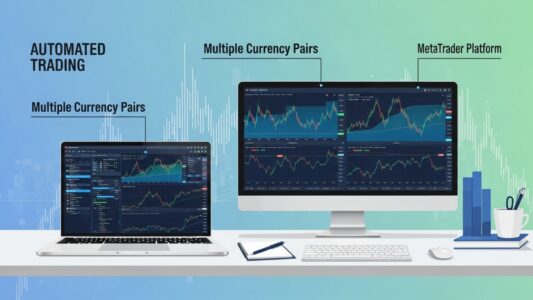
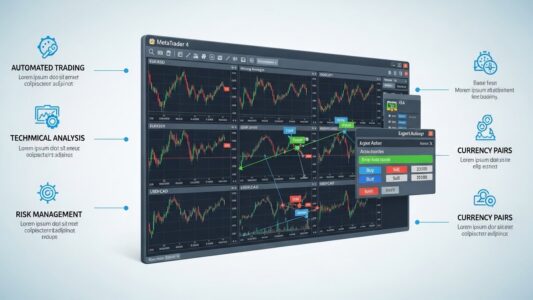
Expert Advisors are software programs running on MetaTrader platforms that analyze price data and execute trades based on programmed logic. You can purchase commercial EAs, download free ones from online repositories, or code custom EAs if you have programming knowledge.
EAs operate autonomously once configured and activated. They monitor markets 24/7, identify trading opportunities matching their programmed criteria, calculate position sizes, place orders with stop losses and take profits, and manage open positions until exit conditions trigger.
The EA follows its coded rules exactly, without emotion, hesitation, or discretionary judgment. If programmed to buy when the 20-period moving average crosses above the 50-period moving average, it executes that trade every time conditions align, regardless of broader market context or trader intuition.
EAs range from simple strategies using basic indicators to complex algorithms incorporating multiple timeframes, various technical studies, time filters, and sophisticated money management. Quality and effectiveness vary enormously—some represent legitimate trading strategies while others are scams or poorly designed systems that lose money consistently.
Key Differences Between Copy Trading and Expert Advisors
Understanding how these approaches differ across critical dimensions helps clarify which suits your needs.
Decision Making
Copy trading relies on human traders making discretionary decisions based on analysis, experience, intuition, and current market context. The traders you copy might adjust their approach when market conditions change, temporarily stop trading during uncertain periods, or modify risk based on their confidence levels.
Expert Advisors make decisions based solely on programmed algorithms. They execute the same logic regardless of broader market context, news events, or changing conditions unless explicitly programmed to recognize and adapt to these factors.
Adaptability
Copied traders can adapt to changing market conditions in real-time. If a copied trader recognizes that volatility has increased unusually or that market character has shifted, they can adjust their trading approach immediately.
Expert Advisors continue executing their programmed strategy until you manually intervene, adjust settings, or disable them. They lack the contextual awareness to recognize when market conditions have changed fundamentally.
Transparency
With copy trading, you typically see the trader’s rationale for positions through comments, analysis posts, or platform messaging. Many successful copied traders explain their thought process, helping you learn while copying.
Expert Advisors vary in transparency. Commercial EAs often reveal little about their exact logic to protect proprietary strategies. Custom-coded EAs provide complete transparency if you understand the code. This difference impacts your ability to understand why trades execute and whether the approach makes sense.
Control and Customization
Copy trading offers limited customization. You choose which traders to copy and how much capital to allocate, but you can’t modify their trading decisions. Some platforms let you set maximum position sizes or stop-copying during specific conditions, but fundamentally you’re accepting another trader’s decisions.
Expert Advisors offer extensive customization if you have programming knowledge or work with a developer. You can modify indicators, adjust entry/exit rules, change money management parameters, add filters, or completely redesign the strategy. Even without coding ability, most EAs provide adjustable parameters letting you customize behavior within the EA’s framework.
Dependency
Copy trading creates dependency on the copied trader’s continued performance and presence. If they stop trading, change their approach dramatically, or their performance deteriorates, your results suffer. You’re essentially hiring someone else to trade for you without a contract guaranteeing their continued effort or skill.
Expert Advisors depend on coded strategy remaining effective as markets evolve. If market conditions shift away from what the EA was designed for, performance degrades unless you modify the EA or switch to different strategies. However, the EA itself doesn’t quit, lose motivation, or fundamentally change its approach without your input.
Cost Comparison
Understanding total costs for each approach helps evaluate which provides better value.
Copy Trading Costs
Most copy trading platforms charge in one or more of these ways:
Spread markups add 0.5 to 2 pips to the normal spreads you pay on each trade. If your broker normally offers 1 pip spread on EUR/USD, the copy trading platform might charge 2.5 pips total—1.5 pips going to the platform and copied trader.
Performance fees charge a percentage of profits generated through copying, typically 10-30%. If you profit $1,000 copying a trader with 20% performance fee, you pay $200 to the trader and platform.
Monthly subscription fees ranging from $20 to $100+ provide access to premium traders or reduced spread markups.
Total copy trading costs can reach 2-5% of profits or more depending on trading frequency and platform fee structure. Active trading with frequent positions accumulates higher costs through spread markups.
Expert Advisor Costs
EA costs include:
Initial purchase price for commercial EAs ranging from $50 to $500 or more for quality systems. Free EAs exist but quality varies dramatically. Custom-developed EAs can cost hundreds to thousands of dollars depending on complexity.
Monthly licensing fees for some commercial EAs, typically $30 to $100 per month, providing updates and support.
VPS hosting costs of $15 to $40 monthly for running EAs continuously without depending on your home computer. For VPS information and setup, read our VPS guide...
After initial investment, ongoing EA costs are minimal if you own the EA outright. VPS hosting is your primary recurring expense. Total annual costs might be $200-$500 for many traders using purchased EAs with VPS hosting.
Cost Winner
Expert Advisors typically cost less long-term than copy trading, especially for traders generating consistent profits. Copy trading’s percentage-based fees or spread markups create ongoing costs that scale with your trading volume and profits.
However, copy trading might prove cheaper initially if you’re testing automation with small capital, as you avoid upfront EA purchase costs and can start with minimal investment.
Performance and Results
Neither approach guarantees profitability. Success depends on selecting quality traders or EAs and managing them properly.
Copy Trading Performance Factors
Your results depend entirely on the traders you copy. If they profit, you profit proportionally. If they lose, you lose. Copy trading platforms show historical performance, but past results don’t guarantee future success.
The copied trader might change their approach, take excessive risks chasing losses, or simply have a bad period. You’re trusting another person’s judgment, discipline, and continued effort—all of which can vary.
Diversifying across multiple copied traders reduces dependency on any single person but doesn’t eliminate risk if market conditions shift unfavorably for all their approaches simultaneously.
Expert Advisor Performance Factors
EA performance depends on strategy quality and whether current market conditions suit the programmed approach. Well-designed EAs executing sound strategies can produce consistent returns when market conditions align with their methodology.
However, markets change. An EA profitable during trending conditions might struggle during ranging markets. Strategies effective for years can stop working as market structure evolves or more traders adopt similar approaches.
You control EA selection and can switch between multiple EAs, test new ones, or disable underperforming systems. This provides more control than copy trading but requires you to evaluate EA quality and monitor performance actively.
Results Verdict
Neither approach inherently produces better results. Exceptional copy trading can outperform mediocre EAs, and quality EAs can outperform poor copied traders. Success depends on selection quality, proper management, realistic expectations, and favorable market conditions for your chosen approach.
Learning and Development
How each approach contributes to your trading education differs significantly.
Learning from Copy Trading
Copy trading offers educational value if you actively study copied traders’ positions. Many successful traders provide analysis explaining their reasoning, helping you understand their thought process.
You can observe how experienced traders manage positions, when they take profits, how they handle losing trades, and what market conditions they favor. This exposure accelerates learning compared to trading in isolation.
However, passive copy trading where you never analyze the trades provides minimal educational benefit. You’re delegating trading entirely without developing your own skills.
Learning from Expert Advisors
EAs teach less about discretionary trading since they follow programmed algorithms rather than human analysis. However, they excel at teaching systematic thinking, the importance of consistent rule-following, and how to backtest and evaluate strategies objectively.
If you code your own EAs or modify existing ones, you learn programming skills, how to formalize trading ideas into testable rules, and how to analyze strategy performance quantitatively. For information on coding your own automated systems, read our algorithmic trading guide…
Learning Verdict
Copy trading provides better education for discretionary trading skills and market analysis. Expert Advisors teach systematic thinking, strategy development, and quantitative analysis. Your learning goals should influence which approach you choose.
Setup and Technical Requirements
Implementation complexity varies between these approaches.
Copy Trading Setup
Copy trading platforms are designed for simplicity. You create an account, deposit funds, browse available traders, select those you want to copy, allocate capital to each, and activate copying. The entire setup might take 30 minutes to an hour.
Technical requirements are minimal. You access most copy trading platforms through web browsers or mobile apps—no software installation required. No VPS needed since the platform provider handles trade execution on their servers.
The main time investment goes into researching and selecting quality traders to copy rather than technical setup.
Expert Advisor Setup
EA implementation requires more technical steps. You install MetaTrader platform, obtain the EA file, install it in the correct platform folder, restart the platform, attach the EA to a chart, configure settings, and verify it’s running correctly.
For continuous operation, you need VPS hosting ($15-$40 monthly) or a computer running 24/7 with reliable internet. Setup might take several hours for beginners unfamiliar with MetaTrader or VPS.
Testing EAs properly before live trading adds time. You should backtest on historical data, forward test on demo accounts, and run small live tests before committing significant capital. For backtesting methodology, read our backtesting guide..
Copy trading wins on simplicity and speed. EAs require more technical competence and time investment, though the process isn’t complex for anyone comfortable with basic computer tasks.
How each approach handles risk affects your capital preservation and stress levels.
Copy Trading Risk Management
You control overall risk by choosing how much capital to allocate to copying and which traders to follow. Select conservative traders with lower drawdowns if you prioritize capital preservation, or aggressive traders if you’re willing to accept higher risk for potentially higher returns.
However, you can’t control individual trade risk once you’ve selected a trader. If they suddenly increase position sizes or take larger risks, your account follows automatically unless you stop copying immediately.
Some platforms offer “copy with lower risk” settings that reduce position sizes proportionally, giving you some control. Stop-loss settings let you automatically stop copying if losses reach certain thresholds.
The key risk is that you’re trusting another person’s risk management discipline. They might trade conservatively for months then suddenly take excessive risks, and you’ll experience those risks unless you monitor constantly and react quickly.
Expert Advisor Risk Management
EAs follow programmed risk parameters exactly. If configured to risk 1% per trade with maximum 3 simultaneous positions, the EA never deviates unless you change settings.
You control position sizing, maximum drawdown limits, stop-loss distances, and all risk parameters. The EA never gets emotional, revenge trades, or abandons its risk rules due to frustration or overconfidence.
However, EAs lack human judgment to recognize unusual market conditions warranting reduced risk or temporary trading cessation. They’ll continue trading during extreme volatility or unexpected events unless programmed specifically to recognize and respond to these conditions.
Expert Advisors provide more precise, predictable risk control once properly configured. Copy trading introduces human variability—potentially beneficial if copied traders have good judgment, potentially harmful if they make poor risk decisions.
Which Approach Is Better for You?
Neither approach is universally superior. The better choice depends on your specific circumstances and priorities.
Choose Copy Trading If:
You lack time or interest in learning technical analysis or strategy development. You prefer leveraging others’ expertise rather than building your own trading skills. You value the human element and adaptability in trading decisions. You’re comfortable delegating control to others and accepting their judgment. You want to learn discretionary trading by observing successful traders. Your capital is small and you want to minimize upfront costs. You prioritize simplicity and quick setup over customization and control.
Choose Expert Advisors If:
You want complete transparency and understanding of trading logic. You have or want to develop technical skills in trading platforms and automation. You prefer systematic, rule-based trading to discretionary decisions. You want extensive control and customization capability. You’re willing to invest time in backtesting, optimization, and ongoing management. You’re comfortable with technology and troubleshooting technical issues. You want to minimize ongoing costs after initial investment. You value consistency and emotion-free execution over human adaptability.
Consider Both If:
Your capital allows allocation to multiple approaches for diversification. You want to learn from copy trading while developing your own systematic strategies through EAs. Different market conditions favor different approaches and you want flexibility to emphasize whichever is working better currently.
Many successful automated traders eventually use both approaches, copying traders whose discretionary judgment complements their systematic EA strategies, creating a hybrid approach leveraging both human expertise and algorithmic consistency.
Final Thoughts
Copy trading and Expert Advisors represent different philosophies for automated trading. Copy trading trusts human expertise and judgment, accepting dependency on other traders’ continued performance and discipline. Expert Advisors trust systematic rules and consistency, accepting that algorithms lack contextual awareness and adaptability.
Both approaches can succeed or fail depending on implementation quality, selection skill, and whether market conditions favor the underlying strategies. Neither eliminates the need for monitoring, risk management, or realistic performance expectations.
Your choice should align with your technical comfort level, control preferences, learning goals, and how much you trust others versus yourself to make trading decisions. Start with whichever approach feels more natural, test it thoroughly with small capital, and expand gradually as you confirm it works in your hands.
Remember that automation, whether through copying or EAs, doesn’t guarantee profits. It shifts challenges from emotional control and execution consistency to selection quality and ongoing system monitoring. Success requires diligence, realistic expectations, and commitment to proper testing and risk management regardless of which automation approach you choose.