How to Read Forex Quotes and Understand Currency Pairs: A Beginner’s Guide
What is a Currency Pair?
Forex quotes are presented in pairs; the first currency represents the base currency, and the second is the quote currency. For instance, in the case of EUR/USD, EUR serves as the base currency, while USD is the quote currency
Base Currency: The first currency in the pair (e.g., EUR in EUR/USD)
Quote Currency: The second currency in the pair (e.g., USD in EUR/USD)
Think of it like this: You’re asking, “How many units of the quote currency (USD) do I need to buy 1 unit of the base currency (EUR)?”
🎯 How to Read a Forex Quote
Forex quotes are typically shown with two prices:
Example Quote:
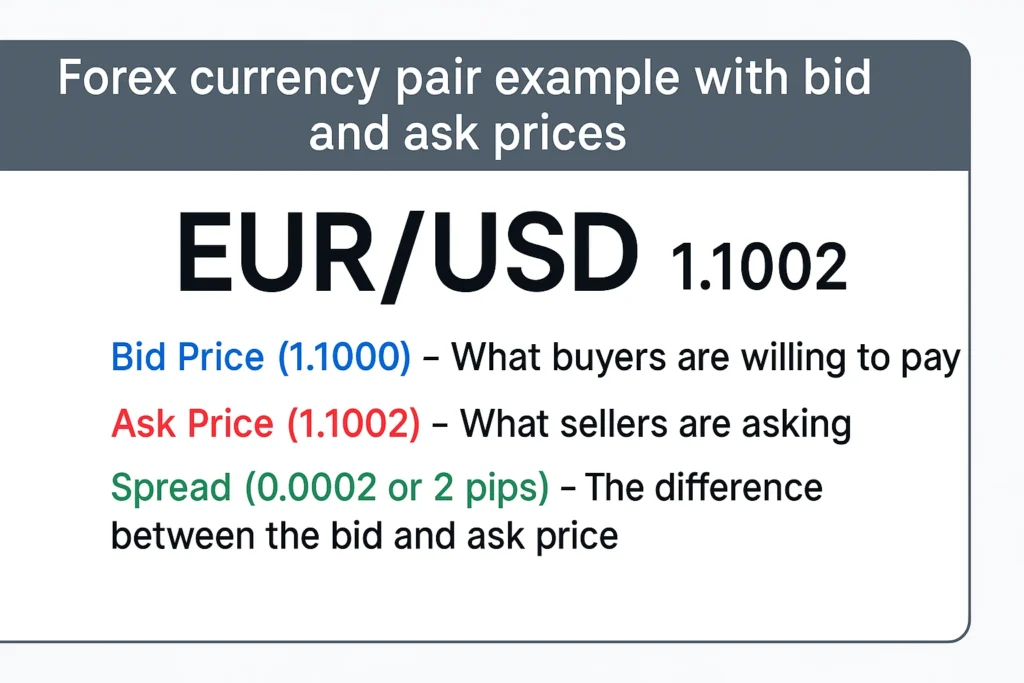
EUR/USD = 1.1000 / 1.1002
Bid Price (1.1000) – What buyers are willing to pay
Ask Price (1.1002) – What sellers are asking
Spread (0.0002 or 2 pips) – The difference between bid and ask price
Example:
If you want to buy, you’ll pay the ask price (higher).
If you want to sell, you’ll receive the bid price(lower).
The difference between the two is called the spread, which is often how brokers make money.
Example in Practice
If you believe the Euro will strengthen against the USD, you would buy EUR/USD. If you believe the Euro will weaken, you would sell EUR/USD.
💡 Major, Minor, and Exotic Pairs
Major Pairs – Most traded and always include the USD (e.g., EUR/USD, GBP/USD)
Minor Pairs – Don’t include the USD but involve strong economies (e.g., EUR/GBP, AUD/JPY)
Exotic Pairs – Involve one major currency and one from a smaller or emerging economy (e.g., USD/TRY, EUR/SEK)
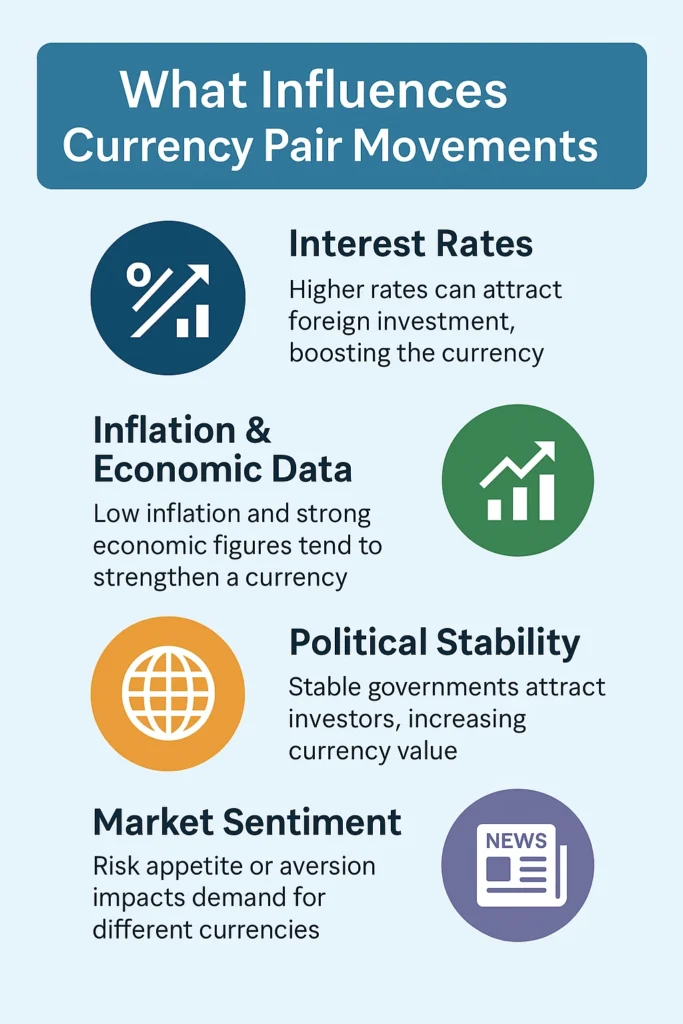
What Influences Currency Pair Movements
n Forex trading, currencies are always traded in pairs. This is because you’re simultaneously buying one currency and selling another
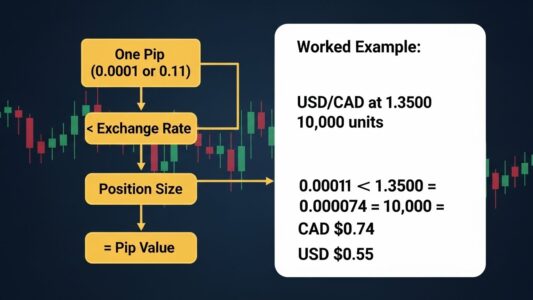
Forex prices don’t move randomly — they react to real-world events and financial data. The value of a currency pair like EUR/USD can rise or fall due to changes in economic conditions, interest rates, or even breaking news. Traders closely monitor these factors to make informed decisions and maximize their profits. Understanding the dynamics behind currency movements is crucial, and that’s where concepts like margin trading in forex explained come into play. By leveraging borrowed funds, traders can amplify their potential returns, but they also face higher risks in a volatile market. Additionally, traders need to grasp fundamental concepts such as what are pips in forex, as these units of measurement indicate the smallest price move that a given exchange rate can make based on market convention. Understanding pips is essential for managing trades effectively, as it helps in calculating potential profits and losses. With this knowledge, traders can better navigate the complexities of the forex market and implement more effective strategies.
Example: If the U.S. Federal Reserve raises interest rates, the USD often gains strength — pushing EUR/USD lower.
2. Inflation and Economic Data
Inflation reports, GDP growth, employment figures, and retail sales data all impact currency strength. Strong data = strong currency.Example: A strong Non-Farm Payroll (NFP) report in the U.S. may boost the USD.
3. Political Stability
Currencies favor countries with stable governments. Political uncertainty can weaken a currency, even if the economy looks strong.
Example: Brexit caused high volatility in GBP/USD due to political risk.
4. Market Sentiment and Risk Appetite
When investors feel confident, they move money into “riskier” currencies (like AUD, NZD). In uncertain times, they flock to “safe havens” like the USD, JPY, or CHF.
Example: During a global crisis, USD/JPY might fall as traders buy JPY for safety.
Bottom Line:
Every currency pair reacts differently to news and data. As a trader, it’s important to understand why a pair is moving — not just how much.
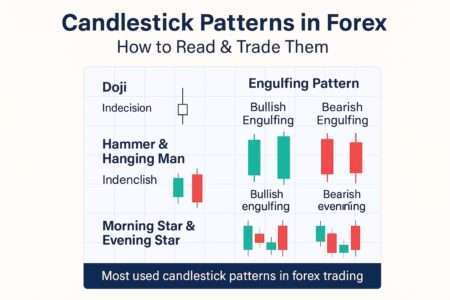
Stay tuned for Lesson 3: “What Moves the Forex Market” where we’ll go deeper into these influences with real-world examples and strategies. In this lesson, we will also cover key concepts such as leverage in forex trading explained, helping you understand how it can amplify your trading potential. Additionally, we will discuss the importance of risk management when using leverage, as well as the various market indicators that traders rely on. Get ready to enhance your trading skills and make informed decisions in the dynamic world of forex. We will also explore candlestick patterns for forex trading, which are essential tools for interpreting market movements and making strategic decisions. Understanding these patterns can significantly enhance your ability to predict market trends and identify potential entry and exit points. By integrating these insights with leverage and risk management strategies, you’ll be well-equipped to navigate the complexities of the forex market.
Currency pairs represent the exchange rate between two currencies
The first is the base; the second is the quote
Forex quotes show the bid and ask prices
Knowing how to read these is key to making smart trades
Key factors that influence currency pair movements include: interest rates, inflation, economic data, political stability, market sentiment, and risk appetite