Learn How to Make Fast Money by Learning diffrent Strategies in Forex Trading and Different Investment Options
Currency Trading Tips: 10 Lessons Every Beginner Needs
Forex looks easy from the outside. You see a chart go up, you buy. It goes up more, you sell, you profit. Real trading isn’t like that, and the gap between how it looks and how it actually works is where most beginners lose their money. These currency trading tips close that gap before losses mount
The currency trading tips below will save you years of expensive mistakes. None of them are tricks or secrets — they’re the lessons that experienced traders wish someone had drilled into them on day one. Start with these proven currency trading tips below
The biggest mistake beginners make isn’t a bad trade — it’s deciding they’re ready to trade before they actually are. Forex has its own vocabulary, mechanics, and logic. Pips, lots, leverage, margin, spreads, swap rates — these terms aren’t optional knowledge. If you don’t understand what they mean and how they affect your trades, you’re not ready.
Spend real time on the fundamentals before going anywhere near a live account. Read about how forex trading works, study technical and fundamental analysis, and understand risk management. The market will still be there in three months. That’s why education tops every list of currency trading tips worth reading. That’s why education sits at the top of every list of currency trading tips worth reading.
2. Pick a Regulated Broker
Your broker holds your money. That’s the entire reason regulation matters. A regulated broker has rules they must follow about client funds, fair execution, and dispute resolution. An unregulated one has no such obligation — and forex history is full of unregulated brokers that vanished overnight with client deposits.
In the US, look for regulation by the CFTC and NFA. In the UK, that’s the FCA. Australia uses ASIC. Those four are the gold standard.
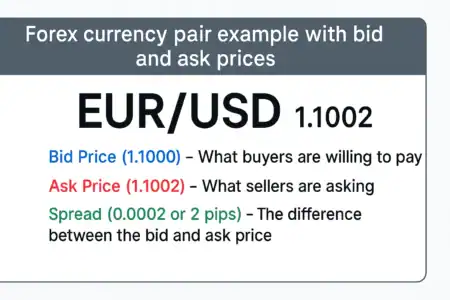
Beyond regulation, compare spreads, check execution speed, and test customer service before you fund an account. Our guide on how to choose a forex broker walks through everything to look at.
3. Start with a Demo Account
Every legitimate broker offers free demo accounts. Use one for at least a few weeks before trading real money. Practice executing orders, learn the platform, test strategies, and make all your beginner mistakes when nothing is at stake.
If you can’t be consistently profitable on a demo, you won’t be on a live account either. Demo isn’t a stepping stone you breeze past — it’s a filter. Take it seriously.
4. Build a Written Trading Plan
A trading plan is your set of rules. It tells you what you’ll trade, when you’ll trade it, how much you’ll risk per trade, and what defines a setup worth taking versus one to skip. Without a plan, you’re guessing — and guessing in forex usually means losing.
Your plan should cover the maximum risk per trade (1-2% of your account is a reasonable ceiling), the currency pairs you’ll focus on, the specific setups you’ll take, the sessions you’ll trade, and how you’ll review trades after they close. Write it down. Re-read it every week. Update it as you learn.
Currency Trading Tips for Managing Risk
5. Master One Pair Before Adding Others
New traders try to trade everything. EUR/USD, GBP/JPY, AUD/CAD, gold, oil, anything that moves. This is a mistake.
Every currency pair has its own personality — its typical daily range, its reaction to news, its quiet hours and active hours. Learning those rhythms takes weeks of focused observation. Spread your attention across ten pairs, and you learn nothing about any of them.
Start with EUR/USD. It’s the most-traded pair on Earth, it has the tightest spreads, and there’s more analysis written about it than any other instrument in any market. Get good at one pair first. Add others later.
6. Risk Only 1-2% Per Trade
This is the single most important rule of all currency trading tips, this keeps you trading and the one most beginners ignore.
On a $10,000 account, 1% risk per trade means $100. That’s the maximum loss you’ll accept on any position. If your stop-loss would risk more than that, you reduce your position size — not your stop-loss distance. The position size calculator makes the math easy.
Why does this matter? Math. With 2% risk per trade, ten consecutive losses leave you with $8,170 from a $10,000 start. You’re still in business. With 10% risk per trade, those same ten losses leave you with $3,487. You’re effectively done. Of all the currency trading tips on this list, risk per trade is the one that keeps a normal losing streak from being a career-ending one.
7. Always Use a Stop-Loss
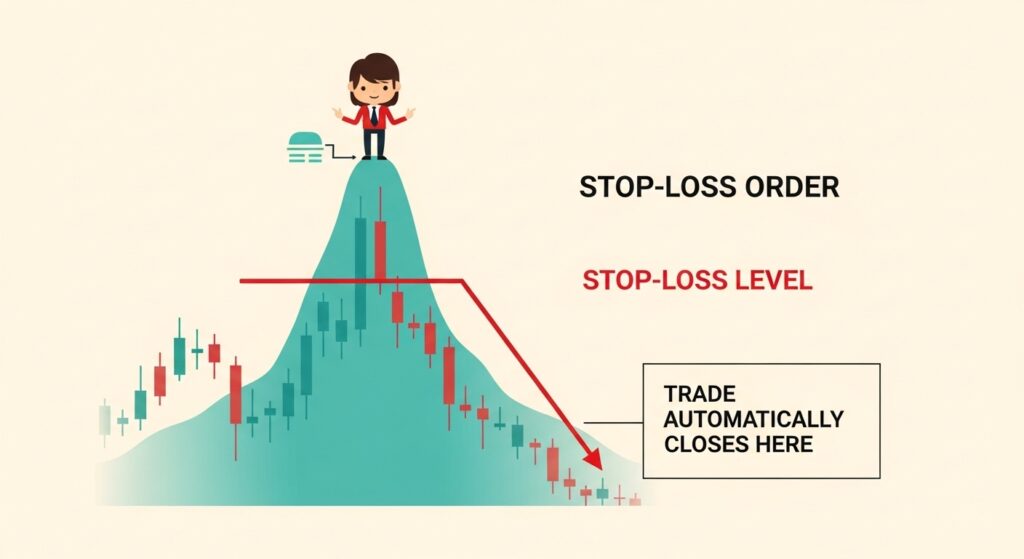
A stop-loss is an order that automatically closes your trade if price moves against you by a specified amount. Use one on every trade. No exceptions.
The mistake beginners make is moving the stop further away when a trade goes against them, hoping price will come back. It usually doesn’t. That’s how a $100 loss becomes a $500 loss becomes a margin call.
Set the stop based on logic — below recent support for a long, above recent resistance for a short. Then leave it alone. The whole point is to take the decision out of your hands when emotions are running highest — which is why this ranks among the most important currency trading tips you’ll ever follow
8. Don’t Overuse Leverage
Your broker may offer 100:1, 200:1, or even 500:1 leverage. That doesn’t mean you should use it.
Leverage magnifies both gains and losses. At 100:1, a 1% adverse move on a fully leveraged position wipes out your account. New traders are drawn to high leverage because it lets small accounts feel like big accounts. Experienced traders see it as the fastest way to lose everything.
Keep your effective leverage low. Most retail traders should use 10:1 or 20:1 maximum, even when more is available. The goal isn’t to feel powerful. The goal is to still be trading next year.
Currency Trading Tips for Mindset and Discipline
9. Keep a Trading Journal
Every trade you take should be logged: the pair, the direction, your entry, your stop, your target, your reason for the trade, and the outcome. Review the journal weekly.
Without a journal, you’ll keep making the same mistakes without seeing the pattern. With one, you’ll start noticing things — that you lose more on Mondays, that your best trades come after London open, that pin bars at resistance work for you but trendline breaks don’t. The journal is where edge gets built — and where most other currency trading tips finally start to make sense in your own trading
10. Manage Your Emotions
This is the tip beginners dismiss and experienced traders rank as the most important.
Trading psychology is what separates traders who last from traders who blow up. Fear after a losing streak. Greed after a winning one. Revenge trading. Overconfidence. The version of you sitting at the screen after three losses in a row is not the version of you who wrote the trading plan in calm conditions. The plan exists for that exact moment.
If you find yourself wanting to deviate from your rules, walk away from the screen. Take an hour, a day, a week if you need it. The market will still be there. Your account might not be if you push through emotions and force a trade that violates your plan.
These currency trading tips won’t make you rich. Nothing in trading does that quickly or reliably. What they will do is keep you in the game long enough to actually learn how to trade — which is the only thing that ultimately matters.
The currency trading tips that work all come down to the same things — patience, discipline, and the willingness to learn from losses. Forex rewards those qualities and punishes everything else
Disclaimer: Forex trading involves substantial risk of loss and isn’t suitable for everyone. The information here is for educational purposes only and shouldn’t be taken as investment advice. Past performance doesn’t predict future results. Never trade with money you can’t afford to lose.