Every successful forex trader started the same way—making mistakes, learning from losses, and gradually developing the skills needed for consistent profitability. The question is: do you want to learn these expensive lessons with real money or with virtual funds that cost you nothing?
Forex demo trading provides a risk-free environment where you can practice trading strategies, test platforms, develop discipline, and gain experience without risking a single dollar of your own capital. Demo accounts replicate real market conditions using live price feeds, allowing you to experience actual trading conditions while your account balance remains purely virtual.
Yet despite this obvious advantage, many traders skip demo trading entirely or use it incorrectly. Some jump straight to live trading, convinced they’ll be more focused with real money at stake. Others treat demo accounts as games, taking unrealistic risks they’d never take with actual funds. Both approaches lead to predictable failure and unnecessary losses.
This comprehensive guide shows you exactly how to use forex demo trading effectively. You’ll learn how to select the right demo account, what to practice during your demo phase, how long to demo trade before going live, and most importantly, how to ensure your demo experience translates into real-world success.
A forex demo account is a practice trading account provided by brokers that allows you to trade with virtual money in real market conditions. Demo accounts use actual live price feeds from the forex market, so the currency pairs move exactly as they do in real trading. The only difference is that your capital and profits/losses exist only on paper.
How Demo Accounts Work
When you open a demo account, the broker provides you with virtual capital—typically $10,000 to $100,000 depending on the broker and your preferences. You can then:
Place buy and sell orders on currency pairs
Use all the same order types available in live trading (market orders, limit orders, stop orders)
Access the full trading platform with all features and tools
Practice risk management by setting stop-losses and take-profits
Execute trades during actual market hours when real price movements occur
Test trading strategies under genuine market conditions
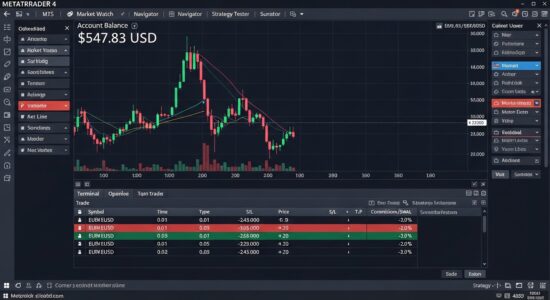
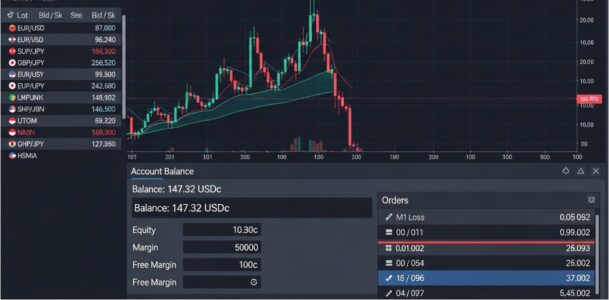
Your demo account tracks your performance just like a real account, showing your balance, equity, profit/loss, and trading history. The platform looks and functions identically to live trading—the only difference is the absence of real financial risk.
Demo vs. Live Trading: Key Differences
While demo accounts closely simulate real trading, several important differences exist:
Execution Speed: Demo orders typically fill instantly at the displayed price. Live trading may involve slight delays (milliseconds) and occasional slippage, especially during high-volatility periods.
Psychological Pressure: Demo trading involves zero emotional stress. You feel nothing when you lose $500 in virtual money. Losing $500 of real savings creates genuine anxiety that affects decision-making.
Spread Variations: Some brokers offer slightly tighter spreads on demo accounts than on live accounts, making demo trading appear more profitable than it actually is.
Order Rejection: Demo accounts rarely reject orders. Live trading occasionally experiences rejected orders during extreme volatility or when liquidity is insufficient.
Overnight Fees: While demo accounts typically show swap fees (interest charged or earned for holding positions overnight), you don’t actually pay these costs since no real money is involved.
Despite these differences, demo trading remains the most effective way to learn forex trading basics and develop foundational skills before risking capital.
According to the National Futures Association , practicing with demo accounts is a recommended step for anyone new to forex trading.
The Commodity Futures Trading Commission emphasizes that understanding how to trade before committing real money significantly improves the likelihood of success.
Why Demo Trading Is Essential
Demo trading isn’t optional for beginners—it’s a mandatory phase that separates those who succeed from those who donate their savings to the market.
Learn Platform Navigation Without Pressure
Modern trading platforms like MetaTrader 4, MetaTrader 5, and cTrader offer powerful features, but they require familiarity to use effectively. You need to know how to:
Calculate position sizes based on your risk parameters
Close positions partially or completely
Making mistakes while learning these basics costs nothing on a demo account. On a live account, clicking the wrong button can result in unintended trades, missed exits, or positions opened at the wrong size—all of which cost real money.
Test Trading Strategies Risk-Free
Every trading strategy requires testing before implementation. A strategy might look perfect on paper but fail completely in actual market conditions. Demo accounts let you:
Test entry and exit rules to see if they produce consistent profits
Determine the optimal timeframes for your strategy
Identify which currency pairs work best with your approach
Measure actual win rate and risk-reward ratios
Discover the strategy’s maximum drawdown
Gathering this data on a demo account costs nothing. Testing an unproven strategy with real money can drain your account before you realize the approach doesn’t work.
Develop Discipline and Routine
Successful trading requires disciplined execution of a proven plan. Demo trading helps you establish:
The discipline to follow stop-losses even when you “feel” the market will reverse
Patience to wait for high-probability setups rather than forcing trades
Proper position sizing based on risk management rules
Regular review habits that drive continuous improvement
These behavioral patterns must become automatic. Demo trading provides the repetitions needed to build these habits without the emotional interference that real money creates.
Build Confidence Before Risking Capital
Confidence comes from demonstrated competence. When you’ve executed 100 successful trades on a demo account following your trading plan, you know you can do it. This confidence remains when you transition to live trading.
Without this foundation, doubt creeps in during your first losing streak. You question your strategy, abandon your plan, and start searching for a “better” approach—a cycle that prevents consistent profitability.
The Financial Conduct Authority notes that proper preparation, including demo trading, is an important step before risking real capital.
Choosing the Right Demo Account
Not all demo accounts are created equal. Selecting the right one ensures your practice experience translates to live trading success.
Broker Selection Criteria
Choose a demo account from a broker you might actually use for live trading. This ensures:
Platform Familiarity: You learn the exact platform you’ll use live, so no re-learning is required when you transition.
Realistic Conditions: The spreads, execution speed, and trading conditions should mirror what you’ll experience with real money.
Proper Regulation: Use demos from regulated brokers only. If they offer questionable demo conditions, their live conditions are likely worse.
Top regulated brokers offering quality demo accounts include those regulated by: US: CFTC and NFA * UK: Financial Conduct Authority (FCA) * Australia: ASIC (https://asic.gov.au) * Europe: CySEC
Demo Account Features to Look For
Realistic Starting Balance: Choose a demo balance similar to what you’ll actually deposit live. If you plan to start with $1,000, don’t practice with a $100,000 demo account. The psychology and position sizing differ dramatically.
Live Price Feeds: Ensure the demo uses real-time market prices, not delayed or simulated data.
Full Platform Access: The demo should provide access to all features available on live accounts—charting tools, indicators, order types, and analysis capabilities.
Sufficient Duration: Some demos expire after 30 days. Look for brokers offering extended or renewable demo accounts so you can practice as long as needed.
Mobile App Access: If you plan to trade or monitor positions from your phone, ensure the demo includes mobile platform access.
Platform Options
MetaTrader 4 (MT4): The most popular forex platform globally. Excellent for beginners due to its straightforward interface and extensive educational resources available online.
MetaTrader 5 (MT5): MT4’s successor with more timeframes, order types, and asset classes. Slightly more complex but more powerful.
cTrader: Modern, intuitive platform preferred by many traders for its clean interface and advanced order features.
Proprietary Platforms: Some brokers offer their own platforms. These can be excellent but ensure adequate educational resources exist to learn them.
How to Use Demo Accounts Effectively
Most traders waste their demo trading phase. They either quit too soon or practice incorrectly. Follow this systematic approach to maximize the value of your demo experience.
Set Clear Learning Objectives
Define what you want to accomplish during demo trading:
Phase 1 (Week 1-2): Platform Mastery
Learn to place all order types without hesitation
Navigate charts smoothly across timeframes and pairs
Apply indicators and drawing tools confidently
Calculate position sizes quickly and accurately
Phase 2 (Week 3-4): Strategy Development
Choose one trading strategy to master
Define entry rules, exit rules, and risk parameters
Execute 20-30 trades following the strategy precisely
Track results in a trading journal
Phase 3 (Week 5-8): Consistency Building
Execute 50-100 more trades using your strategy
Maintain strict adherence to your trading plan
Achieve consistent profitability over this period
Refine strategy based on journal analysis
Treat Demo Trading Like Real Trading
The biggest demo trading mistake is treating it like a game. This creates habits that destroy live trading accounts:
Don’t:
Risk 20% per trade because “it’s not real money”
Trade every currency pair simultaneously without focus
Enter trades randomly to “see what happens”
Ignore stop-losses or move them to avoid losses
Trade during work hours when you couldn’t trade live
Do:
Risk only 1-2% per trade as you will live
Focus on 1-3 currency pairs you’ll trade live
Enter trades only when your strategy signals
Always use stop-losses and honor them
Trade only during hours when you’ll actually be available live
Track Your Performance Meticulously
Keep a detailed trading journal documenting every demo trade:
For Each Trade Record:
Date and time
Currency pair
Direction (long/short)
Entry price and time
Stop-loss and take-profit levels
Position size and risk amount
Trade rationale (why you entered)
Exit price and result
Lessons learned
After 20-30 trades, analyze your journal for patterns:
Which setups produce the best results?
What mistakes do you repeat?
Are you following your plan consistently?
Is your strategy profitable overall?
This data-driven approach transforms demo trading from aimless practice into systematic skill development.
Position Sizing: Calculate position size for every trade based on your stop-loss distance and risk percentage. Use this formula:
Position Size = (Account Balance × Risk %) ÷ (Stop Distance in Pips × Pip Value)
Maximum Risk Per Trade: Never risk more than 1-2% of your demo account per trade, even though it’s virtual money.
Daily/Weekly Loss Limits: Set maximum drawdown limits. If you lose 3-5% of your account in a day or 10% in a week, stop trading and review what went wrong.
Risk-Reward Ratios: Only take trades offering at least 1:2 risk-reward (risking $100 to make $200 minimum). Track your actual achieved ratios.
These habits must become automatic. If you don’t practice them on demo, you won’t execute them live when real money creates emotional pressure.
Common Demo Trading Mistakes
Avoid these errors that undermine the value of demo trading:
Mistake 1: Skipping Demo Trading Entirely
The Error: Opening a live account immediately because “demo isn’t real, so I won’t learn anything meaningful.”
Why It’s Wrong: Demo trading teaches essential skills—platform navigation, order execution, basic strategy implementation, and performance tracking. Without these foundations, you’ll make expensive mistakes with real money.
The Solution: Complete at least 50-100 demo trades before risking real capital. This minimum provides enough repetitions to build basic competence.
Mistake 2: Using Unrealistic Demo Balances
The Error: Practicing with a $100,000 demo account when you plan to start with $1,000 live.
Why It’s Wrong: Position sizing, risk perception, and profit expectations differ dramatically at different account sizes. A 1% risk on $100,000 is $1,000—on $1,000 it’s $10. The psychology and trading approach must match your actual situation.
The Solution: Set your demo balance to match (or be slightly larger than) your planned live deposit. If starting with $2,000 live, use a $2,000-$5,000 demo.
Mistake 3: Not Taking Demo Seriously
The Error: Taking huge risks, ignoring stop-losses, over-trading, and treating demo like a game because losses don’t hurt.
Why It’s Wrong: You build whatever habits you practice. Reckless demo trading creates reckless habits that persist when you go live.
The Solution: Create and follow a written trading plan during demo. Execute trades exactly as you would with real money. Build disciplined habits from day one.
Mistake 4: Demo Trading Too Long
The Error: Staying on demo for 6-12 months because you’re “not ready yet” or because you’re comfortable with risk-free trading.
Why It’s Wrong: Demo trading cannot replicate the emotional pressure of real money. At some point, you must experience live trading to develop complete skills. Excessive demo time can create paralysis and unrealistic expectations.
The Solution: Transition to live trading after 2-3 months of demo (or 100+ trades) if you’re consistently profitable and following your plan. Start with the minimum deposit amount to keep emotional pressure manageable.
Mistake 5: Quitting After Initial Success
The Error: Making money on your first 10 demo trades and immediately opening a live account, assuming you’ve “figured it out.”
Why It’s Wrong: Ten trades prove nothing. Random variance can produce winning streaks that don’t reflect skill. Real competence requires sustained performance over many trades.
The Solution: Execute minimum 50-100 trades before evaluating true performance. Track your statistics (win rate, risk-reward, maximum drawdown) over this larger sample to verify consistent profitability.
When to Transition from Demo to Live
The transition from demo to live trading represents a critical juncture. Move too soon and you’ll lose money unnecessarily. Wait too long and you’ll delay learning the emotional aspects of real trading.
Readiness Indicators
Consider transitioning to live trading when you can honestly answer “yes” to these questions:
Platform Competence:
Can you execute all order types quickly and accurately?
Do you understand how to calculate position sizes for your risk level?
Can you navigate the platform without hesitation?
Strategy Confidence:
Have you executed 100+ trades using one consistent strategy?
Is your strategy profitable over this sample (positive expectancy)?
Can you identify high-probability setups quickly?
Discipline:
Have you followed your trading plan on every single demo trade?
Do you use stop-losses on 100% of trades without exception?
Can you resist the urge to enter trades outside your strategy?
Performance:
Are you consistently profitable over your last 50 trades?
Is your win rate and risk-reward ratio meeting your strategy’s targets?
Have you experienced a losing streak and recovered without changing your approach?
If you answered “yes” to all questions, you’re likely ready to begin live trading with a small account.
Starting Live Trading Correctly
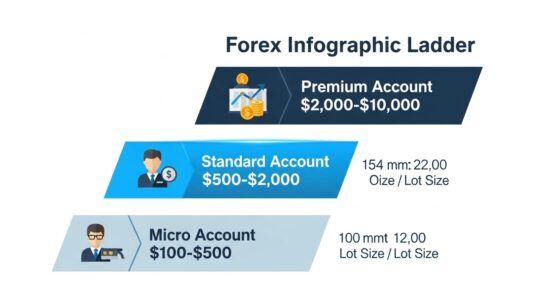
Use Minimum Deposits: Start with the smallest deposit the broker allows—typically $100-$500. This keeps emotional pressure manageable while you adapt to real money trading.
Reduce Position Size Initially: For your first 10-20 live trades, risk only 0.5% per trade instead of your planned 1-2%. This eases the psychological transition.
Continue Journaling: Maintain the same detailed trade journal you used during demo. Track not just trade data but also emotional states and psychological observations.
Expect Performance Decline: Your first live trades will likely be less profitable than demo despite using the same strategy. This is normal—the added emotional pressure affects decision-making. Give yourself time to adjust.
Review Regularly: After your first 20-30 live trades, analyze your journal. Are you following your plan? How is your actual performance comparing to demo? What adjustments might help?
Managing the Psychological Shift
The transition from demo to live trading introduces new psychological challenges:
Fear and Hesitation: You may hesitate to enter valid setups because “this time it’s real money.” Counter this by starting with very small positions and reminding yourself that your strategy has proven profitable.
Overexcitement from Wins: Small wins with real money feel more significant than large demo wins. Don’t let this excitement cause overconfidence or abandonment of risk rules.
Despair from Losses: Your first real loss hurts more than expected. Prepare for this emotionally and remember that losses are normal and expected in your strategy.
Urge to Prove Yourself: You may feel pressure to make money quickly to justify the transition. Resist this pressure and maintain your systematic approach.
Building Your Demo Trading Plan
Create a structured plan for your demo trading phase to ensure you develop all necessary skills.
Your 8-Week Demo Trading Program
Weeks 1-2: Platform and Basics
Goals:
Master platform navigation and order execution
Learn to calculate position sizes
Understand how spreads and pip values work
Execute 20 trades focusing on execution quality, not profitability
Daily Activities:
30 minutes: Platform practice (placing orders, modifying positions, using tools)
30 minutes: Execute 1-2 trades following basic trend-following rules
15 minutes: Journal your trades and note lessons
Weeks 3-4: Strategy Selection and Initial Testing
Goals:
Choose one specific trading strategy to master
Define clear entry and exit rules
Execute 30 trades using this strategy consistently
Begin tracking win rate and risk-reward metrics
Daily Activities:
15 minutes: Review strategy rules before trading
45 minutes: Identify setups and execute trades following strategy precisely
20 minutes: Journal trades and analyze adherence to plan
Weeks 5-6: Consistency and Refinement
Goals:
Execute 40 more trades with perfect plan adherence
Achieve positive overall profitability
Identify strategy strengths and weaknesses through journal analysis
60 minutes: Trading session following strategy rules
30 minutes: Trade review and journal analysis
Weeks 7-8: Performance Validation
Goals:
Execute final 30 trades demonstrating consistent profitability
Prove you can follow your plan even after losses
Calculate final statistics (win rate, average risk-reward, maximum drawdown)
Make go/no-go decision on transitioning to live trading
Daily Activities:
15 minutes: Pre-market routine
60 minutes: Trading session
30 minutes: Performance tracking and plan refinement
Weekly Review Process
Every weekend, conduct a comprehensive review:
Calculate Weekly Statistics:
Total trades taken
Win rate percentage
Average win vs. average loss
Total profit/loss
Largest win and largest loss
Analyze Adherence:
Percentage of trades following plan exactly
Common rule violations
Patterns in mistakes
Identify Improvements:
What went well this week?
What needs improvement?
One specific goal for next week
Update Trading Plan:
Make any data-driven strategy refinements
Adjust risk parameters if needed
Set specific targets for next week
Forex demo trading isn’t a waste of time—it’s the foundation that determines whether you’ll join the small percentage of profitable traders or the majority who lose money and quit.
The key to effective demo trading is treating it seriously. Use realistic account balances, risk only 1-2% per trade, follow a written trading plan, and journal every trade meticulously. Build the habits during demo that you’ll need for live trading success.
Plan on 2-3 months of focused demo trading with 100+ trades executed following a consistent strategy. This timeline provides enough repetitions to develop competence, prove your strategy’s profitability, and build confidence without excessive delay.
When you transition to live trading, start small—minimum deposits and reduced position sizes. Expect your performance to temporarily decline as you adjust to the psychological pressure of real money. Continue journaling, reviewing, and refining your approach based on data rather than emotions.
Remember that every professional trader spent time on demo accounts developing their skills. This phase isn’t a barrier to overcome quickly—it’s an investment in your long-term success. The money you don’t lose while practicing on demo is money saved for profitable trading later.
Approach demo trading systematically, learn the lessons it offers, and transition to live trading only when you’ve proven consistent profitability and disciplined execution. Your future trading account will thank you.