Learn How to Make Fast Money by Learning diffrent Strategies in Forex Trading and Different Investment Options
IRA to Gold Rollover: Complete Benefits Guide
Last Updated:— April 2026
With inflation persistent and stock markets volatile, more retirement investors are asking whether IRA to gold rollover makes sense. Rolling over your traditional IRA or 401(k) into a Gold IRA lets you hold physical precious metals while keeping your tax advantages intact. This guide covers the benefits, costs, process, and what you need to know before making the move
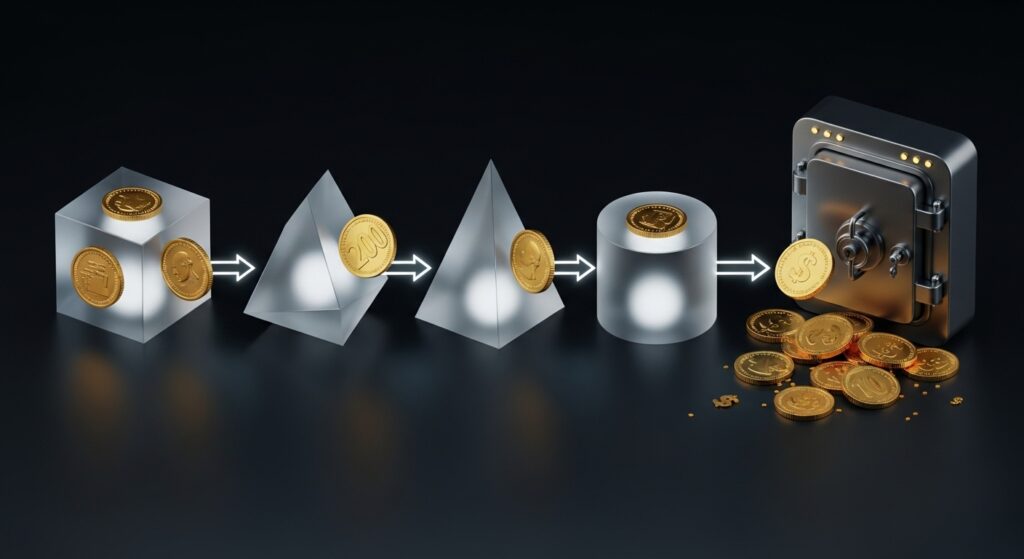
IRA to Gold Rollover is transfering funds from an existing retirement account (Traditional IRA, Roth IRA, 401(k), 403(b), TSP) into a self-directed IRA that holds IRS-approved physical gold, silver, platinum, or palladium.
Key points:
Your gold is held by an IRS-approved custodian
Stored in an IRS-approved depository
You don’t take physical possession (until retirement)
Maintains tax-advantaged status
No taxes or penalties if done correctly
Types of rollovers:
Direct rollover: Funds transfer directly between custodians (recommended)
Indirect rollover: You receive funds, must redeposit within 60 days (risky)
Benefits of IRA to Gold Rollover
1. Inflation Protection
The problem:
Cash loses purchasing power over time
$100,000 today might buy what $50,000 bought 20 years ago
Gold’s track record:
Historically maintained purchasing power
Often rises when dollar weakens
Protected wealth through multiple economic crises
Example:
2000: Gold at $280/oz
2025: Gold at $2,000+/oz
600%+ increase over 25 years
Traditional savings/bonds haven’t kept pace.
2. Portfolio Diversification
Traditional IRA holdings:
60% stocks
30% bonds
10% cash
Problem: All denominated in dollars, all paper assets
2008 financial crisis: Gold rose while stocks fell 50%
2020 COVID crash: Gold hit all-time highs
2022 inflation spike: Gold outperformed bonds
Gold = hedge against stock market downturns
4. Currency Devaluation Hedge
Federal Reserve actions:
Printed trillions since 2008
More money in system = each dollar worth less
National debt over $35 trillion
Gold benefits:
Can’t be printed or created
Limited supply
Global demand
Maintains value when currencies weaken
When faith in dollar declines, gold value rises
5. Geopolitical Crisis Protection
Gold thrives during uncertainty:
Wars (Ukraine, Middle East)
Political instability
Banking crises
Trade conflicts
Historical safe-haven asset
Reason: Physical gold has intrinsic value regardless of government stability
6. No Counterparty Risk
Traditional retirement assets:
Stocks: Company could go bankrupt
Bonds: Government/company could default
Bank accounts: Bank could fail
Physical gold:
No company backing it
Can’t go bankrupt
Can’t be hacked
No counterparty required
Gold IS the asset (not a claim on an asset)
7. Tax Advantages Maintained
Traditional IRA to GoldRollover
Tax-deferred growth
No taxes until withdrawal
Pre-tax contributions deductible
Roth IRA to Gold Roth IRA:
Tax-free growth
Tax-free withdrawals in retirement
After-tax contributions
401(k) to Gold IRA:
Can rollover after leaving job
Maintains tax-deferred status
No tax on rollover itself
No tax penalty if done correctly
8. Physical Asset Ownership
Unlike gold ETFs or mining stocks:
You own specific bars/coins
Allocated storage (not pooled)
Can request delivery at retirement
Real, tangible wealth
Your gold, your ownership, in your name
9. Estate Planning Benefits
Gold IRA passes to beneficiaries:
Clear inheritance
Potentially tax-free (Roth)
Physical asset to pass down
Wealth preservation across generations
Better than paper assets that could become worthless
10. Forced Savings Discipline
IRA structure prevents:
Impulse selling
Emotional decisions
Early cashing out (penalty discourages it)
Forces long-term holding = benefits from gold’s appreciation
Who Should Consider IRA To Gold Rollover?
Ideal Candidates:
Age 50+ approaching retirement Conservative investors seeking stability Inflation-concerned individuals Large IRA balances ($50,000+) Diversification seekers Crisis-preparers
May Not Be Suitable For:
Young investors (20s-30s) with high risk tolerance Small IRA balances (under $25,000) – fees eat returns Those needing immediate liquidity Individuals who don’t understand gold markets
Gold IRAs work best as part of diversified retirement strategy, not entire portfolio
How to Rollover IRA to Gold
Step 1: Choose a Gold IRA Custodian
Not all custodians offer IRA to Gold Rollover. Need self-directed IRA specialist.
Reputable IRA to Gold Rollover Companies:
1. Goldco
A+ BBB rating
Low fees
Excellent customer service
Buyback guarantee
2. Augusta Precious Metals
Highly rated
Transparent pricing
Educational focus
Lifetime support
3. American Hartford Gold
No fees for qualifying accounts
Price match guarantee
A+ BBB rating
4. Birch Gold Group
20+ years experience
Competitive pricing
Strong reputation
5. Noble Gold
Texas-based
Good for smaller accounts
Solid customer reviews
What to compare:
Setup fees
Annual fees
Storage fees
Buyback programs
Customer service
Reputation (BBB, Trustpilot)
Step 2: Open Self-Directed IRA
Process:
Contact chosen custodian
Complete application
Provide identification
Choose IRA type (Traditional, Roth, SEP)
Designate beneficiaries
Time: 1-2 days
Fees: $50-300 setup fee (often waived for larger accounts)
Step 3: Fund Your Gold IRA
Three methods:
A. Direct Rollover (Recommended)
Custodian-to-custodian transfer
No taxes
No penalties
No 60-day deadline
Safest method
B. Indirect Rollover
You receive check
Must deposit within 60 days
Risk of taxes/penalties if missed
Limited to once per year
NOT recommended
C. Transfer
From one IRA to another (same type)
No tax implications
Unlimited transfers
Simple process
Choose direct rollover for safety
Step 4: Select Your Metals
IRS-Approved Gold:
American Gold Eagle
Canadian Gold Maple Leaf
Austrian Gold Philharmonic
Australian Gold Kangaroo
Gold bars (99.5% minimum purity) from approved refiners
IRS-Approved Silver:
American Silver Eagle
Canadian Silver Maple Leaf
Austrian Silver Philharmonic
Bars (99.9% minimum purity)
Also eligible:
Platinum (99.95% pure)
Palladium (99.95% pure)
NOT eligible:
Jewelry
Collectible coins
Gold under 99.5% purity (except American Eagles)
Krugerrands (91.67% pure) – NOT IRA-approved
Recommendation for beginners:
70-80% gold
20-30% silver
Mix of coins and bars
Your custodian will guide you on approved options
Step 5: Purchase and Store
Purchase:
Custodian executes purchase
You review and approve pricing
Metals purchased from IRS-approved dealers
Typically 2-5% premium over spot price
Storage:
Must be IRS-approved depository
Popular depositories:
Delaware Depository (Wilmington, DE)
Brink’s Global Services
International Depository Services (IDS)
Storage types:
Segregated: Your metals stored separately (recommended)
Non-segregated: Pooled with others (slightly cheaper)
You cannot store IRA gold at home (results in taxable distribution)
Step 6: Maintain Account
Ongoing responsibilities:
Pay annual fees (custodian + storage)
Receive quarterly statements
Monitor gold prices (optional)
Take Required Minimum Distributions at 73
That’s it – your IRA to gold rollover is set up and working
You have $50,000+ to rollover You’re 50+ years old You’re concerned about inflation You want portfolio diversification You understand long-term holding (10+ years) You have other liquid assets You’re comfortable with fees
You SHOULD NOT do IRA To Gold Rollover if:
Account under $25,000 (fees too high %) You need immediate liquidity You’re under 35 with high risk tolerance You can’t afford annual fees You want to trade frequently You don’t understand gold markets You expect quick profits
IRA To Gold Rollover is long-term wealth preservation, not short-term speculation
Action Steps
If You’re Interested:
Step 1: Calculate your ideal gold allocation (10-20% of retirement portfolio)
Step 2: Research 3-5 Gold IRA companies
Check BBB ratings
Read customer reviews
Compare fee structures
Step 3: Request free information kits from top choices
Step 4: Schedule consultations (no obligation)
Step 5: Compare offers and choose best fit
Step 6: Initiate rollover process
Timeline: 2-4 weeks from decision to funded Gold IRA
If You’re Unsure:
Option A: Start with Gold ETF in existing IRA
Test gold exposure
See how you feel about price movements
Evaluate over 6-12 months
Option B: Buy small amount of physical gold personally
Remember: IRA to gold rollover is a powerful wealth preservation strategy when used correctly. It’s not about getting rich quick—it’s about protecting what you’ve already earned from inflation, market crashes, and economic uncertainty. If you have substantial retirement savings and want to diversify into physical assets, IRA to gold rollover can provide peace of mind and portfolio protection. Take your time, do thorough research, compare multiple companies, and make the decision that’s right for your retirement goals.