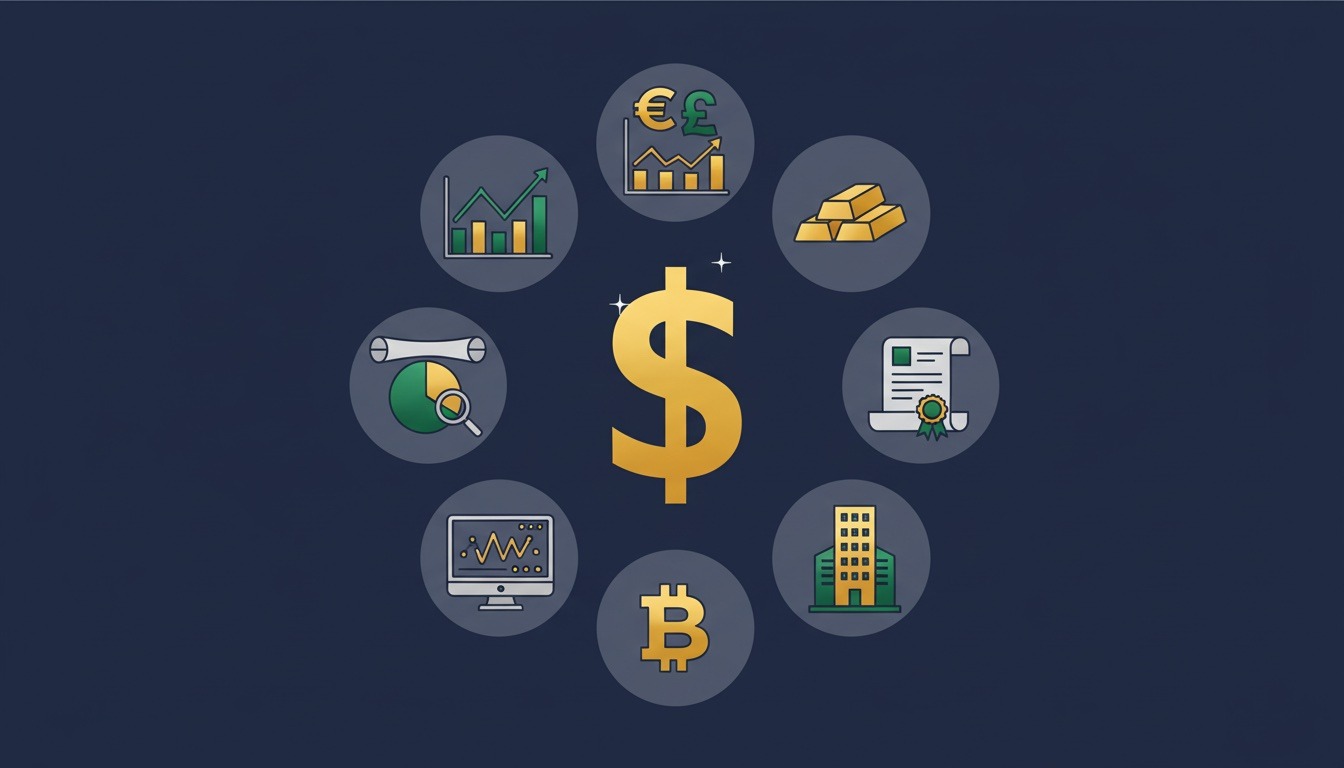
Learning how to invest with little money is one of the most important financial skills you can develop. The good news is you do not need thousands of dollars to get started. Thanks to modern investing platforms, fractional shares, commission-free brokers, and micro-investing apps, you can begin building wealth with as little as $20 — and grow from there.
This guide walks you through exactly how to invest with little money at every level, from your first $20 all the way to $1,000 and beyond.

Why Starting Small Still Matters
The biggest investing mistake most people make is waiting until they have “enough” money to start. The truth is, time in the market matters far more than the amount you invest. Thanks to compound interest, even small amounts grow significantly over decades.
Consider this: if you invest $1,000 today and add $1,000 per year at a 10% average annual return, after 40 years you would have over $530,000. Starting just 10 years later cuts that number nearly in half — not because you invested less money, but because you had less time.
The lesson: start now with whatever you have.
How to Invest With Little Money: By Amount
How to Invest $20
Twenty dollars is enough to get started. Here are the best options:
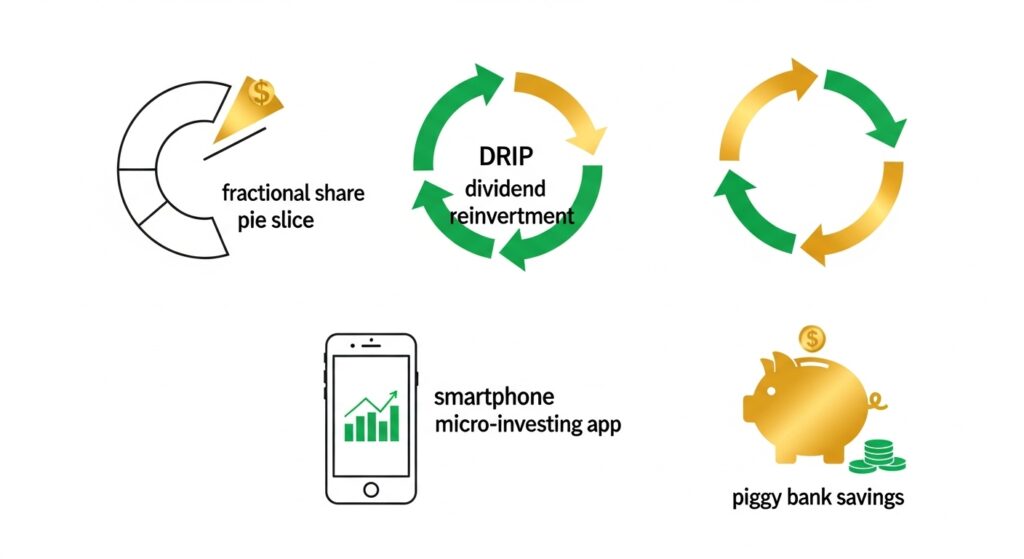
Fractional Shares Most major brokers — including Fidelity, Charles Schwab, and Robinhood — now offer fractional shares, meaning you can buy a slice of a high-priced stock like Apple, Amazon, or Google with as little as $1. With $20 you can own a small piece of multiple companies and begin building a diversified portfolio immediately.
Dividend Reinvestment Plans (DRIPs) Over 1,000 major companies offer DRIPs, which allow you to buy stock directly from the company — bypassing brokers and their fees. Many are free or charge minimal fees, making them ideal for investing as little as $20 to $30 at a time. DRIPs also allow automatic reinvestment of dividends, compounding your returns over time.
Micro-Investing Apps Apps like Acorns round up your everyday purchases to the nearest dollar and invest the difference automatically. With $20 you can open an account and start building a diversified portfolio of ETFs without any manual effort.
High-Yield Savings Account If you are not yet comfortable investing in markets, parking your $20 in a high-yield savings account earns significantly more interest than a traditional bank account while keeping your money safe and accessible.
How to Invest $100

With $100, your options expand meaningfully.
Index Funds An index fund that tracks the S&P 500 gives you instant exposure to 500 of America’s largest companies in a single investment. Historically, the S&P 500 has returned approximately 10% per year on average over long periods. Many index funds now have no minimum investment requirement — you can get started with $100 or less.
Index funds have extremely low expense ratios (often 0.03%–0.20%), meaning almost all of your returns stay in your pocket rather than going to fund managers. The U.S. Securities and Exchange Commission has educational resources on understanding mutual funds and ETFs to help you evaluate your options.
Exchange-Traded Funds (ETFs) ETFs trade like stocks on an exchange and typically track an index, sector, or commodity. With $100 you can buy shares of broad market ETFs, bond ETFs, gold ETFs, or sector-specific funds. Commission-free trading has made ETFs extremely cost-effective for small investors.
Forex Trading The forex market allows you to start trading currencies with as little as $100 through a regulated broker. With leverage available to retail traders, $100 can control a much larger position — though this also amplifies risk. If you are new to forex, start with a demo account to practice before committing real capital. See our What Is Forex Trading: Complete Beginner’s Guide and our Forex Basics guide to get started.
Roth IRA If you have earned income, opening a Roth IRA is one of the smartest moves you can make with $100. Contributions grow completely tax-free, and qualified withdrawals in retirement are tax-free too. The 2026 IRA contribution limit is $7,500 — you can contribute any amount up to that limit, starting with as little as $100.
How to Invest $500
At $500, you have access to nearly every major investment category available to retail investors.
Discount Brokerage Account Opening a discount brokerage account with $500 gives you access to individual stocks, ETFs, index funds, bonds, and options. Focus on keeping your total investment costs — including brokerage fees — below 2% of the transaction value. Most major brokers now offer commission-free stock and ETF trades.
Dollar-Cost Averaging Rather than investing your $500 all at once, consider spreading it across several months through dollar-cost averaging — investing a fixed amount at regular intervals regardless of market conditions. This reduces the risk of investing a lump sum at a market peak and smooths out your average purchase price over time.
Gold and Precious Metals With $500 you can buy physical gold coins or bars, invest in gold ETFs, or open a position in XAU/USD through a forex broker. Gold has historically preserved purchasing power and performed strongly during periods of economic uncertainty. See our Gold Trading: Complete Guide to XAU/USD for a full breakdown of your options.
Cryptocurrency Major exchanges allow you to buy Bitcoin, Ethereum, and other cryptocurrencies with as little as $10. With $500 you can build a small but meaningful crypto position. Keep crypto to a modest allocation — typically no more than 5–10% of your total portfolio — given its volatility. Our Cryptocurrency Trading for Beginners guide covers how to get started safely.
How to Invest $1,000 and Beyond
With $1,000 or more, you can build a genuinely diversified portfolio across multiple asset classes.
Build a Core Portfolio A simple, effective portfolio for a beginning investor with $1,000 might look like this:
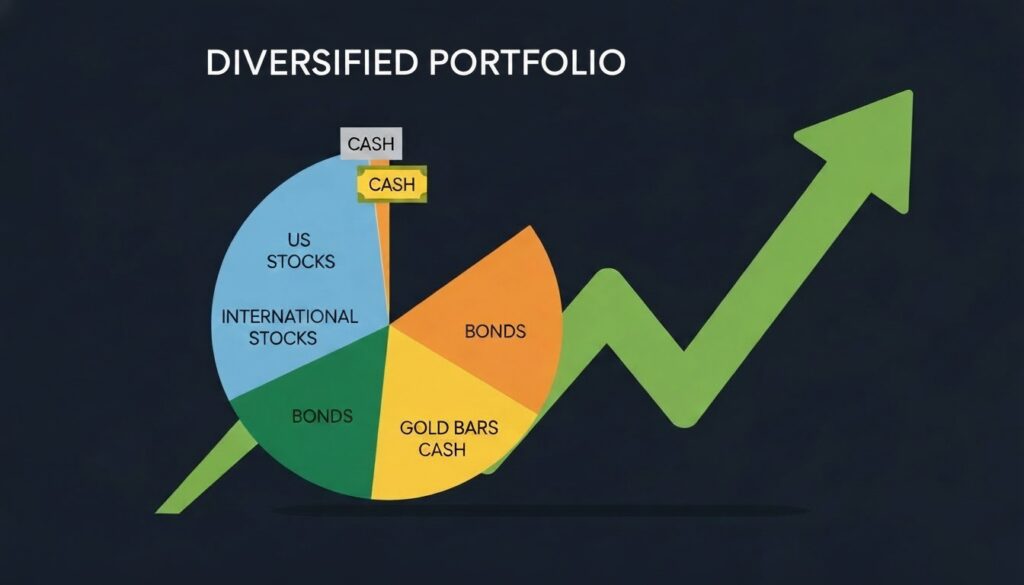
| Asset | Allocation | Amount |
|---|---|---|
| S&P 500 index fund | 50% | $500 |
| International stock ETF | 20% | $200 |
| Bond ETF | 15% | $150 |
| Gold ETF or physical gold | 10% | $100 |
| Cash / emergency reserve | 5% | $50 |
This gives you broad diversification across U.S. stocks, international markets, fixed income, and a safe-haven hedge — all with a single $1,000 investment.
Open a Roth IRA and Max It Out If you have not already, open a Roth IRA and work toward maximizing your contribution. In 2026, the limit is $7,500 per year ($8,600 if you are 50 or older). Every dollar you contribute to a Roth IRA grows completely tax-free. See our How to Invest for Retirement guide for a complete strategy.
Start Forex Trading with Proper Risk Management With $1,000 you can open a standard forex trading account and implement proper position sizing. The key rule: never risk more than 1–2% of your account on a single trade. At $1,000, that means risking no more than $10–$20 per trade. Our Forex Risk Management: Complete Guide covers everything you need to protect your capital while trading currencies.
Explore Alternative Investments With $1,000 you can also begin exploring alternative investments — real estate crowdfunding platforms, silver, commodities, and more. See our Alternative Investments guide for a full breakdown of options beyond stocks and bonds.
Key Rules for Investing With Little Money
No matter how much you are starting with, these principles apply:
1. Pay off high-interest debt first. A 20% credit card interest rate is a guaranteed -20% return on your money. Paying it off is the best investment you can make.
2. Build an emergency fund first. Before investing, have 3–6 months of living expenses in a liquid savings account. Investing money you might need in an emergency forces you to sell at the worst possible time.
3. Keep costs low. Fees compound just like returns — but in the wrong direction. Choose low-cost index funds and commission-free brokers.
4. Don’t try to time the market. Studies consistently show that investors who try to time the market earn significantly less than those who invest consistently over time. Morningstar research shows market-timers consistently underperform the funds they invest in.
5. Automate your investing. Set up automatic contributions — even $20 per week — so investing happens without relying on willpower. Automation is the single most effective habit for building long-term wealth.
6. Reinvest dividends. Always reinvest dividends rather than taking them as cash. Over decades, dividend reinvestment accounts for a significant portion of total investment returns.
What NOT to Do When Investing Small Amounts
- Don’t invest money you need in the next 12 months — short time horizons expose you to market volatility you cannot afford
- Don’t chase hot stocks or trends — by the time retail investors hear about a hot stock, the move has usually already happened
- Don’t over-diversify — with $100, owning 50 different positions makes no sense. A single broad index fund is better diversification than 50 individual stocks
- Don’t ignore tax-advantaged accounts — always maximize Roth IRA and 401(k) contributions before investing in taxable accounts
Final Thoughts
You do not need a lot of money to start investing — you need to start. Whether you have $20, $100, or $1,000, there is a strategy that fits your situation. The most important step is the first one.
As your savings grow, expand into additional asset classes — forex trading, gold, cryptocurrency, real estate — to build a genuinely diversified portfolio. Every major investor started exactly where you are now.
Explore our full Forex Education Hub and our Alternative Investments guide to keep building your knowledge and growing your wealth.