Learn How to Make Fast Money by Learning diffrent Strategies in Forex Trading and Different Investment Options
Different Investment Methods: A Complete Guide
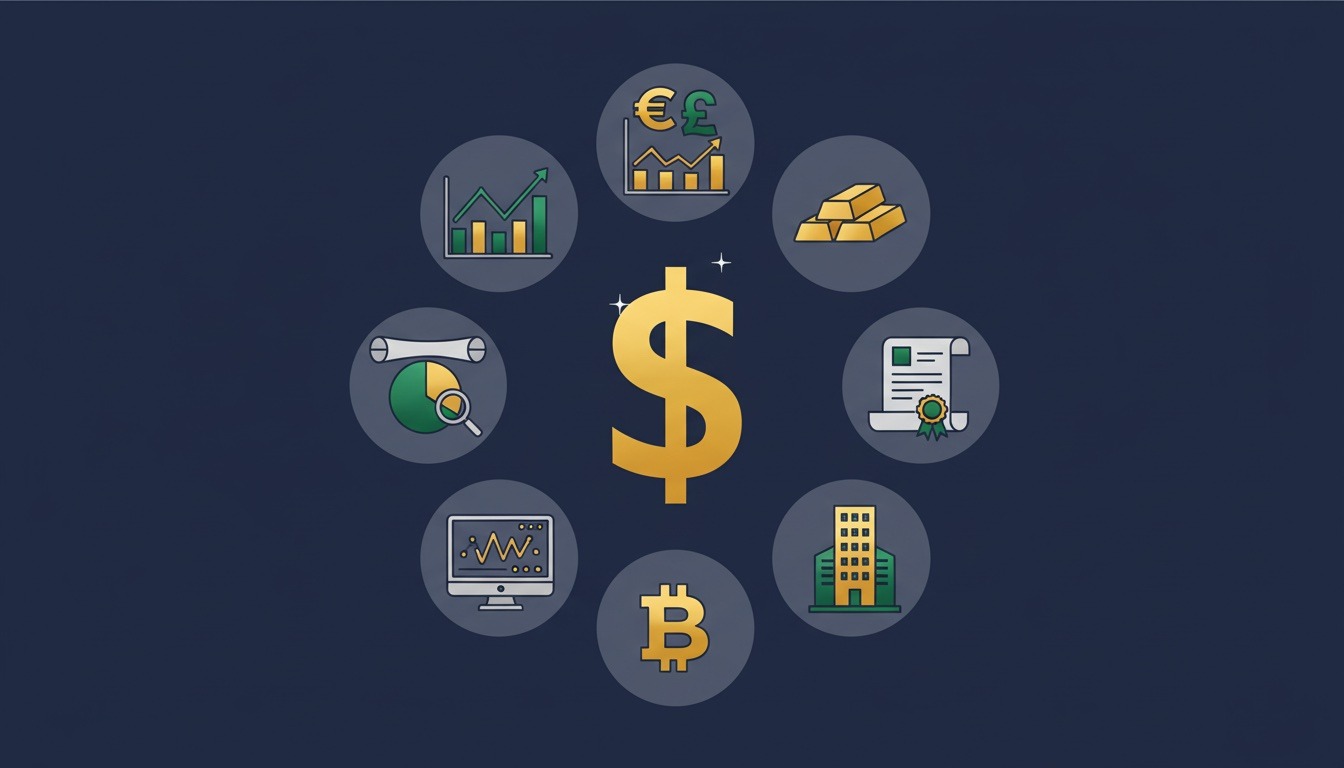
Understanding the range of investment methods available is the starting point for building long-term wealth. Whether you are working with $100 or $100,000, the right approach depends on your goals, risk tolerance, time horizon, and available capital. This guide covers every major investment method — from the world’s largest financial market to real estate, precious metals, and beyond.
The forex market runs 24 hours a day, five days a week, and never concentrates risk in a single company or sector. What moves prices here is macroeconomic data, central bank decisions, and geopolitical developments — the kind of information that is publicly available and analysable by any informed trader. Leverage of up to 50:1 is available to US retail traders, which amplifies both gains and losses, so position sizing and risk management matter enormously.
The forex market is regulated in major jurisdictions by the CFTC and NFA in the United States and the FCA in the United Kingdom. New to forex? Start with our Forex Education Hub for a complete learning path from beginner basics to advanced trading strategies.
Stocks
Buying shares means taking an ownership stake in a company. If the business grows in value, your shares grow with it, and many companies also pay dividends — regular cash distributions to shareholders — making stocks both a growth and income vehicle. The broad spectrum runs from blue-chip names like Apple and Microsoft with decades of track records, to growth companies reinvesting every dollar of profit into expansion, to dividend-paying businesses generating steady income, to speculative penny stocks at the far end of the risk scale. The SEC regulates stock markets in the United States, providing investor protections and disclosure requirements for all publicly listed companies.
Index Funds and ETFs
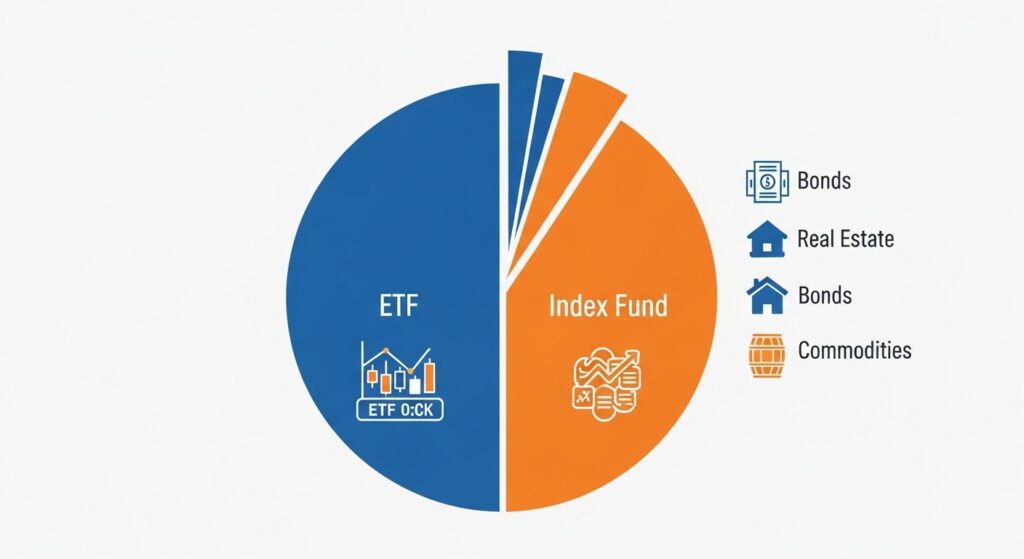
Rather than picking individual stocks, an index fund or ETF buys a slice of an entire market. A fund tracking the S&P 500 gives you exposure to 500 of America’s largest companies in a single purchase. The historical long-term return on broad market index funds has averaged around 10% per year, with expense ratios often below 0.10% — a fraction of what actively managed funds charge. ETFs trade on stock exchanges throughout the day like regular shares, adding intraday flexibility to the same diversification benefit. For most retail investors who do not want to spend hours analysing individual companies, a simple portfolio of low-cost index funds is one of the most effective long-term strategies available.
Gold and Precious Metals
Gold has functioned as a store of value for thousands of years, and recent market performance has reinforced that role. In 2025, gold surged over 60% to an all-time high above $5,500 per ounce, driven by central bank buying, geopolitical uncertainty, and de-dollarisation trends. Even after a correction in early 2026, it remained one of the strongest-performing assets over any 18-month window.
Investors access gold in several ways: physical bars and coins, gold ETFs like SPDR Gold Shares, Gold IRA accounts holding physical metal in a tax-advantaged retirement structure, or trading XAU/USD directly in the forex market. Gold functions as an inflation hedge, a safe-haven asset during market stress, and a portfolio diversifier with low correlation to equities. Silver shares similar characteristics with the added dimension of industrial demand. See our complete Gold Trading: XAU/USD guide and Silver Trading: XAG/USD guide for full breakdowns.
Mutual Funds
Mutual funds pool capital from many investors and put it to work across a diversified portfolio of stocks, bonds, or other assets under professional management. Trillions of dollars sit in mutual funds globally, and the variety of strategies is wide — growth, income, balanced, sector-specific, international. Unlike ETFs, mutual funds price once daily at net asset value rather than trading continuously throughout the day.
The main drawback of actively managed mutual funds is cost. Management fees can be significant and compound over time in a way that meaningfully erodes returns. Many investors find that low-cost index funds or ETFs deliver better net performance over the long run precisely because they do not carry that fee burden.
Bonds and Fixed Income
When you buy a bond, you are lending money to a government or corporation in exchange for regular interest payments and the return of your principal at maturity. Bonds carry lower risk than stocks as a general rule and provide predictable income — which is why they form the stability layer of most balanced portfolios.
The range of bond options covers U.S. Treasury bonds backed by the federal government, corporate bonds offering higher yields in exchange for credit risk, municipal bonds issued by local governments and often carrying tax advantages, and TIPS — Treasury Inflation-Protected Securities — whose principal adjusts upward with inflation. As investors approach retirement, shifting a greater portion of the portfolio toward bonds is a standard approach to reducing volatility and protecting accumulated capital. See our guide on how to invest for retirement for a full framework.
Real Estate
Real estate generates rental income, appreciates over time, provides a natural inflation hedge, and allows investors to use borrowed capital through mortgages — a combination that has built more long-term wealth than almost any other asset class. Direct ownership of residential or commercial property is the most common route, but it is far from the only one. REITs — Real Estate Investment Trusts — are publicly traded companies that own income-producing properties and can be bought with any amount of capital. Real estate crowdfunding platforms allow fractional investment in properties that would otherwise require far more capital to access directly. Fix-and-flip investing involves buying undervalued properties, renovating them, and selling for profit. Tax lien investing, where investors purchase tax liens from municipalities and earn returns when property owners settle their debts, can generate returns of 12–30% in some jurisdictions.
Cryptocurrency
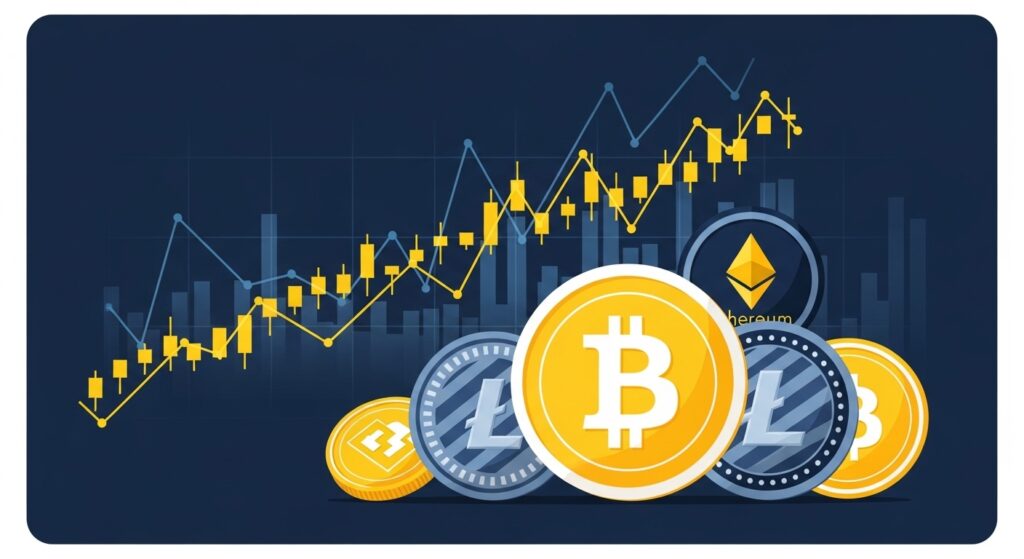
Cryptocurrency has moved from the margins of finance into the portfolios of institutional investors, sovereign wealth funds, and central bank reserves. Bitcoin’s fixed supply and decentralised structure appeal to investors concerned about currency debasement and long-term inflation. Ethereum and other major networks have developed into financial infrastructure supporting lending, trading, and programmable money.
The volatility is real — significant price swings are part of the territory and require careful position sizing. Markets trade continuously, 24 hours a day, seven days a week. Most investors treat crypto as a high-growth allocation rather than a core holding, with typical portfolio weightings in the 1–5% range. See our Cryptocurrency Trading for Beginners guide for a full introduction.
Day Trading and Forex Scalping
Day trading means opening and closing positions within a single session. Nothing carries over. Forex scalping works the same way but goes even shorter — small price movements, many trades, tight execution.
Neither approach is passive. You need time, discipline, and genuine fluency in technical analysis. These methods suit people who actually enjoy watching markets, not those looking for a hands-off income stream.
Prefer automation? Expert Advisors can run rule-based strategies without you sitting at a screen all day.
Alternative Investments
Alternative investments sit outside the stock and bond mainstream. That is precisely their value — their returns tend to move independently of traditional markets, which makes them useful for diversification.
Private equity means investing in companies that are not publicly listed. The time horizons are longer, but so is the return potential. Hedge funds use strategies most retail investors never access — long/short positions, global macro bets, managed futures. Entry is typically restricted to accredited investors.
Commodities cover oil, agricultural products, and industrial metals. Collectibles — art, wine, rare coins, luxury watches — have made serious money for buyers who know their market well. Infrastructure assets like toll roads, airports, and utilities generate long, steady, inflation-linked income streams that bonds simply cannot replicate.
Choosing the Right Investment Method for Your Needs
No single investment method works for everyone. The right combination depends on your time horizon, risk tolerance, available capital, and how actively you want to manage your portfolio.
Investment Method
Best For
Risk Level
Liquidity
Forex Trading
Active traders, macro investors
Medium–High
Very High
Stocks
Long-term wealth building
Medium
High
Index Funds / ETFs
Passive investors, beginners
Medium
High
Gold / Silver
Inflation hedge, diversification
Medium
High
Bonds
Income, capital preservation
Low–Medium
High
Real Estate
Income, long-term appreciation
Medium
Low
Cryptocurrency
High-growth allocation
Very High
High
Day Trading
Active traders with time to dedicate
High
Very High
Alternative Investments
Accredited investors, diversification
Varies
Low
The most effective approach for most investors combines several of these methods — core index funds for broad market growth, bonds for stability, gold for inflation protection, and a measured allocation to forex or cryptocurrency for alternative exposure. See our diversified portfolio guide for a framework on how to structure this.
The Bottom Line
Pick the method you actually understand. Not the one with the highest headline return, and not the one everyone else seems to be talking about. Markets punish investors who operate outside their knowledge base.
Learn before you commit capital. Build gradually. The investors who do best over time are rarely the ones chasing the biggest gains — they are the ones who stayed consistent through the cycles that knocked everyone else out.