Learn How to Make Fast Money by Learning diffrent Strategies in Forex Trading and Different Investment Options
How and Where to Buy Gold for Retirement: Complete Investment Guide
Gold has served as a wealth preservation tool for thousands of years, and today it remains one of the most popular assets for retirement planning. Whether you’re concerned about inflation, economic uncertainty, or simply want to diversify your retirement portfolio, understanding how to buy gold for retirement is essential for making informed investment decisions.
In this comprehensive guide, we’ll walk you through everything you need to know about how and where to buy gold for your retirement accounts, including the types of gold investments available, how to select reputable dealers, common mistakes to avoid, and the regulatory requirements you must understand before investing.
Gold occupies a unique position in retirement portfolios due to its historical role as a store of value and hedge against economic uncertainty. Unlike paper assets that can lose value due to inflation or market crashes, physical gold maintains intrinsic value that has endured across centuries and civilizations.
Safe Haven Properties
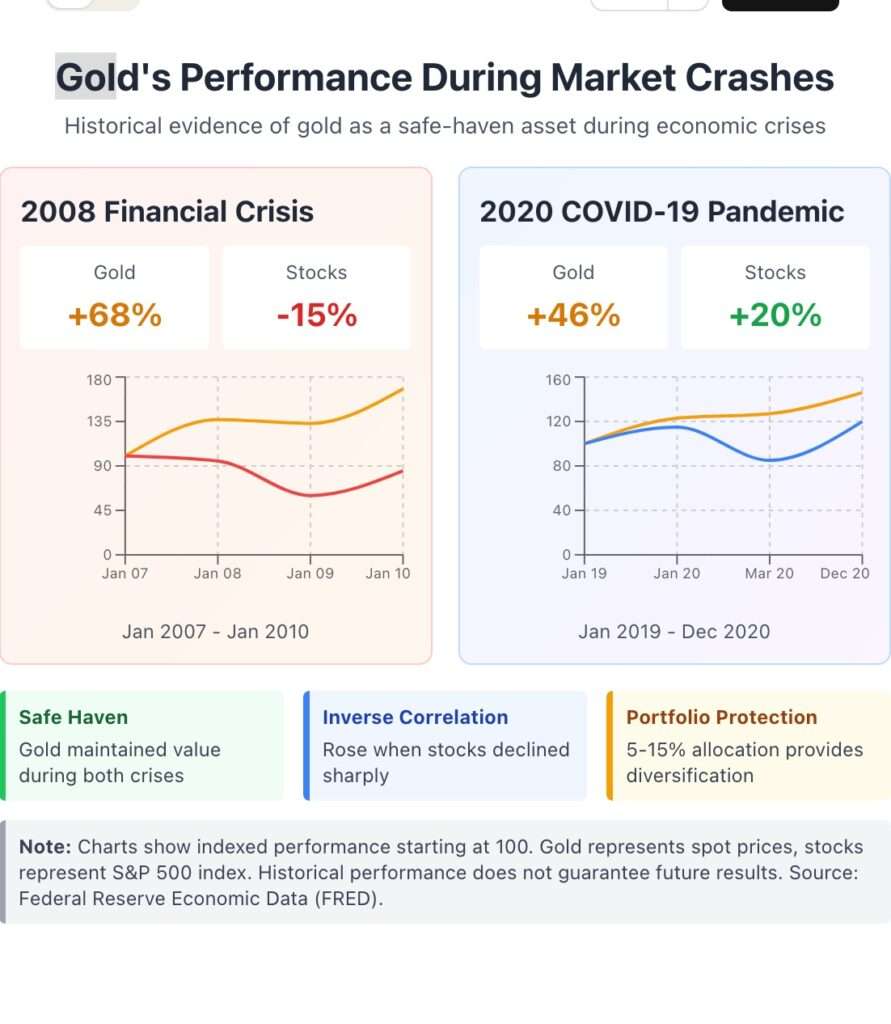
During periods of economic turmoil, stock market volatility, or currency devaluation, investors historically flock to gold as a safe haven asset. According to the World Gold Council, gold has demonstrated negative correlation with stock markets during crisis periods, meaning when stocks decline, gold often increases in value or maintains stability.
This inverse relationship makes gold particularly valuable for retirees who cannot afford significant portfolio losses as they approach or enter retirement years. The psychological comfort of owning a tangible asset that governments cannot print or devalue through monetary policy provides additional peace of mind for conservative investors.
Inflation Hedge Characteristics
The U.S. Bureau of Labor Statistics tracks inflation through the Consumer Price Index, and historical data shows that gold has maintained purchasing power over long periods even as fiat currencies lose value. When inflation accelerates, the dollar’s purchasing power declines, but gold prices typically rise to compensate, protecting wealth from erosion.
For retirement planning spanning 20-30 years, this inflation protection becomes increasingly important. A dollar today will not purchase the same amount of goods in 20 years, but an ounce of gold tends to maintain its relative purchasing power across decades.
Portfolio Diversification Benefits
Modern portfolio theory emphasizes diversification across uncorrelated assets to reduce overall portfolio risk. Gold’s low correlation with stocks and bonds makes it an effective diversification tool. Financial advisors typically recommend allocating 5-15% of a retirement portfolio to precious metals, with gold representing the primary holding within that allocation.
The Commodity Futures Trading Commission regulates precious metals futures markets and provides transparency on gold trading, helping investors understand market dynamics and make informed allocation decisions.
Types of Gold Investments for Retirement
When learning how to buy gold for retirement, understanding the different investment vehicles available is crucial. Each option offers distinct advantages and disadvantages regarding liquidity, storage, costs, and regulatory compliance.
Physical Gold Bullion
Physical gold bullion represents the most direct form of gold ownership and includes bars and rounds produced by government mints or private refineries. Bullion products trade based on their gold content plus a small premium above the spot price of gold.
For retirement accounts, the Internal Revenue Service maintains specific purity requirements. Gold must be 99.5% pure (0.995 fineness) to qualify for IRA inclusion, with certain government-minted coins exempt from this requirement.
Gold Coins for Investment
Gold coins fall into two categories: bullion coins valued primarily for gold content, and numismatic (collectible) coins that carry premiums based on rarity, condition, and historical significance.
Bullion Coins:
American Gold Eagles, Canadian Maple Leafs, and other government-minted bullion coins offer several advantages for retirement investors. These coins carry government backing for weight and purity, universal recognition for easy resale, and relatively small premiums over spot gold prices.
The American Gold Eagle, produced by the U.S. Mint, represents the most popular gold coin for American retirement investors. Despite containing 91.67% gold (22-karat), the IRS specifically exempts Gold Eagles from the 99.5% purity requirement for IRA inclusion.
Numismatic Coins – Not Recommended for Retirement:
Collectible coins trade at substantial premiums above their gold content due to rarity and condition. While numismatic coins can appreciate significantly, they require specialized knowledge to value properly and carry high dealer markups that reduce investment returns. Most financial advisors recommend avoiding collectible coins for retirement portfolios and focusing instead on bullion products with transparent pricing.
Self-Directed Gold IRAs
A Gold IRA (Individual Retirement Account) allows you to hold physical gold within a tax-advantaged retirement account. Gold IRAs function similarly to traditional or Roth IRAs but hold precious metals instead of paper assets.
How Gold IRAs Work:
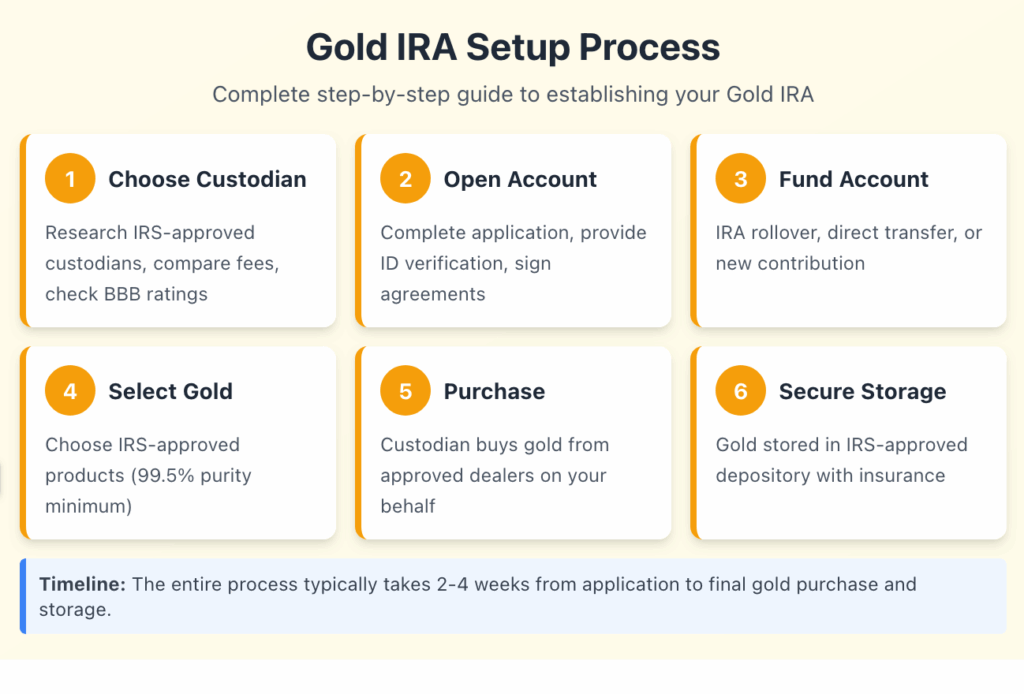
Gold IRAs require a specialized custodian approved to hold precious metals. You cannot personally possess the gold in your IRA—it must remain in an IRS-approved depository. The custodian manages the account administration, while the depository provides secure storage.
Benefits of Gold IRAs:
Tax-deferred or tax-free growth (depending on IRA type)
Direct ownership of physical gold
Protection from inflation and currency devaluation
Diversification within retirement accounts
Professional storage and insurance
Considerations for Gold IRAs:
Higher fees than traditional IRAs (custodian fees, storage fees, insurance)
Required minimum distributions at age 73 (for traditional IRAs)
Limited liquidity compared to stocks or bonds
No dividend or interest income
Setup complexity requiring specialized custodians
Gold IRA Costs:
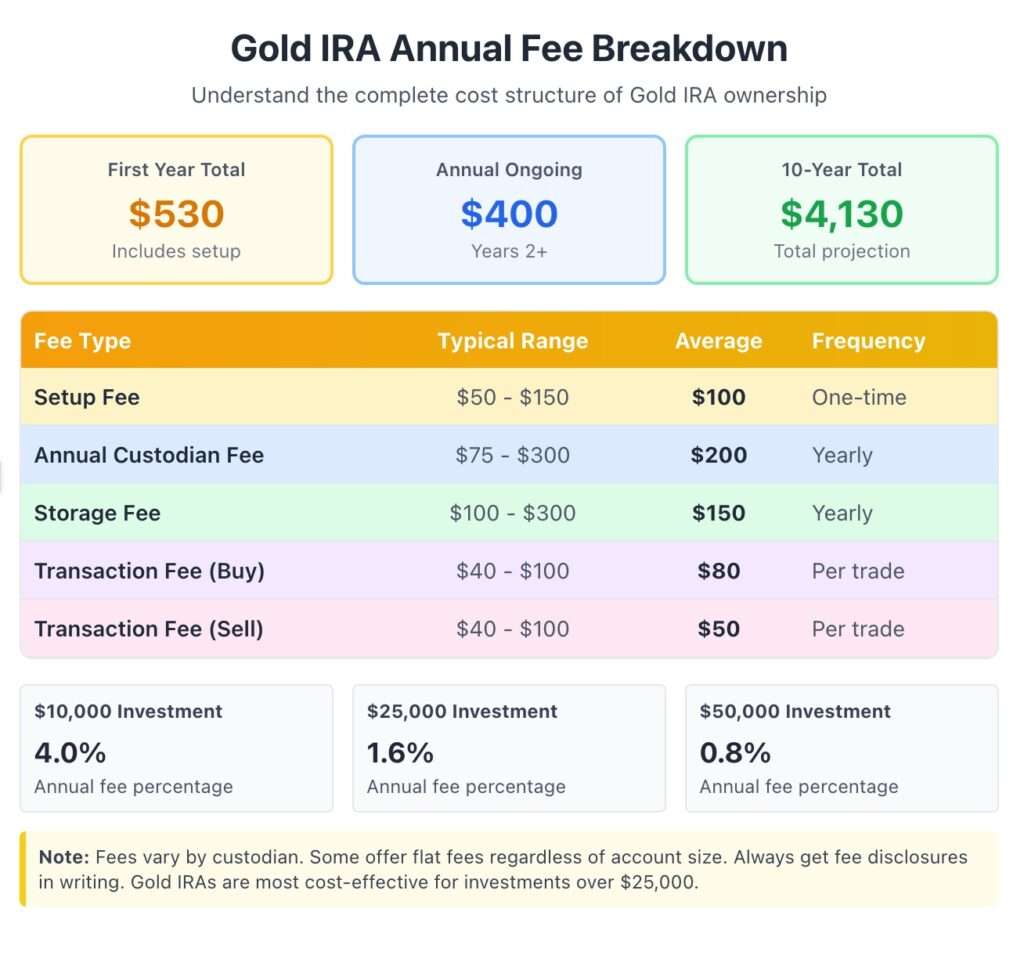
Annual custodian fees typically range from $75 to $300, while storage fees cost between $100 and $300 annually depending on the depository and amount stored. Transaction fees for buying or selling gold within the IRA can range from $40 to $100 per transaction. These costs reduce overall returns, making Gold IRAs most suitable for larger allocations.
Gold ETFs and Mining Stocks
For investors seeking gold exposure without physical possession or storage concerns, gold exchange-traded funds (ETFs) and gold mining stocks provide alternatives.
Gold ETFs:
Gold ETFs trade on stock exchanges like regular stocks but represent ownership in physical gold held by the fund. Popular options include SPDR Gold Shares (GLD), iShares Gold Trust (IAU), and Aberdeen Standard Physical Gold Shares ETF (SGOL).
Advantages of Gold ETFs:
High liquidity with instant buying and selling
Low expense ratios (typically 0.25% to 0.40% annually)
No storage or insurance concerns
Easy to hold in standard brokerage or IRA accounts
Fractional ownership allowing smaller investments
Disadvantages of Gold ETFs:
No physical possession of gold
Counterparty risk through fund structure
Management fees reduce returns
Potential tracking error versus physical gold prices
No protection in extreme systemic financial collapse
Gold Mining Stocks:
Gold mining stocks represent equity ownership in companies that extract gold from the earth. These stocks provide leveraged exposure to gold prices—when gold rises 10%, mining stocks might rise 15-20% due to improved profit margins. However, this leverage works both ways, amplifying losses when gold prices decline.
Mining stocks carry additional risks beyond gold price movements, including operational challenges, management quality, geopolitical risks in mining jurisdictions, environmental concerns, and company-specific issues. For these reasons, most financial advisors recommend direct gold exposure through physical metal or ETFs rather than mining stocks for conservative retirement portfolios.
How to Buy Gold for Retirement: Step-by-Step Process
Understanding the practical steps for purchasing gold ensures you make informed decisions and work with reputable dealers. Whether buying physical gold or establishing a Gold IRA, following these steps protects your retirement assets.
Step 1: Determine Your Investment Goals and Budget
Before purchasing gold, clarify your investment objectives. Are you seeking inflation protection, portfolio diversification, or wealth preservation? Your goals determine the appropriate allocation percentage and gold investment type.
Financial advisors typically recommend allocating 5-15% of a retirement portfolio to precious metals. Conservative investors might choose 5-7%, while those more concerned about inflation or economic uncertainty might allocate 10-15%. Avoid over-allocating beyond 20%, as gold produces no income and can experience prolonged periods of price stagnation.
Step 2: Choose Your Gold Investment Type
Based on your research and goals, select the gold investment vehicle that best matches your needs:
Choose Physical Gold If:
You want direct ownership and possession
You have secure storage available
You prefer tangible assets you can see and touch
You’re willing to manage storage and insurance
You’re comfortable with less liquidity
Choose a Gold IRA If:
You want tax-advantaged gold ownership
You prefer professional storage and management
You’re comfortable with custodian and storage fees
You’re investing a significant amount ($10,000+)
You don’t need immediate access to the gold
Choose Gold ETFs If:
You prioritize liquidity and convenience
You want to avoid storage concerns
You’re making smaller or incremental investments
You prefer traditional brokerage account access
You’re comfortable with fund structures
Step 3: Where to Buy Gold for Retirement
QUICK START – Want to buy gold RIGHT NOW?
Complete Beginners: Go to APMEX.com → Click “Gold” → Choose “American Gold Eagle 1 oz” → Buy 1 coin to start ($2,000-2,500)
Want Lowest Price: Go to JMBullion.com → Click “Gold Bullion” → Choose “1 oz Gold Bars” → Compare pricing (lowest premiums)
Want Immediate Possession: Google “coin shop near me” or “gold dealer near me” → Visit 2-3 shops today → Compare prices → Buy and leave with gold
Setting Up Gold IRA: Contact Goldco, Augusta Precious Metals, or Birch Gold Group → They handle entire setup process
Not sure yet? Read the detailed comparison below to find the best option for your situation.
Online Gold Dealers (Best for Most Buyers)
Internet retailers offer competitive pricing, wide selection, and convenience. Here are the exact dealers where you can buy gold online today:
This is spot ($2,050) + premium ($45 = 2.2% over spot)
Excellent pricing!
Step 4: Add to Cart
Quantity: 1
Click “Add to Cart”
Total: $2,095.00
Step 5: Check Shipping
Orders over $199 ship free
Fully insured shipping included
Signature required delivery
Step 6: Create Account
Click “Checkout”
Enter: Name, email, shipping address
Create password
Step 7: Select Payment Method
Bank Wire (no fee – BEST OPTION)
Check (10-day hold)
Credit Card (+4% = $83.80 extra)
Choose wire transfer
Step 8: Review Order
Product: 1 oz American Gold Eagle
Price: $2,095.00
Shipping: FREE
Payment: Wire transfer
Total: $2,095.00
Step 9: Confirm Order
Receive wire instructions via email
Wire details: Bank name, routing, account, reference number
Step 10: Send Wire from Your Bank
Log into your bank account
Initiate wire transfer using provided details
Wire fee: ~$25 from your bank
True total cost: $2,120 ($2,095 + $25 wire)
Step 11: Confirmation
JM Bullion confirms wire received (1 business day)
Order processes and ships
Step 12: Shipping
Receive tracking number via email
USPS or UPS delivery
3-5 business days typically
Signature required
Step 13: Delivery
Sign for package
Inspect for damage
Verify contents (1 American Gold Eagle in protective capsule)
Store securely immediately
Timeline:
Monday: Place order, send wire
Tuesday: Wire clears, order ships
Friday: Gold arrives at your door
Total Cost Breakdown:
Gold price: $2,095
Wire fee: $25
Total: $2,120 for 1 oz of gold
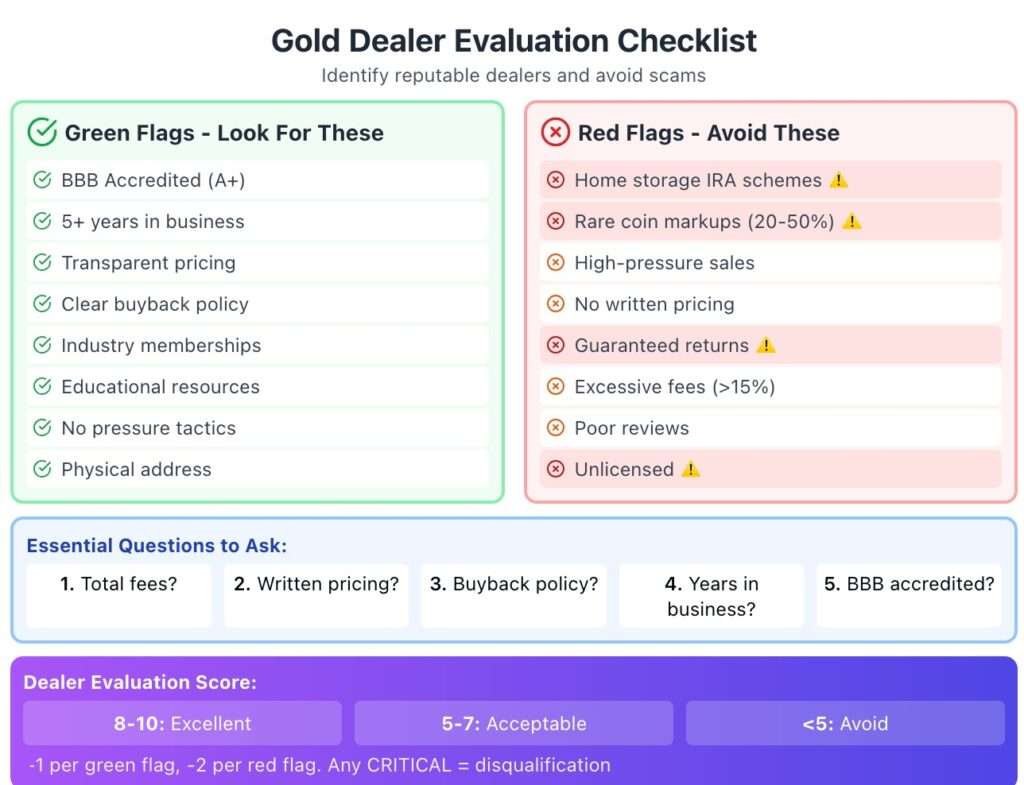
Red Flags – Dealers to AVOID
Refuse to Quote Prices Without Personal Info: Legitimate dealers display pricing publicly. If they won’t tell you prices without your name, phone, and address – walk away.
High-Pressure Sales Tactics: “This deal expires in 1 hour!” or “Prices will never be this low again!” are manipulation tactics. Reputable dealers don’t pressure you.
Pushing Rare/Collectible Coins: If you ask about bullion and they push “rare” coins at 30-50% premiums, they’re trying to maximize profit at your expense.
Home Storage IRA Schemes: “You can keep your IRA gold at home!” is ILLEGAL. The IRS requires approved custodian storage. This is a scam.
Unusually High Premiums: If premiums exceed 10% over spot for common bullion, you’re overpaying. Shop elsewhere.
No BBB Rating or Many Complaints: Check BBB.org before buying. F ratings or numerous unresolved complaints = avoid.
Guarantees of Future Prices: “Gold will definitely hit $5,000 by next year!” Nobody knows future prices. This is manipulation.
Your Action Plan: Buy Gold This Week
TODAY:
Check current gold spot price (Kitco.com, APMEX.com, JMBullion.com)
Decide your budget ($2,000 minimum for 1 oz coin recommended)
Choose product type (Gold Eagle for beginners)
THIS WEEK:
Visit APMEX.com, JMBullion.com, and SDBullion.com
Compare pricing for identical products (1 oz Gold Eagle)
Read dealer reviews on BBB.org and Trustpilot
Calculate total cost including shipping/payment fees
NEXT WEEK:
Create account with chosen dealer
Place order for 1 oz American Gold Eagle
Initiate payment (wire transfer recommended)
Arrange secure storage BEFORE gold arrives
MONTH 2 & BEYOND:
Set up automatic monthly purchases if dollar-cost averaging
Consider diversifying (add gold bars for lower premiums)
Explore Gold IRA for tax advantages
Build position systematically over time
The key is taking action. Don’t get paralyzed by analysis. Start with ONE American Gold Eagle from a reputable dealer (APMEX or JM Bullion), learn the process, then scale up as confidence grows.
Step 4: Compare Prices Across Multiple Dealers
Before making a purchase, compare pricing from at least three reputable dealers. Spot gold prices remain relatively consistent across dealers, but premiums vary significantly.
When comparing prices, ensure you’re comparing identical products. A 1-ounce American Gold Eagle from one dealer should be directly comparable to the same coin from another dealer. Factor in shipping costs, insurance, and any additional fees when calculating the total cost.
Real-time spot gold prices are available from CME Group, the London Bullion Market Association, and major financial news sites. Understanding current spot prices helps you evaluate whether dealer premiums are reasonable.
Step 5: Make Your Purchase
Once you’ve selected a dealer and specific products, you can complete your purchase through various payment methods:
Payment Options:
Bank wire transfer (often provides best pricing)
Personal check (may require clearance delay)
Credit card (usually carries 3-4% processing fee)
PayPal or other digital payments (limited availability)
Cash purchases exceeding $10,000 trigger IRS reporting requirements under the Bank Secrecy Act. Dealers must file Form 8300 for large cash transactions, so plan accordingly if preferring cash payments.
Step 6: Arrange Secure Storage
For physical gold purchases outside an IRA, you must decide between personal storage and professional depository storage.
Personal Storage Options:
Home safe (bolted and fireproof)
Bank safety deposit box
Private vault facility
Professional Depository Storage:
Segregated storage (your specific gold identified separately)
Commingled storage (your gold mixed with other clients’ holdings)
International storage (diversification across jurisdictions)
For Gold IRAs, the IRS mandates storage with approved depositories. You cannot personally store gold in your IRA without disqualifying the entire account and triggering taxes and penalties.
Step 7: Maintain Proper Documentation
Keep detailed records of all gold purchases, including:
Purchase receipts and invoices
Certificates of authenticity
Appraisal documents
Storage agreements
Insurance policies
Transaction confirmations
Proper documentation proves ownership, assists with insurance claims if necessary, facilitates eventual sales, and provides records for tax reporting requirements.
Tax Implications of Gold Investments
Understanding the tax treatment of gold investments helps you make informed decisions and avoid unexpected tax liabilities.
Physical Gold Taxation
The IRS classifies physical gold as a collectible, subjecting profits to capital gains taxation. When you sell gold held for more than one year, gains are taxed at a maximum rate of 28%—higher than the standard long-term capital gains rates of 0%, 15%, or 20% applied to stocks.
Gold held for one year or less is taxed as ordinary income at your regular income tax rate when sold.
Gold IRA Taxation
Gold held within traditional IRAs grows tax-deferred. You pay no taxes on appreciation while the gold remains in the account. Upon distribution, withdrawals are taxed as ordinary income at your then-current tax rate.
Roth Gold IRAs offer tax-free growth. Contributions are made with after-tax dollars, but qualified withdrawals after age 59½ are completely tax-free, including all appreciation.
Early withdrawals from traditional or Roth Gold IRAs before age 59½ typically incur a 10% penalty plus ordinary income taxes (for traditional IRAs), with certain exceptions for first-time home purchases, qualified education expenses, or disability.
Required Minimum Distributions
Traditional Gold IRAs require minimum distributions beginning at age 73. Unlike paper assets easily liquidated in small amounts, gold distributions can prove complicated. You must either:
Take physical possession of gold (triggering taxable income)
Have the custodian sell enough gold to cover the distribution
Transfer other IRA assets to cover the RMD
Planning for RMDs should factor into your decision about gold allocation size within retirement accounts.
Reporting Requirements
Dealers must report certain transactions to the IRS using Form 1099-B:
Sales of 25 or more 1-ounce Gold Maple Leafs, Krugerrands, or Mexican Onzas
Sales of 1-kilo gold bars
Sales of any gold bars totaling 32.15 troy ounces or more
These reporting requirements don’t create additional tax liability—you owe capital gains taxes on profits regardless of whether Form 1099-B is filed—but understanding reporting thresholds helps you maintain accurate tax records.
Common Mistakes to Avoid When Buying Gold for Retirement
Learning from others’ mistakes can save you thousands of dollars and protect your retirement assets. Avoid these common errors when purchasing gold for retirement:
Mistake 1: Paying Excessive Premiums for Common Coins
Some dealers market common bullion coins as “rare” or “collectible” to justify enormous premiums. A standard American Gold Eagle is not rare—millions are minted annually. These coins should trade for 3-8% over spot gold prices, not 20-50% premiums some unscrupulous dealers charge.
Stick with recognized bullion products at reasonable premiums. Save collectible numismatic coins for hobby collections, not retirement investments.
Mistake 2: Falling for Home Storage IRA Schemes
Some promoters advertise “home storage IRAs” or “checkbook IRAs” claiming you can store IRA gold at home while maintaining tax advantages. These schemes violate IRS rules. The IRS requires IRA assets to be held by qualified custodians, and attempting home storage will disqualify your entire IRA, triggering immediate taxes and penalties.
Legitimate Gold IRAs always involve IRS-approved custodians and depositories. If a promoter claims you can personally possess IRA gold, walk away immediately.
Mistake 3: Over-Allocating to Gold
While gold provides valuable diversification, over-allocating creates problems. Gold produces no income through dividends or interest, and it can experience multi-year periods of flat or declining prices. Investors who allocated 50% or more of their portfolios to gold in 2011 experienced significant opportunity costs as stocks rallied over the following decade while gold stagnated.
Maintain balanced diversification with 5-15% gold allocation for most retirement portfolios, supplementing rather than replacing stocks and bonds.
Mistake 4: Ignoring Total Costs
Focus on total ownership costs, not just purchase price. Gold IRA fees—including custodian fees, storage fees, transaction fees, and setup costs—can total $300-$500 annually or more. These fees compound over time, significantly reducing returns.
Calculate break-even points considering all costs. For smaller allocations (under $10,000), the percentage impact of flat annual fees can overwhelm any benefits gold provides.
Mistake 5: Buying Gold at Market Peaks
Emotional buying—purchasing gold after substantial price increases driven by fear or market uncertainty—often results in buying near peak prices. While gold serves as portfolio insurance, buying after prices have already rallied significantly reduces the protective benefit.
Consider dollar-cost averaging, making regular periodic purchases over time rather than lump-sum investments. This approach reduces timing risk and averages your purchase price across market cycles.
Mistake 6: Neglecting Security and Insurance
Storing physical gold without proper security and insurance exposes you to theft or loss. Home insurance policies typically provide limited coverage for precious metals (often $1,000-$2,000 maximum), requiring separate valuable items riders for adequate protection.
Budget for appropriate security measures and insurance coverage as part of your total gold investment cost.
Mistake 7: Failing to Verify Authenticity
Counterfeit gold products exist, particularly in the secondary market. When purchasing gold, especially from private sellers or online marketplaces, verify authenticity through professional testing.
Stick with reputable dealers offering guarantees of authenticity and providing proper documentation. For significant purchases, consider professional third-party verification through companies like PCGS or NGC for coins.
Getting Started: Your Action Plan
Now that you understand how to buy gold for retirement, you can create an action plan tailored to your specific situation:
Immediate Steps (Week 1):
Assess Your Financial Situation: Review your current retirement portfolio allocation, determine an appropriate gold percentage (5-15% for most investors), and establish your investment budget.
Educate Yourself: Read additional resources about gold investing , how and where to buy gold for retirement, understand current market conditions, and familiarize yourself with gold products and pricing.
Research Dealers: Create a list of 3-5 reputable dealers, check BBB ratings and customer reviews, and visit dealer websites to compare pricing and policies.
Short-Term Steps (Weeks 2-4):
Compare Specific Products: Request quotes from multiple dealers for identical products, calculate total costs including shipping and fees, and verify current spot gold prices for comparison.
If Considering a Gold IRA: Research approved custodians and their fee structures, understand depository options and storage costs, and review IRA rollover or transfer procedures with your current retirement account provider.
Make Your Decision: Select your preferred dealer based on reputation, pricing, and service, choose specific gold products matching your budget and goals, and determine your purchase timing strategy.
Medium-Term Steps (Months 1-3):
Complete Your Purchase: Execute your first gold purchase using your preferred payment method, arrange appropriate storage solutions, and properly document your purchase with organized records.
Set Up Ongoing Processes: If dollar-cost averaging, schedule regular purchase intervals, monitor spot gold prices and market conditions, and review your overall portfolio allocation quarterly.
Review and Adjust: Assess how gold fits within your overall retirement strategy, adjust allocations as your situation changes, and stay informed about market conditions and economic trends affecting gold.
Frequently Asked Questions About How and Where to Buy Gold for Retirement
How much gold should I have in my retirement portfolio?
Financial advisors typically recommend allocating 5-15% of a retirement portfolio to precious metals, with the specific percentage depending on your risk tolerance, investment timeline, and economic concerns. Conservative investors might choose 5-7%, while those more concerned about inflation or economic uncertainty might allocate 10-15%. Avoid over-allocating beyond 20%, as gold produces no income and can experience prolonged stagnation.
Yes, through a self-directed Gold IRA. However, the IRS requires the gold to be stored with an approved custodian and depository—you cannot personally possess gold in your IRA without disqualifying the account. Gold must meet minimum fineness requirements (99.5% purity) with certain government-minted coins like American Gold Eagles exempt from this standard.
What are the fees for a Gold IRA?
Gold IRA fees typically include setup fees ($50-$150), annual custodian fees ($75-$300), storage fees ($100-$300 annually), and transaction fees ($40-$100 per purchase or sale). Total annual costs generally range from $200-$500 depending on the custodian, depository, and account size.
Is buying gold for retirement a good investment?
Gold serves as portfolio insurance and wealth preservation rather than a growth investment. It protects against inflation and currency devaluation, provides diversification from paper assets, and offers stability during economic uncertainty. However, gold produces no income, can experience multi-year price stagnation, and should complement rather than replace stocks and bonds in retirement portfolios.
What is the best form of gold to buy for retirement?
For most retirement investors, government-minted bullion coins like American Gold Eagles or Canadian Maple Leafs offer the best combination of liquidity, recognition, and reasonable premiums. These coins trade with small premiums over spot gold prices and enjoy universal acceptance. Avoid collectible numismatic coins with high premiums unless you have specialized knowledge in coin collecting.
Work only with reputable dealers who have long-standing positive reputations, BBB accreditation, and transparent pricing. Avoid high-pressure sales tactics, unusually high premiums on common products, home storage IRA schemes, and dealers pushing collectible coins for retirement. Research dealers thoroughly, compare pricing across multiple sources, and never feel rushed into immediate decisions.
Can I take physical possession of gold in my IRA?
No, not without triggering taxes and penalties. Gold held in an IRA must remain with an IRS-approved custodian and depository. Taking personal possession of IRA gold constitutes a distribution, making the full value taxable as ordinary income and subject to a 10% early withdrawal penalty if you’re under age 59½.
When is the best time to buy gold for retirement?
Rather than trying to time the market, consider dollar-cost averaging—making regular periodic purchases over time. This strategy reduces timing risk and averages your purchase price across market cycles. Gold often performs well during periods of high inflation, economic uncertainty, or stock market volatility, but these conditions are difficult to predict.
Are gold ETFs better than physical gold for retirement?
Each option offers different advantages. Physical gold provides direct ownership without counterparty risk but requires storage and insurance. Gold ETFs offer convenience, liquidity, and lower costs but involve fund structures and management fees. For retirement accounts, Gold IRAs provide tax advantages for physical gold ownership, while gold ETFs can be held in standard IRAs with lower overall fees.
What purity of gold qualifies for an IRA?
The IRS requires gold to be 99.5% pure (0.995 fineness) to qualify for IRA inclusion. Certain government-minted coins receive exemption from this requirement, including American Gold Eagles (91.67% purity), providing flexibility for IRA investors. Always verify that specific gold products meet IRS requirements before purchasing for an IRA.
Final Thoughts on Buying Gold for Retirement
Learning how to buy gold for retirement empowers you to make informed decisions about precious metals in your investment portfolio. Gold’s historical role as a store of value, inflation hedge, and portfolio diversifier makes it relevant for retirement planning, particularly during periods of economic uncertainty.
The key to successful gold investing lies in education, patience, and working with reputable dealers and custodians. Avoid high-pressure sales tactics, collectible coin markups, and home storage IRA schemes. Focus instead on recognized bullion products, transparent pricing, and IRS-compliant storage arrangements.
Start with a modest allocation appropriate for your risk tolerance and investment timeline. Research dealers thoroughly before purchasing, comparing pricing and reputation across multiple companies. For Gold IRAs, understand fee structures completely and select custodians with transparent pricing and strong customer service reputations.
Gold won’t make you wealthy overnight, but it can preserve the wealth you’ve already accumulated. In an era of unprecedented money creation, mounting government debt, and persistent inflation concerns, gold’s time-tested role as a store of value becomes increasingly relevant for retirement planning.
Remember that gold represents just one component of a comprehensive retirement strategy. Maintain adequate diversification across stocks, bonds, real estate, Bitcoin, and other asset classes while using gold as portfolio insurance and long-term wealth preservation.
By following the guidance in this comprehensive guide, you’re positioned to make informed decisions about gold investments that align with your retirement goals and risk tolerance. Take your time, conduct thorough research, and approach gold investing as a patient, long-term wealth preservation strategy rather than a speculative venture.
Disclaimer: This article provides educational information about gold investing for retirement planning. It does not constitute financial advice, investment recommendations, or professional guidance. Consult with qualified financial advisors, tax professionals, and legal counsel before making investment decisions. Gold prices fluctuate, and past performance does not guarantee future results.