Day trading—the high-stakes practice of buying and selling financial instruments within the same trading day—is often viewed as a fast track to wealth. The truth is, it is a demanding skill set, a meticulous discipline that requires technical mastery, psychological fortitude, and a robust trading plan.
This guide is your complete educational roadmap. It is designed to be a non-trading, instructional resource that prepares you for the realities of the market.
We are stripping away the hype to focus exclusively on the core knowledge you need: from the foundational principles of technical analysis and identifying high-probability setups, to the non-negotiable rules of risk management (like the 1-2% rule) that protect capital. You will learn to build a disciplined plan, understand market psychology, and navigate the world of trading platforms and essential resources.
Our Commitment: This site is purely for learning and education. We provide the proven strategies and knowledge; your commitment will turn this information into market readiness.
The Indicator Framework for Intraday Trading Strategies
Clients are advised to build their analytical framework around one indicator from each category rather than loading charts with 10+ overlapping indicators:
Recommended Indicator Setup for Day Trading Beginners:
Indicator Category
Purpose
Best Options
Timeframe
Trend
Identify direction
EMA (20, 50), MACD, ADX
All
Momentum
Measure strength
RSI (14), Stochastics
15-min, 1-hour
Volatility
Gauge market conditions
Bollinger Bands, ATR
1-hour, 4-hour
Support/Resistance
Key price levels
Pivot Points, Fibonacci
Daily, 4-hour
Simple But Effective 3-Indicator Setup:
Chart Setup for EUR/USD (1-Hour Timeframe):
1. EMA 20 and EMA 50 (Trend identification)
2. RSI 14 (Overbought/oversold conditions)
3. Support/Resistance lines (Key price levels)

Trading Rules:
- BUY when: Price above EMA 20, RSI > 50, bouncing from support
- SELL when: Price below EMA 20, RSI < 50, rejecting from resistance
- Stop Loss: 20-30 pips beyond entry
- Take Profit: 1:2 or 1:3 risk-reward ratio
From a brokerage execution standpoint, we’ve observed that traders employing three or fewer complementary indicators consistently outperform those using complex, cluttered analytical setups—a critical insight for those learning Forex technical analysis.
Moving Averages: Foundation of Trend Trading Strategies
Moving averages represent the most widely used technical indicator in day trading strategies, and for good reason—they simplify trend identification for beginners learning Forex.
Moving Average Types and Applications:
MA Type
Calculation
Responsiveness
Best Use Case
SMA (Simple)
Arithmetic average
Slower
Long-term trends
EMA (Exponential)
Weighted toward recent
Faster
Day trading ⭐
WMA (Weighted)
Linear weighting
Medium-Fast
Short-term trading
Popular Moving Average Combinations for Day Trading:
EMA 20/50 Crossover – When EMA 20 crosses above EMA 50 = bullish signal
EMA 9/21 – Faster crossover system for scalping strategies
Price and EMA 200 – Price above = uptrend, below = downtrend
Moving Average Day Trading Strategy Example:
Setup: EUR/USD 15-minute chart
Indicators: EMA 20 (blue), EMA 50 (red)

BUY Signal:
- EMA 20 crosses above EMA 50 (Golden Cross)
- Price pulls back to EMA 20
- Entry: When price bounces off EMA 20
- Stop Loss: 10 pips below EMA 50
- Take Profit: 2:1 risk-reward ratio

SELL Signal:
- EMA 20 crosses below EMA 50 (Death Cross)
- Price rallies to EMA 20
- Entry: When price rejects EMA 20
- Stop Loss: 10 pips above EMA 50
- Take Profit: 2:1 risk-reward ratio
RSI is one of the best indicators for day trading strategies, especially for identifying overbought and oversold conditions. For beginners learning Forex, RSI provides clear, objective signals.
RSI Settings and Interpretation:
RSI Level
Condition
Trading Action
Reliability
70-100
Overbought
Consider selling/taking profits
Moderate
50-70
Bullish momentum
Hold long positions
High
30-50
Bearish momentum
Hold short positions
High
0-30
Oversold
Consider buying
Moderate
RSI Divergence Strategy (Advanced):
One of the most powerful intraday trading strategies involves RSI divergence:
Bullish Divergence: Price makes lower low, RSI makes higher low = potential reversal up
Bearish Divergence: Price makes higher high, RSI makes lower high = potential reversal down
RSI Day Trading Strategy Example:
Setup: GBP/USD 1-hour chart with RSI (14)

Oversold Bounce Strategy:
- Wait for RSI to drop below 30 (oversold)
- Wait for RSI to cross back above 30
- Enter LONG on next bullish candle
- Stop Loss: Below recent swing low (20-30 pips)
- Take Profit: When RSI reaches 70, or 1:2 RR
- Typical gain: 40-60 pips
Support and Resistance: The Cornerstone of All Trading Strategies
Countless dayrading strategies emerge, gain popularity, and fade. Yet support and resistance analysis remains as relevant today as decades ago—making it essential for anyone learning Forex.
Types of Support and Resistance for Day Trading:
Type
Description
Strength
How to Use
Horizontal S/R
Previous swing highs/lows
Strong
Range trading, breakouts
Trend Lines
Diagonal lines connecting pivots
Moderate-Strong
Trend following
Pivot Points
Mathematical calculations
Moderate
Intraday levels
Round Numbers
1.1000, 1.2000, etc.
Moderate
Psychological levels
Moving Averages
Dynamic S/R
Moderate
Trend trading
Identifying Key Support and Resistance Levels:
Learn Forex to mark these levels systematically:
Zoom out to daily/4-hour chart
Mark obvious swing highs and lows from past 30-60 days
Identify zones (not single lines) where price repeatedly reacted
Note confluence areas where multiple factors align
Mark psychological round numbers
Support/Resistance Trading Strategy Example:
EUR/USD Daily Analysis:
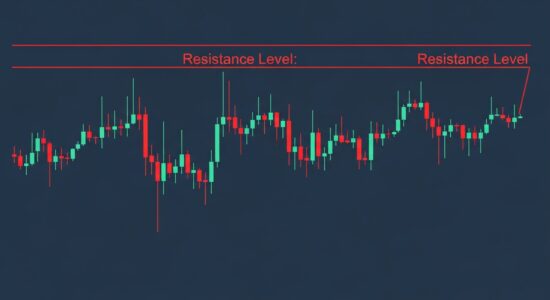
Strong Resistance Zone: 1.1180-1.1200 (tested 3 times in past month)
Strong Support Zone: 1.1020-1.1040 (held twice recently)

Day trading Strategy:
Current Price: 1.1050

SELL Setup (at resistance):
- Wait for price to reach 1.1180-1.1200
- Look for rejection candle pattern (pin bar, engulfing)
- Enter SHORT at 1.1185
- Stop Loss: 1.1210 (25 pips above resistance)
- Take Profit: 1.1100 (85 pips toward support)
- Risk:Reward = 1:3.4

BUY Setup (at support):
- Wait for price to reach 1.1020-1.1040
- Look for bullish reversal pattern
- Enter LONG at 1.1035
- Stop Loss: 1.1010 (25 pips below support)
- Take Profit: 1.1120 (85 pips toward resistance)
- Risk:Reward = 1:3.4
The Self-Fulfilling Prophecy Effect:
One reason support and resistance levels work consistently is that numerous traders watch these same levels simultaneously. When price approaches significant support, buyers enter anticipating a bounce; when price approaches resistance, sellers exit anticipating rejection. This collective behavior creates the very reactions traders anticipated—a self-fulfilling prophecy that reinforces the validity of these levels.
Candlestick Patterns: Price Action for Day Trading
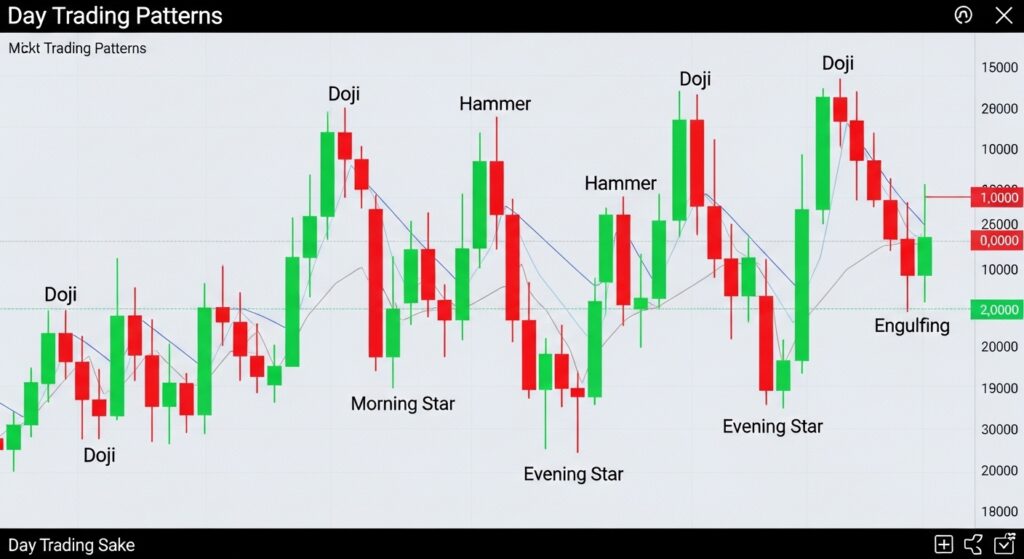
Price action trading—analyzing raw price movements without indicators—has gained substantial popularity among those learning Forex. Candlestick patterns provide visual representations of market psychology that day traders can exploit immediately.
Essential Candlestick Patterns for Day Trading Beginners:
Pattern
Type
Reliability
What It Signals
Pin Bar
Reversal
High
Rejection of price level
Engulfing
Reversal
High
Strong momentum shift
Inside Bar
Continuation
Moderate
Consolidation before breakout
Doji
Indecision
Moderate
Potential reversal at extremes
Marubozu
Continuation
Moderate
Strong directional conviction
Hammer/Shooting Star
Reversal
High
Rejection at support/resistance
Pin Bar Strategy – Best Pattern for Day Trading Beginners:
The pin bar (Pinocchio bar) is one of the most reliable candlestick patterns for intraday trading strategies:
Pin Bar Anatomy:
- Small body (real body)
- Long wick/tail (2-3x the body size)
- Minimal or no wick on opposite side

Bullish Pin Bar (at support):
- Long lower wick showing rejection of lower prices
- Body near top of candle
- Signals buyers defended support level

Entry: Above pin bar high
Stop Loss: Below pin bar low
Take Profit: 1:2 or 1:3 risk-reward

Bearish Pin Bar (at resistance):
- Long upper wick showing rejection of higher prices
- Body near bottom of candle
- Signals sellers defended resistance level

Entry: Below pin bar low
Stop Loss: Above pin bar high
Take Profit: 1:2 or 1:3 risk-reward
Engulfing Pattern Strategy:
Engulfing patterns provide some of the best day trading strategy setups when they appear at key levels:
Bullish Engulfing at Support:
Setup: EUR/USD at 1.1020 support
Pattern: Large green candle completely engulfs previous red candle
Confirmation: Candle closes above previous high

Entry: 1.1045 (above engulfing candle high)
Stop Loss: 1.1010 (below engulfing candle low, 35 pips)
Take Profit: 1.1115 (70 pips, 1:2 RR)
Timeframe: 15-minute or 1-hour chart
From a brokerage execution standpoint, Brokers emphasize that candlestick patterns increase in reliability when they appear at confluence with other technical factors—support/resistance levels, trend lines, or Fibonacci retracements. This confluence approach is crucial for those learning Forex pattern trading.
Risk Management: The Most Critical Day Trading Strategy
Day Trading Position Size Calculator
📊 Day Trading Position Size Calculator
Calculate optimal position size based on risk management rules
Position Size
0.67
lots
Risk Amount
$200
per trade
Potential Profit
$400
at 1:2 R:R
Risk Level
Moderate
Recommended: 1-2%
✓ Within safe limits
💡 Risk Management Tips:
Never risk more than 1-2% of your account per trade
Maximum 6% total risk across all open positions
Position size should decrease as stop loss distance increases
Always use stop-loss orders to protect your capital
Approximately 70-80% of retail Forex day traders lose money over a 12-month period. This isn’t due to lack of intelligence or effort—it’s primarily attributable to inadequate risk management practices.
Brokers emphasize that risk management isn’t a component of day trading strategies—it IS the strategy. Every other element—technical analysis, market timing, pattern recognition—becomes irrelevant without rigorous risk control. This is the single most important lesson for anyone learning Forex.
The 1-2% Rule: Foundation of Capital Preservation
The cornerstone of the best day trading strategies is the 1-2% rule: Never risk more than 1-2% of your total account balance on any single trade.
Risk Percentage Impact Over Time:
Risk Per Trade
After 10 Losses
After 20 Losses
Recovery Needed
1%
-10%
-18%
22% gain
2%
-18%
-33%
49% gain
5%
-40%
-64%
178% gain
10%
-65%
-88%
733% gain
This table demonstrates why the 1-2% rule is non-negotiable for day trading beginners learning Forex. Even professional traders experience losing streaks—protecting capital during these periods is paramount.
Calculating Position Size Using the 1-2% Rule:
Formula:
Position Size (lots) = (Account Balance × Risk %) ÷ (Stop Loss in pips × Pip Value)

Example 1 - Conservative (1% risk):
Account Balance: $5,000
Risk Per Trade: 1% ($50)
Stop Loss Distance: 25 pips
Pip Value (EUR/USD): $10 per standard lot

Position Size = $50 ÷ (25 × $10) = $50 ÷ $250 = 0.20 lots (2 mini lots)

Example 2 - Moderate (2% risk):
Account Balance: $10,000
Risk Per Trade: 2% ($200)
Stop Loss Distance: 40 pips
Pip Value (GBP/USD): $10 per standard lot

Position Size = $200 ÷ (40 × $10) = $200 ÷ $400 = 0.50 lots (5 mini lots)
A position size calculators offered in trading platforms specifically to help clients implement this critical risk management principle—an essential tool for anyone learning Forex systematically.
Stop-Loss Orders: Non-Negotiable Protection
One of the most consequential decisions in implementing day trading strategies is whether to use hard stop-loss orders placed with the broker or rely on “mental stops” executed manually.
Stop-Loss Order Types:
Type
Execution
Slippage Risk
Cost
Best For
Standard Stop
Market order at trigger
Yes
Free
Normal conditions
Guaranteed Stop
Exact price execution
No
Small premium
News trading
Trailing Stop
Follows price
Yes
Free
Trend following
Time-Based Stop
Exit after duration
N/A
Free
Scalping
Clients who are learning Forex are advised that mental stops represent one of the most dangerous practices in trading psychology. The human brain, when confronting unrealized losses, engages in powerful rationalization mechanisms:
Mental Stop Rationalization Progression:
1. "I'll close this position if it reaches -$200"
      ↓
2. "Maybe it will bounce from this support level"
      ↓
3. "I'm sure it will recover; I just need to hold on"
      ↓
4. "If I can just break even, I promise I'll exit"
      ↓
5. Account blown / Margin call
From a brokerage execution standpoint, countless accounts seen decimated by this exact psychological sequence. A planned 20-pip stop loss becomes a 100-pip disaster as the trader hopes for a reversal that never materializes.
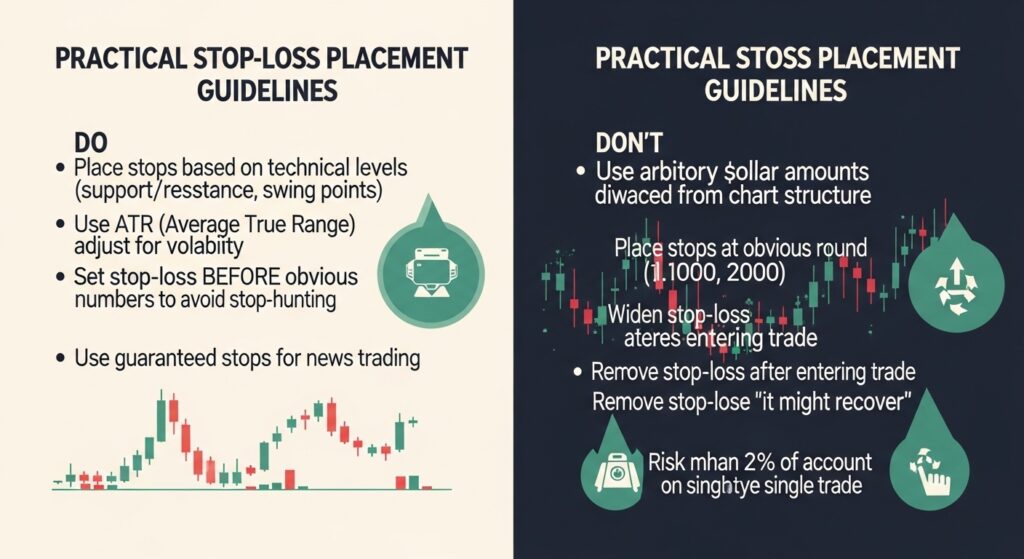
Practical Stop-Loss Placement Guidelines:
DO:
Place stops based on technical levels (support/resistance, swing points)
Use ATR (Average True Range) to adjust for volatility
Set stop-loss BEFORE entering the trade
Use guaranteed stops for news trading
Place stops beyond obvious round numbers to avoid stop-hunting
DON’T:
Use arbitrary dollar amounts divorced from chart structure
Place stops at obvious round numbers (1.1000, 1.2000)
Widen stop-loss after entering trade
Remove stop-loss because “it might recover”
Risk more than 2% of account on single trade
Position Sizing: The Mathematical Edge
Position sizing in day trading represents the most underestimated element of successful intraday trading strategies. Many beginners learning Forex focus obsessively on entry and exit techniques while giving minimal consideration to how much capital to allocate.
The 6% Rule for Multiple Positions:
Never have more than 6% of your total capital at risk simultaneously across all open positions. This means:
If risking 2% per trade → Maximum 3 concurrent positions
If risking 1.5% per trade → Maximum 4 concurrent positions
If risking 1% per trade → Maximum 6 concurrent positions
Position Sizing Based on Volatility:
Different currency pairs and market conditions require different position sizing approaches:
Market Condition
Volatility
Position Size Adjustment
Low Volatility
ATR < 50 pips
Increase 10-20%
Normal Volatility
ATR 50-100 pips
Standard sizing
High Volatility
ATR > 100 pips
Decrease 20-30%
News Events
Extreme spikes
Decrease 30-50% or avoid
The Drawdown Recovery Challenge
One of the most sobering realities in learning Forex is understanding the mathematics of drawdowns. This table should be permanently etched in every day trader’s mind:
Account Drawdown
Capital Remaining
Gain Required to Recover
Time to Recover (avg)
10%
$9,000
11.1%
2-4 weeks
20%
$8,000
25.0%
1-2 months
30%
$7,000
42.9%
2-4 months
40%
$6,000
66.7%
4-6 months
50%
$5,000
100.0%
6-12 months
60%
$4,000
150.0%
12+ months
75%
$2,500
300.0%
Years
This demonstrates why capital preservation trumps profit maximization in the best day trading strategies. Avoiding large losses is exponentially more important than capturing large gains—a fundamental principle for anyone learning Forex.
Daily Loss Limits: The Circuit Breaker
Clients often advised of implementing day trading strategies to establish daily loss limits as a circuit breaker mechanism:
Recommended Daily Loss Limits:
Trading Style
Daily Loss Limit
Action When Reached
Conservative
3% of account
Stop immediately
Moderate
5% of account
Stop immediately
Aggressive
6% of account
Stop immediately
The Consecutive Loss Rule:
After three consecutive losing trades, stop trading for the day regardless of dollar amount lost. Your decision-making is likely compromised by emotion, and continuing typically accelerates losses—a pattern brokers observe repeatedly in client accounts.
Example - Daily Loss Limit in Action:

Account: $10,000
Daily Loss Limit: 5% ($500)
Risk Per Trade: 2% ($200)

Trade 1: -$200 (loss)
Trade 2: -$180 (loss)
Trade 3: -$150 (loss)
Total Loss: $530

STOP TRADING - Daily limit exceeded
Resume tomorrow with clear mind and fresh perspective
From a brokerage execution standpoint, Brokers implemented platform features allowing clients to set automatic daily loss limits. When reached, the platform prevents new position openings—protecting traders from emotional revenge trading.
Creating Your Day Trading Plan: Blueprint for Success
The best day trading strategies mean nothing without a comprehensive trading plan. Those traders with written, detailed trading plans outperform those without by a significant margin.
Essential Components of a Day Trading Plan
1. Trading Schedule:
Session
Time (EST)
Pairs to Trade
Strategy to Use
Asian
7 PM – 4 AM
USD/JPY, AUD/USD
Range trading
London
3 AM – 12 PM
EUR/USD, GBP/USD
Breakout, Momentum
New York
8 AM – 5 PM
All major pairs
All strategies
Overlap
8 AM – 12 PM
EUR/USD, GBP/USD
Best opportunities
2. Strategy Selection Matrix:
Market Condition → Strategy

Trending Market:
- Use: Momentum strategy, Breakout strategy
- Indicators: EMA crossover, MACD
- Avoid: Range trading, counter-trend

Ranging Market:
- Use: Range trading strategy
- Indicators: RSI, Stochastics, Bollinger Bands
- Avoid: Trend-following, breakouts

High Volatility (News):
- Use: News trading strategy OR avoid
- Wide stops, reduced position size
- Guaranteed stop-loss orders

Low Volatility:
- Use: Scalping, range trading
- Tighter stops possible
- Asian session optimal
3. Pre-Trade Checklist:
Every trade should meet these criteria before execution:
Confirms your trading strategy setup
Risk is 1-2% of account balance
Risk-reward ratio minimum 1:2
Stop-loss placed based on technical level
No major news scheduled within next 30 minutes
Trade aligns with higher timeframe trend
You’re emotionally stable and focused
Not revenge trading after previous loss
4. Post-Trade Review:
After every trade, document:
Entry price and reason
Exit price and reason
Strategy used
Timeframe traded
Profit/loss amount
What went right
What went wrong
Lessons learned
Sample Day Trading Plan Template
TRADER: John Smith
STRATEGY: Momentum + Support/Resistance
ACCOUNT SIZE: $5,000
RISK PER TRADE: 1.5% ($75)

TRADING HOURS:
- Primary: 8 AM - 12 PM EST (London/NY overlap)
- Secondary: 3 AM - 6 AM EST (London open)

INSTRUMENTS:
- Primary: EUR/USD, GBP/USD
- Secondary: USD/JPY

TIMEFRAMES:
- Analysis: 4-hour, 1-hour
- Entry/Exit: 15-minute

ENTRY CRITERIA:
1. Price must be trending on 1-hour chart (above/below EMA 50)
2. Pullback to support/resistance or EMA 20
3. RSI confirmation (>50 for long, <50 for short)
4. Candlestick pattern confirmation (pin bar, engulfing)

EXIT CRITERIA:
- Take Profit: 2:1 risk-reward minimum
- Stop Loss: Technical level + 10 pips buffer
- Trailing Stop: Activate after 1:1 achieved

DAILY LIMITS:
- Maximum trades: 5
- Daily loss limit: 4% ($200)
- Consecutive loss limit: 3 trades

WEEKLY REVIEW:
- Sunday evening: Analyze week's performance
- Calculate win rate, average RR, total P/L
- Identify patterns in wins/losses
- Adjust plan if necessary
Advanced Concepts for Day Trading Success
As traders progress beyond beginner status in learning Forex, these advanced concepts separate consistent winners from the majority.
Correlation Trading: Portfolio Approach
Understanding currency correlations can improve day trading strategies by preventing over-exposure to single directional bets.
Major Currency Pair Correlations:
Pair 1
Pair 2
Correlation
What It Means
EUR/USD
USD/CHF
-0.95 (Negative)
Move opposite directions
EUR/USD
GBP/USD
+0.85 (Positive)
Move together
AUD/USD
NZD/USD
+0.90 (Positive)
Move together
USD/JPY
USD/CHF
+0.75 (Positive)
Move together
EUR/USD
USD/JPY
-0.70 (Negative)
Move opposite
Avoiding Over-Leverage Through Correlation:
Mistake Example:
Trade 1: LONG EUR/USD (2% risk)
Trade 2: LONG GBP/USD (2% risk)
Trade 3: SHORT USD/CHF (2% risk)

Actual Risk: ~5-6% (all three trades are essentially the same bet)
Problem: If USD strengthens, all three trades lose simultaneously

Better Approach:
Choose ONE USD direction trade at 2% risk
Add uncorrelated trade if second opportunity appears
Example: LONG EUR/USD + LONG AUD/JPY (different dynamics)
Multi-Timeframe Analysis
The best day trading strategies incorporate multiple timeframe analysis to increase probability:
Timeframe Analysis Hierarchy:
STEP 1 - Higher Timeframe (4-hour/Daily): Determine overall trend
STEP 2 - Medium Timeframe (1-hour): Identify support/resistance zones
STEP 3 - Lower Timeframe (15-min): Time precise entry/exit

Example:
Daily Chart: EUR/USD in strong uptrend above EMA 50
1-Hour Chart: Pullback to support at 1.1050
15-Min Chart: Pin bar rejection at 1.1050

→ HIGH probability LONG setup (trend + support + pattern)
Multi-Timeframe Strategy Rules:
Never trade against the higher timeframe trend (low probability)
Wait for pullbacks in trending markets (better entry)
Use lower timeframe for entry timing only
Higher timeframe determines strategy direction
Trading Session Characteristics
Different trading sessions offer distinct opportunities for day trading strategies:
Session-Specific Strategies:
Session
Best Pairs
Characteristics
Recommended Strategy
Tokyo
JPY, AUD, NZD
Low volatility, ranges
Range trading, scalping
London
EUR, GBP, CHF
High volatility, trends
Breakout, momentum
New York
USD pairs, Gold
Moderate-high volatility
All strategies
Overlap
All majors
Highest liquidity
Best trading window
London/New York Overlap (8 AM – 12 PM EST):
This 4-hour window represents the absolute best time for implementing day trading strategies:
Highest daily volume (60%+ of total Forex volume)
Tightest spreads
Best liquidity for large orders
Major news releases occur
Clearest directional moves
For part-time traders or beginners learning Forex, focusing exclusively on this window often produces better results than trading 12+ hours daily.
The Psychology of Day Trading: Mental Game Mastery
From our privileged position as a broker witnessing thousands of accounts over 15 years, we’ve developed deep insights into the psychological factors that separate successful day traders from the majority who fail—insights crucial for anyone learning Forex seriously.
The Four Pillars of Trading Psychology
1. Discipline: Following Your Plan
The “discipline paradox”: traders spend months developing the best day trading strategies, backtesting extensively, establishing detailed plans—then abandon these plans during the first few losing trades.
Building Discipline:
Start with demo trading (minimum 3 months)
Use micro lots for first 6 months live
Keep detailed trading journal
Review every trade against your plan
Celebrate disciplined losing trades (yes, really)
2. Patience: Waiting for Quality Setups
Professional traders spend far more time waiting for setups than executing them. A trader making 2-3 high-quality trades per day typically outperforms one making 15-20 mediocre trades.
Overtrading Warning Signs:
Trading out of boredom
Forcing setups that don’t meet criteria
Trading to recover losses quickly
More than 10 trades per day (non-scalpers)
Declining win rate with increasing trade frequency
3. Emotional Control: Managing Fear and Greed
Emotion
Manifestation
Solution
Fear
Missing entries, early exits
Reduce position size
Greed
Over-leveraging, no stops
Follow 1-2% rule strictly
Hope
Holding losers too long
Use hard stop-loss orders
Revenge
Oversized trades after loss
Take mandatory break
4. Objectivity: Data-Driven Decisions
Successful day trading strategies rely on objective criteria, not gut feelings:
Subjective Approach:
"This looks like it might go up"
"I have a feeling about this trade"
"Everyone is bullish so I should buy"

Objective Approach:
"Price bounced from support with pin bar"
"RSI < 30 and crossed back above 30"
"Setup meets all 5 criteria on my checklist"
The Revenge Trading Trap
From a brokerage execution standpoint, Brokers can identify revenge trading patterns in client accounts—the pattern is unmistakable:
Revenge Trading Sequence:
1. Normal 0.10 lot trade loses $50
2. Immediately enters 0.30 lot trade (triple size)
3. No technical justification - purely emotional
4. Second trade loses $150
5. Enters 0.50 lot trade to recover losses
6. Loses $250
7. Total loss: $450 from three impulsive trades
8. Account severely damaged or destroyed
Preventing Revenge Trading:
Implement 3-loss daily limit
Use platform position size limits
Take 30-minute mandatory break after loss
Have non-trading activities ready (walk, exercise)
Never increase position size after losses
The Journal: Your Performance Laboratory
Every professional trader maintains a detailed trading journal—not just for record-keeping, but as a performance improvement tool essential for mastering day trading strategies.
Essential Journal Elements:
TRADE #47 - March 15, 2025

SETUP:
Pair: EUR/USD
Strategy: Support bounce + Pin bar
Timeframe: 1-hour chart
Entry: 1.1055
Stop Loss: 1.1035 (20 pips)
Take Profit: 1.1095 (40 pips, 1:2 RR)
Position Size: 0.25 lots
Risk: 1.5% ($75)

EXECUTION:
Entry Time: 10:45 AM EST
Exit Time: 2:30 PM EST
Exit Price: 1.1095
Result: +$100 profit

ANALYSIS:
What Went Right:
- Waited for pullback to support
- Pin bar provided clear entry signal
- Risk-reward was favorable
- Trade aligned with daily uptrend

What Went Wrong:
- Entry slightly early (could have waited for candle close)
- Almost got stopped out before moving in direction

LESSONS:
- Waiting for candle close confirmation reduces false signals
- This setup works well during London session
- Similar pattern worked 3 times this month

EMOTIONAL STATE:
- Calm and confident during entry
- Slight anxiety when price tested stop loss
- Pleased with result but recognize luck factor

PLAN ADHERENCE: 9/10
(Deducted 1 point for slightly early entry)
Weekly Journal Review Questions:
What was my win rate this week?
What was my average risk-reward ratio?
Which setups worked best?
Which setups failed most often?
Did I follow my plan consistently?
What were my best and worst trades?
What patterns do I notice in my winning trades?
What patterns appear in my losing trades?
How was my emotional state?
What should I improve next week?
Platform Features and Broker Selection
Brokerage firms recognize that platform quality directly impacts the success of your day trading strategies. The tools available can mean the difference between profitable execution and missed opportunities when learning Forex.
Essential Platform Features for Day Trading
Must-Have Features Checklist:
One-Click Trading – Execute trades instantly without confirmation dialogs
Multiple Timeframes – View 1-min through monthly charts
50+ Technical Indicators – All standard indicators plus custom options
Position Size Calculator – Automatic risk calculation
Multiple Chart Windows – Monitor several pairs simultaneously
Mobile Trading – iOS and Android apps with full functionality
Fast Execution – Sub-100ms execution speeds
Choosing the Right Broker for Day Trading
Factor
Why It Matters
What to Look For
Regulation
Capital protection
FCA, ASIC, CySEC, NFA
Spreads
Transaction costs
EUR/USD < 1.0 pip
Execution Speed
Entry/exit quality
< 100ms average
Leverage
Flexibility
30:1 to 100:1
Minimum Deposit
Accessibility
$100-$500 for beginners
Platform
Usability
MT4, MT5, or proprietary
Customer Support
Problem resolution
24/5 availability
Educational Resources
Learning support
Webinars, guides, analysis
When selecting a broker, verify they are properly regulated by respected authorities such as the National Futures Association (NFA) in the United States, the Financial Conduct Authority (FCA) in the UK, or the Australian Securities and Investments Commission (ASIC) in Australia. Regulated brokers provide greater security and transparency for your trading capital.
Red Flags to Avoid:
Avoid any broker that isn’t regulated by a recognized authority like the CFTC, NFA, or FCA. Watch out for spreads that widen dramatically during news events, frequent order rejections, and any difficulty withdrawing your funds. If a broker promises guaranteed profits or pressures you to deposit more money — walk away immediately.
Common Mistakes in Day Trading (And How to Avoid Them)
Brokers observing trader behavior, they identified recurring mistakes that sabotage even the best day trading strategies. For beginners learning Forex, avoiding these pitfalls is as important as mastering technical analysis.
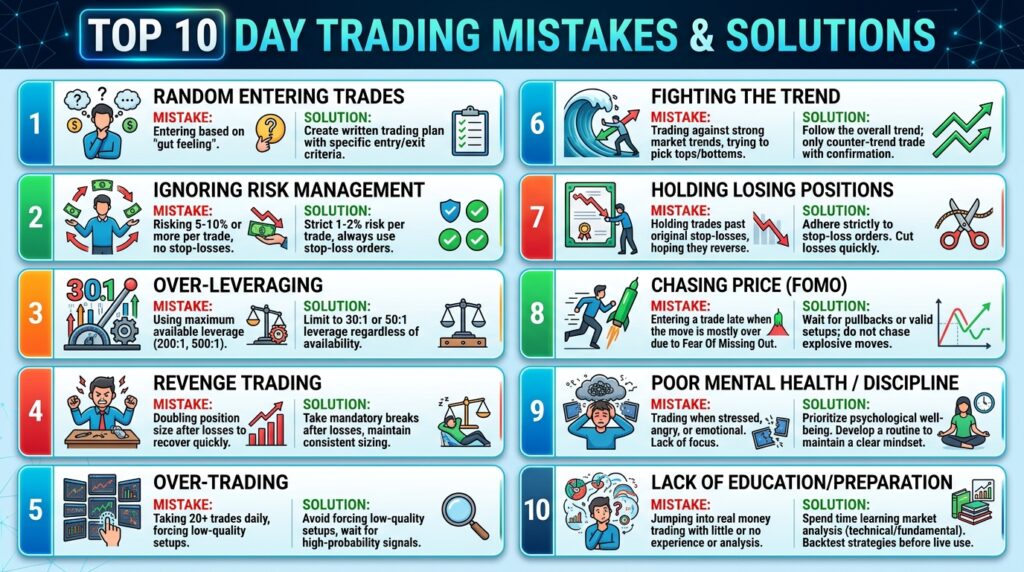
Top 10 Day Trading Mistakes
1. Trading Without a Plan
Mistake: Randomly entering trades based on “gut feeling”
Solution: Create written trading plan with specific entry/exit criteria
2. Ignoring Risk Management
Mistake: Risking 5-10% or more per trade, no stop-losses
Solution: Strict 1-2% risk per trade, always use stop-loss orders
3. Over-Leveraging
Mistake: Using maximum available leverage (200:1, 500:1)
Solution: Limit to 30:1 or 50:1 leverage regardless of availability
4. Revenge Trading
Mistake: Doubling position size after losses to recover quickly
Solution: Take mandatory breaks after losses, maintain consistent sizing
Learning Forex through day trading strategies represents one of the most accessible paths for beginners entering currency markets. Day trading for beginners starts with understanding that this methodology involves opening and closing positions within a single 24-hour period, distinguishing it from swing trading or long-term investing.
Today’s beginners have unprecedented access to the best day trading strategies and intraday trading strategies that professional traders use daily.
At its core, learning Forex day trading means mastering intraday trading strategies that capitalize on short-term price movements. Unlike traditional stock market day trading that operates within fixed exchange hours, the Forex market’s continuous operation from Sunday evening through Friday afternoon (Eastern Time) provides unique opportunities for implementing the best day trading strategies around the clock.
Understanding Leverage: Critical for Day Trading Beginners
What truly separates Forex day trading strategies from other financial instruments is the extraordinary leverage available to participants. For beginners learning Forex, understanding leverage represents the most critical foundational concept—it amplifies both potential profits and potential losses with equal force.
In the Forex market, leverage ratios can range from 30:1 for retail clients in highly regulated jurisdictions like the European Union, to 50:1 in the United States, and up to 500:1 or higher in less regulated offshore environments. This means that with a $1,000 account balance, a trader using 100:1 leverage could theoretically control $100,000 worth of currency—a notion that sounds appealing until one considers the risk implications.
Leverage Comparison Table:
Leverage Ratio
Margin Required
Capital Needed to Control $100,000
Risk Level
30:1
3.33%
$3,333
Moderate
50:1
2.00%
$2,000
Moderate-High
100:1
1.00%
$1,000
High
200:1
0.50%
$500
Very High
500:1
0.20%
$200
Extremely High
When implementing day trading strategies for beginners, start with lower leverage ratios (30:1 or 50:1) regardless of what’s available. When a trader opens a position, they’re required to maintain a certain percentage of the total position value as margin. For instance, with 50:1 leverage (which represents a 2% margin requirement), controlling a standard lot of EUR/USD worth $100,000 requires only $2,000 in margin.
Learn how distinguish between available leverage and utilized leverage. Just because your account offers 100:1 leverage doesn’t mean you should use it fully on every trade. Professional traders typically utilize only a fraction of their available leverage, preferring to maintain substantial free margin as a buffer against adverse price movements.
Real-Time Example: Understanding Margin Calls
Consider a practical scenario we frequently explain during client onboarding: A trader deposits $5,000 and decides to open a position of 2 standard lots (200,000 units) of GBP/USD at 50:1 leverage. The margin requirement would be $4,000, leaving only $1,000 as free margin.
If the market moves just 50 pips against this position (a movement that can occur in minutes during volatile sessions), the trader would face a loss of $1,000, completely eliminating their free margin. At this point, our risk management systems would trigger a margin call, and if the trader cannot deposit additional funds or close positions, we would be forced to automatically liquidate positions to protect against negative balance.
This scenario plays out daily across retail accounts, which is precisely why we stress that understanding leverage mechanics isn’t optional—it’s foundational to survival in the Forex day trading arena.
The Broker’s Role: Tools and Execution
Investment platforms have seen a significant shift in design and usage since the introduction of digital brokerage and algorithmic trading. day trading strategies effectively.
Understanding Leverage and Margin Requirements
Brokers now have sophisticated margin management systems that provide real-time visibility into account health. The new trading platforms display multiple margin-related metrics that every day trader should monitor continuously:
Used Margin: The amount of capital currently locked up in open positions. This figure updates instantly as you open or close trades.
Free Margin: The available capital that can be used to open new positions or withstand adverse price movements in existing positions, this is the most critical metric for day traders to monitor.
Margin Level: Expressed as a percentage, this represents your equity divided by used margin, multiplied by 100. Brokers typically issue margin call warnings when this figure drops below 100%, and the system begins force-liquidating positions if it falls below 50%.
From a brokerage execution standpoint, Brokers implemented tiered margin systems that adjust requirements based on position size. While a micro lot might require standard margin, traders attempting to open positions exceeding 10 standard lots face elevated margin requirements as a risk management measure.
Brokers also distinguish between initial margin (required to open a position) and maintenance margin (required to keep it open). During periods of extreme volatility—such as major central bank announcements or geopolitical crises—we reserve the right to increase margin requirements temporarily, and they always communicate these changes through our platform notifications.
The Importance of a Reliable Trading Platform
Speed and reliability aren’t merely convenience features in Forex day trading—they’re fundamental requirements that can determine success or failure. Brokers often advise clients that the difference between a winning trade and a losing trade can come down to milliseconds of execution delay or a single instance of platform instability.
Infrastructure investment focuses on three critical areas:
Order Execution Speed: Brokers co-located their servers with major liquidity providers to minimize latency. most with an average execution time for market orders sits at 47 milliseconds, with over 95% of orders executed within 100 milliseconds. For day traders attempting to capture small price movements—sometimes just 5-10 pips—this speed differential can be the difference between profit and loss.
Price Feed Reliability: They aggregate price feeds from 14 tier-1 liquidity providers, creating a composite bid/ask spread that typically beats what any single provider offers. the redundant data center architecture ensures that even if one liquidity provider experiences connectivity issues, the price feeds continue without interruption.
Platform Stability: The trading platform maintains 99.97% uptime, with scheduled maintenance occurring exclusively during low-volume Sunday sessions. We employ automatic failover systems that redirect traffic to backup servers in the rare event of primary server issues, ensuring traders can always access their positions.
Traders often underestimate the importance of execution quality until they experience slippage during a critical trade. Slippage—the difference between expected execution price and actual execution price—becomes particularly pronounced during high-impact news releases when spreads can widen from typical 0.5 pips to 5-10 pips or more in seconds.
We’ve implemented guaranteed stop-loss orders for clients willing to pay a small premium, ensuring execution at the specified price regardless of market gaps. For day traders holding positions through known risk events, this tool provides invaluable peace of mind.
Advanced Charting and Analysis Tools
From a brokerage execution standpoint, sophisticated traders require sophisticated tools. All platform integrates over 100 technical indicators, multiple timeframe analysis capabilities, and customizable chart templates that allow traders to implement complex strategies efficiently.
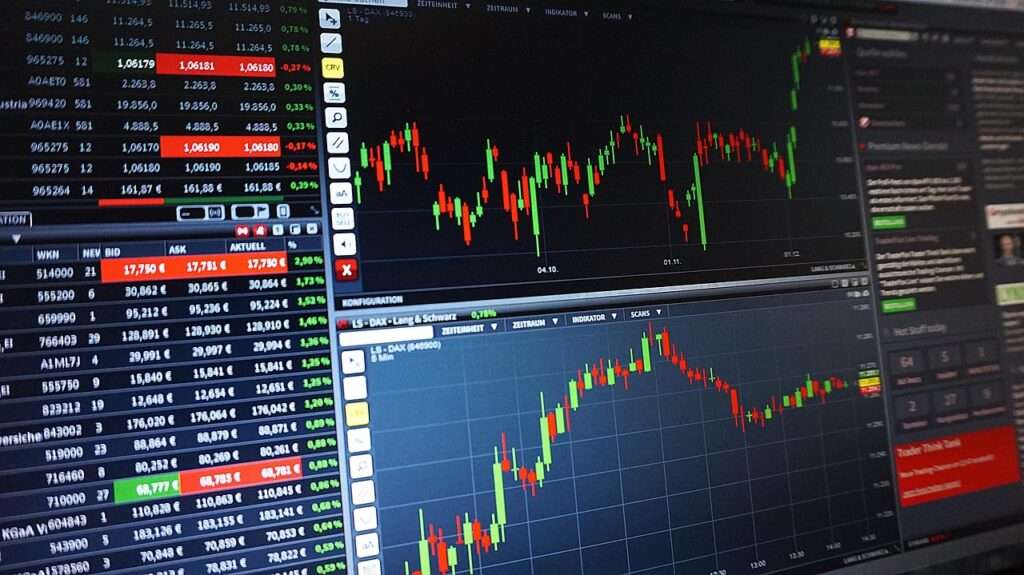
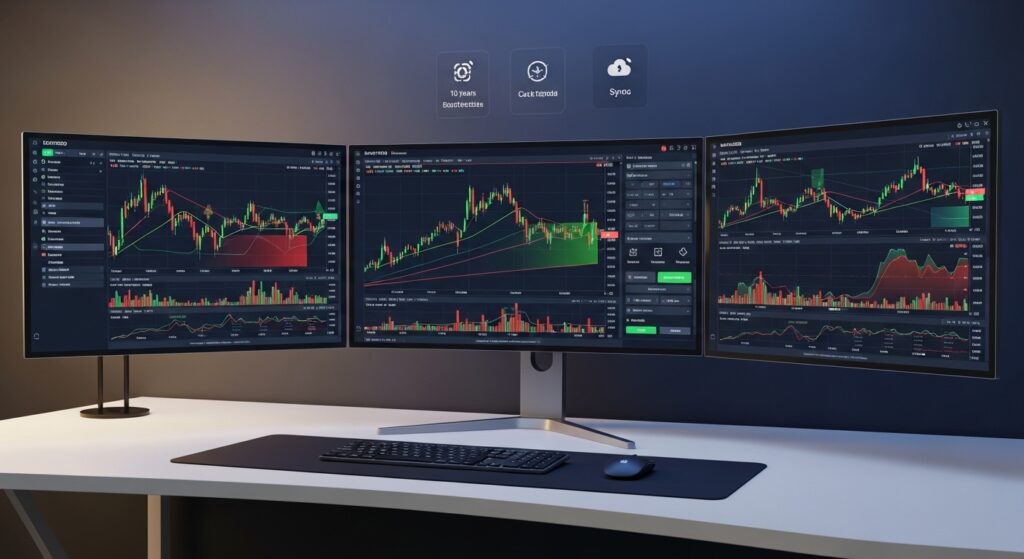
Successful day traders typically employ multiple monitor setups, with separate displays for different timeframes of the same currency pair. The platform supports multi-window configurations and cloud-based template storage, allowing traders to access their workspace configuration from any device.
The ability to backtest strategies against historical data represents another critical platform feature. Brokers provide 10 years of tick-level data for major pairs, enabling traders to validate their methodologies before risking real capital. traders who thoroughly backtest their strategies demonstrate significantly better risk-adjusted returns than those who trade based on intuition alone.
Risk Management for the Retail Day Trader
Approximately 70-80% of retail Forex day traders lose money over a 12-month period. This isn’t due to lack of intelligence or effort—it’s primarily attributable to inadequate risk management practices.
Risk management isn’t a component of trading strategy—it is the strategy. Every other element—technical analysis, market timing, pattern recognition—becomes irrelevant without rigorous risk control.
Stop-Loss Orders vs. Mental Stops
One of the most consequential decisions a day trader makes is whether to use hard stop-loss orders placed with the broker or to rely on mental stops that they’ll execute manually when certain price levels are reached.
From a brokerage execution standpoint, there are countless accounts decimated by this exact psychological sequence. A planned 20-pip stop loss becomes a 100-pip disaster as the trader hopes for a reversal that never materializes.
Hard stop-loss orders eliminate this psychological vulnerability entirely. Once placed, they execute automatically when the specified price is reached, removing emotional decision-making from the equation. Yes, you’ll occasionally experience the frustration of being stopped out just before the market reverses in your favor—but this temporary discomfort pales in comparison to the account protection they provide.
Practical Stop-Loss Guidelines We Share with Clients:
Never risk more than 1-2% of your total account balance on any single trade
Position your stop-loss based on technical levels (support/resistance, volatility measures) rather than arbitrary dollar amounts
Avoid placing stops at obvious round numbers where stop-hunting often occurs
Consider using trailing stops to lock in profits as positions move favorably
Never widen a stop-loss after entering a trade—this violates the fundamental risk management principle
Implementing advanced stop-loss types in the platform to accommodate different trading styles:
Standard Stop-Loss: Executes as a market order when the specified price is reached. May experience slippage during volatile markets.
Guaranteed Stop-Loss: Executes at exactly the specified price regardless of market conditions, typically for a small premium charged to the spread.
Trailing Stop-Loss: Automatically adjusts as the price moves favorably, maintaining a fixed distance from the current market price.
Position Sizing and Capital Preservation
Position sizing represents the most underestimated element of trading success. Many traders focus obsessively on entry and exit techniques while giving minimal consideration to how much capital to allocate to each trade.
Learn a systematic position sizing framework based on account balance, risk tolerance, and stop-loss distance:
Step 1: Determine Risk Per Trade Decide what percentage of your account you’re willing to lose on this specific trade. Conservative traders use 0.5-1%, moderate traders use 1-2%, aggressive traders use 2-3%. We strongly discourage risking more than 3% on any single position.
Step 2: Calculate Stop-Loss Distance Determine the pip distance from your entry price to your stop-loss level based on technical analysis. For example, if you’re buying EUR/USD at 1.1000 with a stop at 1.0980, your stop distance is 20 pips.
Step 3: Calculate Position Size Use the formula: Position Size = (Account Balance × Risk Percentage) / (Stop-Loss Distance × Pip Value)
Practical Example:
Account Balance: $10,000
Risk Per Trade: 2% ($200)
Stop-Loss Distance: 20 pips
Pip Value for 1 standard lot of EUR/USD: $10
Position Size = $200 / (20 pips × $10 per pip) = $200 / $200 = 1 standard lot
This mathematical approach removes guesswork and ensures consistent risk exposure across all trades regardless of stop-loss distance.
From a brokerage execution standpoint, we’ve observed that traders who employ systematic position sizing survive market volatility that destroys the accounts of those who “wing it” with arbitrary lot sizes.
Capital Preservation Principles We Emphasize:
The 6% Rule: Never have more than 6% of your total capital at risk simultaneously across all open positions. If you’re risking 2% per trade, this means no more than three concurrent positions.
The Consecutive Loss Limit: After three consecutive losing trades, stop trading for the day. Your decision-making is likely compromised by emotion, and continuing to trade typically accelerates losses.
The Daily Loss Limit: Establish a maximum daily loss threshold (typically 5-6% of account balance). If reached, immediately close all positions and stop trading for the day.
The Recovery Principle: Understand that recovering from drawdowns requires exponentially larger gains. A 50% account loss requires a 100% gain to return to breakeven—a mathematical reality that should inform every risk decision.
We often share this sobering illustration with new clients:
Account Drawdown
Gain Required to Recover
10%
11.1%
20%
25.0%
30%
42.9%
40%
66.7%
50%
100.0%
60%
150.0%
This table demonstrates why capital preservation trumps profit maximization in professional trading. Avoiding large losses is exponentially more important than capturing large gains.
Key Forex Instruments for Day Trading
Best Currency Pairs for Day Trading
📈 Best Currency Pairs for Day Trading
Compare major Forex pairs for beginners
EUR/USD – Detailed Analysis
Liquidity
95%
Volatility
70
pips/day avg
Spread Cost
0.7
pips typical
Beginner Score
100%
Liquidity95%
Volatility (Trading Opportunity)65%
Tight Spread (Lower Cost)95%
Beginner Friendly100%
🎯 Our Recommendation for Beginners:
EUR/USD
Start with EUR/USD for the best learning experience. It offers:
Tightest spreads (0.5-1.0 pips)
Highest liquidity (easiest execution)
Moderate volatility (60-80 pips daily)
Most predictable behavior
Abundant educational resources
The Forex market comprises dozens of currency pairs, but from a brokerage execution standpoint, not all instruments offer equivalent day trading opportunities. Liquidity, spread costs, volatility patterns, and trading hour overlaps create a hierarchy of tradability that experienced day traders understand intuitively.
Major Currency Pairs: The Foundation of Forex Day Trading
The major pairs have consistently accounted for approximately 70-80% of retail day trading volume. This concentration exists for good reason—these pairs offer the optimal combination of tight spreads, deep liquidity, and predictable volatility patterns.
EUR/USD (Euro/US Dollar): The world’s most traded currency pair represents approximately 28% of global Forex volume. Our typical spread during London and New York session overlaps sits at 0.5-0.7 pips, widening to 1.5-2.0 pips during the Asian session. We often advise clients that EUR/USD provides the best balance of volatility and spread costs for beginning day traders. Daily average ranges typically span 60-80 pips, with elevated movement during European Central Bank and Federal Reserve announcements.
GBP/USD (British Pound/US Dollar): Known as “Cable” in trading vernacular, this pair offers significantly higher volatility than EUR/USD—typically 80-120 pip daily ranges—but at the cost of wider spreads (1.0-1.5 pips during liquid sessions). From a brokerage execution standpoint, GBP/USD attracts traders seeking larger profit potential per trade, though the increased volatility also amplifies risk. Post-Brexit, this pair has exhibited even greater volatility during UK economic data releases and Bank of England policy announcements.
USD/JPY (US Dollar/Japanese Yen): This pair serves as a barometer for risk sentiment in global markets, often correlating inversely with equity indices. Our spreads typically range from 0.7-1.0 pips during Asian and London sessions. We observe that USD/JPY responds strongly to both US economic data and broader risk-on/risk-off market dynamics, making it a favorite among day traders who incorporate multiple timeframe analysis. The pair tends to respect technical levels consistently, making support and resistance strategies particularly effective.
USD/CHF (US Dollar/Swiss Franc): Often overlooked by novice traders, USD/CHF provides moderate volatility (50-70 pip daily ranges) with relatively tight spreads (1.0-1.5 pips). In our experience, this pair offers excellent trending characteristics during sustained directional moves in the US dollar. The Swiss franc’s status as a safe-haven currency creates interesting dynamics during risk-off market environments.
AUD/USD (Australian Dollar/US Dollar) and USD/CAD (US Dollar/Canadian Dollar): These commodity-correlated pairs exhibit distinctive volatility patterns tied to their respective nations’ resource exports. AUD/USD shows particular sensitivity to Chinese economic data (Australia’s largest trading partner) and iron ore prices, while USD/CAD responds strongly to crude oil price movements. We typically see spreads of 0.8-1.5 pips for AUD/USD and 1.0-2.0 pips for USD/CAD.
Cross Pairs and Exotics: Advanced Instruments
Brokers emphasize that cross pairs (currency pairs not involving the US dollar) and exotic pairs (currencies from emerging market economies) present both opportunities and challenges that differ substantially from majors.
EUR/GBP, EUR/JPY, and GBP/JPY: These crosses attract advanced day traders seeking to capitalize on differential monetary policy between non-USD economies. However, spreads typically run 1.5-3.0 pips, effectively doubling transaction costs compared to majors. We often advise clients that successful cross-pair trading requires capturing proportionally larger moves to overcome spread costs.
Exotic Pairs (USD/TRY, USD/ZAR, USD/MXN): While offering extraordinary volatility—sometimes 200-500 pip daily ranges—exotic pairs present substantial challenges including wide spreads (10-50 pips), limited liquidity, and overnight swap charges that can approach 10-20% annually. From a brokerage execution standpoint, they recommend exotic pair trading only for well-capitalized, experienced traders who understand the unique risks these instruments present.
Gold (XAU/USD): The Alternative Day Trading Instrument
Gold has emerged as one of the most popular alternatives to traditional currency pairs. Technically a commodity rather than a Forex instrument, gold trading exhibits characteristics that appeal strongly to day traders.
Volatility Profile: Gold typically demonstrates 800-1500 pip daily ranges (when measured as 1 pip = $0.01), providing abundant intraday movement for traders to capture. This volatility accelerates dramatically during geopolitical crises, monetary policy shifts, or inflation concerns.
Correlation Dynamics: Gold maintains an inverse correlation with the US dollar and often serves as an inflation hedge and safe-haven asset. We observe that day traders frequently use gold positions to diversify risk across their portfolios, as its price movements often diverge from currency pair dynamics.
Trading Sessions: Unlike currency pairs where liquidity concentrates during specific geographical sessions, gold maintains relatively consistent liquidity across London and New York hours, with a moderate decline during Asian sessions.
Spread Considerations: A typical gold spread ranges from 20-40 pips during liquid sessions, widening to 50-100 pips during illiquid periods or immediately surrounding major news releases. Day traders must account for these wider spreads in their profit calculations—a 100-pip gold move provides less net profit than a 100-pip EUR/USD move due to proportionally higher spread costs.
Session-Based Trading Opportunities
From a brokerage execution standpoint, they emphasize that different currency pairs exhibit varying liquidity and volatility characteristics across the three major Forex trading sessions:
Asian Session (Tokyo): 7:00 PM – 4:00 AM EST
Dominated by JPY, AUD, and NZD pairs
Generally lower volatility and wider spreads for EUR/USD and GBP/USD
Occasional sharp moves during Australian or Japanese economic releases
Optimal for range-trading strategies in major pairs
European Session (London): 3:00 AM – 12:00 PM EST
Highest liquidity period for EUR, GBP, and CHF pairs
Spreads reach their tightest levels
Significant volatility during European economic data releases
Trend-following strategies often most effective
North American Session (New York): 8:00 AM – 5:00 PM EST
Peak liquidity during London/New York overlap (8:00 AM – 12:00 PM EST)
All major pairs exhibit excellent tradability
US economic releases often generate substantial volatility
Liquidity declines noticeably after London close
Traders are advised to align their trading schedules with the sessions most relevant to their chosen currency pairs, as attempting to day trade EUR/USD during the Asian session typically results in inferior execution quality and limited profit opportunities.
Best Day Trading Strategies: The Broker’s Perspective
Successful practitioners rarely rely on a single approach when learning Forex. Instead, they develop adaptable intraday trading strategies that respond to varying market conditions. Below, we detail the best day trading strategies that consistently produce results for beginners and experienced traders alike.
Scalping represents one of the most popular day trading strategies for beginners who enjoy fast-paced action. This intraday trading strategy involves executing numerous trades throughout the day, targeting small profit objectives typically ranging from 3-10 pips per trade.
From a brokerage execution standpoint, scalpers represent a unique client segment with specific platform requirements. Successful scalping demands ultra-low latency execution. We often advise beginners learning Forex that scalping may not be the best starting point—it requires:
Lightning-fast execution (sub-100ms latency)
Intense focus and discipline
Quick decision-making abilities
Emotional resilience to handle rapid wins and losses
Spread Impact: Because scalpers target small profit objectives, spread costs consume a disproportionate percentage of potential profits. A trader targeting 5-pip gains on EUR/USD with a 0.5-pip spread surrenders 10% of their profit to transaction costs on every trade. When learning Forex, beginners should understand that scalping succeeds only with the tightest-spread pairs during the most liquid trading sessions.
Scalping Strategy Example:
Entry: EUR/USD at 1.1000 (on 1-min chart bounce from support)
Stop Loss: 1.0995 (5 pips)
Take Profit: 1.1005 (5 pips)
Risk:Reward: 1:1
Trade Duration: 2-10 minutes
There are platforms features specifically for scalping strategies, including one-click trading, customizable hotkeys, and DOM (depth of market) displays showing liquidity at various price levels.
Momentum Trading Strategy: Best for Trending Markets
Momentum strategies represent some of the best day trading strategies for beginners learning Forex because they’re intuitive and align with the natural market tendency to continue moving in the established direction.
Momentum Trading Strategy Overview:
Strategy Element
Specification
Timeframes
15-minute, 1-hour charts
Profit Target
40-100+ pips
Stop Loss
20-50 pips
Trade Frequency
2-5 trades per day
Best Pairs
EUR/USD, GBP/USD, AUD/USD
Optimal Conditions
News releases, session opens
Skill Level
Beginner to Intermediate
This intraday trading strategy seeks to identify currency pairs exhibiting strong directional movement and enter positions in the direction of that momentum. In our experience, momentum trading represents one of the most intuitive approaches for traders transitioning from other markets.
Identification Criteria for Momentum Day Trading:
Economic Data Releases – NFP, GDP, CPI reports
Central Bank Announcements – Fed, ECB, BOE decisions
Session Opens – London open (3 AM EST) and US open (8 AM EST)
We observe that the London open (3:00 AM EST) and US open (8:00 AM EST) frequently produce momentum setups as increased liquidity enables the market to break through overnight trading ranges—making these prime times for implementing this day trading strategy for beginners.
Risk Management Considerations: Momentum trades often involve wider stop-losses (30-50 pips) than scalping strategies, but proportionally larger profit targets (60-150+ pips). From a brokerage execution standpoint, momentum traders benefit from our trailing stop functionality, which allows profits to run while protecting against sudden reversals—a crucial tool when learning Forex momentum strategies.
Range Trading Strategy: Profiting from Consolidation
Markets trend approximately 30% of the time and consolidate within ranges the remaining 70%—a statistic we frequently share during client education webinars. Range trading represents one of the best day trading strategies for beginners because it provides clearly defined entry and exit points.
Range Trading Strategy Breakdown:
Strategy Element
Specification
Timeframes
15-minute, 1-hour, 4-hour charts
Profit Target
Distance from support to resistance
Stop Loss
10-20 pips beyond range boundaries
Trade Frequency
3-8 trades per day
Best Pairs
EUR/USD, USD/JPY during Asian session
Optimal Sessions
Asian session (low volatility)
Skill Level
Beginner-Friendly
How Range Trading Works:
This intraday trading strategy capitalizes on consolidation periods by buying at support levels and selling at resistance levels. Range trading strategies work best when:
Volatility is low (Asian trading session)
No major news events scheduled
Clear support and resistance levels are established
Price oscillates predictably between boundaries
Range Trading Strategy Example:
Identified Range: EUR/USD trading between 1.1000 (support) and 1.1050 (resistance)
Buy Entry: 1.1005 (near support)
Stop Loss: 1.0990 (15 pips below support)
Take Profit: 1.1045 (near resistance, 40-pip gain)
Risk:Reward: 1:2.67
Indicators: RSI < 30 at support, Stochastic oversold
Session Selection: Many Brokers advise clients learning Forex that range trading strategies perform optimally during the Asian session when major pairs exhibit lower volatility and tendency to oscillate within defined boundaries—perfect conditions for day trading beginners.
Indicator Utilization: Range traders typically employ oscillators like RSI (Relative Strength Index) or Stochastics to identify overbought and oversold conditions within the range. Platforms include customizable alert functionality that notifies traders when price approaches key support or resistance levels.
The Breakout Risk: The primary danger in range trading occurs when ranges break decisively, often triggered by unexpected news or accumulated order flow. We emphasize the importance of stop-loss placement just beyond range boundaries to limit losses when these breakouts occur—a critical lesson for those learning Forex risk management.
Breakout strategies represent some of the best day trading strategies for traders seeking high risk-reward opportunities. This intraday trading strategy involves identifying when price breaks through established support or resistance levels with conviction.
Breakout Trading Strategy Specifications:
Strategy Element
Specification
Timeframes
5-minute, 15-minute, 1-hour charts
Profit Target
50-150+ pips
Stop Loss
15-30 pips (placed inside broken level)
Trade Frequency
1-4 trades per day
Best Pairs
GBP/USD, EUR/USD, gold (XAU/USD)
Optimal Conditions
News events, session opens, consolidation breaks
Skill Level
Intermediate
Types of Breakouts:
Continuation Breakouts – Price breaks in direction of prevailing trend
Reversal Breakouts – Price breaks counter to prevailing trend
Consolidation Breakouts – Price breaks from range/triangle/flag patterns
News-Driven Breakouts – Economic data triggers directional move
Breakout Trading Strategy Example:
Setup: EUR/USD consolidating between 1.1020-1.1040 for 3 hours
Breakout: Price breaks above 1.1040 on high volume
Entry: 1.1042 (confirmation above resistance)
Stop Loss: 1.1025 (below consolidation zone, 17 pips)
Take Profit: 1.1110 (68 pips - 1:4 risk:reward)
Confirmation: Increased volume, strong bullish candle close
When learning Forex breakout strategies, beginners should understand that false breakouts occur frequently. Price may spike through a level momentarily before reversing—this is why confirmation is crucial. We advise waiting for:
Candle close beyond the level (not just a wick)
Increased volume/tick volume accompanying the breakout
Retest of the broken level (former resistance becomes new support)
News Trading Strategy: High-Impact Event TradingTraders can track upcoming high-impact events and economic releases using free economic calendars such as Forex Factory and Investing.com Economic Calendar, which provide real-time updates, consensus forecasts, and historical data to help plan trades around volatile periods.
News trading strategies target the extreme volatility surrounding major economic releases. While challenging for beginners, this intraday trading strategy can produce substantial profits when executed properly.
News Trading Strategy Framework:
Strategy Element
Specification
Key Events
NFP, FOMC, GDP, CPI, Central Bank Decisions
Profit Target
50-200+ pips
Stop Loss
30-50 pips
Trade Frequency
1-3 trades per week
Best Pairs
Pairs affected by the news (USD pairs for US news)
Execution
Pending orders or immediate post-release entry
Skill Level
Advanced
Major Market-Moving Events for Day Trading:
We advise everyone who is learning Forex to maintain awareness of these high-impact releases:
US Non-Farm Payrolls (NFP) – First Friday monthly, 8:30 AM EST (50-150 pip moves)
Consumer Price Index (CPI) – Monthly inflation data (40-120 pip moves)
Central Bank Speeches – Variable timing (30-150 pip moves)
News Trading Strategy Example:
Event: US Non-Farm Payrolls (NFP) Release
Pre-Release Setup: EUR/USD at 1.1025
Expected: 180K jobs | Actual: 250K jobs (bullish USD)

Immediate Reaction: EUR/USD drops to 1.0965 (60-pip move in 2 minutes)

Entry: 1.0970 (after initial spike, entering in direction of move)
Stop Loss: 1.1010 (40 pips above entry)
Take Profit: 1.0895 (75 pips - targeting extended move)
Trade Duration: 30 minutes to 2 hours
Execution Challenges for News Trading:
From a brokerage execution standpoint, news trading presents technical challenges beyond normal market conditions that beginners learning Forex must understand:
Spread Widening – spreads widen from 0.5 pips to 5-15 pips during major releases
Slippage – Orders may execute 3-8 pips away from requested price
Order Rejection – Extreme volatility can cause temporary order rejection
Requotes – Price moves so rapidly that quotes become stale
Brokers offer pending orders (buy stops above current price, sell stops below) as a tool to help traders navigate these challenges rather than attempting manual execution during the release itself.
Day Trading for Beginners: Essential Foundation
Learning Forex successfully requires beginners to build a solid foundation before implementing any day trading strategies. Those who rush into trading without proper preparation consistently underperform those who invest time in education.
Step 1: Understanding Currency Pairs
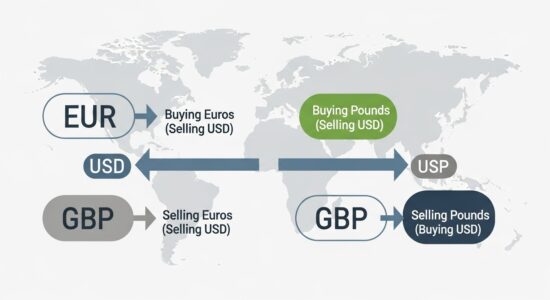
For day trading beginners, understanding how currency pairs work represents the first critical step in learning Forex. Unlike stocks where you simply buy a company, Forex involves simultaneously buying one currency while selling another.
Currency Pair Structure:
EUR/USD = 1.1000

EUR = Base Currency (what you're buying or selling)
USD = Quote Currency (what you're paying with or receiving)
1.1000 = Price (1 EUR costs 1.10 USD)
Best Currency Pairs for Day Trading Beginners:
Pair
Characteristics
Typical Spread
Volatility
Beginner-Friendly
EUR/USD
Most liquid, predictable
0.5-1.0 pips
Moderate (60-80 pips/day)
⭐⭐⭐⭐⭐
USD/JPY
Follows risk sentiment
0.7-1.2 pips
Moderate (50-70 pips/day)
⭐⭐⭐⭐
GBP/USD
Higher volatility
1.0-2.0 pips
High (80-120 pips/day)
⭐⭐⭐
USD/CHF
Moderate, trending
1.5-2.5 pips
Low-Moderate (50-70 pips/day)
⭐⭐⭐⭐
AUD/USD
Commodity-correlated
0.8-1.5 pips
Moderate (60-90 pips/day)
⭐⭐⭐
Beginners who are learning Forex should start with EUR/USD due to its combination of tight spreads, sufficient volatility for profit opportunities, and predictable behavior patterns.
Step 2: Choosing the Right Trading Timeframes
One of the most common questions we receive from those learning Forex is: “What time frame should I trade?” The answer depends on your day trading strategy and personality.
Timeframe Comparison for Day Trading Strategies:
Timeframe
Trades Per Day
Holding Period
Strategy Type
Stress Level
Best For
1-Minute
50-100+
Seconds-Minutes
Scalping
Very High
Experienced traders
5-Minute
20-50
5-30 minutes
Scalping
High
Active traders
15-Minute
5-15
15 minutes-2 hours
Momentum, Breakout
Moderate-High
Intermediate
1-Hour
2-8
1-6 hours
All strategies
Moderate
Beginners ⭐
4-Hour
1-3
4-8 hours
Swing (intraday)
Low-Moderate
Part-time traders
For day trading beginners, it’s recommended to start with 15-minute and 1-hour charts. These timeframes provide:
Enough time to analyze setups without feeling rushed
Sufficient price movement to capture meaningful profits
Reduced noise compared to 1-5 minute charts
Lower stress levels conducive to learning
Step 3: Demo Trading – The Critical Bridge
Before risking real capital, every beginner learning Forex should spend significant time demo trading. In our experience, traders who demo trade for at least 2-3 months before going live demonstrate 60% better performance in their first year.
Demo Trading Checklist for Beginners:
1-Trade for minimum 2-3 months 2-Execute at least 100 trades across different market conditions 3- Test multiple day trading strategies 4- Achieve 3 consecutive profitable months 5-Maintain risk management discipline (1-2% per trade) 6- Keep detailed trading journal 7- Practice during different trading sessions
Common Demo Trading Mistakes:
⚠ Trading with unrealistic account sizes ($100K+ demos when planning $5K live)
⚠ Taking excessive risks because “it’s not real money”
⚠ Not treating demo trading seriously
⚠ Rushing to live trading after 2-3 winning trades
⚠ Not testing strategies during different volatility conditions
Step 4: Starting Small with Live Trading
When transitioning to live trading, one of the best day trading strategies for beginners is to start dramatically smaller than you think necessary. We recommend:
Recommended Starting Capital by Experience:
Experience Level
Minimum Capital
Recommended Capital
Position Sizing
Complete Beginner
$500
$1,000-$2,000
Micro lots (0.01)
Demo-Tested (3+ months)
$1,000
$2,000-$5,000
Mini lots (0.10)
Consistently Profitable
$2,500
$5,000-$10,000
Mini to Standard lots
Experienced (1+ year)
$5,000+
$10,000+
Standard lots (1.0)
The psychological difference between demo and live trading cannot be overstated. Your first live loss will trigger emotions that never appeared during demo trading—this is normal and expected when learning Forex.
Technical Analysis Tools: Essential for Day Trading Strategies
The Indicator Overload Trap
New day traders often load their charts with 6, 8, or even 10+ indicators simultaneously, believing more indicators provide better market insight. This approach typically produces the opposite effect—analysis paralysis that delays execution and contradictory signals that undermine confidence.
We often advise clients to build their analytical framework around one indicator from each category:
Trend Indicators: Moving averages (simple or exponential), MACD (Moving Average Convergence Divergence), or ADX (Average Directional Index) help identify whether markets are trending or ranging.
Momentum Indicators: RSI (Relative Strength Index), Stochastics, or Momentum Oscillator indicate whether current price movements show strength or exhaustion.
Volatility Indicators: Bollinger Bands or Average True Range (ATR) measure market volatility levels, helping traders adjust position sizing and profit targets accordingly.
Volume Indicators: While traditional volume data isn’t available in spot Forex, tick volume provides a reasonable proxy for identifying conviction behind price movements.
From a brokerage execution standpoint, Brokers observed that traders employing three or fewer complementary indicators consistently outperform those using complex, cluttered analytical setups.
Support and Resistance: The Foundation
Brokers have witnessed countless trading methodologies emerge, gain popularity, and fade into obscurity. Yet support and resistance analysis—among the oldest technical concepts—remains as relevant today as decades ago.
Identifying Key Levels: Brokers teach their clients to mark previous swing highs and lows, psychological round numbers (1.1000, 1.2000, etc.), and pivot points calculated from previous day’s high, low, and close. These levels represent areas where supply and demand historically achieved equilibrium, making them logical areas for future price reactions.
The Self-Fulfilling Prophecy: One reason support and resistance levels work consistently is that numerous traders watch these same levels simultaneously. When price approaches significant support, buyers enter anticipating a bounce; when price approaches resistance, sellers exit anticipating rejection. This collective behavior creates the very reactions traders anticipated—a self-fulfilling prophecy that reinforces the validity of these levels.
Breakout vs. Reversal: From a brokerage execution standpoint, they emphasize that the most challenging aspect of support and resistance trading involves determining whether price will respect a level (leading to reversal opportunities) or break through it (leading to breakout opportunities). Brokers observed that volume analysis—or tick volume in Forex—often provides the determining factor. High-volume approaches to support or resistance typically result in breaks, while low-volume approaches often result in reversals.
Chart Patterns and Price Action
Price action trading—analyzing raw price movements without indicators—has gained substantial popularity among Forex day traders in recent years. Brokerage firms have noticed this shift and adjusted their educational content accordingly.
Japanese candlestick patterns provide visual representations of market psychology that day traders can exploit. We often share these particularly reliable patterns with clients:
Pin Bar (Pinocchio Bar): A candle with a small body and long wick indicating rejection of certain price levels. Pin bars at support or resistance levels provide high-probability entry signals. Pin bars work exceptionally well on 15-minute and 1-hour timeframes for day trading.
Engulfing Patterns: A candle that completely engulfs the previous candle’s body signals potential reversals. Bullish engulfing patterns at support and bearish engulfing patterns at resistance offer clearly defined entry and stop-loss levels.
Inside Bars: A consolidation pattern where the current candle’s high and low remain within the previous candle’s range. Inside bars often precede directional breakouts and provide favorable risk-reward setups.
From a brokerage execution standpoint, brokers emphasize on that candlestick patterns increase in reliability when they appear at confluence with other technical factors—support/resistance levels, trend lines, or Fibonacci retracements.
Classical chart patterns—triangles, flags, head and shoulders—maintain remarkable relevance in modern Forex day trading despite their centuries-old origins.
Triangles: Symmetrical, ascending, and descending triangles represent consolidation periods where volatility contracts before directional breakouts. We advise clients to monitor these patterns on 1-hour and 4-hour charts, then drop to 5-minute or 15-minute timeframes for precise entry timing when breakouts occur.
Flags and Pennants: These continuation patterns emerge during strong trends when price consolidates briefly before resuming the primary directional movement. In our experience, flag patterns offer exceptional risk-reward ratios, as stops can be placed just beyond the flag boundaries while profit targets extend to the distance of the preceding impulse move.
Double Tops and Double Bottoms: Reversal patterns indicating exhaustion of the current trend. Traders be aware that these patterns require confirmation—the second peak or trough isn’t sufficient by itself; price must break the neckline level with conviction before traders should commit capital.
Beyond personal discipline, a trader’s emotional state has palpable effects that are monitored and managed by the brokerage itself. This section explores how trading psychology—the battle with fear, greed, and impulsivity—is observed and even amplified by the mechanisms of the financial platforms and market structure
The Discipline Paradox
Brokers often observe what they call the “discipline paradox”: traders spend months developing their technical strategies, backtesting extensively, and establishing detailed trading plans—then abandon these plans during the first few losing trades.
this psychological pattern stems from an underestimation of emotional pressure during live trading. Demo account success doesn’t automatically translate to live account success because the emotional component remains absent from simulated trading.
New clients should begin with micro lots (1,000 units) rather than standard lots (100,000 units), even if their capital could support larger positions. The goal isn’t to maximize initial profits—it’s to develop the psychological resilience to follow their plan under real financial pressure. Once a trader demonstrates consistent profitability and emotional control with micro lots over 3-6 months, scaling up becomes appropriate.
The Revenge Trading Trap
Brokers can identify revenge trading in client accounts—the pattern is unmistakable. After a losing trade, the trader immediately enters another position with double or triple their usual size, attempting to quickly recover losses. This second position often lacks the technical justification that characterized their earlier trades; it’s purely emotionally driven.
Revenge trading represents one of the fastest paths to account destruction. A single 2% loss becomes a 6% loss, which becomes a 15% loss, spiraling into complete account wipeout within hours or even minutes.
Brokerage firms implemented several safeguards to protect clients from revenge trading tendencies:
Maximum Position Size Limits: Clients can set maximum lot sizes beyond which the platform won’t accept orders, preventing emotional over-leveraging.
Daily Loss Limits: The platform can automatically prevent new position openings after a specified dollar or percentage loss threshold is reached.
Mandatory Trading Breaks: After three consecutive losing trades, the platform can enforce a 30-minute cooling-off period before accepting new orders.
While some traders initially resist these protective measures, we’ve observed that those who implement them demonstrate significantly improved long-term performance.
The Overtrading Syndrome
Brokers have noticed that accounts exhibiting overtrading (20+ trades per day for non-scalpers) almost universally underperform. The correlation is remarkably consistent across different experience levels and account sizes.
Overtrading stems from several psychological sources:
Boredom: The market doesn’t provide constant opportunities, yet many traders feel compelled to remain active. They enter marginal setups that don’t meet their strategy criteria simply to avoid sitting idle.
Entertainment Seeking: Some individuals approach trading as entertainment rather than business. The excitement of opening positions becomes the goal rather than the consequence of identifying genuine opportunities.
Loss Recovery Attempts: After losing trades, the urge to quickly recover losses drives traders to force setups rather than waiting for high-probability scenarios.
Professional traders spend far more time waiting for setups than executing them. A trader making 2-3 high-quality trades per day will typically outperform one making 15-20 mediocre trades, even if the latter trader achieves a higher win rate, because spread costs, commissions, and emotional fatigue accumulate rapidly with excessive trading frequency.
News Trading: Opportunities and Dangers
Economic data releases and central bank announcements create some of the largest intraday price movements in Forex markets. However, as a regulated broker, we must emphasize that news trading carries distinct risks that differ from technical pattern-based trading.
Major Market-Moving Events
Clients often advised to maintain awareness of these high-impact releases:
US Non-Farm Payrolls (NFP): Released first Friday of each month at 8:30 AM EST, NFP frequently generates 50-150 pip moves in major pairs within minutes. We typically see spreads widen dramatically from 0.5 pips to 5-10 pips during the initial release, normalizing within 5-10 minutes.
Central Bank Rate Decisions and Policy Statements: Federal Reserve, European Central Bank, Bank of England, and Bank of Japan meetings often produce sustained directional trends lasting hours or even days. These events represent the highest impact on Forex markets.
GDP Reports, Inflation Data (CPI/PPI), Retail Sales: These tier-one releases frequently move markets 30-80 pips, particularly when actual figures diverge significantly from consensus expectations.
Central Bank Speech Events: Remarks from Federal Reserve Chair, ECB President, or other major central bank officials can trigger volatility comparable to formal policy releases, particularly when they deviate from previously communicated guidance.
News Trading Strategies and Execution Challenges
From a brokerage execution standpoint, news trading presents technical challenges beyond normal market conditions:
Spread Widening: During the seconds immediately surrounding major releases, our spreads can temporarily widen from 0.5 pips to 5-15 pips as liquidity providers reduce their market-making activity to protect against adverse selection. Traders must account for this in their profit calculations.
Slippage: Orders placed during news releases frequently experience slippage—the difference between expected and actual execution price. A buy order placed at 1.1000 might execute at 1.1005 due to rapid price movement and reduced liquidity.
Order Rejection: During extreme volatility spikes, our liquidity providers occasionally reject orders entirely, particularly very large orders that exceed available liquidity at current price levels.
Requotes: In rare instances during the most volatile milliseconds of news releases, the price may move so rapidly that the quoted price becomes unavailable before order execution completes, requiring a new quote.
several tools are offered to help traders navigate these challenges:
Pending Orders: Rather than attempting to manually execute during news releases, traders can place pending orders (buy stops) above current price, sell stops below) that trigger automatically when price reaches specified levels. This eliminates the need for split-second manual execution during the volatile release period.
Guaranteed Stop-Loss Orders: For traders determined to hold positions through major news events, we offer guaranteed stops that execute at the exact specified price regardless of market gaps or slippage, typically for a small premium added to the spread.
Reduced Position Sizing: We strongly recommend reducing position size by 30-50% when trading around major news events to account for wider spreads and increased slippage that effectively increase your cost basis.
Your Day Trading Journey Starts Here
Mastering the best day trading strategies requires dedication, discipline, and realistic expectations. Learning Forex is not a get-rich-quick scheme—it’s a skill-based profession that rewards patience, rigorous risk management, and continuous improvement.
Key Takeaways for Day Trading Success:
1. Education First
Invest 3-6 months in education and demo trading
Master one strategy before diversifying
Understand that risk management is foundational, not optional
2. Start Small and Scale Gradually
Begin with $1,000-$2,000 and micro/mini lots
Risk only 1-2% per trade without exception
Focus on consistency over large gains
3. Follow Your Trading Plan
Create a detailed, written trading plan
Document every trade in your journal
Review performance weekly and adjust systematically
4. Manage Risk Religiously
Always use hard stop-loss orders (never mental stops)
Never risk more than 2% per trade
Implement daily and weekly loss limits as circuit breakers
5. Focus on Process, Not Profits
Success comes from executing your plan consistently
Profits are the byproduct of good process
Celebrate disciplined trades regardless of outcome
6. Be Patient and Realistic
Profitability typically takes 1-2+ years for most traders
Expect setbacks and learning curves as normal
View trading as a long-term business, not a hobby
Your Next Steps in Learning Forex:
Week 1-2:
★ Study this complete guide thoroughly ★ Open demo account with a regulated broker ★ Focus on EUR/USD exclusively ★ Practice identifying support/resistance levels on charts
Month 1-3:
★Demo trade one simple strategy (range or momentum) ★Keep detailed trading journal for every trade ★ Study price action and candlestick patterns ★Aim for 50+ demo trades before considering live trading
Month 4-6:
★Open live account with $1,000-$2,000 capital ★ Trade micro lots (0.01) only ★ Risk maximum 1% per trade ★ Focus on following your plan, not making money
Month 7-12:
★ Increase to mini lots (0.10) only if consistently profitable ★ Refine your best-performing setups ★ Expand to 2-3 currency pairs maximum ★ Target modest 3-5% monthly returns
Year 2+:
★ Scale position sizes gradually as account grows ★ Consider specializing in one specific strategy ★ Maintain detailed performance analytics ★ Continue education and market adaptation
Final Thoughts from Our Brokerage
Iwe’ve witnessed both remarkable success stories and devastating failures. The difference rarely comes down to intelligence, available capital, or even market knowledge—it comes down to discipline, rigorous risk management, and psychological resilience.
The best day trading strategies in the world cannot overcome poor risk management. The most sophisticated technical analysis cannot compensate for emotional trading decisions. The highest leverage available cannot replace proper position sizing and capital preservation.
For those genuinely committed to learning Forex day trading as a serious professional endeavor, the opportunities are real and achievable. The market rewards thorough preparation, unwavering discipline, and patient execution. It punishes overconfidence, excessive greed, and impatience with equal—often brutal—measure.
As you embark on your day trading journey, remember this crucial perspective: every professional trader you admire started exactly where you are today—as a beginner learning the fundamentals, making inevitable mistakes, and gradually building competence through disciplined experience and continuous improvement.
The Forex market operates 24 hours a day, five days a week. It will always be here tomorrow, next week, next year. There is no rush. Take your time to learn properly. Trade small while developing your skills. Manage risk with absolute discipline.
The goal isn’t to get rich overnight through excessive risk-taking—it’s to still be trading profitably years from now through sustainable, disciplined practices. Those who approach day trading as a marathon rather than a sprint are the ones who ultimately succeed.
We wish you success on your journey in mastering intraday trading strategies and learning Forex trading professionally. Trade wisely, manage risk religiously, and never stop learning and adapting to evolving market conditions.
About Us
We are an educational platform dedicated to helping traders learn and master Forex trading strategies. Our content is based on years of industry experience and real-world trading insights, designed to provide actionable guidance for traders at all levels.
Our Mission:
Provide comprehensive Forex education and trading strategies
Help traders connect with reputable regulated brokers
Share practical trading insights and best practices
Offer unbiased broker reviews and comparisons
Support trader development through quality educational content
Important Note: We are an educational website and may earn affiliate commissions when you sign up with brokers we recommend. We do not provide brokerage services, trading signals, or financial advice. Always ensure your chosen broker is properly regulated in your jurisdiction.
Risk Disclaimer
IMPORTANT LEGAL NOTICE:
Trading foreign exchange on margin carries a high level of risk and may not be suitable for all investors. Past performance is not indicative of future results. The high degree of leverage available in Forex trading can work against you as well as for you.
Before deciding to trade foreign exchange, you should carefully consider your investment objectives, level of experience, and risk appetite. The possibility exists that you could sustain a loss of some or all of your initial investment; therefore, you should not invest money that you cannot afford to lose.
You should be aware of all the risks associated with foreign exchange trading and seek advice from an independent qualified financial advisor if you have any doubts.
Educational Purpose: The information provided on this website is for educational purposes only and does not constitute investment advice, financial advice, trading advice, or any other type of advice. The content is general in nature and does not take into account your personal circumstances, financial situation, or needs.
No Broker Services: We are not a licensed broker, financial advisor, or investment firm. We provide educational content and may receive affiliate compensation when you open accounts with brokers we recommend. We do not accept liability for any loss or damage, including without limitation any loss of profit, which may arise directly or indirectly from trading decisions made based on information provided on this website.