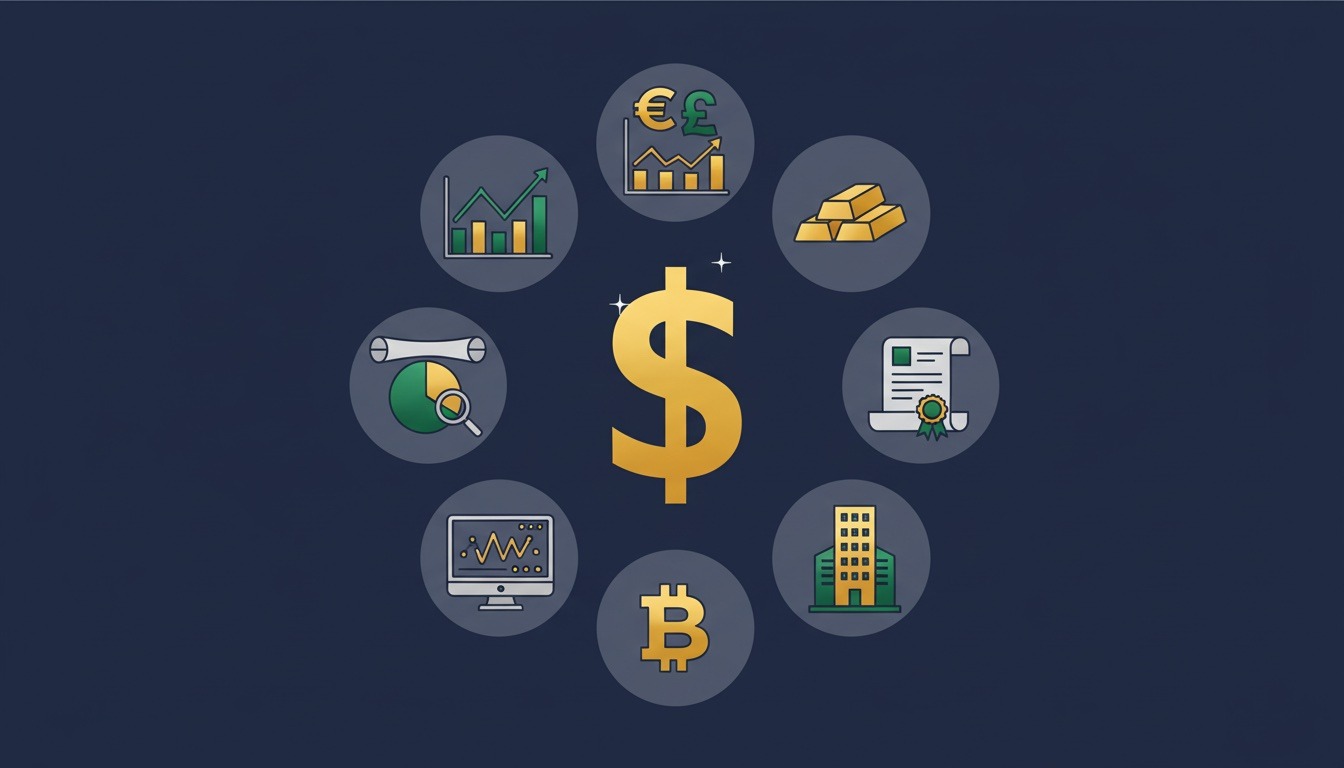
Learn How to Make Fast Money by Learning diffrent Strategies in Forex Trading and Different Investment Options
How to Invest for Retirement: Complete Guide for 2026
Learning how to invest for retirement is one of the most important financial decisions you will ever make. The earlier you start, the more time your money has to compound — but even if you are getting a late start, the right strategy can still build meaningful wealth for your future.
This guide covers everything you need to know about how to invest for retirement in 2026: the right accounts to use, current contribution limits, asset allocation strategies, the role of gold and alternative assets, and the key mistakes to avoid.
Why Learning How to Invest for Retirement Matters More Than Ever
Pensions have largely disappeared. Social Security alone is not enough. According to the Social Security Administration, the average monthly Social Security benefit in 2026 is approximately $1,976 — far below what most people need to maintain their standard of living in retirement.
The burden of building retirement wealth now falls almost entirely on individuals. That means understanding how to invest for retirement — and acting on that knowledge — is not optional. It is essential.
Step 1: How to Invest for Retirement Using the Right Accounts
The U.S. tax code offers powerful advantages for retirement investors. Using the right accounts is the foundation of any solid retirement strategy on how to invest for retirement
401(k), 403(b), and 457 Plans
If your employer offers a 401(k) or similar workplace retirement plan, this is your first priority. In 2026, the IRS has set the following contribution limits:
Account Type
2026 Limit
Catch-Up (Age 50+)
Super Catch-Up (Age 60–63)
401(k) / 403(b) / 457
$24,500
$32,500 total
$35,750 total
IRA / Roth IRA
$7,500
$8,600 total
N/A
SIMPLE IRA
$17,000
$21,000 total
N/A
Always contribute at least enough to get your full employer match. An employer match is free money — not capturing it is leaving part of your salary on the table.
Traditional IRA vs. Roth IRA
Both IRAs offer tax advantages, but they work differently:
Traditional IRA: Contributions may be tax-deductible. You pay taxes when you withdraw in retirement.
Roth IRA: Contributions are made with after-tax money. Withdrawals in retirement are completely tax-free — including all growth.
For 2026, Roth IRA eligibility phases out for single filers earning between $153,000 and $168,000, and for married couples filing jointly between $242,000 and $252,000. If you earn above those thresholds, speak with a financial advisor about a backdoor Roth IRA conversion.
Can You Contribute to Both a 401(k) and an IRA?
Yes. You can max out both a 401(k) and an IRA in the same year. Maxing out both in 2026 means setting aside $32,000 in tax-advantaged retirement savings — a powerful foundation for long-term wealth.
Step 2: Get Your Asset Allocation Right
Asset allocation — how you divide your portfolio across stocks, bonds, and other assets — is the most important driver of long-term investment returns. Studies consistently show that allocation decisions account for the vast majority of portfolio performance over time.
The Age-Based Rule
A simple starting point: subtract your age from 120 to determine your stock allocation. If you are 45, aim for approximately 75% stocks and 25% bonds and other fixed-income assets. As you approach retirement, gradually shift toward more conservative holdings to protect what you have built.
Core Asset Classes for Retirement
Stocks (equities): The primary growth engine of most retirement portfolios. Consider a mix of domestic and international index funds across large, mid, and small-cap companies. Low-cost index funds consistently outperform most actively managed funds over the long term.
Bonds and fixed income: Bonds generate steady income and reduce portfolio volatility. As you near retirement, bonds become increasingly important. Consider bond funds, CDs, or Treasury securities.
Real estate: Real Estate Investment Trusts (REITs) provide exposure to real estate without direct ownership. They generate dividend income and offer diversification from stocks and bonds.
Gold and precious metals: Gold has served as a wealth preservation tool for thousands of years. As a hedge against inflation and currency devaluation, a modest gold allocation — typically 5–15% — can reduce overall portfolio risk. Central banks globally have been buying gold at record levels precisely because of its ability to hold value during economic uncertainty. See our complete guide on how and where to buy gold for retirement for a detailed breakdown of your options.
Cryptocurrency: Bitcoin and other major cryptocurrencies have become increasingly mainstream retirement assets. While highly volatile, a small allocation (1–5%) can provide outsized growth potential. They should complement, not replace, core retirement holdings.
Step 3: Diversify Across and Within Asset Classes
Diversification — spreading your investments across uncorrelated assets — is the closest thing to a free lunch in investing. When one asset class falls, another may hold steady or rise, smoothing out your overall returns.
Diversification checklist:
Domestic and international stocks
Large-cap, mid-cap, and small-cap exposure
Growth and value styles
Multiple bond durations and credit qualities
Inflation hedges: gold, silver, real estate, TIPS
Alternative assets: commodities, cryptocurrency
One area often overlooked is precious metals diversification. Gold and silver have low correlation with stock markets — they often rise when stocks fall, providing a natural hedge. When investors flee to safe-haven assets during recessions or financial crises, gold often surges, protecting retirement portfolios from the worst drawdowns.
Step 4: Keep Investment Costs Low
Fees are the silent destroyer of retirement wealth. A 1% annual fee difference on a $500,000 portfolio costs roughly $100,000 over 20 years in lost compound growth.
Rules for minimizing costs:
Choose index funds over actively managed funds where possible — expense ratios should be well under 0.5%
Avoid funds with front-end or back-end sales loads
Minimize transaction costs by avoiding frequent trading
Keep advisory fees under 1% of your total portfolio annually
Step 5: Consider a Gold IRA for Inflation Protection
A Gold IRA allows you to hold physical gold within a tax-advantaged retirement account. Given the inflationary pressures and currency uncertainty of recent years, many retirement investors are adding gold exposure specifically for its inflation-hedging properties.
Key benefits of a Gold IRA include direct ownership of physical gold within a tax-deferred or tax-free account, protection against currency devaluation, and diversification away from paper assets. If you have an existing 401(k), 403(b), or traditional IRA, you may be able to roll over a portion into a Gold IRA. See our IRA to Gold Rollover: Complete Benefits Guide for full details on how this works and what to expect.
Step 6: Know What NOT to Do
Avoiding common mistakes is just as important as making good investment decisions.
Don’t Try to Time the Market
Studies consistently show that investors who try to time the market — moving in and out based on short-term predictions — end up with significantly lower returns than those who stay invested. Morningstar research shows that market-timing investors consistently underperform the funds they are investing in, simply because they buy high and sell low.
Don’t Delay Starting
The most powerful force in retirement investing is compound interest — and it requires time. Every year you delay costs you far more than the amount you failed to contribute. A 25-year-old who contributes $5,000 per year until age 65 at 7% annual returns will accumulate approximately $1.1 million. Starting at 35 with the same contributions produces roughly $540,000 — half the outcome for the same money. Understanding how to invest for retirement means making consistent contributions over time, even when markets are volatile
Don’t Over-Concentrate in Employer Stock
Many investors hold large positions in their employer’s stock inside their 401(k). This concentrates both your employment income and your retirement savings in the same company — a dangerous double exposure if that company struggles.
Don’t Ignore Required Minimum Distributions
Traditional IRAs and 401(k)s require minimum distributions beginning at age 73. Failing to take RMDs triggers a 25% excise tax on the amount not withdrawn. Plan ahead, especially if you hold illiquid assets like physical gold in your IRA.
Don’t Neglect Rebalancing
Asset allocations drift over time as different assets grow at different rates. Rebalancing once a year — selling overweight assets and buying underweight ones — keeps your risk profile consistent with your goals. Research shows annual rebalancers significantly outperform those who never rebalance or rebalance too frequently.
Step 7: Get Professional Help When You Need It
A qualified financial advisor can help you optimize your retirement strategy, minimize taxes, and navigate complex decisions like Social Security timing, Medicare planning, and estate planning.
When selecting an advisor, look for a fee-only fiduciary — someone legally required to act in your best interest rather than earning commissions on product sales. The National Association of Personal Financial Advisors (NAPFA) maintains a directory of fee-only fiduciary advisors across the country.
How to Invest for Retirement in 2026: The Big Picture
The environment for retirement investors in 2026 is more complex than previous generations faced. Inflation remains elevated. Global recession risk is real. Government debt is at historic highs. Currency uncertainty is driving central banks to accumulate gold at record levels.
In this environment, the principles of sound retirement investing remain unchanged — but the importance of diversification, inflation hedging, and asset protection has never been higher. A well-constructed retirement portfolio includes tax-advantaged accounts maxed out to their 2026 limits, a diversified allocation across stocks, bonds, real estate, and precious metals, low-cost investment vehicles, and a long-term mindset that ignores short-term market noise.
For investors interested in alternative assets and commodities as part of their retirement strategy, explore our Gold Trading: Complete Guide to XAU/USD and our Forex Education Hub for comprehensive guides on every aspect of global investing.
Getting Started
Learning how to invest for retirement is one of the most important financial decisions you will make. The earlier you start, the more time compound growth has to work in your favor. Open the right accounts, allocate your assets appropriately for your age, keep costs low, and revisit your strategy annually. Whether you are 25 or 55, the best time to invest for retirement is now.
This article provides educational information only and does not constitute financial, tax, or investment advice. Consult a qualified financial advisor before making retirement investment decisions. Contribution limits are set by the IRS and subject to annual adjustment.