Learn How to Make Fast Money by Learning diffrent Strategies in Forex Trading and Different Investment Options
USD/CHF Trading Guide: How to Trade the Swiss Franc
The Swiss Franc has earned a unique reputation in forex markets. While most currencies rise and fall based on economic growth and interest rates, the CHF often moves for entirely different reasons. It’s the ultimate safe haven currency, the one traders flock to when markets get nervous.
If you’re planning to trade USD/CHF, you need to understand what makes this pair tick. The dynamics here are different from trading EUR/USD or GBP/USD. The Swiss National Bank operates with different priorities, Swiss economic data carries different weight, and the franc’s safe haven status creates price movements that catch unprepared traders off guard.
This guide will walk you through everything you need to know about trading USD/CHF effectively, from understanding what drives the franc to practical strategies that work in different market conditions.
The Swiss Franc isn’t just another currency. Switzerland’s political neutrality, strong banking system, and stable economy have made the CHF a refuge during times of global uncertainty for decades.
When stocks crash, when geopolitical tensions flare, when central banks make unexpected moves, money flows into the Swiss Franc. This safe haven demand can override normal economic fundamentals. The franc might strengthen even when Swiss economic data disappoints, simply because global risk sentiment has soured.
Switzerland’s banking secrecy laws, while diminished in recent years, still contribute to the franc’s appeal. The country’s current account surplus, low debt levels, and tradition of fiscal discipline add to the currency’s stability reputation.
Understanding this safe haven characteristic is fundamental to trading USD/CHF successfully. You’re not just trading on US versus Swiss economic data. You’re trading global risk sentiment, and that requires a different analytical approach than most currency pairs.
What Moves USD/CHF
Several factors influence USD/CHF price action, and they often pull in different directions simultaneously.
US Economic Data and Federal Reserve Policy drive the USD side of the equation. Strong US employment reports, rising inflation, or hawkish Fed commentary typically strengthens the dollar and pushes USD/CHF higher. When the Fed cuts rates or US data disappoints, the dollar weakens and USD/CHF tends to fall.
Global Risk Sentiment is often more important than economic fundamentals for this pair. Stock market selloffs, geopolitical crises, or financial system stress trigger safe haven flows into the franc. During these periods, USD/CHF can drop sharply regardless of US economic strength.
Swiss National Bank (SNB) Policy plays a crucial but unpredictable role. The SNB has a history of surprise interventions and unconventional policy moves. They’ve maintained negative interest rates for years and intervened directly in forex markets to weaken the franc when they deemed it too strong for Swiss exporters.
Gold Prices show an inverse correlation with USD/CHF. When gold rallies, the franc often strengthens, pushing USD/CHF lower. Both gold and CHF serve as safe haven assets, so they tend to move together during risk-off periods.
European Economic Conditions matter because Switzerland’s economy is closely tied to the Eurozone. Swiss exports depend heavily on European demand, so EUR/CHF movements often influence USD/CHF indirectly.
The interplay between these factors creates the trading opportunities in USD/CHF. A trader focused only on US economic data will miss the bigger picture and likely struggle with this pair.
USD/CHF Price Behavior and Characteristics
USD/CHF typically trades in a more orderly fashion than high-volatility pairs like GBP/JPY. The average daily range is moderate, usually between 50-80 pips under normal conditions, though this can expand dramatically during risk-off events.
The pair trends well over longer timeframes. Multi-month trends are common, driven by sustained shifts in Fed policy, global risk sentiment, or SNB intervention. These trends can persist even when short-term data suggests they should reverse.
Volatility spikes occur during specific events. SNB policy announcements can trigger 200-300 pip moves in minutes. Major geopolitical shocks send the pair plunging as safe haven demand surges. These violent moves remind traders why proper risk management is essential.
USD/CHF respects technical levels reasonably well. Support and resistance levels, trend lines, and Fibonacci retracements tend to work better on this pair than on some others. The relatively lower retail participation and higher institutional involvement may contribute to this technical reliability.
Session-wise, USD/CHF sees its highest activity during the European and US overlap (8 AM to 12 PM EST). Swiss data releases typically occur during early European hours, while US data comes during the New York session. The Asian session tends to be quieter unless major risk events emerge.
Correlations: USD/CHF’s Relationships with Other Pairs
Understanding how USD/CHF correlates with other currency pairs helps you manage risk and spot trading opportunities.
Strong Negative Correlation with EUR/USD: This is one of the most reliable correlations in forex. When EUR/USD rises, USD/CHF usually falls, and vice versa. The correlation isn’t perfect because EUR/CHF movements can disrupt it, but it’s strong enough that many traders monitor both pairs together.
The logic is straightforward: both pairs share the USD as one component. When the dollar strengthens against most currencies, EUR/USD falls while USD/CHF rises. This inverse relationship typically exceeds -0.85 correlation.
Positive Correlation with EUR/CHF: When the euro strengthens against the franc, both EUR/USD and USD/CHF tend to rise together. When the franc strengthens against the euro, both pairs fall. Monitoring EUR/CHF helps you understand whether USD/CHF movements are driven by dollar strength or franc strength.
Correlation with Gold (Inverse): As mentioned earlier, gold and the Swiss Franc often move together as safe haven assets. When gold rallies, the franc typically strengthens, pushing USD/CHF lower. This correlation strengthens during risk-off periods and weakens during calm markets.
No discussion of USD/CHF trading is complete without addressing the SNB’s role. Unlike the Federal Reserve or European Central Bank, which follow relatively transparent policy frameworks, the SNB operates with more discretion and less predictability.
Negative Interest Rates: The SNB maintained negative rates for years, charging banks to hold deposits. This unconventional policy aimed to discourage capital inflows and prevent excessive franc appreciation that would hurt Swiss exporters.
Currency Intervention: The SNB actively intervenes in forex markets, buying foreign currencies to weaken the franc. These interventions aren’t always announced in real-time, making them difficult to anticipate. Intervention speculation can itself move the market.
The January 2015 Shock: The SNB’s most dramatic move came when they unexpectedly abandoned their EUR/CHF floor at 1.2000. The franc surged 30% in minutes, destroying several forex brokers and causing catastrophic losses for traders holding CHF shorts. This event serves as a permanent reminder of the SNB’s willingness to make shocking policy reversals.
Trading USD/CHF requires awareness that the SNB might intervene at any time if they judge the franc too strong. Holding large positions through SNB policy meetings or periods of extreme franc strength carries elevated risk.
Best Times to Trade USD/CHF
Timing matters significantly for USD/CHF trading. Liquidity, volatility, and price behavior vary across different trading sessions.
European Session (2 AM – 12 PM EST) is prime time for USD/CHF. Swiss economic data releases occur during early European hours, creating volatility and trading opportunities. The London session opening at 3 AM EST brings substantial liquidity. This is when the pair tends to establish its daily direction.
US Session (8 AM – 5 PM EST) maintains good activity, especially during the overlap with European trading from 8 AM to 12 PM EST. US economic data releases drive USD strength or weakness, directly impacting the pair. The afternoon US session (after European close) typically sees reduced volatility.
Asian Session (6 PM – 2 AM EST) is generally quieter for USD/CHF. Range-bound trading is common during these hours. However, major risk events emanating from Asia can trigger significant safe haven flows into the franc, making the session less predictable during crisis periods.
Avoid trading around SNB meetings unless you’re specifically trading the event and accept the elevated risk. SNB policy announcements can produce extremely volatile price action with wide spreads and slippage.
Technical Analysis on USD/CHF
USD/CHF responds well to technical analysis, making it suitable for traders who rely on charts and indicators.
Trend Following Strategies work effectively on longer timeframes. The 4-hour and daily charts often show clear trends that persist for weeks or months. Moving average crossovers, trend line breaks, and momentum indicators like MACD and RSI all provide useful signals.
Support and Resistance Levels hold well on this pair. Major psychological levels like 0.9000, 0.9500, and 1.0000 act as significant barriers. Previous swing highs and lows often serve as reliable support and resistance on both intraday and longer-term charts.
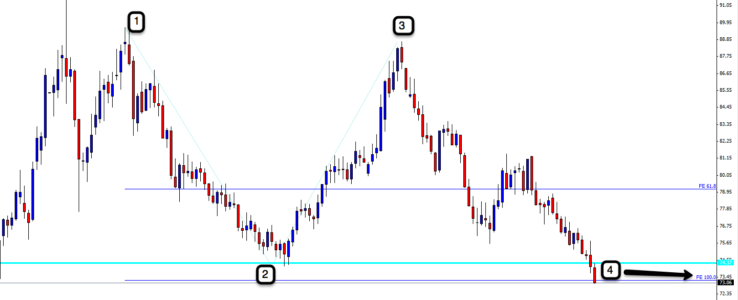
Fibonacci Retracements are particularly effective for identifying potential reversal points during corrections within larger trends. The 38.2%, 50%, and 61.8% retracement levels frequently coincide with bounces or reversals.
Chart Patterns such as head and shoulders, double tops/bottoms, and triangles tend to play out reliably. The institutional nature of USD/CHF trading may contribute to this pattern reliability, as larger players often trade based on classical technical analysis.
Trading Strategies for USD/CHF
Different market conditions call for different approaches when trading this pair.
Safe Haven Flow Trading: During global risk events, focus on trading the franc’s safe haven role. When stock markets plunge or geopolitical tensions escalate, look for opportunities to short USD/CHF as the franc strengthens. Conversely, when risk appetite returns, long USD/CHF positions benefit from franc weakness.
The key is identifying genuine risk-off events versus temporary market jitters. Major geopolitical crises, financial system stress, or broad equity market selloffs trigger substantial safe haven flows. Minor news events might cause brief reactions but lack follow-through.
Fed Policy Differential Trading: When the Federal Reserve signals hawkish policy (rate hikes, tightening) while the SNB maintains accommodative policy, the interest rate differential favors USD strength. Long USD/CHF positions can capture this dynamic. The reverse applies when the Fed turns dovish while the SNB remains neutral or tightens.
Range Trading During Calm Periods: When global markets are stable and no major policy shifts loom, USD/CHF often trades in well-defined ranges. Identify the range boundaries using support and resistance levels, then sell at range highs and buy at range lows.
Breakout Trading: After extended consolidation periods or when the pair approaches major technical levels, breakouts can produce substantial trends. Wait for decisive breaks of key levels with increased volume, then enter in the breakout direction with stops below/above the broken level.
Risk Management Specific to USD/CHF
Trading USD/CHF requires particular attention to certain risk factors.
SNB Intervention Risk: Always maintain reasonable position sizes on USD/CHF because the SNB can intervene unexpectedly. Leverage should be moderate. A surprise SNB action or policy shift can cause 200+ pip moves in minutes, potentially triggering stops or margin calls on overleveraged positions.
Gap Risk Around SNB Meetings: The pair can gap significantly at SNB policy announcements. Avoid holding positions through these events unless you accept gap risk. If you do trade the event, use smaller position sizes than normal.
Safe Haven Event Risk: Global shocks can send USD/CHF plunging rapidly as panic buying of francs ensues. Your stop loss might not execute at your intended level during extreme volatility. Account for potential slippage when setting stop distances.
Correlation Risk: If you’re also trading EUR/USD, recognize that it moves inversely to USD/CHF. Holding long EUR/USD and long USD/CHF simultaneously partially hedges your dollar exposure rather than doubling it. Make sure you understand your net exposure across correlated pairs.
Certain economic releases have outsized impacts on this pair.
US Side:
Non-Farm Payrolls: The most important US data release. Strong employment typically strengthens USD/CHF; weak data pushes it lower.
CPI Inflation Data: Inflation readings influence Fed policy expectations, driving dollar strength or weakness.
Fed Interest Rate Decisions and FOMC Statements: Direct impact through interest rate changes and policy guidance.
GDP Reports: Strong growth supports the dollar; weak growth undermines it.
Swiss Side:
CPI Data: While less impactful than US data, Swiss inflation influences SNB policy and franc direction.
Trade Balance: Switzerland’s large current account surplus supports the franc. Unusually weak trade data can weigh on CHF.
SNB Policy Meetings: Even without policy changes, SNB communication about franc strength concerns or intervention willingness moves the market.
KOF Economic Barometer: A leading indicator for Swiss economic activity that sometimes generates market reactions.
Global Factors:
Stock Market Performance: Major equity index selloffs often trigger USD/CHF declines as safe haven demand emerges.
Geopolitical Events: Crises in Europe, Middle East tensions, or global trade disputes can spike franc demand.
Gold Price Movements: Sharp gold rallies often coincide with franc strength.
Common Mistakes When Trading USD/CHF
Avoid these errors that catch traders off guard on this pair.
Mistake 1: Ignoring Safe Haven Dynamics
Trading USD/CHF purely on economic data while ignoring risk sentiment is a recipe for confusion. The franc can strengthen despite weak Swiss data if global risk appetite sours. Always monitor broader market conditions and risk flows.
Mistake 2: Overleveraging
The SNB’s unpredictability and the franc’s safe haven status create gap and volatility risks. Using excessive leverage can lead to catastrophic losses if the SNB intervenes or a major risk event occurs. Keep leverage moderate on this pair.
Mistake 3: Fighting the Trend
USD/CHF can trend persistently when fundamental drivers align. Trying to pick tops or bottoms against strong trends often leads to repeated losses. Respect the trend and look for entries in its direction rather than fading it.
Mistake 4: Holding Through SNB Events
Unless specifically trading the event, close positions before SNB meetings. The risk of violent, unpredictable moves outweighs potential gains from holding through the announcement.
Mistake 5: Neglecting EUR/CHF
Movements in EUR/CHF significantly affect USD/CHF. If EUR/CHF is surging, USD/CHF’s behavior reflects both dollar and franc dynamics. Monitor EUR/CHF to understand whether USD/CHF moves are driven by USD strength/weakness or CHF strength/weakness.
Practical USD/CHF Trading Example
Let’s walk through a complete trade setup.
You’re monitoring USD/CHF during a period of calm global markets. The Fed has recently signaled confidence in the US economy and hinted at potential rate hikes, while the SNB maintains its negative rate policy.
On the daily chart, USD/CHF has been consolidating between 0.9100 and 0.9250 for three weeks. The pair approaches the upper boundary at 0.9245, and you notice a bullish engulfing candle forming with increased volume.
Before entering, you check:
Risk Sentiment: Stock markets are stable, VIX is low—no safe haven flows expected
Fed vs SNB: Interest rate differential favors the dollar
EUR/CHF: Stable, suggesting no unusual franc strength
You enter long at 0.9250, anticipating a breakout from the range. Your stop loss sits at 0.9180, below the recent consolidation and the 20-day moving average—70 pips away.
Your initial target is 0.9400, the next major resistance level, offering 150 pips—a 2.1:1 reward-to-risk ratio.
The trade develops favorably. US economic data comes in strong over the next week, reinforcing Fed tightening expectations. The pair pushes through 0.9300, then 0.9350. You trail your stop to breakeven once the pair clears 0.9320.
At 0.9395, just below your target, you notice a bearish evening star candlestick pattern forming at resistance. Rather than waiting for your exact target, you exit at 0.9390, capturing 140 pips.
The trade worked because you aligned multiple factors: favorable interest rate differentials, technical breakout confirmation, calm risk environment, and proper risk management. You also showed discipline by exiting when price action signaled potential reversal rather than hoping for those last 10 pips.
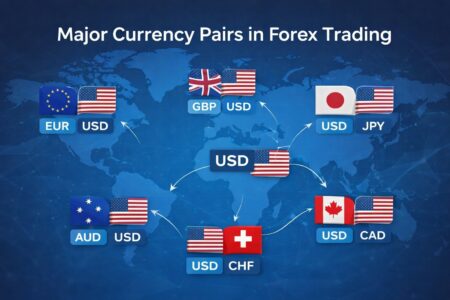
USD/CHF vs Other Major Currency Pairs
USD/CHF vs EUR/USD
Here’s something interesting about USD/CHF and EUR/USD—they’re practically mirror images of each other. If you’ve ever wondered why, it’s because Switzerland and the Eurozone are neighbors with tightly linked economies, so the Swiss franc often shadows the euro’s movements.
What does this mean for you as a trader? When EUR/USD goes up, USD/CHF almost always goes down by roughly the same amount. They maintain this inverse dance about 90-95% of the time. So if you’re thinking about trading both pairs at once, stop—you’d essentially be taking the same trade twice, just in opposite directions.
The practical difference? EUR/USD has way tighter spreads (often half of what you’ll pay for USD/CHF) and more liquidity. Most traders stick with EUR/USD for this reason, turning to USD/CHF only when they specifically want exposure to the Swiss franc.
USD/CHF vs GBP/USD
Think of GBP/USD as the wild cousin and USD/CHF as the calm, steady one at the family gathering. While GBP/USD swings through 100+ pip ranges on a regular Tuesday, USD/CHF might move 50-60 pips on that same day.
Why the difference? The British pound responds dramatically to political news, Brexit developments, and Bank of England surprises. The Swiss franc? It just quietly does its safe haven thing, moving methodically except during rare SNB intervention moments. If you’re the type who gets stressed by big, fast moves, USD/CHF’s more measured pace might suit you better than Cable’s volatility.
Both pairs move inversely to each other most of the time (when GBP/USD rises, USD/CHF typically falls), but the correlation isn’t as tight as with EUR/USD. Sometimes they go their separate ways based on UK-specific or Switzerland-specific news.
USD/CHF vs USD/JPY
Here’s where things get interesting. Both USD/CHF and USD/JPY feature safe haven currencies (Swiss franc and Japanese yen), but they don’t always move together like you might expect.
When the US dollar strengthens broadly, both pairs rise—USD/CHF and USD/JPY head up together. Makes sense, right? But watch what happens during a market panic. The Japanese yen typically strengthens more aggressively than the Swiss franc, causing USD/JPY to plummet while USD/CHF might only drift lower or even hold steady.
Professional traders use this difference to their advantage. By watching both pairs, they can figure out whether a market move is driven by dollar strength/weakness or by pure fear (safe haven demand). USD/JPY offers better liquidity and is active 24 hours due to Asian trading, while USD/CHF is quietest during Asian hours.
USD/CHF vs AUD/USD
AUD/USD and USD/CHF represent opposite ends of the risk spectrum. When traders feel confident and want to take risks, they buy the Australian dollar (pushing AUD/USD up) and sell the Swiss franc (pushing USD/CHF up too). When fear strikes, they dump AUD and grab CHF for safety.
The result? These pairs often move in the same direction, but for completely different reasons. AUD/USD climbs because traders are chasing yield and betting on China’s growth. USD/CHF rises because traders are fleeing safety for riskier assets.
One big practical difference: AUD/USD is heavily influenced by commodity prices (iron ore, coal, gold) and Chinese economic data. USD/CHF doesn’t care much about commodities—it marches to the beat of Swiss National Bank policy and European financial stability. AUD/USD also offers bigger daily ranges, so your profit targets and stops need adjustment.
USD/CHF vs USD/CAD
Both USD/CHF and USD/CAD have USD as the base currency, which creates some natural correlation. When the US dollar strengthens across the board, both pairs tend to rise together. But that’s where the similarity ends.
USD/CAD is joined at the hip with crude oil prices. When oil rallies, the Canadian dollar strengthens and USD/CAD falls. When oil crashes, USD/CAD surges. USD/CHF? Couldn’t care less about oil. It responds to Swiss economic data, SNB policy, and European financial stress.
For practical trading, USD/CAD tends to be more range-bound with clearer support and resistance levels, making it popular for range trading strategies. USD/CHF trends more smoothly and is better for trend-following approaches. USD/CAD also has better liquidity and slightly tighter spreads, plus it’s more active during US trading hours when oil inventory data releases.
USD/CHF vs NZD/USD
NZD/USD is the polar opposite of USD/CHF in almost every way. While the Swiss franc attracts nervous money looking for safety, the New Zealand dollar attracts adventurous traders hunting for yield and willing to take risks.
When market sentiment is positive, NZD/USD climbs (risk-on) while USD/CHF also climbs (money leaving safe havens). When markets get spooked, NZD/USD crashes (risk-off) while USD/CHF also crashes (though less severely, as money piles into CHF). The correlation is there but it’s driven by opposite motivations.
From a practical standpoint, NZD/USD swings through much bigger ranges—we’re talking 80-120+ pips daily versus USD/CHF’s typical 50-70 pips. USD/CHF offers more consistent, predictable price action suitable for conservative strategies. NZD/USD offers bigger profit potential but requires wider stops and better timing. If you’re just starting out, USD/CHF’s stability makes it more forgiving of mistakes.
Final Thoughts on Trading USD/CHF
USD/CHF offers unique opportunities for traders who understand its special characteristics. The Swiss Franc’s safe haven status, the SNB’s interventionist tendencies, and the pair’s correlation with global risk sentiment create a trading environment distinct from other major pairs.
Success with USD/CHF requires broader market awareness beyond just US and Swiss economic data. You need to monitor stock markets, geopolitical developments, gold prices, and overall risk appetite. These factors often override traditional fundamental analysis.
The pair suits both technical and fundamental traders. Its respect for technical levels makes chart-based strategies viable, while its responsiveness to Fed policy and safe haven flows provides fundamental trading opportunities.
Risk management deserves extra attention with USD/CHF. The SNB’s unpredictability means you should never become complacent or overleveraged. Moderate position sizing and awareness of event risk are essential for long-term survival.
Start by understanding the safe haven dynamic. Watch how USD/CHF behaves during risk-off periods versus calm markets. Observe SNB communications and learn to recognize when franc strength might prompt intervention concerns.
Most importantly, respect this pair’s unique nature. Don’t try to trade it exactly like EUR/USD or GBP/USD. Adapt your approach to account for the factors that make the Swiss Franc special, and you’ll find USD/CHF can be a rewarding addition to your trading portfolio.