Learn How to Make Fast Money by Learning diffrent Strategies in Forex Trading and Different Investment Options
AUD/USD Trading Guide: The Aussie
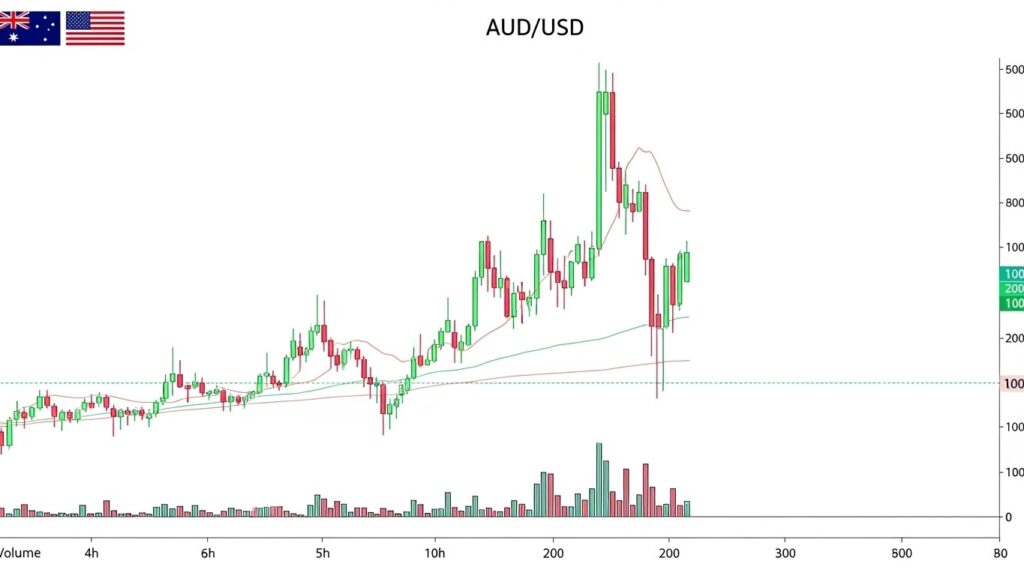
In this AUD/USD Trading Guide you will learn about the AUD/USD currency pair, commonly known as “The Aussie,” represents the exchange rate between the Australian dollar and the US dollar. As one of the major currency pairs in forex trading, it offers unique characteristics driven by commodity prices, interest rate differentials, and the economic relationship between two major economies.
AUD/USD ranks as the fourth most traded currency pair globally, accounting for approximately 5-6% of daily forex volume according to the Bank for International Settlements (https://www.bis.org). This liquidity ensures tight spreads and reliable price execution, making it attractive for traders at all experience levels.
The pair’s behavior reflects Australia’s position as a major commodity exporter, particularly iron ore, coal, and natural gas. China’s demand for these resources creates a strong correlation between Chinese economic growth and the Australian dollar’s strength. When commodity prices rise and China’s economy expands, the AUD typically strengthens against the USD.
The Reserve Bank of Australia (RBA) (https://www.rba.gov.au) manages Australian monetary policy, while the Federal Reserve (https://www.federalreserve.gov) controls US policy. Interest rate differentials between these two central banks significantly influence AUD/USD price action, as covered in our Fundamental Analysis Guide.
Key Drivers of AUD/USD Movement
Commodity prices represent the primary driver of Australian dollar strength. Iron ore prices particularly impact the AUD since Australia supplies approximately 50% of global iron ore exports. When iron ore prices surge, the AUD typically rallies. Gold prices also affect the pair, as Australia ranks among the world’s top gold producers.
The China-Australia economic relationship cannot be overstated. China purchases roughly one-third of Australia’s total exports, making Chinese economic data almost as relevant to the AUD as Australian data. Strong Chinese manufacturing PMI, industrial production, and GDP figures typically support the Australian dollar.
Interest rate differentials drive medium to long-term trends in AUD/USD. When the RBA maintains higher rates than the Federal Reserve, carry trade opportunities emerge. These strategies, which involve borrowing in low-interest currencies to invest in higher-yielding ones, create sustained demand for the AUD. Our Forex Trading Strategies guide covers various approaches to capitalize on these dynamics.
Risk sentiment plays a crucial role in AUD/USD behavior. The Australian dollar functions as a “risk-on” currency—it tends to strengthen during periods of global economic optimism and weaken during risk-averse periods. Stock market rallies often coincide with AUD strength, while equity selloffs typically pressure the pair lower.
Trading Sessions and Optimal Timing
The AUD/USD pair demonstrates distinct behavioral patterns across different trading sessions. The Asian session, when Australian markets are active, typically produces the most significant moves. The Sydney market opens at 10 PM GMT (5 PM EST), creating initial volatility as Asian traders react to overnight developments.
The overlap between the Asian and European sessions from 7 AM to 9 AM GMT generates increased liquidity and volatility. European traders begin positioning, often creating continuation or reversal patterns established during Asian trading hours.
News releases from the Australian Bureau of Statistics (https://www.abs.gov.au) typically occur during the Asian session, causing immediate price spikes. Employment data, GDP reports, and inflation figures from Australia can move AUD/USD 50-100 pips within minutes of release.
The New York session opening at 1 PM GMT brings US economic data that often overpowers Australian factors. Major US releases like Non-Farm Payrolls, GDP, and Federal Reserve decisions can dominate price action regardless of Australian fundamentals, as detailed in our Economic Indicators and Forex guide.
Technical Analysis for AUD/USD
AUD/USD responds well to traditional technical analysis approaches. The pair respects major support and resistance levels, particularly psychological round numbers like 0.6500, 0.7000, and 0.7500. These levels often mark turning points and provide reference points for entries and exits, as explained in our Support and Resistance Trading guide.
Moving averages work effectively on AUD/USD across multiple timeframes. The 50-day and 200-day simple moving averages on daily charts often act as dynamic support and resistance. Crossovers between these averages frequently signal trend changes worth monitoring. The 20-period exponential moving average on 4-hour charts helps identify short-term trend direction.
The Relative Strength Index (RSI) provides valuable overbought and oversold signals on AUD/USD. Readings above 70 suggest overbought conditions where pullbacks may occur, while readings below 30 indicate oversold conditions where bounces become likely. Divergences between price and RSI often precede significant reversals.
Candlestick Patterns prove particularly reliable on AUD/USD. Engulfing patterns, pin bars, and doji formations at key support or resistance levels offer high-probability trade setups. The pair’s liquidity ensures these patterns complete properly without gaps or erratic price behavior.
Fibonacci retracements help identify potential reversal zones during pullbacks. After significant moves, AUD/USD frequently retraces to the 38.2%, 50%, or 61.8% Fibonacci levels before resuming the primary trend. Combining Fibonacci levels with other technical confluences increases setup reliability.
Fundamental Trading Strategies
RBA monetary policy decisions provide major trading opportunities. The RBA meets monthly, typically on the first Tuesday of each month except January. Rate decisions, accompanying statements, and Governor speeches can move AUD/USD 100+ pips. Trading these events requires understanding the RBA’s inflation targets and economic outlook.
Employment data releases occur monthly around mid-month from the Australian Bureau of Statistics. Strong employment growth and declining unemployment rates support AUD strength, while weak employment figures pressure the currency lower. These releases create volatility comparable to US Non-Farm Payrolls.
Chinese economic data offers indirect but powerful trading signals. Chinese manufacturing PMI, released on the first business day of each month, often moves AUD/USD significantly. Strong Chinese data suggests sustained demand for Australian commodities, supporting the AUD.
The terms of trade—the ratio of export prices to import prices—influence the Australian dollar’s fundamental value. Rising commodity prices improve Australia’s terms of trade, strengthening the AUD. The RBA publishes comprehensive terms of trade data quarterly.
Common Trading Approaches
Range Trading works well during Asian session consolidations. AUD/USD often establishes clear ranges overnight that persist through European morning hours. Our Range Trading Strategies guide details how to identify and trade these opportunities with defined risk parameters.
Breakout Trading capitalizes on momentum when AUD/USD breaks significant technical levels. Major support or resistance breaks, particularly when accompanied by high volume and strong fundamentals, often lead to sustained moves. Our Breakout Trading Strategies resource covers entry techniques and risk management for these setups.
Trend Following suits traders who prefer longer holding periods. AUD/USD develops extended trends lasting weeks or months, driven by commodity super-cycles or interest rate differentials. Using trend indicators like moving averages and ADX helps identify and ride these moves, as discussed in our Trend Trading Strategies guide.
Scalping during high-volume periods provides opportunities for quick profits. The Sydney open and overlapping session times offer sufficient volatility for scalpers. However, spreads matter significantly for short-term trading—ensure your broker offers competitive spreads before implementing scalping strategies. Our Forex Scalping Guide provides detailed techniques for short-term trading.
Risk Management for AUD/USD
Position sizing must account for AUD/USD’s average daily range of 70-100 pips. Using our Risk Management principles, never risk more than 1-2% of account equity on any single trade. A 50-pip stop loss on a $10,000 account with 2% risk allows for a position size of approximately 4,000 units (0.04 lots).
Volatility spikes during major announcements require wider stops or reduced position sizes. RBA decisions and Australian employment reports can move the pair 100+ pips instantly. Consider reducing position size by 50% when trading these high-impact events.
Correlation awareness prevents overexposure. AUD/USD maintains strong positive correlation with NZD/USD and negative correlation with USD/JPY. Holding AUD/USD long positions while also long NZD/USD doubles your exposure to similar risk factors. Our Understanding Currency Pairs guide explains these relationships.
The pair’s commodity sensitivity adds an extra risk dimension. Unexpected commodity price crashes can trigger rapid AUD declines even when other fundamentals appear supportive. Monitor iron ore and gold prices through resources like the International Monetary Fund (https://www.imf.org) commodity price data.
Economic Calendar Events to Watch
Track these regular data releases that significantly impact AUD/USD:
Australian Employment Change occurs monthly, typically mid-month. This report measures new jobs created and is released by the Australian Bureau of Statistics. Strong employment growth supports RBA rate hikes, strengthening the AUD.
RBA Meeting Minutes published two weeks after each policy meeting provide insight into board members’ thinking. These minutes often move AUD/USD more than the rate decision itself, revealing future policy bias.
China Manufacturing PMI releases on the first business day of each month. Readings above 50 indicate expansion and typically support the AUD. The National Bureau of Statistics of China (https://www.stats.gov.cn/english) publishes this crucial indicator.
US Non-Farm Payrolls on the first Friday of each month dominates trading regardless of Australian factors. Strong US employment strengthens the USD, pressuring AUD/USD lower. Weak employment can spark AUD rallies.
Retail Sales from both countries provide insight into consumer spending and economic health. Australian retail sales release mid-month, while US retail sales typically come out mid-month as well. Strong retail figures suggest economic strength supporting respective currencies.
Seasonal Patterns and Trends
AUD/USD exhibits seasonal tendencies worth considering in your trading plan. The pair tends to strengthen during the first quarter as commodity demand picks up with Chinese industrial activity following Lunar New Year celebrations. This pattern reflects renewed manufacturing and construction activity across Asia.
The Australian fiscal year ending June 30 sometimes creates capital flows affecting the AUD. Portfolio rebalancing and year-end accounting can influence short-term price action, though this factor has diminished in recent years.
September historically shows AUD weakness as northern hemisphere markets return from summer holidays and risk appetite moderates. This pattern isn’t guaranteed but has occurred frequently enough to warrant awareness.
December through early January often brings reduced liquidity and choppy price action. Many institutional traders reduce positions ahead of year-end, leading to thin markets susceptible to exaggerated moves. Consider reducing position sizes during this period.
Advanced Trading Considerations
The correlation with equity markets provides trading signals. When global stock indices rally, the AUD typically strengthens against the USD. The S&P 500’s direction often predicts near-term AUD/USD movement, particularly during the New York session.
Yield curve analysis offers insights into future AUD/USD direction. When Australian bond yields rise relative to US yields, the AUD typically strengthens. The spread between 10-year Australian and US government bonds correlates with medium-term AUD/USD trends.
Central bank intervention remains possible though rare. The RBA has occasionally intervened in currency markets when it believes the AUD is significantly overvalued or undervalued. Such interventions create temporary disruptions worth monitoring.
Multi-timeframe analysis improves trade timing. Analyze daily charts for overall trend direction, 4-hour charts for swing trade entries, and 1-hour charts for precise entry points. This approach ensures your trades align with multiple timeframe confluences.
Trading Psychology and Discipline
The AUD’s reputation as a commodity currency can create cognitive biases. Traders sometimes anchor their expectations to commodity prices, missing important interest rate or risk sentiment shifts. Maintain flexibility in your analysis and avoid overweighting any single factor.
Patience during ranging markets proves essential. AUD/USD can trade sideways for extended periods during commodity price stability and balanced risk sentiment. Forcing trades in these conditions leads to losses. Our Common Forex Trading Mistakes guide covers recognizing when to step aside.
Maintain a Trading Journal specifically tracking AUD/USD trades. Note the dominant driver (commodities, interest rates, risk sentiment) for each trade to identify which scenarios you handle best. This feedback loop accelerates your learning curve.
Emotional discipline remains crucial during high-volatility events. RBA surprises and unexpected Chinese data can move AUD/USD violently. Pre-define your risk parameters and stick to them regardless of emotional impulses.
Building Your AUD/USD Trading Plan
Develop clear entry criteria incorporating both technical and fundamental factors. Require at least two confirming signals before entering trades—perhaps a technical breakout combined with supportive fundamentals. Our Creating a Forex Trading Plan guide provides a comprehensive framework.
Define specific exit rules including profit targets and stop losses. Many successful AUD/USD traders use 1:2 or 1:3 risk-reward ratios, targeting 100-150 pips of profit while risking 50 pips. Adjust these parameters based on your timeframe and trading style.
Establish position sizing rules that account for varying volatility. During low-volatility periods, you might trade standard size, but reduce to 50% position size during RBA meetings or major Chinese data releases.
Create a pre-trade checklist ensuring you’ve analyzed relevant factors: current commodity prices, recent RBA commentary, upcoming economic events, technical setup quality, and overall risk sentiment. This systematic approach prevents impulsive trades.
Broker Considerations for AUD/USD Trading
Select brokers offering competitive spreads on AUD/USD. Typical spreads range from 0.5 to 1.5 pips with reputable brokers. Spreads often widen during news events and low-liquidity periods, so verify how your broker handles these situations. Our How to Choose a Forex Broker guide covers selection criteria.
Execution quality matters particularly for short-term trading strategies. Test your broker’s execution speed during Asian session volatility using a demo account. Slippage during fast-moving markets can significantly impact profitability.
Verify your broker provides access to Australian and Chinese economic calendars. Real-time economic data feeds help you stay informed about market-moving events affecting AUD/USD.
AUD/USD vs Other Major Currency Pairs
AUD/USD vs EUR/USD
Liquidity Comparison:EUR/USD leads all forex pairs with approximately 24% of global volume, while AUD/USD captures roughly 6%. This liquidity difference translates into spread advantages—EUR/USD typically offers 0.5-1.0 pip spreads compared to AUD/USD’s 1.0-2.0 pips.
Volatility Profile: AUD/USD generates average daily ranges of 70-90 pips versus EUR/USD’s 60-80 pips. This 15-20% volatility premium makes AUD/USD attractive for traders seeking larger intraday movements.
Fundamental Drivers: EUR/USD responds primarily to European Central Bank policy and US Federal Reserve decisions. AUD/USD adds commodity price sensitivity (iron ore, coal, gold) and Chinese economic dependency to its fundamental equation. Traders must monitor three economies (US, Australia, China) versus two for EUR/USD.
Key Takeaway: EUR/USD suits beginners due to tighter spreads and abundant educational resources. AUD/USD rewards experienced traders who can analyze commodity markets and Asian economic data.
AUD/USD vs GBP/USD
Volatility Hierarchy:GBP/USD ranks as the most volatile major pair with 100-120 pip daily averages. AUD/USD sits in the middle tier at 70-90 pips. EUR/USD anchors the low end at 60-80 pips. This hierarchy helps traders select pairs matching their risk tolerance.
Correlation Dynamics: Both pairs maintain positive correlation with EUR/USD (0.70-0.85 range), meaning they generally move in the same direction when USD strengthens or weakens. However, GBP/USD responds more dramatically to UK-specific political events, while AUD/USD reacts more strongly to commodity price shifts.
Trading Session Optimization: GBP/USD peaks during London session (3 AM – 12 PM ET), going nearly dormant during Asian hours. AUD/USD maintains activity through Asian session (5 PM – 2 AM ET), offering opportunities when GBP/USD sleeps. This temporal separation allows traders to focus on different pairs at different times.
Key Takeaway: Use GBP/USD for European session trading and higher volatility. Choose AUD/USD for Asian session access and commodity correlation strategies.
AUD/USD vs USD/JPY
Safe Haven vs Risk Asset: This pairing illustrates a fundamental forex concept—USD/JPY contains a safe haven currency (JPY), while AUD/USD features a risk-on currency (AUD). During market optimism, both pairs rise as traders sell JPY and buy AUD. During fear, both fall as JPY strengthens and AUD weakens.
Carry Trade Implications: The historical interest rate differential between Australia (higher) and Japan (lower) created one of forex’s most popular carry trades—borrow cheap JPY to buy high-yielding AUD. This structural relationship means AUD/USD and USD/JPY often move in tandem, both rising during risk-on environments and falling during risk-off periods.
Asian Session Activity: Both pairs offer genuine trading opportunities during Asian hours (unlike EUR/USD or GBP/USD). USD/JPY benefits from Tokyo market participation. AUD/USD gains from Sydney trading and Asian commodity market correlation. Traders operating during 6 PM – 2 AM ET can actively trade either pair.
Key Takeaway: Monitor both pairs to gauge risk sentiment. Simultaneous strength in both signals risk-on conditions. Simultaneous weakness indicates risk-off. Divergence suggests currency-specific factors override broader sentiment.
AUD/USD vs USD/CHF
Risk Spectrum Positioning:USD/CHF features the Swiss franc, a safe haven currency. AUD is a risk currency. This creates inverse correlation patterns during risk events. When markets panic, traders buy CHF (pushing USD/CHF down if USD also weakens) and sell AUD (pushing AUD/USD down). When markets celebrate, money flows reverse.
Correlation Complexity: The relationship between these pairs depends on which currency drives movement. During broad USD weakness, both pairs fall (AUD/USD drops, USD/CHF drops). During risk-off events with stable USD, AUD/USD falls while USD/CHF may rise. Understanding which scenario applies requires reading the broader market context.
Volatility and Range Characteristics: AUD/USD typically generates 70-90 pip daily ranges with trending behavior tied to commodity cycles. USD/CHF produces smaller 50-70 pip ranges with more range-bound price action. Technical traders often prefer USD/CHF’s clearer support/resistance levels, while trend followers prefer AUD/USD’s directional moves.
Key Takeaway: These pairs serve different strategic purposes. AUD/USD excels for trend-following and commodity correlation strategies. USD/CHF suits range trading and safe haven flow analysis.
AUD/USD vs USD/CAD
Commodity Currency Comparison: Both pairs feature commodity-linked currencies, but different commodities. USD/CAD tracks crude oil (Canada’s major export). AUD/USD follows iron ore, coal, and gold (Australia’s major exports). This commodity diversification allows trading both pairs simultaneously without complete overlap.
Directional Correlation: These pairs show moderate positive correlation (0.60-0.75). When USD weakens broadly, both AUD/USD and USD/CAD fall (but USD/CAD moves opposite to our intuition because USD is the base currency). Understanding the base/quote currency mechanics prevents confusion.
Session Timing and Liquidity: AUD/USD dominates Asian session (5 PM – 2 AM ET). USD/CAD dominates North American session (8 AM – 5 PM ET). This natural separation creates a 24-hour trading cycle—trade AUD/USD overnight, switch to USD/CAD during the day.
Key Takeaway: Use both pairs to maintain exposure to commodity currencies across all sessions. Monitor both crude oil and base metals to understand divergences between the pairs.
AUD/USD vs NZD/USD
The Highest Correlation in Forex: AUD/USD and NZD/USD maintain 0.85-0.95 correlation, the strongest among major pairs. Both represent Oceanic economies, both track commodities, both rise during risk-on and fall during risk-off. They move in virtual lockstep most of the time.
Subtle Differences: AUD/USD follows industrial commodities (iron ore, coal) tied to Chinese manufacturing. NZD/USD follows agricultural commodities (dairy, meat) tied to Chinese consumption. When China’s economy shifts from investment-led to consumption-led growth, these pairs can diverge.
Volatility Comparison: NZD/USD generates slightly higher volatility (80-100 pips daily) versus AUD/USD (70-90 pips). This volatility premium reflects New Zealand’s smaller economy and lower liquidity. Traders seeking maximum movement might prefer NZD/USD, while those wanting more stability choose AUD/USD.
Trading Strategy Implications: Never trade both pairs long or both pairs short simultaneously—you’re essentially doubling position size on the same trade. The high correlation means profits and losses move together. Instead, trade the spread between them (the NZD/AUD cross pair) when fundamentals suggest divergence.
Key Takeaway: Treat these pairs as nearly identical for most purposes. Choose AUD/USD for better liquidity and tighter spreads. Choose NZD/USD for slightly higher volatility and different session peak times (Wellington opens before Sydney).
AUD/USD offers diverse trading opportunities driven by commodity prices, interest rate differentials, Chinese economic health, and global risk sentiment. Its liquidity, clear technical patterns, and well-defined fundamental drivers make it suitable for traders employing various strategies from scalping to position trading.
Success with the Aussie requires understanding its unique characteristics. Monitor commodity prices, track RBA policy carefully, stay informed about Chinese economic developments, and recognize the pair’s role as a risk sentiment barometer. Combine this fundamental awareness with solid technical analysis and disciplined risk management.
Whether you’re trading short-term breakouts during the Asian session, swinging multi-day positions based on RBA policy shifts, or holding longer-term positions aligned with commodity super-cycles, AUD/USD provides the volatility and liquidity needed for profitable trading. Develop expertise in this pair’s drivers, maintain trading discipline, and continuously refine your approach through careful journaling and analysis.