Learn How to Make Fast Money by Learning diffrent Strategies in Forex Trading and Different Investment Options
Major Currency Pairs: Complete Trading Guide
Understanding major currency pairs is essential for successful forex trading. This comprehensive guide covers the seven major pairs, their characteristics, what drives their movements, and proven strategies for trading each one.
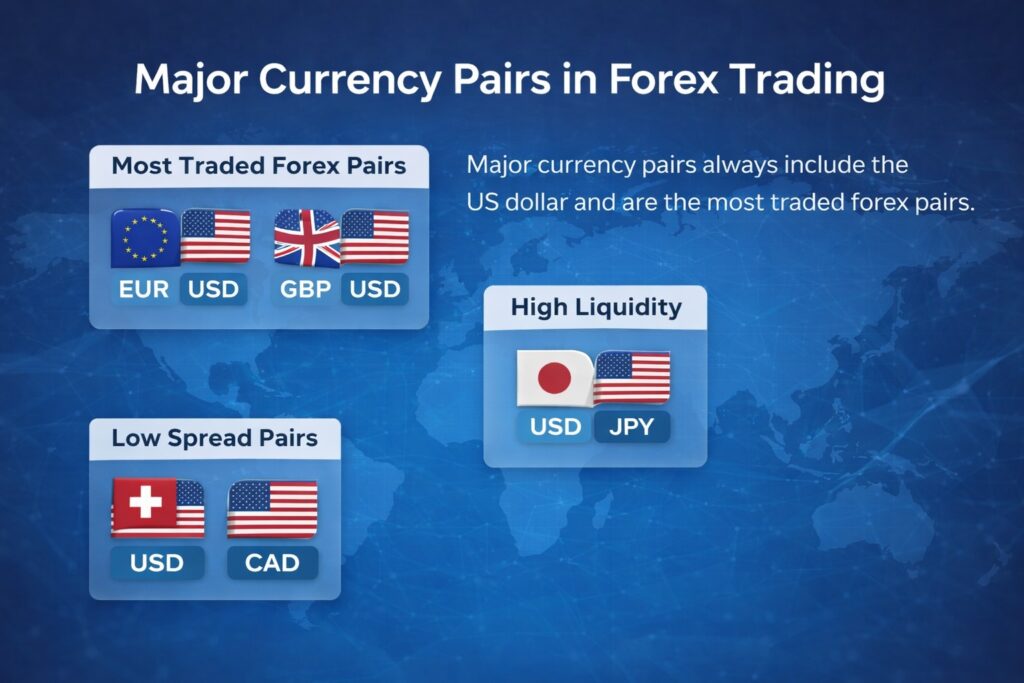
Major currency pairs are the most heavily traded forex pairs in the world, all involving the US dollar. They represent the largest, most liquid markets with the tightest spreads and most predictable price movements.
The 7 Major Pairs:
EUR/USD (Euro/US Dollar)
GBP/USD (British Pound/US Dollar)
USD/JPY (US Dollar/Japanese Yen)
USD/CHF (US Dollar/Swiss Franc)
USD/CAD (US Dollar/Canadian Dollar)
AUD/USD (Australian Dollar/US Dollar)
NZD/USD (New Zealand Dollar/US Dollar)
These pairs account for approximately 70% of all forex trading volume, making them the most accessible and reliable for traders at all levels.
Why Trade Major Currency Pairs?
Liquidity and Tight Spreads
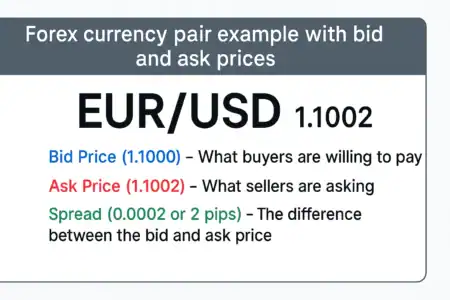
Major pairs offer the highest liquidity in forex markets. This means you can enter and exit trades quickly with minimal slippage. Spreads on major pairs typically range from 0.5 to 2 pips, compared to 3-10+ pips on exotic pairs.
Predictable Price Action
With decades of historical data and consistent market participation, major pairs exhibit more predictable technical patterns. Chart analysis, indicators, and support/resistance levels work more reliably on these established markets.
Lower Transaction Costs
The tight spreads and high liquidity translate directly to lower trading costs. For active traders and scalpers, this cost difference compounds significantly over hundreds of trades.
Abundant Information
Economic data, news, and analysis are readily available for major currencies. You can easily track GDP reports, employment data, interest rate decisions, and political events that drive these pairs.
Best for Beginners
Major pairs are ideal for new traders due to their stability, abundant educational resources, and forgiving nature. You’re less likely to encounter sudden, unexplained price spikes that can wipe out accounts trading exotic pairs.
EUR/USD: The World’s Most Traded Pair
Overview
EUR/USD represents the Euro against the US Dollar and accounts for approximately 24% of all forex trading volume. It’s known for tight spreads (often 0.5-1 pip), high liquidity, and smooth price action.
Nickname: “The Fiber” (referring to fiber optic cables across the Atlantic)
Key Characteristics:
Most liquid forex pair globally
Lowest spreads available
Responds strongly to ECB and Fed policy
Tends to trend well on higher timeframes
Excellent for technical analysis
What Moves EUR/USD:
European Central Bank (ECB) interest rate decisions
Federal Reserve policy and statements
Eurozone economic data (GDP, employment, inflation)
US economic indicators (NFP, CPI, retail sales)
Political stability in Europe (elections, Brexit-related news)
Risk sentiment (Euro as a risk-on currency)
Best Trading Times:
London-New York overlap (8am-12pm EST): Highest volatility
London session (3am-12pm EST): Strong trends
Avoid Asian session: Low volatility and choppy
Trading Personality: EUR/USD tends to trend on daily and weekly timeframes but can range during consolidation periods. It respects technical levels well and works excellently with moving averages, Fibonacci retracements, and support/resistance trading.
GBP/USD pairs the British Pound against the US Dollar and is the third most traded pair globally. Known for significant daily ranges and explosive moves, it offers excellent profit potential but requires careful risk management.
Nickname: “Cable” (from the transatlantic telegraph cable)
London-New York overlap (8am-12pm EST): Strong moves
Avoid late US session: Erratic movements
Trading Personality: GBP/USD is known as the “day trader’s dream and nightmare.” It offers large intraday moves but false breakouts are common. The pair trends well on higher timeframes but requires wider stops due to volatility.
Ideal For:
Experienced day traders (who can handle volatility)
USD/JPY represents the US Dollar against the Japanese Yen and is the second most traded pair. It serves as a key barometer of risk sentiment in global markets.
Nickname: “The Gopher” (yen sounds like “en” which means “go for”)
Key Characteristics:
Risk-off currency (Yen strengthens during market fear)
Strongly influenced by stock market movements
Correlates inversely with gold
Smooth, trending price action
Excellent technical trading pair
What Moves USD/JPY:
Bank of Japan (BoJ) policy and intervention
US Federal Reserve decisions
Global risk sentiment (stocks, VIX)
Japanese trade balance data
US Treasury yields (strong positive correlation)
Natural disasters in Japan
Carry trade dynamics
Best Trading Times:
Tokyo session (7pm-4am EST): Respects Asian levels
London-New York overlap (8am-12pm EST): Follow-through moves
Avoid weekend gaps: Common due to news from Asia
Trading Personality: USD/JPY trends smoothly and respects technical levels exceptionally well. It’s one of the best pairs for moving average strategies and trend following. During risk-off events, expect sharp Yen buying.
USD/CHF pairs the US Dollar with the Swiss Franc. The Swiss Franc is considered a safe haven currency due to Switzerland’s political neutrality, banking secrecy, and economic stability.
Nickname: “The Swissie”
Key Characteristics:
Safe haven pairing (two safe currencies)
Moves inversely to EUR/USD (about 90% negative correlation)
Lower volatility than other majors
Influenced by Swiss National Bank intervention
Excellent for hedging EUR/USD positions
What Moves USD/CHF:
Swiss National Bank (SNB) policy and interventions
European Central Bank decisions (due to Swiss-EU ties)
Trading Personality: USD/CHF tends to move steadily without the volatility of GBP/USD or sudden spikes of USD/JPY. It’s a “quiet” major that trends predictably. Many traders use it to hedge EUR/USD exposure.
USD/CAD represents the US Dollar against the Canadian Dollar. Canada’s economy is heavily dependent on oil exports, making this pair strongly correlated with crude oil prices.
Nickname: “The Loonie” (from the loon bird on Canadian dollar coins)
Key Characteristics:
Strongly inversely correlated with oil prices
Influenced by US-Canada trade relationship
Moderate volatility and spreads
Excellent for commodity traders
Responsive to NAFTA/USMCA developments
What Moves USD/CAD:
Crude oil prices (strong inverse correlation)
Bank of Canada (BoC) policy decisions
US Federal Reserve policy
Canadian employment and GDP data
US-Canada trade relations
Commodity prices generally (Canada exports lumber, metals)
Best Trading Times:
London-New York overlap (8am-12pm EST): Best liquidity
US session (8am-5pm EST): Energy market correlation
Avoid Asian session: Low liquidity
Trading Personality: USD/CAD trends well and offers excellent swing trading opportunities. Watch crude oil for directional bias: rising oil typically means falling USD/CAD. The pair respects technical levels and works well with support/resistance strategies.
AUD/USD pairs the Australian Dollar with the US Dollar. The Australian Dollar is a commodity currency heavily influenced by gold, iron ore, and coal prices, as well as Chinese economic demand.
Nickname: “The Aussie”
Key Characteristics:
Risk-on currency (rises with optimism)
Correlates with gold prices and Asian markets
Higher yielding currency (attractive for carry trades)
Heavily influenced by Chinese economic data
Good volatility for day trading
What Moves AUD/USD:
Reserve Bank of Australia (RBA) policy
Chinese economic data (Australia’s largest trade partner)
Commodity prices (gold, iron ore, coal)
Risk sentiment and stock markets
Australian employment and GDP data
Federal Reserve policy
Best Trading Times:
Sydney-Tokyo overlap (5pm-2am EST): Asian developments
London session open (3am-5am EST): Follow-through
Avoid late US session: Low liquidity
Trading Personality: AUD/USD is a risk barometer: it rises when traders are optimistic and falls during risk-off events. Watch Chinese data releases and commodity prices for directional bias. The pair trends well on daily timeframes.
NZD/USD represents the New Zealand Dollar against the US Dollar. Similar to AUD/USD, the “Kiwi” is a commodity currency and risk-sentiment indicator, but with even higher interest rates historically.
Nickname: “The Kiwi” (New Zealand’s national bird)
Key Characteristics:
Highest yielding major currency (historically)
Smaller economy means higher volatility
Correlates strongly with dairy and agricultural prices
Follows AUD/USD closely (about 85% correlation)
Excellent carry trade currency
What Moves NZD/USD:
Reserve Bank of New Zealand (RBNZ) policy
Dairy auction results (major export)
Australian economic data (close trading partner)
Chinese economic indicators
Risk sentiment globally
Agricultural commodity prices
Federal Reserve policy
Best Trading Times:
Sydney-Tokyo session (5pm-4am EST): Domestic data
London session (3am-8am EST): European participants
Avoid late US session: Thin liquidity
Trading Personality: NZD/USD is the “little brother” to AUD/USD, often following its lead but with more volatility. The pair offers excellent swing trading opportunities and responds strongly to dairy prices and RBNZ surprises.
The forex market operates 24 hours, but not all hours are equal. The best trading times align with major financial center overlaps when liquidity and volatility peak.
Tokyo Session (7pm-4am EST):
Best for: USD/JPY, AUD/USD, NZD/USD
Characteristics: Moderate volatility, respects Asian levels
Watch for: Japanese economic data, RBA/RBNZ announcements
London Session (3am-12pm EST):
Best for: EUR/USD, GBP/USD, USD/CHF
Characteristics: Highest volume session globally
Watch for: European economic data, ECB speeches
New York Session (8am-5pm EST):
Best for: All major pairs (especially USD pairs)
Characteristics: High volatility, US data releases
Watch for: Fed announcements, US economic reports
London-New York Overlap (8am-12pm EST):
Best for: EUR/USD, GBP/USD, all majors
Characteristics: Highest volatility and liquidity
Watch for: Breakouts, trend continuations
Avoid:
Sunday evening opens: Wide spreads, gaps
Major holiday periods: Thin liquidity
Late Friday US session: Position squaring
How to Choose Which Currency Pair to Trade
Match Your Trading Style
Scalpers:
EUR/USD (tightest spreads)
USD/JPY (smooth movements)
Avoid: GBP/USD (too volatile)
Day Traders:
GBP/USD (large intraday ranges)
EUR/USD (predictable patterns)
AUD/USD (good volatility)
Swing Traders:
All major pairs work well
USD/CAD (clear weekly trends)
EUR/USD (respects technical levels)
Fundamental Traders:
Pairs matching your economic expertise
USD/CAD (oil correlation is straightforward)
AUD/USD (commodity/risk relationships clear)
Consider Your Schedule
Asian Hours (Evening/Night US time):
Focus on: USD/JPY, AUD/USD, NZD/USD
European Hours (Early Morning US time):
Focus on: EUR/USD, GBP/USD, USD/CHF
US Hours (Daytime US):
Trade any major pair (all liquid)
Risk Tolerance
Conservative:
EUR/USD (most predictable)
USD/CHF (lowest volatility)
USD/JPY (smooth trends)
Moderate:
USD/CAD (moderate volatility)
AUD/USD (manageable ranges)
Aggressive:
GBP/USD (high volatility, high reward)
NZD/USD (strong moves)
Currency Pair Correlations
Understanding how pairs move together helps manage risk and identify opportunities.
Highly Correlated (Move Together):
EUR/USD and GBP/USD: +0.85 (European currencies)
AUD/USD and NZD/USD: +0.87 (Pacific currencies)
EUR/USD and AUD/USD: +0.75 (risk-on currencies)
Negatively Correlated (Move Opposite):
EUR/USD and USD/CHF: -0.90 (mirror image)
EUR/USD and USD/JPY: -0.65 (risk sentiment)
GBP/USD and USD/CHF: -0.85
Correlation Strategy Applications:
Risk Management: Trading EUR/USD and USD/CHF simultaneously is essentially doubling your position (they move opposite). Avoid trading highly correlated pairs if you want diversification.
Confirmation: If EUR/USD breaks resistance, GBP/USD should follow. If it doesn’t, the breakout may be false.
Hedging: Long EUR/USD and short USD/CHF creates a neutral position if you’re uncertain about direction but expect volatility.
Complete Currency Pairs Resource Library
Master each major currency pair with these comprehensive trading guides:
EUR/USD – The Foundation:EUR/USD Trading Guide – Learn strategies for the world’s most traded pair, including ECB policy trading, technical setups, and optimal entry timing.
GBP/USD – The Volatile Mover:GBP/USD Trading Guide – Master Cable’s high-volatility movements, Brexit impacts, and breakout strategies for this dynamic pair.
USD/JPY – The Risk Indicator:USD/JPY Trading Guide – Trade the Gopher effectively using stock market correlations, BoJ intervention patterns, and risk-sentiment analysis.
USD/CHF – The Hedge:USD/CHF Trading Guide – Understand Swissie’s safe-haven dynamics, SNB intervention risks, and hedging applications.
USD/CAD – The Oil Proxy:USD/CAD Trading Guide – Trade the Loonie using oil price correlations, Canadian economic drivers, and commodity-based strategies.
AUD/USD – The China Play:AUD/USD Trading Guide – Profit from Aussie’s risk-on nature, Chinese economic dependencies, and commodity price relationships.
NZD/USD – The High Yielder:NZD/USD Trading Guide – Master Kiwi trading through dairy price correlations, RBNZ policy, and carry trade opportunities.
Building Your Currency Pair Strategy
Start With One Pair
Don’t try to master all seven pairs simultaneously. Choose one pair that matches your schedule, risk tolerance, and trading style. Study it for at least 1-3 months before adding another.
Learn Its Personality
Each pair has unique characteristics:
EUR/USD trends steadily
GBP/USD moves explosively
USD/JPY respects technicals perfectly
USD/CAD follows oil religiously
Spend time watching your chosen pair’s daily movements. Note how it reacts to economic data, what times it’s most active, and which technical levels it respects.
Track Economic Drivers
Create an economic calendar routine:
Mark major data releases for your pair’s currencies
Understand which data points have historically moved the pair most
Watch central bank statements and policy decisions
Follow relevant commodity prices (oil for USD/CAD, gold for AUD/USD)
Develop Technical Mastery
Major pairs respond well to technical analysis:
Identify key support and resistance levels
Mark important moving averages (50, 100, 200)
Draw trend lines and channels
Use Fibonacci retracements at swing points
Implement Risk Management
Calculate appropriate position sizes:
EUR/USD: Smaller stops possible (lower volatility)
GBP/USD: Wider stops required (higher volatility)
USD/JPY: Moderate stops (average volatility)
Always risk no more than 1-2% of your account per trade, adjusted for each pair’s typical daily range.
Journal and Refine
Track every trade:
Entry and exit points
Reasons for entering
Emotional state
What worked, what didn’t
After 50-100 trades on one pair, patterns emerge. You’ll discover your edge: maybe you’re excellent at catching EUR/USD pullbacks in trends, or you nail GBP/USD breakouts during London open.
Common Currency Pair Mistakes to Avoid
Trading Too Many Pairs
Spreading attention across all seven majors dilutes focus. You can’t deeply understand seven different economic relationships, correlation patterns, and technical personalities simultaneously. Master one or two pairs before expanding.
Ignoring Session Times
Trading GBP/USD during Asian session or USD/JPY during late US session leads to frustration. Low liquidity means wider spreads, false breakouts, and choppy price action. Trade pairs during their active sessions.
Overlooking Correlations
Going long EUR/USD and GBP/USD simultaneously isn’t diversification—it’s doubling your position. These pairs move together 85% of the time. Similarly, being long EUR/USD and short USD/CHF cancels your positions.
Fighting Central Banks
Trading against clear Federal Reserve, ECB, or Bank of Japan policy is expensive. When central banks signal intentions (rate hikes, QE, intervention), align with them rather than against them.
Neglecting Fundamentals
While technical analysis works well on majors, ignoring fundamental drivers leads to getting caught on the wrong side of major moves. A perfect technical setup means nothing when the Fed surprises with a 0.75% rate hike.
Using Same Strategy on All Pairs
A scalping strategy that works beautifully on EUR/USD’s tight spreads and smooth movements will destroy your account on GBP/USD’s volatility. Each pair requires adjusted approaches.
Overtrading During News
Major economic releases (NFP, FOMC, ECB) create extreme volatility. Spreads widen, slippage increases, and false moves are common. Many professional traders avoid trading 15 minutes before and after major releases.
Your Path to Currency Pair Mastery
Major currency pairs offer the best conditions for forex trading success: tight spreads, high liquidity, predictable patterns, and abundant information. These seven pairs provide enough variety to match any trading style, schedule, or risk tolerance.
Success comes from specialization:
Choose 1-2 pairs that match your lifestyle
Study their unique characteristics deeply
Understand what drives their movements
Develop strategies specific to those pairs
Trade during their optimal sessions
Implement proper risk management
The traders who consistently profit in forex markets aren’t those who trade every pair—they’re specialists who know their chosen pairs intimately. They anticipate how EUR/USD will react to ECB decisions, recognize when GBP/USD is setting up for a breakout, or spot when USD/JPY is respecting the 200-day moving average.
Master one pair, prove profitability over 100+ trades, then cautiously expand to a second. This patient, focused approach builds the expertise that separates professional traders from gamblers.
Your next step: Choose your first pair from our complete trading guides above, and begin your journey to currency pair mastery.