Last Updated: November 2025

Forex Position trading is the ultimate low-stress forex strategy for those who prefer a long-term investing approach over active trading. By holding positions for weeks to months based primarily on fundamental analysis, position traders capture major currency trends while spending minimal time monitoring markets. This guide covers everything you need to master position trading and build long-term wealth through strategic currency positioning.
What is Forex Position Trading?
Position trading involves taking long-term views on currency pairs, holding positions for weeks, months, or even years based on macroeconomic trends and fundamental analysis. Position traders are more like currency investors than active traders.
Key Characteristics:
Time Horizon:
- Hold positions: Weeks to months (sometimes years)
- Analysis time: 30 minutes to 1 hour daily
- Position reviews: Weekly or bi-weekly
Profit Targets:
- 500-5,000+ pips per trade
- Major trend captures
- Fewer trades, massive potential per trade
Trading Frequency:
- 1-5 trades per month
- Sometimes just 2-3 trades per year
- Extremely selective
Analysis Style:
- 70% fundamental analysis
- 30% technical analysis (timing only)
- Macro-economic focus
Why Position Trading?
Lowest Time Commitment
Daily Routine:
- Morning check: 10 minutes
- Evening analysis: 20-30 minutes
- Weekend review: 1 hour
Total: 30 minutes per day
Perfect for:
- Full-time professionals
- Business owners
- Busy parents
- Anyone valuing time freedom
Lowest Stress Level
No Pressure:
- Don’t watch charts constantly
- No need to react to every news event
- Can ignore short-term noise
- Focus on big picture only
Peace of Mind:
- Set and forget approach
- Weekly reviews sufficient
- Can take vacations without worry
- Sleep well knowing fundamentals on your side
Largest Profit Potential
Single Trade Example:
- Buy USD/JPY at 110.00 (Oct 2020)
- Sell USD/JPY at 151.00 (Oct 2022)
- Profit: 4,100 pips
- One trade held 2 years
Compare to:
- Scalper: Needs 820 successful 5-pip trades
- Day trader: Needs 205 successful 20-pip trades
- Swing trader: Needs 41 successful 100-pip trades
Lower Transaction Costs
Spread Impact:
- Position trader: 5 trades/year × 2 pips = 10 pips annually
- Day trader: 1,000 trades/year × 2 pips = 2,000 pips annually
Fewer trades = dramatically lower costs.
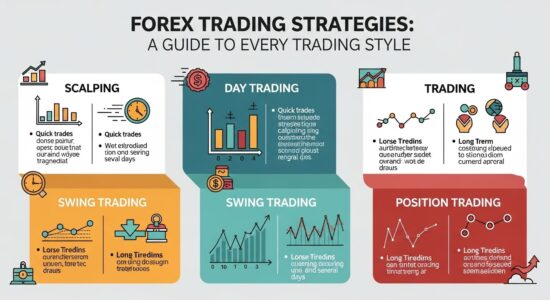
Position Trading vs. Other Styles
| Feature | Scalping | Day Trading | Swing Trading | Position Trading |
|---|---|---|---|---|
| Hold Time | Seconds | Hours | Days-Weeks | Weeks-Months |
| Pips/Trade | 5-20 | 20-80 | 100-500 | 500-5000+ |
| Trades/Year | 5,000+ | 1,000+ | 100-200 | 5-25 |
| Daily Time | 4-8 hours | 4-8 hours | 1-2 hours | 30 minutes |
| Analysis | Technical | Technical | Both | Fundamental |
| Stress | Very High | High | Moderate | Very Low |
| Capital Needed | $500 | $1,000 | $2,000 | $5,000+ |
Advantages of Position Trading
Focus on Fundamentals
Easier to Understand:
- Economic news (interest rates, GDP, inflation)
- Central bank policies
- Geopolitical developments
- Trade balances
vs. Technical indicators (MACD, RSI, Stochastic) which require extensive study.
More Predictable:
- Fundamental trends last months/years
- Technical patterns can fail frequently
- Economic direction clearer than chart patterns
No Need for Perfect Timing
Flexibility:
- Enter anytime during trend development
- Small timing errors don’t matter
- Can dollar-cost average into positions
- Not punished for being early
Compare to day trading:
- Must enter at exact price
- 10-pip slippage = significant loss
- Timing is everything
Can Maintain Career
Work-Life Balance:
- Keep full-time job
- Build business simultaneously
- Spend time with family
- Pursue hobbies
- Travel freely
Position trading doesn’t consume your life.
Compound Returns
Long-Term Wealth Building:
- Hold winning trades months/years
- Compound profits over time
- Add to winning positions
- Build significant wealth gradually
Disadvantages to Consider
Requires Large Capital
Why More Capital Needed:
- Wider stop-losses (100-500 pips typical)
- Must weather larger drawdowns
- Need buffer for swap fees
- Position sizing constraints
Minimum Realistic Capital:
- $5,000 minimum
- $10,000 recommended
- $20,000+ for comfortable trading
With small accounts, stop-losses become impractical.
Significant Overnight Risk
Exposure:
- Hold through weekends
- Hold during major news events
- Central bank surprises
- Geopolitical shocks
Reality:
- Gaps of 100-300 pips possible
- Flash crashes occur
- Black swan events
Mitigation:
- Don’t overleverage (key!)
- Diversify across pairs
- Monitor fundamentals closely
- Accept risk as part of strategy
Swap Fees Accumulate
Nightly Charges:
- Positive or negative depending on interest differential
- Adds up over weeks/months
- Can be significant cost
Example:
- Hold EUR/USD short 6 months
- Swap: -$3 per night
- Total cost: $540 over 6 months
Solution:
- Choose pairs with favorable swap
- Consider swap-free accounts
- Factor into profit calculations
Requires Patience
Mental Challenges:
- Watching positions in 500-pip drawdown for weeks
- Not closing winners prematurely
- Waiting months for major moves
- Very few trades (can feel inactive)
Not Suitable If:
- You need constant action
- Can’t handle unrealized losses
- Impatient personality
- Want quick results
Economic Knowledge Required
Must Understand:
- Central bank policies
- Interest rate cycles
- Inflation dynamics
- GDP components
- Trade balances
- Geopolitical factors
Investment:
- Time learning economics
- Following financial news
- Reading central bank statements
- Understanding monetary policy
More complex than just reading charts.
Best Currency Pairs for Position Trading
Major Pairs (Best Liquidity)
USD/JPY:
- Large trend potential
- Clear fundamental drivers
- Low spreads
- High liquidity
EUR/USD:
- Most liquid pair
- Clear macroeconomic themes
- Tight spreads
- Best for beginners
GBP/USD:
- Strong trends
- Higher volatility (larger moves)
- Clear Brexit/UK economic narrative
USD/CHF:
- Safe haven dynamics
- Clear trends
- Lower volatility than GBP
Carry Trade Pairs
AUD/JPY:
- High interest differential historically
- Strong trends
- Commodity currency vs. safe haven
NZD/JPY:
- Similar to AUD/JPY
- Interest rate differential
- Trending behavior
EUR/JPY:
- Moderate carry potential
- Clear trends
- Good liquidity
Commodity Currency Pairs
USD/CAD:
- Oil price correlation
- Interest rate differentials
- Clear fundamental drivers
- Good for trend trading
AUD/USD:
- Commodity price correlation
- China growth proxy
- Clear cycles
- Strong trends
NZD/USD:
- Similar to AUD
- Dairy price correlation
- Clear trends
Timeframes for Position Trading
Primary Analysis Timeframes
Weekly (W1):
- Main trend identification
- Major support/resistance
- Long-term patterns
- Primary decision timeframe
Daily (D1):
- Entry timing refinement
- Trend confirmation
- Stop-loss placement
- Short-term structure
4-Hour (H4):
- Precise entry timing (optional)
- Only for fine-tuning
- Not critical for position traders
Why Higher Timeframes?
Noise Filtering:
- Ignore intraday volatility
- Focus on meaningful price action
- Clear trend visualization
- Better signal quality
Less Checking:
- Weekly chart doesn’t need daily review
- Can check every few days
- Reduces trading anxiety
Position Trading Strategies
Strategy 1: Interest Rate Differential (Carry Trade)
Concept: Buy high-yield currency vs. low-yield currency, collect interest differential
Setup:
- Identify interest rate differential (2%+ ideal)
- Confirm trend supports carry direction
- Enter long high-yield currency
- Hold for months/years
- Collect daily swap income
Example:
- AUD interest rate: 4.35%
- JPY interest rate: -0.10%
- Differential: 4.45%
- Trade: Buy AUD/JPY
- Benefit: Price appreciation + positive carry
Risk:
- Market crashes often target carry trades
- Sudden risk-off unwinds positions
- Central bank policy changes
Best Conditions:
- Low volatility environments
- Risk-on sentiment
- Stable/rising stocks
- Widening yield differentials
Strategy 2: Central Bank Policy Divergence
Concept: Trade currencies with opposite monetary policy directions
Setup:
- Identify central bank policy divergence
- Buy currency with tightening policy (hawkish)
- Sell currency with easing policy (dovish)
- Hold throughout policy cycle (months/years)
Example:
- Federal Reserve raising rates (hawkish)
- European Central Bank keeping rates low (dovish)
- Trade: Buy USD/EUR (Sell EUR/USD)
- Timeframe: 6-24 months
Signals:
- Central bank forward guidance
- Interest rate decisions
- Inflation data trends
- Employment data
- GDP growth differences
Strategy 3: Economic Growth Divergence
Concept: Buy strong economy’s currency vs. weak economy
Setup:
- Compare economic indicators
- Identify clear divergence
- Buy strong, sell weak
- Hold until convergence
Indicators to Compare:
- GDP growth rates
- Unemployment rates
- Manufacturing PMI
- Consumer confidence
- Retail sales
- Business investment
Example:
- US economy accelerating (strong data)
- Eurozone economy stagnating (weak data)
- Trade: Buy USD/EUR (Sell EUR/USD)
Strategy 4: Commodity Currency Trends
Concept: Trade commodity currencies based on commodity price trends
Pairs:
USD/CAD (Oil):
- Oil rising → CAD strengthens → Sell USD/CAD
- Oil falling → CAD weakens → Buy USD/CAD
AUD/USD (Iron ore, Copper, Coal):
- Commodities rising → AUD strengthens → Buy AUD/USD
- Commodities falling → AUD weakens → Sell AUD/USD
Setup:
- Identify major commodity trend (oil, copper, gold)
- Trade corresponding currency pair
- Hold through commodity cycle
Correlation Strength:
- Strong during clear commodity trends
- Weakens during risk-off events
- Monitor actual correlation
Strategy 5: Safe Haven Flows
Concept: Trade based on risk sentiment
Safe Haven Currencies:
- JPY (Japanese Yen)
- CHF (Swiss Franc)
- USD (US Dollar – in crises)
Risk Currencies:
- AUD (Australian Dollar)
- NZD (New Zealand Dollar)
- GBP (British Pound)
Setup:
Risk-Off Environment:
- Buy JPY, CHF, USD
- Sell AUD, NZD, GBP
- Trades: Buy USD/JPY short, Buy JPY/AUD, etc.
Risk-On Environment:
- Sell safe havens
- Buy risk currencies
- Trades: Buy AUD/JPY, Buy NZD/JPY
Indicators:
- Stock market trends (S&P 500, Dow)
- VIX (volatility index)
- Bond yields
- Geopolitical tensions
Fundamental Analysis for Position Traders
Interest Rates (Most Important)
Why Interest Rates Matter:
- Higher rates attract foreign capital
- Currency strengthens to buy higher-yielding assets
- Central banks control rates
Monitoring:
- Central bank meetings (8 times/year typically)
- Forward guidance in statements
- Market expectations (Fed Funds futures)
Rate Hike Cycle:
- Bullish for currency
- Buy early in cycle
- Hold throughout
- Exit when cuts expected
Rate Cut Cycle:
- Bearish for currency
- Sell early in cycle
- Hold throughout
Inflation Data
Key Reports:
- CPI (Consumer Price Index) – monthly
- Core CPI (excludes food, energy)
- PPI (Producer Price Index)
- PCE (Personal Consumption Expenditures)
Impact:
- High inflation → Central bank raises rates → Currency strengthens
- Low inflation → Central bank may cut rates → Currency weakens
Relationship:
- Inflation above target → Hawkish central bank → Bullish currency
- Inflation below target → Dovish central bank → Bearish currency
GDP Growth
Quarterly Reports:
- Measures economic growth
- Higher GDP → Stronger economy → Stronger currency
- Lower GDP → Weaker economy → Weaker currency
Watch For:
- GDP trends (accelerating vs. decelerating)
- Relative GDP between countries
- Revisions to previous estimates
Employment Data
Key Reports:
US:
- Non-Farm Payrolls (NFP) – monthly
- Unemployment rate
- Average hourly earnings
Other Countries:
- Employment change
- Unemployment rate
Impact:
- Strong employment → Growing economy → Potential rate hikes → Bullish currency
- Weak employment → Weakening economy → Potential rate cuts → Bearish currency
Trade Balance
Current Account:
- Trade surplus → Bullish for currency
- Trade deficit → Bearish for currency
Why It Matters:
- Surplus = foreign demand for currency
- Deficit = selling currency to buy imports
Long-term Impact:
- Persistent deficits weaken currency over time
- Persistent surpluses strengthen currency
Geopolitical Events
Major Impacts:
- Wars, conflicts
- Trade wars, tariffs
- Political instability
- Brexit-type events
- Sanctions
Strategy:
- Avoid affected currencies during uncertainty
- Buy safe havens during crises
- Return to fundamentals when settled
Technical Analysis for Position Traders
Limited Role
Purpose:
- Entry timing only
- Confirm fundamental bias
- Set stop-loss levels
- Identify major support/resistance
NOT Used For:
- Primary trading decisions
- Overriding fundamentals
- Short-term signals
Essential Tools
Moving Averages:
- 200 SMA on Weekly/Daily
- Trend direction
- Major support/resistance
Support/Resistance:
- Major weekly levels
- Psychological levels (1.0000, 1.5000, etc.)
- Historical highs/lows
Trendlines:
- Long-term trends on Weekly
- Connect major swing points
- Breakouts significant
Entry Timing
Simple Approach:
Step 1: Identify fundamental bias (buy or sell based on macro)
Step 2: Wait for technical confirmation:
- Price at major support (to buy)
- Price at major resistance (to sell)
- Trend in your direction on Weekly
Step 3: Enter with wide stop (150-500 pips)
Step 4: Set long-term target (500-2000 pips)
Risk Management for Position Traders
Position Sizing
Conservative Approach:
- Risk 0.5-1% per trade
- Lower than day/swing trading
- Accounts for larger stops
Calculation:
- Account: $10,000
- Risk: 1% = $100
- Stop-loss: 200 pips
- Pip value: $100 ÷ 200 = $0.50 per pip
- Position: 0.05 lots (5,000 units)
Stop-Loss Placement
Wide Stops Essential:
- 150-500 pips typical
- Allows for normal volatility
- Prevents premature stop-outs
Methods:
Technical Levels:
- Below major support (long)
- Above major resistance (short)
- Weekly swing lows/highs
Percentage-Based:
- 3-5% from entry
- Simple approach
ATR-Based:
- 2-3 × ATR (14 on Weekly)
- Adjusts to volatility
Take-Profit Targets
Methods:
Technical:
- Previous major high/low
- Historical price levels
- Psychological levels (1.5000, 1.0000)
Percentage:
- 10-15% gain from entry
- Simple approach
Trailing Stop:
- Use Weekly ATR trailing stop
- Locks in profits
- Catches extended moves
None (Fundamental Exit):
- Exit when fundamentals change
- No fixed target
- Most sophisticated approach
Diversification
Multiple Positions:
- Hold 3-5 positions simultaneously
- Different currency pairs
- Different fundamental themes
Benefits:
- Reduces single-pair risk
- Captures multiple trends
- Smoother equity curve
Example Portfolio:
- Long USD/JPY (rate differential)
- Long AUD/USD (commodity trend)
- Short EUR/GBP (growth divergence)
Money Management
Leverage Usage
Conservative:
- 5:1 to 10:1 effective leverage maximum
- Most capital not in use
- Safety buffer
Dangerous:
- Using 50:1 or higher
- One large move wipes account
Calculation:
- With $10,000 account
- 3 positions × 0.05 lots each
- Total exposure: $15,000
- Effective leverage: 1.5:1
Swap Considerations
Choose Pairs Wisely:
- Positive swap preferred
- Negative swap = cost
- Check broker swap rates
Example:
- AUD/JPY long: +$8 per lot per night (positive)
- EUR/USD short: -$3 per lot per night (negative)
Adding to Positions
Pyramiding:
- Add to winning positions
- As fundamentals strengthen
- Improves average entry
Example:
- Initial: Buy USD/JPY at 110.00 (0.05 lots)
- Add: Buy USD/JPY at 115.00 (0.05 lots)
- Add: Buy USD/JPY at 120.00 (0.05 lots)
- Total: 0.15 lots, average entry 115.00
Rules:
- Only add to winners
- Never add to losers (averaging down)
- Maintain total risk under 2-3%
Position Trading Routine
Weekly Review (1-2 hours)
Sunday Evening:
- Review Economic Week Ahead (30 min):
- Check economic calendar
- Note major releases
- Central bank meetings
- Geopolitical events
- Analyze Open Positions (30 min):
- Fundamentals still valid?
- Any news affecting positions?
- Adjust stops if needed
- Take profits if target reached
- Scan for New Opportunities (30 min):
- Review 5-10 currency pairs
- Check Weekly charts
- Identify fundamental setups
- Note potential entries
- Update Trade Journal (15 min):
- Document decisions
- Note market conditions
- Record thoughts
Daily Check (15-20 minutes)
Morning (10 min):
- Scan financial news headlines
- Check overnight price action
- Note any major developments
- Check positions (quick glance)
Evening (10 min):
- Review day’s economic data
- Check position status
- Read central bank statements if any
- Quick Weekly chart review
Monthly Review (2-3 hours)
End of Month:
- Analyze all trades from month
- Calculate performance
- Review strategy effectiveness
- Adjust approach if needed
- Set goals for next month
Tools and Resources
Economic Data Sources
Free:
- TradingEconomics.com
- Investing.com Economic Calendar
- Forex Factory Calendar
- Central bank websites (Fed, ECB, BOE, BOJ)
Paid:
- Bloomberg Terminal (expensive)
- Reuters Eikon
- FactSet
News Sources
Essential:
- Bloomberg.com
- Reuters.com
- Financial Times
- Wall Street Journal
- CNBC
Central Banks:
- Federal Reserve (federalreserve.gov)
- European Central Bank (ecb.europa.eu)
- Bank of England (bankofengland.co.uk)
- Bank of Japan (boj.or.jp)
Analysis Tools
Charting:
- TradingView (excellent for Weekly/Daily analysis)
- MetaTrader 4/5
- Investing.com charts
Economic Indicators:
Learning Plan
Month 1: Foundation
Study:
- Macroeconomics basics
- Interest rates and monetary policy
- How central banks work
- GDP, inflation, employment
Resources:
- Khan Academy Economics
- Investopedia
- Central bank websites
Months 2-3: Application
Practice:
- Follow 3-5 currency pairs
- Read central bank statements
- Track economic data releases
- Note fundamental themes
- Open positions based on fundamentals
- Hold for weeks/months on demo
- Don’t check daily
- Build patience
Months 4-6: Small Live Trading
Execute:
- Start with $5,000 minimum
- Take 1-2 positions
- Hold through volatility
- Focus on psychology
- Journal everything
Year 2+: Refinement
Develop:
- Track record of success
- Multiple positions
- Larger capital
- Refined approach
- Deep fundamental knowledge
Common Mistakes
Mistake 1: Trading Like Day Trader
Problem: Checking charts hourly, exiting on small moves
Solution: Check Weekly chart weekly. Trust your thesis.
Mistake 2: Ignoring Fundamentals
Problem: Entering on technical signals alone
Solution: Always have fundamental reason. Technicals for timing only.
Mistake 3: Overleveraging
Problem: Using 50:1+ leverage with wide stops
Solution: Keep effective leverage under 10:1 maximum.
Mistake 4: No Stop-Loss
Problem: “Long-term trade” without protection
Solution: Always use stop-loss. Even position trades need risk management.
Mistake 5: Impatience
Problem: Closing after 1 week because “nothing happening”
Solution: Trends take months. Give trades time to develop.
Mistake 6: Fighting Central Banks
Problem: Fading central bank policy direction
Solution: Don’t fight the Fed (or any major central bank). Trade with policy direction.
Next Steps
Start Here:
Other Trading Styles:
Fundamentals:
Risk Management:
Technical Analysis:
Psychology:
Position trading offers the ultimate freedom—trade forex successfully while maintaining your career, business, and personal life. By focusing on major fundamental themes and holding positions for months, you can build long-term wealth with minimal daily time commitment. Start by building your economic knowledge, practice with demo accounts, and gradually transition to long-term currency investing.
Related Posts:







Powered by Contextual Related Posts