Learn How to Make Fast Money by Learning diffrent Strategies in Forex Trading and Different Investment Options
EUR/USD Trading Guide: Complete Strategy for the World’s Most Traded Pair
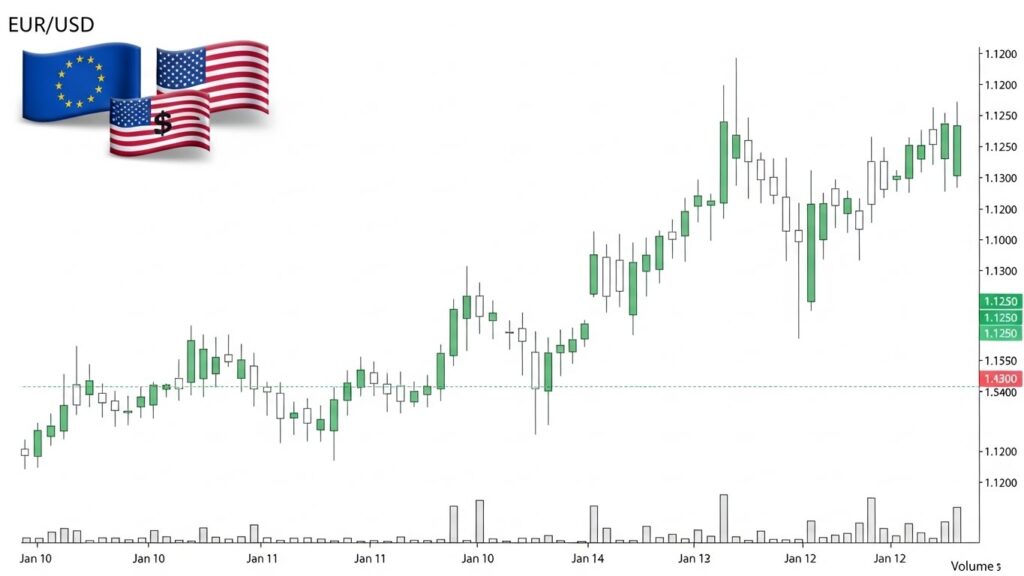
EUR/USD is the undisputed king of forex trading, accounting for roughly 24% of all daily forex volume—over $1.5 trillion traded every single day. As the most liquid currency pair in the world, EUR/USD offers tight spreads, excellent price action, and countless trading opportunities across all timeframes.
This comprehensive EUR/USD Trading Guide teaches you everything you need to trade EUR/USD successfully: its characteristics and behavior, best trading strategies, optimal trading times, key technical and fundamental factors, and common mistakes to avoid. Whether you’re a beginner choosing your first currency pair or an experienced trader looking to optimize EUR/USD performance, this guide provides the complete framework you need.
EUR/USD represents the exchange rate between the world’s two largest economic zones: the 27-nation European Union and the United States. This pairing creates unique characteristics that make it ideal for forex traders.
Key Advantages of Trading EUR/USD
1. Tightest Spreads
EUR/USD consistently offers the lowest spreads in retail forex, often 0.1-0.3 pips with ECN brokers and 0.5-1.0 pips with standard accounts. These minimal transaction costs mean:
Scalpers can profit from tiny price movements
Day traders face lower barriers to profitability
Swing traders lose less to spreads over multi-day holds
2. Maximum Liquidity
As the most traded pair, EUR/USD provides:
Instant order execution at desired prices
Minimal slippage, even on large orders
Ability to enter and exit positions easily
Consistent price action without erratic gaps (except major news)
3. Predictable Price Action
EUR/USD responds reliably to:
Technical analysis (respects support/resistance)
Chart patterns (triangles, flags, head and shoulders)
Trend lines and moving averages
Economic data releases
This predictability allows traders to build systematic strategies with confidence.
4. Abundant Information
More analysis, research, forecasts, and educational content exists for EUR/USD than any other pair. You’ll never struggle to find:
Technical analysis and trade ideas
Fundamental research and economic forecasts
Historical data for backtesting
Real-time news and commentary
5. Moderate Volatility
EUR/USD volatility sits in the sweet spot:
Not too quiet (sufficient movement for profits)
Not too wild (manageable risk)
Average daily range: 60-100 pips (normal conditions)
Can spike to 150-200+ pips during major news or crises
Who Should Trade EUR/USD?
Ideal For:
Beginners learning forex (most educational resources focus on EUR/USD)
Scalpers (tightest spreads enable small profit targets)
Day traders (ample intraday movement and liquidity)
Swing traders (clear trends and reliable technical levels)
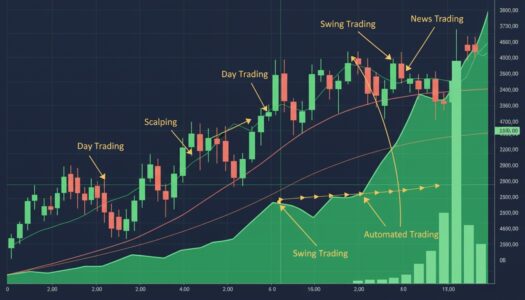
Automated traders (consistent price action for EAs)
Consider Alternatives If:
You need extreme volatility (try GBP/USD)
You trade only Asian session (EUR/USD quietest then)
You prefer exotic/commodity currencies
EUR/USD Characteristics and Behavior
Typical Daily Range
Normal Conditions: 60-80 pips daily range Active Days: 80-120 pips High Volatility (news/crisis): 150-250+ pips
What This Means for Trading:
Scalpers target 5-10 pips per trade
Day traders target 20-50 pips
Swing traders target 80-150+ pips
Position traders target 200-500+ pips
Trending vs. Ranging Behavior
EUR/USD spends roughly:
30-40% in clear trends (ideal for trend-following)
40-50% in ranges (ideal for range trading)
20-30% choppy/unclear (best to avoid trading)
Implication: Both trend-following and range-trading strategies work on EUR/USD. The key is identifying which market state currently exists.
AUD/USD (0.70-0.80): Often aligned due to risk sentiment
NZD/USD (0.70-0.75): Similar risk-on/risk-off behavior
Negatively Correlated (move in opposite directions):
USD/CHF (-0.90 to -0.95): Almost perfect inverse
USD/JPY (-0.60 to -0.70): Moderate inverse relationship
Trading Implication: If trading EUR/USD long, avoid simultaneously trading GBP/USD long or USD/CHF short—you’re essentially taking the same trade three times, tripling your risk to a single market move.
Response to News and Events
EUR/USD reacts strongly to:
U.S. Economic Data (primary driver):
Non-Farm Payrolls (NFP)
Federal Reserve interest rate decisions
CPI and inflation data
GDP and retail sales
Eurozone Economic Data:
ECB interest rate decisions and press conferences
German economic data (Germany is EU’s largest economy)
Eurozone GDP and inflation
Manufacturing/Services PMI
Risk Sentiment:
Stock market performance (S&P 500 correlation)
Geopolitical events
Financial crises
EUR/USD tends to:
Rise when: Eurozone data beats expectations, U.S. data disappoints, risk-on sentiment, Fed dovish, ECB hawkish
Fall when: U.S. data beats expectations, Eurozone data disappoints, risk-off sentiment, Fed hawkish, ECB dovish
Best Times to Trade EUR/USD
Session Breakdown
Asian Session (7:00 PM – 4:00 AM ET):
Typical Range: 20-30 pips
Liquidity: Low
Volatility: Low
Best For: Avoid or use for swing trade management only
Characteristics: Quiet, often choppy, wide spreads
London Session (3:00 AM – 12:00 PM ET):
Typical Range: 50-80 pips
Liquidity: Very High
Volatility: High
Best For: Day trading, scalping
Characteristics: Trends often establish, breakouts occur
Peak Activity: First 2 hours (3:00-5:00 AM ET)
New York Session (8:00 AM – 5:00 PM ET):
Typical Range: 60-90 pips
Liquidity: Very High
Volatility: High
Best For: All trading styles
Characteristics: U.S. data releases drive movement
Peak Activity: 8:00 AM – 12:00 PM ET (U.S. open)
London-New York Overlap (8:00 AM – 12:00 PM ET):
Typical Range: 40-60 pips (in just 4 hours)
Liquidity: Maximum
Volatility: Highest
Best For: Day trading, scalping
Characteristics: Tightest spreads, fastest execution, most opportunities
THE BEST TIME TO TRADE EUR/USD
Optimal Trading Windows
For Scalpers:
Best: 8:00 AM – 12:00 PM ET (London-NY overlap)
Acceptable: 3:00 AM – 5:00 AM ET (London open)
Avoid: Asian session, late NY session
For Day Traders:
Best: 3:00 AM – 12:00 PM ET (London through overlap)
Acceptable: 12:00 PM – 3:00 PM ET (late NY)
Avoid: Asian session, after 4:00 PM ET
For Swing Traders:
Best: Enter during London or NY session for best fills
Monitor: Can check positions anytime
Session Matters Less: Holding multi-day positions
For Position Traders:
Sessions irrelevant for entries
Focus on weekly/monthly trends
Days of the Week
Monday:
Often slow start
Markets digesting weekend news
Ranges often smaller
Rating: 3/5
Tuesday-Thursday:
Most economic data released
Best volatility and trends
Highest opportunity
Rating: 5/5
Friday:
Position squaring (traders closing positions for weekend)
Can see reversals as profits taken
Often volatile morning, quiet afternoon
Rating: 3.5/5
Avoid: Monday before 6:00 AM ET, Friday after 12:00 PM ET
EUR/USD Trading Strategies
Strategy 1: Trend-Following with Moving Averages
Concept: Trade in direction of established trend using moving average pullbacks.
Setup:
Chart: 4-hour or daily
Indicators: 20 EMA, 50 EMA, 200 EMA
Trend: Price above 200 EMA = uptrend; below = downtrend
Entry Rules:
Long: Uptrend (price > 200 EMA), wait for pullback to 20 or 50 EMA, enter when bullish candle closes above EMA
Short: Downtrend (price < 200 EMA), wait for pullback to 20 or 50 EMA, enter when bearish candle closes below EMA
Stop Loss: 10-15 pips beyond the EMA or recent swing low/high
Take Profit: 2:1 risk-reward minimum, or trail with 20 EMA
Best Conditions: Trending EUR/USD markets (happens 30-40% of time)
Example:
EUR/USD in uptrend, price at 1.1050, 200 EMA at 1.0900
Price pulls back to 50 EMA at 1.1020
Bullish engulfing candle closes at 1.1025
Enter long at 1.1030
Stop at 1.1005 (25 pips)
Target 1.1080 (50 pips, 2:1 R:R)
Strategy 2: Range Trading with Support/Resistance
Concept: Trade bounces between well-established support and resistance in ranging markets.
Setup:
Chart: 1-hour or 4-hour
Identify: Clear support and resistance with multiple touches
Indicators: RSI or Stochastic for overbought/oversold confirmation
Entry Rules:
Long: Price near support, RSI < 30 or Stochastic < 20, bullish rejection candle
Short: Price near resistance, RSI > 70 or Stochastic > 80, bearish rejection candle
Stop Loss: 10-20 pips beyond support/resistance
Take Profit: Opposite side of range or middle of range
Best Conditions: Ranging EUR/USD (happens 40-50% of time)
Example:
EUR/USD ranging between 1.1000 support and 1.1080 resistance
Price drops to 1.1005, RSI shows 25 (oversold)
Pin bar forms, rejecting support
Enter long at 1.1010
Stop at 1.0990 (20 pips)
Target 1.1070 (60 pips, near resistance)
Strategy 3: Breakout Trading
Concept: Trade breakouts from consolidation patterns (triangles, rectangles, flags).
Setup:
Chart: 4-hour or daily
Pattern: Clear consolidation with defined boundaries
Volume: Increasing on breakout (if available)
Entry Rules:
Long: Clean break above resistance with momentum candle, enter on retest of broken resistance (now support)
Short: Clean break below support with momentum candle, enter on retest of broken support (now resistance)
Stop Loss: Inside the pattern, opposite side
Take Profit: Distance equal to pattern height projected from breakout point
Best Conditions: After period of consolidation, especially before major news
Example:
EUR/USD consolidating in triangle, 1.1020-1.1060
Breaks above 1.1065 with strong bullish candle
Pulls back to retest 1.1060 (former resistance, now support)
Mistake 1: Trading Through Major News Without Plan
EUR/USD can move 100+ pips in seconds during NFP or Fed decisions. Either:
Close positions 15 minutes before news
Have specific news-trading strategy
Don’t just hope for the best
Mistake 2: Ignoring the Bigger Trend
Trying to short EUR/USD in a strong uptrend or vice versa. Always identify the daily/weekly trend before trading lower timeframes.
Mistake 3: Overtrading During Asian Session
EUR/USD barely moves during Asian hours (7 PM – 3 AM ET). Spreads widen, price action choppy. Wait for London session.
Mistake 4: Not Accounting for Spread
With 0.5-1.0 pip spread on standard accounts, you need 1-2 pips of favorable movement just to break even. Factor spread into profit targets.
Mistake 5: Trading Both EUR/USD and Correlated Pairs
Going long EUR/USD and GBP/USD simultaneously is essentially doubling your position—they move together 85%+ of the time. Diversify by trading non-correlated pairs.
Trading Sessions: [London / NY / London-NY Overlap]
Position Sizing: Risk __% per trade, lot size calculated based on stop distance
Entry Criteria Checklist
Before entering any EUR/USD trade, ALL must be true:
[ ] Setup matches my defined strategy
[ ] Trading during my designated session
[ ] No major news in next 30 minutes
[ ] Clear stop loss level identified
[ ] Risk-reward minimum 1:2
[ ] I am calm and following plan (not emotional/revenge trading)
[ ] Chart screenshot taken
[ ] Position size calculated correctly
Risk Management Rules
Per Trade:
Maximum risk: __% of account
Stop loss: Always placed before entry
Never moved away from entry
Position size formula: Risk$ ÷ (Stop pips × Pip value)
Daily Limits:
Maximum loss per day: __%
Maximum number of trades: __
After __ consecutive losses, stop for day
Weekly Limits:
Maximum loss per week: __%
Review and adjust if hit
Performance Tracking
Journal Every Trade:
Entry/exit details
Setup type
Rationale
Emotional state
Outcome
Lessons
Weekly Review:
Win rate on EUR/USD
Average win vs. loss
Best setups
Worst mistakes
One improvement for next week
EUR/USD Seasonal Patterns
Monthly Patterns
Best Months for Trending:
January (post-holiday positioning)
March (quarter-end rebalancing)
September (post-summer, pre-year-end)
Typically Quieter:
August (European summer holidays)
Late December (holidays, low volume)
Note: These are tendencies, not rules. Always trade what chart shows.
Yearly Cycles
EUR/USD often (not always) follows rough yearly pattern:
Q1: Trend establishment
Q2: Consolidation or continuation
Q3: Summer doldrums, lower volatility
Q4: Year-end positioning, increased volatility
EUR/USD vs Other Major Currency Pairs
EUR/USD vs GBP/USD
EUR/USD and GBP/USD are highly correlated pairs (0.85-0.90 correlation), often moving in tandem. Both pairs feature the USD as the quote currency and represent major developed economies, but they have distinct characteristics.
GBP/USD typically exhibits higher volatility than EUR/USD, with daily ranges often 20-30% larger. This makes GBP/USD more attractive for traders seeking bigger moves but also increases risk. EUR/USD offers more stability and tighter spreads, making it ideal for beginners and scalpers who prefer predictable price action with lower transaction costs.
EUR/USD vs USD/JPY
USD/JPY often moves inversely to EUR/USD, though the relationship isn’t perfectly negative. When the dollar strengthens broadly, EUR/USD typically falls while USD/JPY rises. However, risk sentiment can break this pattern—during risk-off events, both pairs may fall as JPY strengthens as a safe haven.
EUR/USD tends to be more influenced by European economic data and ECB policy, while USD/JPY responds strongly to Bank of Japan interventions and Asian market dynamics. EUR/USD generally has tighter spreads, while USD/JPY offers more trading opportunities during Asian session hours.
EUR/USD vs USD/CHF
EUR/USD and USD/CHF have an almost perfect negative correlation (-0.90 to -0.95), meaning they move in opposite directions nearly all the time. This inverse relationship exists because Switzerland and the Eurozone are geographically close with strong economic ties, and the Swiss franc often moves with the euro.
When EUR/USD rises, USD/CHF almost always falls by a similar percentage. Traders should avoid simultaneously trading both pairs in the same direction, as it essentially doubles exposure to the same market move. EUR/USD typically offers better liquidity and tighter spreads than USD/CHF.
EUR/USD vs AUD/USD
EUR/USD and AUD/USD are positively correlated (0.70-0.80), though less tightly than EUR/USD and GBP/USD. Both tend to rise during risk-on environments and fall during risk-off periods, with AUD/USD being more sensitive to commodity prices and Chinese economic data.
AUD/USD generally exhibits higher volatility than EUR/USD and responds more dramatically to changes in risk appetite. EUR/USD offers more consistent trading opportunities throughout European and US sessions, while AUD/USD is particularly active during Asian session hours when Australian economic data is released.
EUR/USD vs USD/CAD
EUR/USD and USD/CAD have a moderate negative correlation (-0.60 to -0.75). When EUR/USD rises (USD weakens), USD/CAD typically falls (CAD strengthens). However, this relationship can break down when oil prices make large moves, as CAD is heavily influenced by crude oil prices while EUR is not.
USD/CAD tends to be more range-bound than EUR/USD, with clearer support and resistance levels. EUR/USD offers better liquidity and is less affected by commodity price swings, making it more suitable for pure technical trading strategies that don’t require monitoring oil markets.
EUR/USD vs NZD/USD
EUR/USD and NZD/USD show positive correlation (0.70-0.75), similar to the EUR/USD and AUD/USD relationship. Both pairs tend to move in the same direction based on USD strength/weakness and global risk sentiment, though NZD/USD typically exhibits even higher volatility than AUD/USD.
EUR/USD is far more liquid with significantly tighter spreads, making it better suited for scalping and high-frequency trading. NZD/USD offers larger potential profits from single trades due to its wider daily ranges but requires wider stop losses and careful risk management. EUR/USD is the safer choice for beginners, while experienced traders might use NZD/USD for swing trading opportunities.
EUR/USD stands as the premier currency pair in forex trading for excellent reasons: tightest spreads, maximum liquidity, predictable price action, and abundant opportunities across all trading styles and timeframes.
Success trading EUR/USD requires:
Understanding its unique characteristics and behavior
Choosing strategies suited to your trading style and schedule
Trading during optimal sessions (London-NY overlap is best)
Monitoring both U.S. and Eurozone economic data
Applying proper risk management consistently
Keeping detailed records and analyzing performance
Whether you’re a scalper targeting 3-5 pips during the London session, a day trader capitalizing on NFP volatility, or a swing trader riding multi-week trends, EUR/USD provides the liquidity, movement, and reliability you need.
Start with demo trading to familiarize yourself with EUR/USD’s behavior. Test your strategies, document your trades, and transition to live trading only after demonstrating consistent profitability. EUR/USD rewards disciplined, educated traders who respect its characteristics and trade systematically.