Make Money in Forex & Other Investments
Learn How to Make Fast Money by Learning diffrent Strategies in Forex Trading and Different Investment Options

Main menu

Skip to content
  • Home
  • Contact Us
  • Forex Education
  • Technical Analysis
  • Currency Pairs
  • Trading Platforms
  • Trading Strategies
    • Automated Trading & EAs
    • Forex Scalping
    • Hedging Strategies
    • Algorithmic Trading Basics
    • How to Backtest Trading Strategies
  • Forex Brokers
  • Commodities
    • Gold Trading
    • Silver Trading
  • Cryptocurrency
  • Investing
    • Real Estate
    • Global Investing
  • Free Tools
    • Pip Value Calculator
    • Position Size Calculator
    • Profit/Loss Calculator
    • Risk/Reward Calculator
  • Languages
    • English
    • Español
    • العربية
    • Deutsch

Sub menu

Forex Micro Accounts: Complete Guide for Small Capital Traders

For traders starting with $100-$1,000, micro accounts represent the sweet spot between cent accounts’ tiny positions and standard accounts’ capital requirements. A micro account lets you trade real market conditions with manageable risk while building the experience needed for larger capital deployment.

This guide explains what micro accounts are, how they work, and how to use them effectively as part of your trading development.

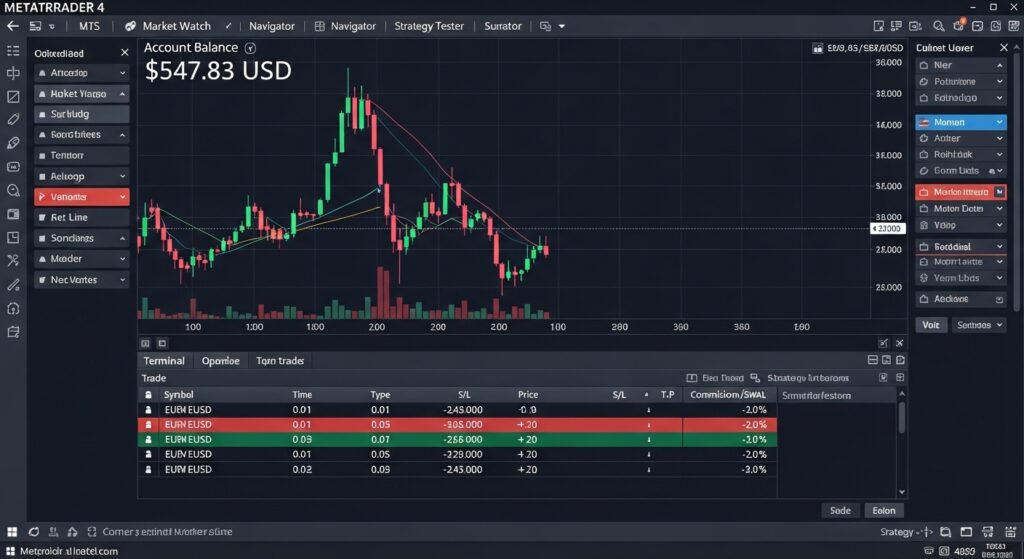
MetaTrader 4 forex trading platform screenshot. Account balance $547.83 USD. Open trades showing micro lot sizes: 0.01, 0.05, 0.10 lots. EUR/USD chart with candlesticks. Orders panel showing small profits and losses. Professional trading interface, dark theme, realistic.

What Is a Forex Micro Account

IN THIS ARTICLE
Toggle
  • What Is a Forex Micro Account
  • How Micro Accounts Work
    • Lot Size Structure
    • Pip Value Calculation
    • Margin Requirements
    • Real Money, Real Psychology
  • Who Should Use Micro Accounts
    • New Traders ($100-$500)
    • Strategy Developers ($500-$1,000)
    • Part-Time Traders
    • Risk-Averse Capital Allocators
  • Micro vs Cent vs Standard Accounts
  • Choosing a Micro Account Broker
    • Regulation and Safety
    • Platform Quality
    • Spread and Commission Structure
    • Minimum Deposit Requirements
    • Customer Support
  • Effective Micro Account Strategies
    • Use Appropriate Position Sizes
    • Trade High-Probability Setups Only
    • Focus on Major Pairs
    • Maintain a Trading Journal
    • Set Realistic Daily/Weekly Goals
  • Position Sizing Examples
    • Example 1: $200 Micro Account
    • Example 2: $500 Micro Account
    • Example 3: $1,000 Micro Account
  • When to Graduate to Standard Accounts
    • Consistent Profitability (3-6 Months)
    • Account Growth to $1,000-$2,000
    • Psychological Readiness
    • Platform Limitations Become Restrictive
  • Realistic Profit Expectations
    • Short-Term Growth Potential
    • Long-Term Wealth Building
    • Realistic Income Timeframe
  • Frequently Asked Questions
    • Can I make a living trading a micro account?
    • How long should I trade a micro account before upgrading?
    • Are micro accounts worse than standard accounts?
    • What’s better—one $500 micro account or five $100 micro accounts?
    • Can I use Expert Advisors (EAs) on micro accounts?
    • Do micro accounts have different spreads than standard accounts?
    • Should I start with a micro or cent account?
  • Related Resources

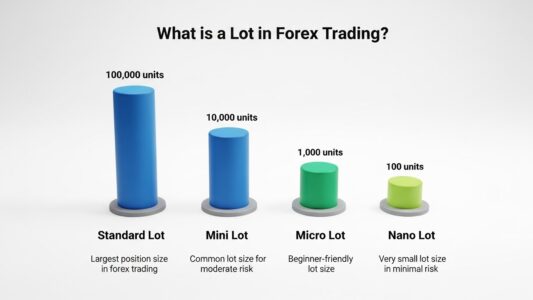
A micro account is a forex trading account that allows you to trade in micro lots (1,000 units of base currency) rather than standard lots (100,000 units). This smaller position sizing makes the market accessible to traders with limited capital while maintaining exposure to real market conditions.

Unlike demo accounts, micro accounts involve real money and genuine psychological pressure. Unlike standard accounts, they allow meaningful trading with capital as low as $100-$500.

The key distinction is lot size. In a standard account, one lot equals 100,000 units of currency. In a micro account, one lot equals 1,000 units—making each position 1% the size of a standard lot with proportionally smaller pip values and margin requirements.

According to the National Futures Association, understanding position sizing and account types is fundamental to managing risk appropriately, particularly for new traders with limited capital.

How Micro Accounts Work

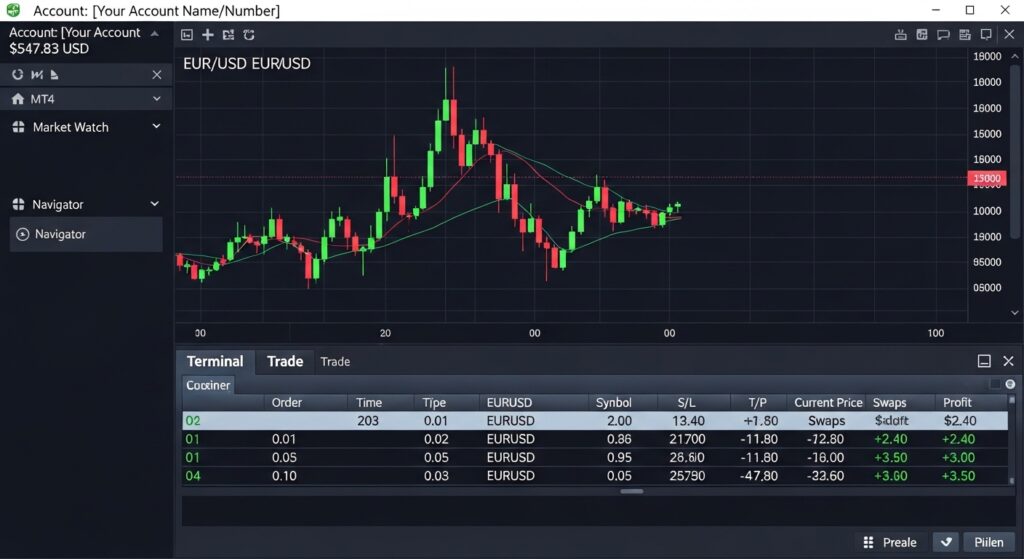
MetaTrader 4 platform showing micro lot forex trading with realistic account balance and position sizes

Lot Size Structure

Micro accounts trade in increments of 1,000 units (micro lots):

  • 1 micro lot = 1,000 units of base currency
  • 10 micro lots = 10,000 units (equivalent to 1 mini lot)
  • 100 micro lots = 100,000 units (equivalent to 1 standard lot)

Pip Value Calculation

For most USD pairs trading 1 micro lot:

  • EUR/USD: $0.10 per pip
  • GBP/USD: $0.10 per pip
  • USD/JPY: $0.09 per pip (approximately)
  • AUD/USD: $0.10 per pip

This means a 10-pip move with 1 micro lot equals $1.00 profit or loss—manageable for accounts in the $100-$1,000 range.

Margin Requirements

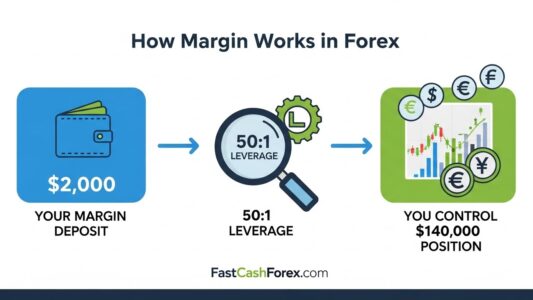
With typical 50:1 leverage on major pairs:

  • 1 micro lot EUR/USD requires ~$20 margin
  • 5 micro lots requires ~$100 margin
  • 10 micro lots requires ~$200 margin

A $500 account can comfortably hold 5-10 micro lot positions while maintaining adequate free margin for market fluctuations.

Real Money, Real Psychology

The critical advantage over demo trading is psychological authenticity. A $200 micro account creates genuine emotional investment. Winning or losing $5-$10 per trade produces real anxiety, discipline challenges, and decision-making pressure—the exact skills you need to develop before trading larger capital.

Who Should Use Micro Accounts

New Traders ($100-$500)

If you’re starting with limited capital, a micro account provides:

  • Real market execution without risking significant capital
  • Opportunity to test strategies with genuine money at stake
  • Learning environment where mistakes cost $5-$20 instead of $50-$200
  • Foundation for capital growth through documented, consistent performance

Strategy Developers ($500-$1,000)

Traders testing new systems benefit from micro accounts because:

  • Live validation with real spreads, slippage, and execution delays
  • Affordable testing environment for unproven strategies
  • Clear performance metrics before committing larger capital
  • Ability to run multiple strategies simultaneously on small account fractions

Part-Time Traders

Those with limited time benefit from micro account characteristics:

  • Lower stress from smaller position sizes
  • Less frequent monitoring required due to reduced volatility impact
  • Flexibility to trade occasionally without pressure to recover large losses
  • Sustainable approach for supplemental income goals

Risk-Averse Capital Allocators

Conservative traders use micro accounts to:

  • Maintain market involvement with minimal capital exposure
  • Test broker platforms and execution quality before larger deposits
  • Evaluate new markets (exotic pairs, crosses) with contained risk
  • Keep trading skills active during uncertain market conditions

Micro vs Cent vs Standard Accounts

FeatureCent AccountMicro AccountStandard Account
Minimum Deposit$10-$50$100-$500$500-$2,000
Lot Size1,000 units (cents)1,000 units (dollars)100,000 units
Pip Value (EUR/USD)$0.001 per lot$0.10 per lot$10 per lot
Typical Position10-50 micro lots1-10 micro lots0.01-1.0 standard lots
Risk Per Trade$0.10-$0.50$1-$5$10-$50
Broker AvailabilityLimited (offshore)Wide (most brokers)Universal
SpreadsOften widerCompetitiveTightest
Best For$10-$50 absolute beginners$100-$1,000 developing traders$500+ experienced traders

The Financial Conduct Authority emphasizes that traders should select account types appropriate to their capital and experience level, ensuring position sizes align with risk tolerance.

For complete details on cent accounts, see our Forex Cent Accounts: Complete Guide.

Choosing a Micro Account Broker

Regulation and Safety

Prioritize regulated brokers with solid reputations:

  • US traders: NFA-registered brokers (OANDA, FOREX.com)
  • UK/EU traders: FCA or CySEC regulated brokers
  • International: ASIC, FSA, or equivalently regulated entities

The Commodity Futures Trading Commission provides guidance on evaluating broker registration and regulatory compliance for US traders.

For detailed broker selection criteria, see our guide on How to Choose a Forex Broker.

Platform Quality

Evaluate trading platforms based on:

  • Order execution speed: Micro accounts should match standard account execution quality
  • Charting tools: Technical analysis capabilities shouldn’t be limited
  • Mobile access: Ability to monitor and manage positions remotely
  • Reliability: Stable platform during high-volatility periods

Most reputable brokers offer MetaTrader 4/5 for micro accounts with full functionality.

Spread and Commission Structure

Compare costs across brokers:

  • Major pairs: Look for 1-2 pip spreads on EUR/USD, GBP/USD
  • Commission models: Some brokers charge commission but offer tighter spreads
  • Overnight fees: Swap rates impact longer-term positions

Even small spread differences matter when account capital is limited.

Minimum Deposit Requirements

Common micro account minimums:

  • $100: Entry-level access at most brokers
  • $250-$500: More comfortable starting point with adequate margin cushion
  • $1,000: Allows diversification across multiple micro lot positions

Choose a deposit amount that leaves room for several losing trades without depleting the account.

Customer Support

For new traders, responsive support is valuable:

  • Live chat or phone support during trading hours
  • Educational resources specific to micro account trading
  • Clear documentation on margin requirements and position sizing
  • Demo account availability for platform familiarization

Effective Micro Account Strategies

Use Appropriate Position Sizes

The most common micro account mistake is over-leveraging. Apply proper risk management principles:

1-2% Risk Per Trade:

  • $100 account: Risk $1-$2 per trade
  • $500 account: Risk $5-$10 per trade
  • $1,000 account: Risk $10-$20 per trade

This creates sustainability. A string of 5-10 losses won’t destroy the account, giving you time to identify and correct problems.

Trade High-Probability Setups Only

With limited capital, selectivity matters more than frequency:

  • Wait for confirmed trend continuations
  • Trade major support/resistance breaks
  • Use confluence of multiple technical signals
  • Avoid low-probability “maybe” setups

One quality 2:1 risk-reward trade per day outperforms five mediocre 1:1 setups.

Focus on Major Pairs

Stick to liquid, low-spread markets:

  • EUR/USD: Tightest spreads, most predictable behavior
  • GBP/USD: Adequate liquidity, clear trends
  • USD/JPY: Good range trading opportunities
  • AUD/USD: Responds well to technical levels

Avoid exotic pairs where spread costs consume too much of your profit potential.

Maintain a Trading Journal

Document every trade to accelerate learning:

  • Entry/exit prices and reasoning
  • Position size and risk amount
  • Emotional state before and after trade
  • What worked and what didn’t
  • Adjustments for next similar setup

For detailed journaling methods, see our guide on How to Create a Forex Trading Journal.

Set Realistic Daily/Weekly Goals

Appropriate micro account targets:

  • $100 account: $2-$5 per day (2-5% daily)
  • $500 account: $10-$25 per day (2-5% daily)
  • $1,000 account: $20-$50 per day (2-5% daily)

These percentages are aggressive but achievable in the short term. The goal isn’t sustained 5% daily returns—it’s skill development while growing capital to standard account levels.

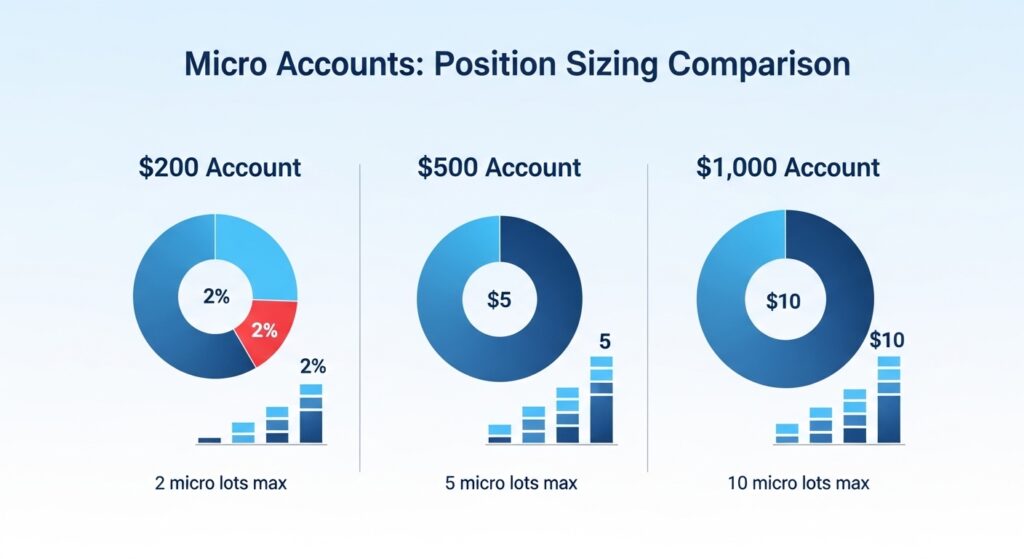
Position Sizing Examples

Micro forex account position sizing guide showing proper lot sizes for $200, $500, and $1,000 accounts

Example 1: $200 Micro Account

Setup: EUR/USD long at 1.1000

  • Entry: 1.1000
  • Stop loss: 1.0980 (20 pips)
  • Target: 1.1040 (40 pips, 2:1 risk-reward)
  • Risk amount: $4 (2% of $200)

Position size calculation:

  • Risk per pip needed: $4 ÷ 20 pips = $0.20 per pip
  • Micro lots: $0.20 ÷ $0.10 = 2 micro lots

Trade outcome if successful:

  • Profit: 40 pips × $0.20 = $8
  • New balance: $208 (4% gain)

Trade outcome if stopped out:

  • Loss: 20 pips × $0.20 = $4
  • New balance: $196 (2% loss)

The position size ensures you can withstand 50 consecutive losing trades before account depletion—adequate room for strategy development.

Example 2: $500 Micro Account

Setup: GBP/USD short at 1.2500

  • Entry: 1.2500
  • Stop loss: 1.2530 (30 pips)
  • Target: 1.2440 (60 pips, 2:1 risk-reward)
  • Risk amount: $10 (2% of $500)

Position size calculation:

  • Risk per pip needed: $10 ÷ 30 pips = $0.33 per pip
  • Micro lots: $0.33 ÷ $0.10 = 3.3 micro lots (use 3 for conservative approach)

Trade outcome if successful:

  • Profit: 60 pips × $0.30 = $18
  • New balance: $518 (3.6% gain)

Trade outcome if stopped out:

  • Loss: 30 pips × $0.30 = $9
  • New balance: $491 (1.8% loss)

Example 3: $1,000 Micro Account

Setup: USD/JPY range trade at 110.00

  • Entry: 110.00 (support bounce)
  • Stop loss: 109.60 (40 pips)
  • Target: 110.80 (80 pips, 2:1 risk-reward)
  • Risk amount: $20 (2% of $1,000)

Position size calculation:

  • Risk per pip needed: $20 ÷ 40 pips = $0.50 per pip
  • Micro lots: $0.50 ÷ $0.09 = ~5.5 micro lots (use 5 for USD/JPY)

Trade outcome if successful:

  • Profit: 80 pips × $0.45 = $36
  • New balance: $1,036 (3.6% gain)

Trade outcome if stopped out:

  • Loss: 40 pips × $0.45 = $18
  • New balance: $982 (1.8% loss)

When to Graduate to Standard Accounts

Consider upgrading when you’ve achieved:

Consistent Profitability (3-6 Months)

Don’t rush the transition. You need:

  • Minimum 3 months of documented profits
  • Positive expectancy across 50+ trades
  • Win rate above 50% OR average win larger than average loss
  • Stable equity curve without significant drawdowns

One profitable month doesn’t confirm strategy viability. Three to six months demonstrates consistency across different market conditions.

Account Growth to $1,000-$2,000

Natural capital accumulation signals readiness:

  • Starting $500 grown to $1,000+ = 100% gain demonstrates skill
  • Starting $200 grown to $500+ = 150% gain shows strong risk management
  • Slow, steady growth preferred over explosive, volatile returns

If you can’t grow a micro account, you won’t succeed with a standard account where mistakes cost 100x more.

Psychological Readiness

Emotional maturity indicators:

  • Losing trades don’t trigger revenge trading
  • Winning trades don’t create overconfidence
  • You follow your trading plan consistently
  • Stop losses are respected without hesitation
  • Profit targets aren’t prematurely adjusted

The biggest challenge in transitioning is psychological. A $50 loss in a standard account feels different than a $0.50 loss in a micro account, even if both represent the same percentage.

Platform Limitations Become Restrictive

You might outgrow micro accounts when:

  • Strategy requires larger positions than micro lots allow efficiently
  • Transaction costs (spreads) become proportionally burdensome
  • Need to trade multiple pairs simultaneously exceeds margin capacity
  • Broker’s micro account offering has feature limitations

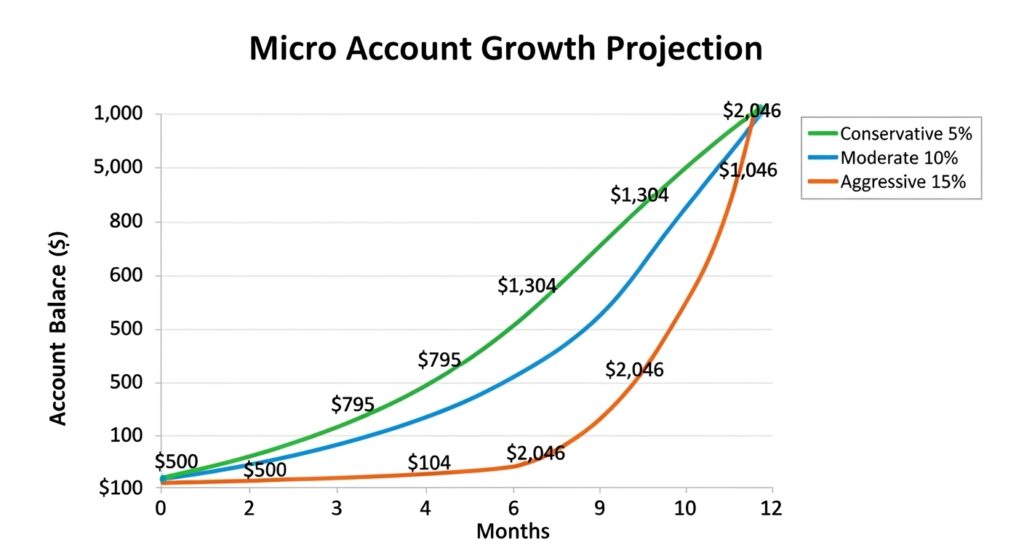
Realistic Profit Expectations

Forex micro account growth projection showing 5%, 10%, and 15% monthly return scenarios over 12 months

Short-Term Growth Potential

Micro accounts allow aggressive percentage returns because absolute dollar amounts remain small:

Realistic targets:

  • Month 1-3: 10-30% monthly (focus is learning, not profits)
  • Month 4-6: 5-15% monthly (strategy refinement)
  • Month 7-12: 3-8% monthly (transitioning toward sustainable returns)

These percentages work with $100-$1,000 because you’re risking $2-$20 per trade. The same percentages become nearly impossible to sustain with larger capital due to market capacity constraints.

Long-Term Wealth Building

Micro accounts aren’t long-term wealth vehicles:

  • $500 growing at 10% monthly becomes $1,549 after one year
  • $500 growing at 5% monthly becomes $898 after one year

The real value is skill development. Master trading with a micro account, then apply those skills to $10,000, $50,000, or $100,000+ where realistic 2-5% monthly returns create meaningful income.

Realistic Income Timeframe

Typical progression:

  • Year 1: Build skills with micro account ($100-$1,000)
  • Year 2: Transition to standard account ($2,000-$10,000)
  • Year 3+: Scale to professional levels ($25,000+) where 2-3% monthly = $500-$750 income

Very few traders achieve consistent income in their first year. The learning curve is steep, and micro accounts provide the lowest-cost education available.

For more details on capital requirements and growth timelines, see our guide on How Much Money to Start Forex Trading.

Frequently Asked Questions

Can I make a living trading a micro account?

No. Even with exceptional 10% monthly returns, a $1,000 micro account generates only $100 monthly profit—not livable income. Micro accounts are learning and skill-building tools, not income sources. Use them to develop trading competence, then apply those skills to larger capital where realistic returns create meaningful income.

How long should I trade a micro account before upgrading?

Minimum 6 months with documented profitability. Ideally 12 months to experience full range of market conditions (trending, ranging, volatile, quiet). If you can’t grow and sustain a micro account profitably for a full year, you’re not ready for larger capital regardless of how much money you have available.

Are micro accounts worse than standard accounts?

Not at reputable brokers. Execution quality, spreads, and platform features are typically identical. The only differences are minimum deposit requirements and available lot sizes. Some brokers reserve tightest spreads for high-volume accounts, but for beginners, micro account spreads are adequate for skill development.

What’s better—one $500 micro account or five $100 micro accounts?

One $500 account. Multiple accounts create management complexity, fragment your focus, and don’t provide proportionate benefits. Use one account to develop one strategy consistently. Once profitable, you can diversify strategies or markets with additional capital, not additional accounts.

Can I use Expert Advisors (EAs) on micro accounts?

Yes, most brokers allow automated trading on micro accounts. This makes micro accounts excellent EA testing grounds. Validate EA performance with real market conditions and costs before deploying on larger capital. Never run an untested EA on a standard account—use a micro account first.

For more on automated trading, see our guide on Setting Up Automated Trading.

Do micro accounts have different spreads than standard accounts?

Sometimes. Some brokers offer identical spreads across account types. Others reserve tightest spreads for high-volume or premium accounts. Check broker specifications. For learning purposes, slightly wider spreads (1-2 pips on EUR/USD vs 0.5-1 pip) don’t significantly impact skill development.

Should I start with a micro or cent account?

Cent account if you have under $100 and want absolute minimum risk exposure. Micro account if you have $100-$1,000 and want more realistic trading conditions at a wider range of brokers. Cent accounts are more restrictive in broker choice and have less favorable trading conditions, but they’re appropriate for the $10-$50 capital range.


Related Resources

  • Forex Cent Accounts: Complete Guide
  • How Much Money to Start Forex Trading
  • Forex Risk Management: Complete Guide
  • How to Choose a Forex Broker
  • Forex Demo Trading Guide
  • What is a Lot in Forex?

Micro accounts bridge the gap between demo trading’s zero-risk environment and standard accounts’ capital intensity. Use them to develop real trading skills with manageable financial exposure, then graduate to larger capital once you’ve proven consistent profitability over meaningful timeframes.
Related Posts:

  • Infographic showing standard, mini, micro, and nano forex lot sizes in a straight line for a beginner guide to what is a Lot in Forex Trading
    What is a Lot in Forex Trading
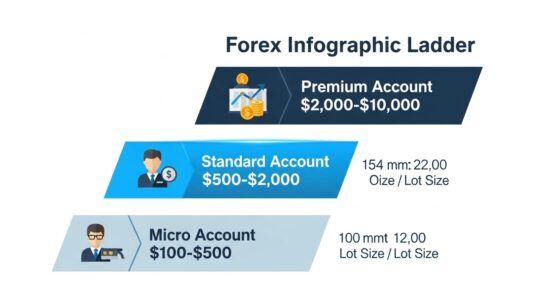
  • Standard forex accounts comparison infographic displaying account progression from micro ($100-$500) to standard ($500-$2,000) to premium ($2,000-$10,000)
    Standard Forex Accounts: Complete Guide for…
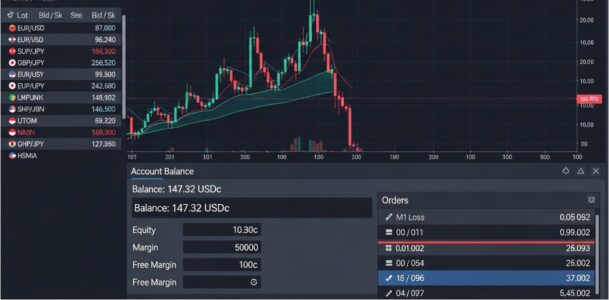
  • Forex cent account trading platform showing 147.32 USDc balance with live chart and open orders
    Forex Cent Accounts: Complete Guide for Beginner Traders
  • How Much Money to Start Forex Trading
    How Much Money to Start Forex Trading
  • pip value concept with three columns: "Position Size" (showing 10,000 units), "Price Movement" (showing +10 pips with an upward arrow), and "Account Impact" (showing +$100) showing the flow from position to movement to monetary result.
    Understanding Pip Value: How to Calculate Your Forex…
  • Margin Trading educational guide showing how margin deposit allows traders to control larger forex positions
    Margin Trading in Forex: Complete Beginner’s Guide

Powered by Contextual Related Posts

Tags: forex account types forex for beginners micro accounts micro lot trading small capital trading

Post navigation

← Forex Cent Accounts: Complete Guide for Beginner Traders
Standard Forex Accounts: Complete Guide for Developing Traders →

Recent Posts

  • Best Forex Brokers That Allow Scalping
  • Making Money in Forex: Complete Guide
  • Best Forex Brokers: How to Choose the Right One
  • VIP Forex Accounts: Complete Guide for Serious Traders
  • Silber-Trading: Vollständiger Leitfaden zum Handel mit XAG/USD

Recent Comments

    Archives

    • March 2026
    • February 2026
    • January 2026
    • December 2025
    • November 2025
    • September 2025
    • August 2025
    • September 2011

    Categories

    • Arabic
    • Artificial Intelligence
    • Artificial intelligence (AI)
    • Automated Trading
    • Banking (Local and Global)
    • Banks
    • Bitcoin
    • Bonds
    • Broker Reviews
    • Business
    • Business in UAE
    • Business News
    • CFD TRADING
    • Chart Patterns in Forex
    • Commodities
    • Commodity Options
    • Crude Oil
    • Cryptocurrency
    • Currency
    • Currency investing
    • Currency News
    • currency of Vietnam
    • Currency Pairs
    • Currency Revalue
    • Day Trading
    • Digital Money
    • Dubai
    • Economy
    • European Business
    • Fast Cash
    • Finance
    • Financial News
    • Foreign Exchange Market
    • forex
    • Forex Brokers
    • Forex Education
    • Forex Fraud
    • Forex Guides
    • Forex Indicators
    • Forex Market Analysis
    • Forex Position Trading
    • Forex Risk Management
    • Forex Scalping
    • Forex Swing Trading
    • Forex Trading
    • Forex Training
    • Fundamental Analysis
    • futures
    • German
    • Global Economy
    • Global Investing
    • Global Market
    • Gold
    • GOLD INVESTMENT
    • Income
    • Invest In Gold
    • Investing
    • Investing Basics
    • investing in Abu Dhabi
    • investing strategy
    • Investment
    • investment methods
    • Investment Portfolio
    • Investors
    • Iraqi Dinar News
    • Learning Center
    • Machine Learning
    • Market News
    • Market News
    • Metal
    • National Future Association
    • News Trading
    • NFA
    • NFA Brokers
    • Options
    • PRECIOUS METALS
    • Price Action Trading
    • Range Tradong Strategies
    • Real Estate
    • Recession
    • Retirement
    • Retirement Planning
    • Silver
    • Social Networks
    • Spanish
    • Stock Market
    • Stocks
    • Support and Resistance Trading
    • Switzerland
    • Technical Analysis
    • Trading
    • Trading Platforms
    • Trading Psychology
    • Trading Rules
    • Trading Strategies
    • Trading Tools
    • Trend Trading Strategies
    • UAE
    • Uncategorized
    • US Forex Brokers
    • Vietnamese dong
    • الاستثمار
    • الاستثمار في الإمارات
    • الاستثمار في دبي
    • تجارة الفوركس
    • سوق تبادل العملات

    Copyright © 2026 Make Money in Forex & Other Investments. All Rights Reserved. Affiliate Disclosure | Privacy Policy