Learn How to Make Fast Money by Learning diffrent Strategies in Forex Trading and Different Investment Options
What are CFDs? Complete Trading Guide
Contracts for Difference (CFDs) have revolutionized how traders access financial markets, offering flexibility and leverage that traditional investing cannot match. CFDs allow you to speculate on rising or falling prices across thousands of global markets without owning the underlying assets, opening trading opportunities in forex, stocks, indices, commodities, and cryptocurrencies from a single trading account.
For traders familiar with forex trading, CFDs represent a natural extension into broader markets using similar principles of leverage and speculation. Understanding how CFDs work, their advantages and risks, and proper trading strategies separates successful CFD traders from those who lose capital through overleveraging and poor risk management.
This comprehensive guide explains everything you need to know about CFD trading: what CFDs are and how they function, markets available for CFD trading, advantages over traditional investing, critical risks to manage, and how to start trading CFDs successfully.
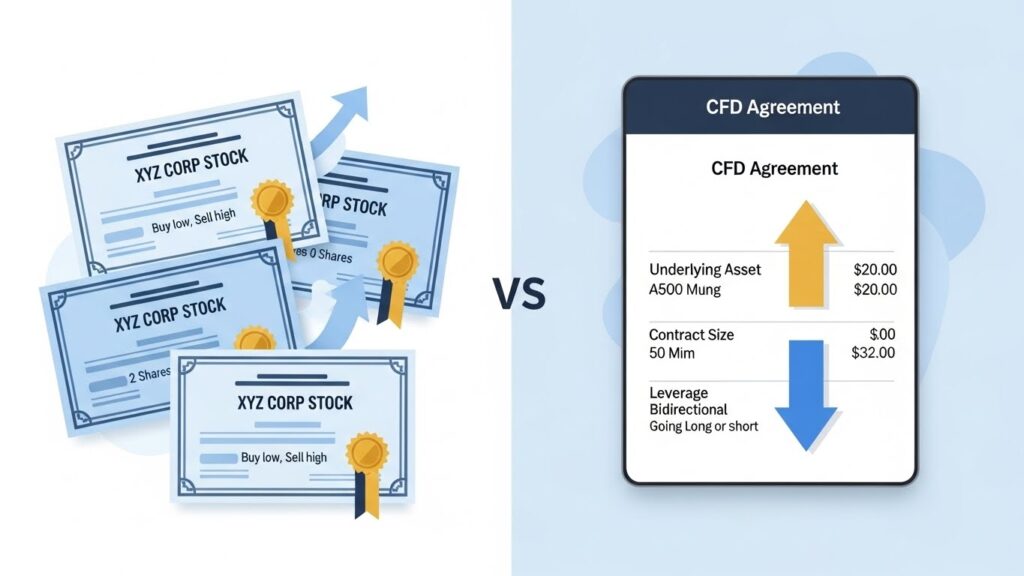
A Contract for Difference (CFD) is a derivative financial instrument that allows you to trade on the price movements of underlying assets without actually owning those assets. When you trade a CFD, you enter into a contract with a broker to exchange the difference in an asset’s price from when you open your position to when you close it.
If you believe a market will rise, you buy (go long) a CFD. If you think it will fall, you sell (go short) a CFD. Your profit or loss depends on how far the market moves in your predicted direction and the size of your position. The key distinction from traditional investing: you never own the underlying asset—you only speculate on its price direction.
CFDs originated in London in the early 1990s as a way for institutional investors to hedge their stock positions while avoiding stamp duty on share purchases. The instruments quickly gained popularity among retail traders for their flexibility, leverage, and ability to profit from both rising and falling markets.
The mechanics are straightforward: you agree to pay (or receive) the difference between the current price and the future price of an asset. If the difference is positive when you close your position, the broker pays you. If negative, you pay the broker. This simple structure creates powerful trading opportunities across virtually any liquid financial market.
How CFD Trading Works
CFD trading operates differently from buying physical shares or assets, using margin and leverage to amplify your market exposure with relatively small capital outlays.
CFD Pricing and Spreads
CFDs are quoted with two prices: the bid (selling price) and the ask (buying price). The difference between these prices is the spread—your cost for entering the trade. Spreads vary by market and broker, typically ranging from 0.1% to 1% of the asset’s value.
When you buy a CFD, you pay the ask price. When you sell, you receive the bid price. This means your trade starts slightly in the negative due to the spread, similar to how spreads work in forex trading. The market must move in your favor by more than the spread before you profit.
Margin and Leverage
CFDs are traded on margin, meaning you only deposit a fraction of the total trade value to open a position. If a broker offers 10:1 leverage, you need only 10% margin to control a full-size position. With $1,000, you can control $10,000 worth of an asset.
This leverage amplifies both profits and losses dramatically. A 5% price move on a leveraged position creates a 50% gain or loss on your margin. Understanding leverage risks is absolutely critical before trading CFDs—many beginners underestimate how quickly leverage destroys accounts during adverse price movements.
Margin requirements vary by asset class and broker. Forex CFDs might require 3.33% margin (30:1 leverage), while stock CFDs could require 20% margin (5:1 leverage). Regulators in different jurisdictions impose maximum leverage limits to protect retail traders from excessive risk.
Long and Short Positions
CFDs allow you to profit from both rising and falling markets equally. Going long (buying) profits when prices rise. Going short (selling) profits when prices fall. This flexibility represents a major advantage over traditional investing, where profiting from declines requires complex options strategies or short-selling shares.
Short selling CFDs is simple: you sell an asset you don’t own at the current price, then buy it back later at a hopefully lower price. The difference is your profit. If prices rise instead, you lose money. This two-way trading capability makes CFDs attractive during bear markets and volatile conditions.
CFD Markets Available for Trading
One of CFD trading’s greatest advantages is access to thousands of markets across multiple asset classes from a single brokerage account.
Forex CFDs
Currency pair CFDs represent the largest and most liquid CFD market. Trade major pairs like EUR/USD, GBP/USD, and USD/JPY, plus exotic pairs with competitive spreads and high leverage. Forex CFDs operate 24 hours, five days per week, offering constant trading opportunities.
For traders already familiar with major currency pairs, forex CFDs provide the same markets with similar execution. The key difference: CFDs settle in your account’s base currency rather than requiring actual currency exchange.
Stock Index CFDs
Trade the performance of entire stock markets through index CFDs like the S&P 500, NASDAQ 100, FTSE 100, DAX 40, and Nikkei 225. Index CFDs offer broad market exposure without the need to pick individual stocks, reducing company-specific risk while maintaining leverage advantages.
Index CFDs track the underlying index value closely, allowing you to speculate on overall market sentiment, economic data releases, and macroeconomic trends. Trading costs are typically low with tight spreads on major indices.
Individual Stock CFDs
Access thousands of individual company stocks from exchanges worldwide including the NYSE, NASDAQ, LSE, and ASX. Stock CFDs let you trade popular companies like Apple, Tesla, Amazon, and Microsoft with leverage and the ability to short sell easily.
Unlike buying physical shares, stock CFDs don’t grant voting rights or direct ownership. However, many brokers pay dividend adjustments to long CFD positions when underlying stocks pay dividends, partially replicating stock ownership benefits.
Commodity CFDs
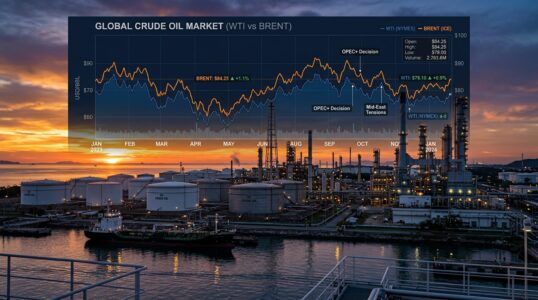
Trade commodities including gold,silver, crude oil, natural gas, and agricultural products through CFDs. Commodity CFDs provide exposure to these markets without the complexities of futures contracts or physical delivery, making them accessible to retail traders.
Commodity prices respond to supply and demand fundamentals, geopolitical events, and currency movements. CFDs allow you to capitalize on these price movements with flexible position sizes and leverage.
Cryptocurrency CFDs
Cryptocurrency CFDs let you trade Bitcoin, Ethereum, and other digital assets without the hassles of crypto wallets, exchanges, and security concerns. Speculate on crypto prices while your broker handles custody and technical infrastructure.
Crypto CFDs offer the same price exposure as owning actual cryptocurrencies but with added benefits: ability to short sell easily, trade with leverage, and avoid the risks of exchange hacks or lost private keys. For traders interested in crypto markets, reviewing cryptocurrency trading fundamentals provides essential background knowledge.
Advantages of CFD Trading
CFDs offer several compelling advantages that attract traders globally, though these benefits come with corresponding risks.
Leverage and Capital Efficiency
Leverage allows you to control large positions with relatively small capital. Rather than tying up $10,000 to buy 100 shares at $100 each, you might need only $1,000 margin with 10:1 leverage. This capital efficiency lets you diversify across multiple positions or keep more capital in reserve.
However, leverage cuts both ways. The same 10:1 leverage that amplifies a 5% gain into a 50% profit also turns a 5% loss into a 50% account hit. Proper position sizing becomes absolutely critical when trading leveraged CFDs.
Access to Global Markets
Trade stocks from London, Frankfurt, New York, Tokyo, and Sydney from one account without dealing with multiple brokers, currencies, or market access restrictions. CFDs democratize access to global markets for retail traders.
No Shorting Restrictions
Short selling CFDs is as simple as clicking “sell” rather than “buy.” No need to borrow shares, worry about availability, or pay borrowing fees in most cases. This makes profiting from declining markets straightforward.
Lower Trading Costs
CFD brokers typically charge lower commissions than traditional stockbrokers, with many offering commission-free trading on indices, commodities, and forex CFDs. Your main cost is the spread between bid and ask prices.
Flexible Position Sizes
Unlike stock trading where you must buy whole shares, many CFD brokers allow fractional positions. Trade 0.1 lots of gold or 0.5 shares of Amazon, giving you precise control over position sizing and risk management.
Risks and Disadvantages of CFD Trading
CFDs carry significant risks that every trader must understand and manage actively.
Leverage Risk and Margin Calls
Leverage magnifies losses as quickly as profits. A position that moves against you by just 10% can wipe out your entire margin if using 10:1 leverage. Brokers issue margin calls when your account equity falls below required maintenance levels, potentially closing your positions at losses if you cannot deposit additional funds.
Overnight Financing Costs
Holding CFD positions overnight incurs financing charges (positive or negative) based on the underlying asset and your position direction. Long positions typically pay overnight fees, while short positions might receive credits. These costs accumulate over time, making CFDs better suited for shorter-term trading than long-term investing in many cases.
Counterparty Risk
When trading CFDs, your counterparty is the broker, not an exchange. If the broker becomes insolvent, your positions and funds could be at risk despite regulatory protections in many jurisdictions. Choose well-regulated, financially sound brokers to minimize counterparty risk.
No Ownership Rights
CFDs don’t grant ownership of underlying assets. You receive no voting rights for stock CFDs, cannot take physical delivery of commodities, and don’t directly own any assets—only contracts with your broker. This matters for long-term investors who value ownership benefits.
Overtrading Temptation
Low barriers to entry and high leverage tempt traders into overtrading—taking too many positions, trading too large, or trading too frequently. This behavior generates excessive costs and magnifies emotional decision-making that leads to losses.
CFD Trading Strategies
Successful CFD trading requires systematic strategies rather than random speculation.
Day Trading CFDs
Day traders open and close CFD positions within the same trading day, avoiding overnight financing costs and overnight risk. This approach requires significant time commitment, fast decision-making, and solid understanding of technical analysis to identify intraday trading opportunities.
Swing Trading
Swing traders hold CFD positions for days or weeks to capture medium-term price movements. This strategy requires less time than day trading while still offering active participation in markets. Swing trading works well with chart pattern recognition and trend identification.
News and Event Trading
Trade CFDs around major economic releases, earnings announcements, or geopolitical events that create volatility. This strategy capitalizes on sharp price movements but requires excellent timing and risk management due to increased slippage and spread widening during high volatility.
Hedging with CFDs
Use CFDs to hedge existing investment portfolios. If you own physical shares but expect short-term weakness, sell equivalent CFDs to offset losses without selling your long-term holdings. This flexibility makes CFDs valuable portfolio management tools.
Risk Management for CFD Trading
Effective risk management separates profitable CFD traders from those who blow up their accounts.
Use Stop Losses
Always set stop loss orders to limit maximum loss on each trade. Calculate your stop loss distance before entering positions, ensuring losses stay within acceptable risk parameters. Never trade without stops, especially when using leverage.
Limit Leverage
Just because brokers offer 30:1 or 50:1 leverage doesn’t mean you should use it. Most experienced traders use far less leverage than available, often limiting themselves to 3:1 or 5:1 to maintain manageable risk levels.
Size Positions Appropriately
Risk only 1-2% of your account capital on any single CFD trade. This conservative approach ensures you survive inevitable losing streaks without destroying your account. Calculate position sizes based on your stop loss distance and account size.
Monitor Margin Levels
Keep substantial free margin in your account beyond minimum requirements. This buffer protects you from margin calls during temporary adverse price movements and gives you flexibility to manage positions actively.
Avoid Overtrading
Quality over quantity applies to CFD trading. Take fewer, higher-probability trades rather than constant speculation. Overtrading increases costs, mental fatigue, and emotional decision-making that leads to poor trading outcomes.
Getting Started with CFD Trading
Beginning CFD trading requires careful preparation and realistic expectations.
Choose a Regulated Broker
Select brokers regulated by reputable authorities like the FCA (UK), ASIC (Australia), or CySEC (Cyprus). Regulation provides investor protections, segregated client funds, and recourse mechanisms if problems arise. Research broker reputations, trading platforms, and cost structures before opening accounts.
Practice CFD trading with virtual money before risking real capital. Demo accounts let you learn platform functionality, test strategies, and develop skills without financial consequences. Spend at least several weeks in demo mode before transitioning to live trading.
Educate Yourself Thoroughly
Understand the markets you plan to trade. Study technical analysis, develop trading plans, and learn risk management principles. Education dramatically improves your probability of trading success.
Begin with Small Positions
When transitioning to live trading, start with minimum position sizes to gain experience managing real money psychology. Gradually increase position sizes only after demonstrating consistent profitability with small trades.
Keep Detailed Records
Maintain a trading journal documenting every trade: entry/exit points, reasoning, results, and lessons learned. This record-keeping reveals patterns in your trading, helps identify mistakes, and accelerates improvement.
Manage Expectations
CFD trading is not a get-rich-quick scheme. Success requires time, dedication, continuous learning, and emotional discipline. Most new traders lose money initially while developing skills. Start conservatively, focus on preservation of capital, and build competence before seeking substantial profits.
CFDs vs Traditional Investing
Understanding when CFDs make sense versus traditional investing helps you choose appropriate instruments for your goals.
CFDs excel for short to medium-term speculation, hedging existing positions, and accessing markets where direct ownership is impractical. The leverage allows capital-efficient trading, and the ability to profit from falling markets provides flexibility traditional investing lacks.
Traditional investing suits long-term wealth building, dividend collection, and investors who value ownership rights and voting privileges. Physical shares don’t carry overnight financing costs or counterparty risk with brokers.
Many sophisticated traders use both approaches: CFDs for short-term trading and hedging, physical assets for core long-term holdings. This combination captures the advantages of each while mitigating their respective disadvantages.
Conclusion
CFD trading opens doors to global financial markets with flexibility and capital efficiency that traditional investing cannot match. The ability to trade thousands of instruments from one account, profit from both rising and falling prices, and use leverage to amplify returns makes CFDs powerful trading tools.
However, these advantages come with significant risks. Leverage magnifies losses as quickly as profits, overnight financing costs accumulate, and the complexity of CFD trading traps unprepared traders into expensive mistakes. Success requires thorough education, disciplined risk management, realistic expectations, and continuous learning.
Approach CFD trading as a serious endeavor requiring study and practice. Start with demo accounts, use conservative leverage, implement strict stop losses, and size positions appropriately. Master the fundamentals, develop systematic strategies, and maintain emotional discipline. CFD trading rewards preparation and patience while punishing impulsive speculation and overleveraging.