Learn How to Make Fast Money by Learning diffrent Strategies in Forex Trading and Different Investment Options
Solana Trading Guide: How to Trade SOL Successfully
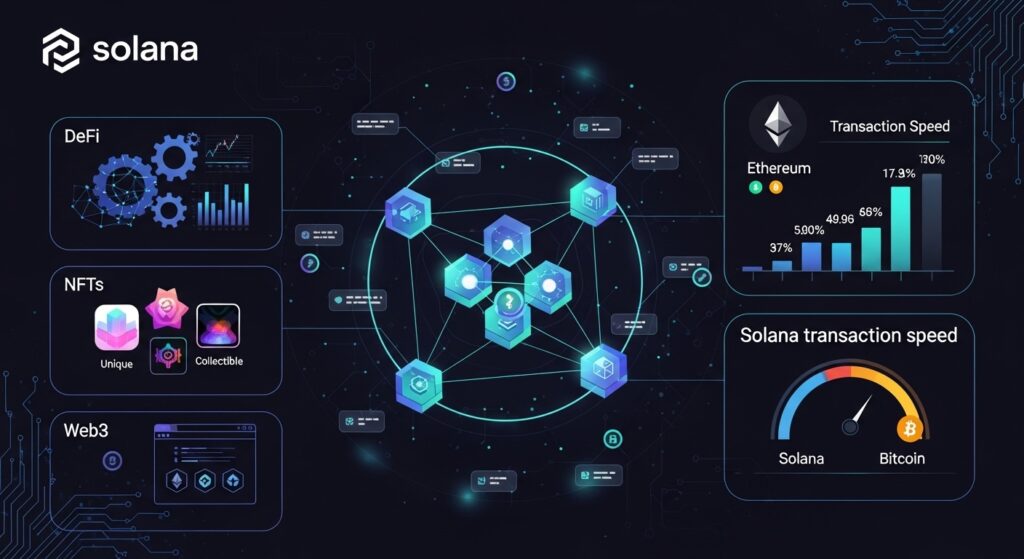
Solana represents one of cryptocurrency’s fastest-growing ecosystems and has become a major focus for Solana trading, thanks to transaction speeds exceeding 65,000 per second and fractions-of-a-penny costs that enable applications impossible on slower blockchains.. While Bitcoin pioneered digital money and Ethereum introduced smart contracts, Solana delivers the performance necessary for mainstream adoption—powering decentralized exchanges processing billions in daily volume, NFT marketplaces handling millions of transactions, and Web3 applications serving millions of users.
For traders, Solana’s explosive growth creates unique opportunities and challenges. SOL surged from $1.50 in early 2021 to $260 by November 2021 (17,000% gain), crashed 97% to $8 in December 2022 following FTX collapse and network outages, then recovered 800%+ to $110+ by 2024 as ecosystem development accelerated. This volatility, combined with Solana-specific catalysts like network upgrades, ecosystem growth metrics, and validator dynamics, creates trading opportunities distinct from Bitcoin and other cryptocurrencies.
This comprehensive guide explains everything you need to trade Solana successfully: what makes Solana valuable, how proof-of-history and validator economics drive demand, major price catalysts specific to SOL, proven trading strategies for different market conditions, technical analysis approaches, risk management essentials, and critical mistakes that destroy beginner Solana traders’ accounts.
Whether you’re day trading SOL’s volatility, accumulating for long-term ecosystem growth, or trading Solana’s correlation with broader cryptocurrency markets, understanding Solana’s unique characteristics separates successful traders from those who lose capital to preventable mistakes.
Solana functions as a high-performance blockchain designed to process thousands of transactions per second while maintaining decentralization and security. Unlike Bitcoin’s 7 transactions per second or Ethereum’s 15-30, Solana achieves 65,000+ TPS through innovative proof-of-history consensus, enabling applications requiring speed and low costs impossible on previous blockchains.
Solana’s Core Innovation: Proof of History
How Traditional Blockchains Work: Most blockchains rely on timestamps from network consensus, requiring nodes to communicate extensively to agree on transaction order. This communication creates bottlenecks limiting transaction throughput.
Proof of History (PoH): Solana introduces cryptographic clock enabling nodes to independently verify transaction order without extensive communication. PoH creates historical record proving events occurred in specific sequence, dramatically reducing consensus overhead and enabling parallel transaction processing.
Result: Transactions process in 400 milliseconds with fees under $0.001—performance enabling real-world applications like decentralized orderbook exchanges, on-chain gaming, and micropayment systems impossible on slower chains.
Solana vs Ethereum: Key Differences
While both support smart contracts and decentralized applications, their approaches differ fundamentally:
Ethereum:
Slower transactions (15-30 TPS currently, improving with Layer 2s)
Higher fees ($1-50+ depending on congestion)
Established ecosystem and developer community
Progressive decentralization through Layer 2 scaling
Dominant DeFi and NFT ecosystems
Solana:
Much faster transactions (65,000+ TPS theoretical, 2,000-4,000 practical)
Minimal fees ($0.00025 average)
Newer ecosystem with rapid growth
Monolithic scaling (everything on Layer 1)
Growing DeFi and NFT adoption
Trading Implications: Ethereum responds to network congestion, gas fee spikes, and Layer 2 adoption. Solana responds to network stability, ecosystem application growth, validator dynamics, and competition with Ethereum for developers and users.
Understanding Solana as high-performance infrastructure rather than Ethereum clone helps identify unique catalysts missed by those treating all smart contract platforms identically.
How Solana’s Proof of Stake Economics Work
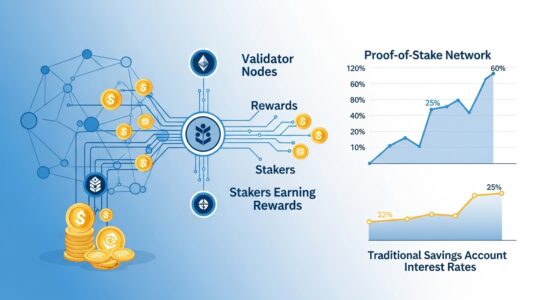
Solana combines proof-of-history with proof-of-stake validation, creating economic dynamics that impact SOL price and supply.
Validator Staking Requirements
Network Validators: Solana network consists of validators who:
Run validator nodes processing transactions
Stake SOL as security collateral
Earn rewards from transaction fees and inflation
Face slashing penalties for malicious behavior
Staking Impact on Supply: Approximately 65-70% of SOL supply is staked to validators, removing it from liquid circulation. This staked SOL cannot be immediately sold, reducing selling pressure during market corrections.
Unstaking Period: Unlike Ethereum’s lengthy unstaking queues, Solana has no mandatory lockup—stakers can unstake and receive SOL within one epoch (approximately 2-3 days). This creates potential sudden supply increases if large stakers exit.
Inflation and Tokenomics
SOL Supply Schedule:
Initial Supply: 500 million SOL at launch (2020)
Current Supply: ~580 million SOL (2024)
Inflation Rate: Declining from 8% initially to 1.5% long-term
Max Supply: Uncapped (inflationary model)
Inflation Distribution: New SOL issuance rewards validators and stakers, compensating them for network security. As transaction fees increase with adoption, inflation’s importance decreases.
Token Burn: 50% of transaction fees burn permanently, creating deflationary pressure during high network usage periods. While fees are minimal per transaction, billions of daily transactions can create meaningful burn.
Trading Insight: Monitor staking percentages on Solana Beach or Validators.app. Decreasing staked percentage indicates SOL flowing to exchanges for potential selling. Increasing percentage removes supply from market, creating bullish pressure.
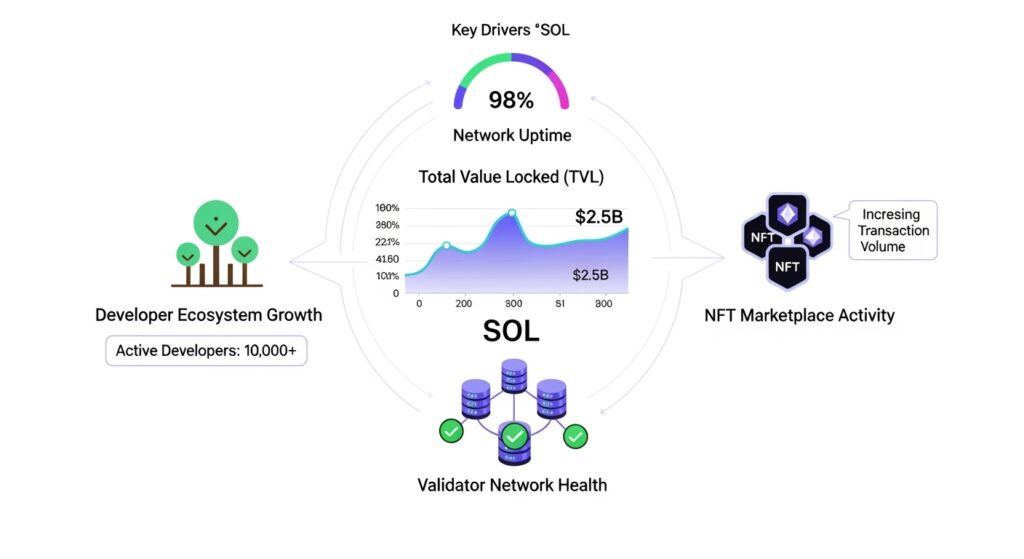
Falling TVL suggests capital flight to competitors
TVL often precedes price movements by days or weeks
Trading Strategy: Track TVL on DeFiLlama.com. Significant TVL increases (15%+ weekly) often precede SOL price rallies as more capital flows into ecosystem.
3. NFT Market Activity
Solana hosts one of crypto’s largest NFT ecosystems, competing with Ethereum.
Major Solana NFT Marketplaces:
Magic Eden (largest by volume)
Tensor
Solanart
NFT Impact on SOL:
High NFT trading creates transaction fee revenue
NFT launches drive network usage
NFT market sentiment influences SOL price
Popular NFT collections attract users to Solana ecosystem
Trading Strategy: Monitor NFT marketplace volumes. Major NFT launches or collection surges correlate with short-term SOL buying pressure as users acquire SOL for purchases.
4. Solana Ecosystem Development
Developer activity and application launches drive long-term value:
Key Development Metrics:
Active developer count
New project launches
GitHub activity
Hackathon participation
Ecosystem funding announcements
Major Ecosystem Growth:
DeFi protocol launches
Gaming platform development
Mobile integration (Saga phone)
Consumer application adoption
Trading Strategy: Major ecosystem announcements (new flagship projects, institutional partnerships, developer grants) create multi-day rallies. Position ahead of scheduled announcements when possible.
5. SOL/ETH Ratio Dynamics
SOL often moves in relation to Ethereum, Solana’s primary competitor:
Trading Strategy: Trade the ratio itself on exchanges offering SOL/ETH pairs. Buy SOL when ratio approaches multi-month lows if fundamental catalysts support recovery.
6. Validator Performance and Decentralization
Network health depends on validator distribution and performance:
Validator Metrics:
Nakamoto Coefficient: Measures decentralization
Validator Count: More validators = better decentralization
Staking Distribution: Concentration risk if few validators control majority
Geographic Distribution: Reduces censorship risk
Trading Impact: Improving validator metrics support long-term bullish thesis. Concentration concerns create FUD and selling pressure.
Solana competes with Ethereum, Avalanche, Binance Smart Chain, and newer chains:
Competitive Factors:
Transaction speed and costs
Developer ecosystem size
User adoption metrics
TVL comparisons
Institutional backing
Trading Insight: SOL often correlates inversely with Ethereum dominance. When “Ethereum killers” narrative strengthens, capital rotates to Solana and competitors.
8. FTX Contagion Effects
FTX’s collapse significantly impacted Solana due to Sam Bankman-Fried’s (FTX founder) heavy backing:
FTX Relationship:
Alameda Research (FTX’s trading arm) was major SOL holder
FTX supported Solana ecosystem development
SBF frequently promoted Solana
Post-FTX Reality:
Massive SOL selling from FTX bankruptcy estate
Negative association with failed exchange
Ecosystem survived and grew despite setback
Trading Consideration: FTX estate still holds substantial SOL that could be sold, creating ongoing overhang. Monitor bankruptcy proceedings for potential selling events.
Solana Trading Strategies
Different market conditions and trader timeframes require adapted strategies.
1. Network Stability Trading
Concept: Trade SOL based on network outages and recovery.
Implementation:
Monitor network status continuously
When outage occurs, set limit buy orders 5-10% below market
Wait for network recovery announcement
Target 15-25% recovery bounce
Exit if outage extends beyond 24 hours (deeper issues possible)
Best For: Swing traders comfortable with event-driven volatility.
Risk Management: Use tight stops (7-10% below entry). Extended outages indicate fundamental problems requiring reevaluation.
2. Ecosystem Momentum Trading
Concept: Trade SOL based on DeFi ecosystem growth.
Implementation:
Track Solana TVL weekly on DeFiLlama
When TVL increases 15%+ week-over-week, enter long position
Set stop loss 8-10% below entry
Target 20-30% gains or TVL momentum reversal
Exit when TVL growth stagnates or reverses
Best For: Medium-term traders (2-6 week holding periods).
Confirmation: Combine TVL growth with increasing daily active addresses (Solana Beach) for stronger signal.
3. NFT Volume Correlation Trading
Concept: Trade short-term based on NFT marketplace activity.
Implementation:
Monitor Magic Eden and Tensor daily volumes
When NFT volume spikes 50%+ above 7-day average, enter long SOL
Set tight stop 4-6% below entry
Target quick 8-15% gains within 3-7 days
Exit when NFT volume normalizes
Best For: Day traders and short-term swing traders.
Warning: NFT spikes can reverse quickly. Use tight stops and take profits aggressively.
4. SOL/ETH Ratio Mean Reversion
Concept: Trade Solana’s relative value versus Ethereum.
Implementation:
Calculate historical SOL/ETH ratio range (typically 0.03-0.08)
When ratio falls to 0.04 or below, accumulate SOL over ETH
When ratio rises to 0.07+, consider taking profits
Hold until ratio mean-reverts toward 0.05-0.06
Use 15-20% stop loss from entry ratio
Best For: Patient traders focusing on relative value rather than absolute price.
Advantage: Works in bull and bear markets. Only requires correct prediction of relative performance.
5. Development Milestone Trading
Concept: Position ahead of major Solana upgrades and ecosystem announcements.
Implementation:
Follow Solana development calendar and roadmap
Identify major upgrades 4-6 weeks ahead
Enter positions 3-4 weeks before expected milestone
Scale in gradually to average entry price
Take 50% profits 1 week before event
Exit remainder on event day or shortly after
Best For: Medium-term traders willing to hold through volatility.
Caution: “Buy the rumor, sell the news” often applies. Upgrades frequently trigger corrections immediately after launch.
6. FTX Liquidation Monitoring
Concept: Trade SOL based on FTX estate selling pressure.
Implementation:
Monitor FTX bankruptcy proceedings
When large SOL sales announced, prepare for temporary dip
Set limit buy orders 10-15% below market
Accumulate during panic selling
Hold for recovery bounce (typically 20-40%)
Best For: Contrarian traders with patience for multi-week positions.
Research: Follow @FTX_Official on Twitter and monitor bankruptcy court filings for liquidation schedules.
Technical Analysis for Solana Trading
Technical analysis principles apply to Solana with adaptations for crypto market characteristics.
Key Support and Resistance Levels
Solana respects psychological levels and technical zones:
Round numbers: $10, $20, $50, $100, $150, $200
Previous all-time high: $260 (November 2021)
FTX crash low: $8 (December 2022)
Major moving averages: 50-day, 200-day
Application: Mark key levels on charts. These provide reliable entry/exit points during ranging markets.
Effective Indicators for SOL Trading
RSI (Relative Strength Index):
Below 30: Oversold (potential buy signal)
Above 70: Overbought (potential sell signal)
Works well on daily/weekly timeframes for SOL
Divergences often precede reversals
Moving Averages:
50-day and 200-day MAs identify trends
Golden Cross (50 above 200): Bullish signal
Death Cross (50 below 200): Bearish signal
SOL respects moving averages more reliably than some altcoins
MACD (Moving Average Convergence Divergence):
Crossovers signal momentum changes
Particularly effective on 4-hour and daily charts for SOL
Divergences with price often precede reversals
Volume Analysis:
Rising prices on increasing volume: Healthy uptrend
Rising prices on decreasing volume: Weak rally, likely reversal
Breakouts need volume confirmation for validity
Chart Patterns Specific to Solana
Volatility Expansion: SOL tends toward low volatility consolidation periods followed by explosive moves (up or down). Bollinger Band squeeze often precedes major movements.
Failed Breakouts: SOL frequently false-breaks resistance before true breakouts. Wait for confirmation (close above resistance, successful retest) before committing large capital.
Recovery V-Bottoms: Following network outages or FUD events, SOL often forms sharp V-bottom recoveries rather than gradual bases. This creates opportunities for aggressive entries near lows.
Solana-Specific Technical Considerations
Correlation Analysis:
High Correlation With:
Ethereum (r = 0.75-0.85)
Other Layer 1s (Avalanche, Fantom)
Overall crypto market (Bitcoin)
Lower Correlation With:
Traditional stocks
Commodities
Implication: SOL technical analysis works best when considered alongside broader crypto market trends. Analyze Bitcoin and Ethereum technicals before taking SOL positions.
Seasonality Patterns:
Historical analysis shows patterns (though not guaranteed to repeat):
Application: Use seasonality as context, not sole decision factor. Combine with technical and fundamental analysis.
Risk Management for Solana Trading
Solana’s extreme volatility demands disciplined risk management to survive long enough to profit.
Position Sizing for High Volatility
SOL can move 10-25% daily during volatile periods. Position sizing must account for this:
Conservative: Risk 1-2% of account per trade Moderate: Risk 2-3% of account per trade Aggressive: Risk 3-5% of account per trade (experienced traders only)
Never risk more than 5% on single SOL trade regardless of conviction.
Time-Based Stops: Exit if price doesn’t move favorably within expected timeframe, especially for event-driven trades.
Protecting Profits
Trailing Stops:
Move stop loss up as price rises
Lock in minimum profits while allowing trend continuation
Typical trail: 8-12% below highest point since entry
Partial Profit Taking:
Sell 25-50% at first profit target
Let remainder run with trailing stop
Reduces psychological pressure, locks gains
Profit Targets:
Conservative: 15-20% gains
Moderate: 25-40% gains
Aggressive: 50%+ during strong trends
Managing Volatility
Reduce Position Size During:
Scheduled network upgrades (outage risk)
Major market uncertainty
Low liquidity periods (weekends, holidays)
Increase Position Size During:
Confirmed network stability
Strong ecosystem momentum
High liquidity periods
Diversification Within Crypto Portfolio
Don’t concentrate exclusively in Solana:
Split between Bitcoin and major altcoins (40-50%)
Solana allocation: 10-25% of crypto portfolio
Other Layer 1s (Ethereum, Avalanche): 20-30%
Maintain stablecoin reserves (20-30%) for opportunities
Common Solana Trading Mistakes
1. Ignoring Network Stability
The Mistake: Trading SOL without monitoring network status and outage history.
Why It Matters: Network outages create immediate 5-15% drops. Unaware traders get stopped out unnecessarily or miss recovery opportunities.
Solution: Bookmark status.solana.com and check before taking positions. Understand outage history and development team’s response quality.
2. Treating SOL Identically to Ethereum
The Mistake: Applying Ethereum trading strategies directly to Solana without adjusting for differences.
Differences:
SOL responds to different catalysts (network stability vs gas fees)
Different validator economics and staking dynamics
Younger ecosystem with more volatility
Different competitive positioning
Solution: Study Solana-specific metrics: validator performance, network stability, ecosystem TVL, NFT activity. Don’t just trade SOL as “Ethereum lite.”
3. Overleveraging on Volatility
The Mistake: Using excessive leverage (10x, 20x+) attracted by SOL’s daily movements.
Reality: SOL’s 10-20% daily swings liquidate leveraged positions regularly. Even correct directional calls fail with excessive leverage.
Solution: Use maximum 2-3x leverage. SOL’s natural volatility provides sufficient profit potential without leverage’s liquidation risk.
4. Panic Selling Network Outages
The Mistake: Immediately selling entire position when network outage announced.
Historical Pattern: Most Solana outages resolve within 24 hours, followed by 10-30% recovery bounces. Panic sellers lock in losses, miss recoveries.
Solution: If holding SOL when outage occurs:
Assess development team communication
Review outage severity and expected resolution
Consider buying dip if fundamentals intact
Only sell if outage suggests deeper problems
5. Ignoring FTX Overhang
The Mistake: Forgetting FTX estate holds substantial SOL that could be sold.
Impact: Periodic FTX sales create temporary price pressure. Unaware traders misinterpret as fundamental weakness.
Solution: Monitor FTX bankruptcy proceedings. When large sales announced, view as opportunity to accumulate at temporarily depressed prices.
6. Chasing NFT Pump Narratives
The Mistake: Buying SOL during peak NFT mania hoping trend continues indefinitely.
Reality: NFT volume spikes are temporary. Buying SOL solely for NFT narrative often leads to buying tops.
Solution: Use NFT volume as short-term trading signal (3-7 days), not long-term investment thesis. Take profits when volume normalizes.
Getting Started with Solana Trading
Step 1: Choose Reliable Exchange
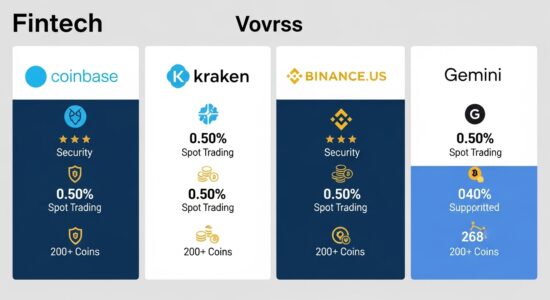
Select exchange supporting SOL with good liquidity and reasonable fees:
Trading Solana offers unique opportunities unavailable with Bitcoin or traditional assets. SOL prices respond to network stability metrics, ecosystem application growth, NFT marketplace activity, validator dynamics, and competitive positioning versus Ethereum—creating diverse catalysts beyond simple supply-demand economics. Understanding these Solana-specific drivers separates successful SOL traders from those applying Bitcoin or Ethereum strategies that miss Solana’s unique characteristics.
Most Solana traders fail not from lack of knowledge but from emotional mistakes, inadequate risk control during extreme volatility, and ignorance of Solana-specific metrics like network stability, validator performance, and ecosystem TVL. Success requires starting small, prioritizing education over quick profits, building experience through documented trading, and never risking capital you can’t afford to lose.
Solana’s position as high-performance blockchain infrastructure competing directly with Ethereum makes it essential knowledge for modern crypto traders. Master Solana’s specific characteristics, apply strategies systematically, monitor network and ecosystem metrics diligently, and continuously learn from both successes and failures.