Understanding how to read forex charts is fundamental to successful currency trading. Among the various charting methods available, candlestick charts have become the gold standard for forex traders worldwide. Originally developed by Japanese rice traders in the 18th century, candlestick charts provide a visual representation of price movements that reveals market psychology and potential trading opportunities.
Unlike simple line charts that only show closing prices, candlestick charts display four critical data points: the opening price, closing price, highest price, and lowest price within a specific time period. This comprehensive view enables traders to identify patterns, gauge market sentiment, and make more informed trading decisions.
Whether you’re a complete beginner or looking to refine your chart-reading skills, mastering candlestick analysis is essential for developing a profitable trading strategy. This guide will walk you through everything you need to know about reading forex charts using candlesticks, from basic anatomy to advanced pattern recognition.
Understanding Candlestick Anatomy: The Building Blocks
The Four Components of a Candlestick
Every candlestick contains four essential price points that tell the story of what happened during a specific trading period:
The Open: This represents the first traded price when the candlestick period begins. For a daily candlestick, this would be the price at the market open.
The Close: This shows the final traded price when the candlestick period ends. The relationship between the open and close determines the candlestick’s color.
The High: This marks the highest price reached during the candlestick period, represented by the top of the upper shadow (wick).
The Low: This indicates the lowest price reached during the period, shown by the bottom of the lower shadow (wick).
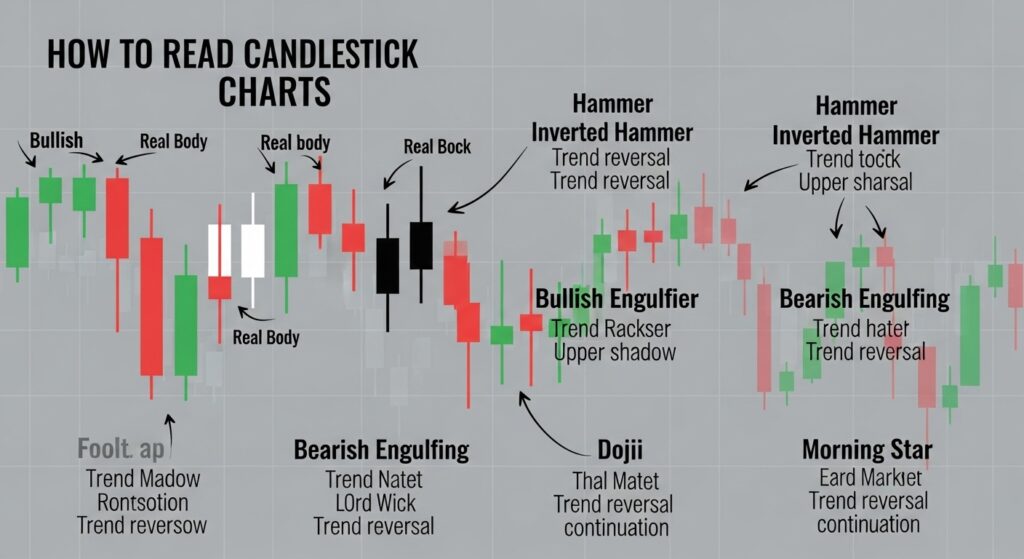
The Real Body Explained
The rectangular portion of the candlestick is called the “real body” and represents the range between the opening and closing prices. The size and color of the real body provide immediate visual feedback about market strength and direction.
A bullish candlestick (typically displayed in green or white) forms when the closing price is higher than the opening price. This indicates buying pressure dominated during that period, with prices finishing higher than they started.
A bearish candlestick (usually shown in red or black) occurs when the closing price is lower than the opening price. This signals that selling pressure prevailed, pushing prices down from the open.
The length of the real body indicates the intensity of buying or selling pressure. A long real body suggests strong momentum in that direction, while a short real body indicates indecision or a balance between buyers and sellers.
Upper and Lower Shadows (Wicks)
The thin lines extending above and below the real body are called shadows or wicks. These represent price rejection and show how far prices moved beyond the open-close range before being pushed back.
The upper shadow extends from the top of the real body to the high of the period. A long upper shadow suggests that buyers pushed prices higher, but sellers regained control and drove prices back down. This often indicates resistance or selling pressure at higher levels.
The lower shadow stretches from the bottom of the real body to the low of the period. A long lower shadow shows that sellers initially pushed prices down, but buyers stepped in and pushed prices back up. This typically signals support or buying interest at lower levels.
Candlesticks with very long shadows relative to their bodies are particularly significant, as they demonstrate strong price rejection and potential reversal points.
Setting Up Your Forex Chart for Candlestick Analysis
Choosing the Right Timeframe
Forex candlestick charts can be displayed across multiple timeframes, from one-minute charts for scalpers to monthly charts for long-term position traders. The timeframe you select should align with your trading strategy and available time commitment.
Short-term timeframes (1-minute to 15-minute charts) are popular among day traders and scalpers who execute multiple trades throughout the day. These charts provide detailed price action but can generate more false signals due to market noise.
Medium-term timeframes (30-minute to 4-hour charts) offer a balance between detail and clarity. Swing traders often prefer these timeframes as they filter out minor fluctuations while still capturing intraday trends.
Long-term timeframes (daily, weekly, monthly charts) are ideal for position traders and those performing fundamental analysis. These charts reveal major trends and are less susceptible to short-term volatility and noise.
Many successful traders use multiple timeframe analysis, examining longer timeframes to identify the overall trend and shorter timeframes to fine-tune entry and exit points.
Platform Configuration Best Practices
Most forex trading platforms offer extensive customization options for candlestick charts. Here’s how to optimize your setup:
Color Scheme: Choose colors that provide clear visual contrast. The traditional green/red or white/black schemes work well. Ensure your bullish and bearish candles are immediately distinguishable at a glance.
Chart Background: A neutral background (white, light gray, or black) reduces eye strain during extended analysis sessions. Avoid busy backgrounds that distract from price action.
Grid Lines: Enable horizontal and vertical grid lines to help identify support and resistance levels. Keep these subtle so they don’t clutter your chart.
Zoom Level: Adjust the zoom to display enough historical data for context while maintaining clear visibility of individual candlesticks. Generally, showing 50-200 candlesticks provides adequate perspective.
Save Templates: Once you’ve configured your ideal setup, save it as a template for quick application to other currency pairs and timeframes.
Single Candlestick Patterns: Reading Individual Candles
Doji Candlesticks: Market Indecision Signals
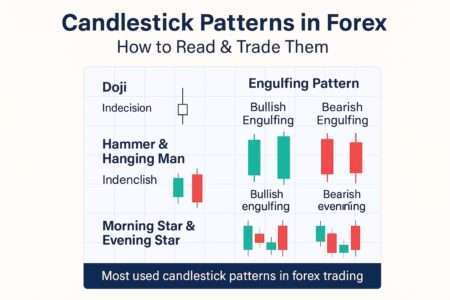
A doji forms when the opening and closing prices are virtually identical, creating a candlestick with little to no real body. This pattern signals market indecision, where neither buyers nor sellers gained control during the period.
Standard Doji: The open and close are at the same level with equal-length shadows above and below. This indicates perfect balance between bulls and bears and often precedes significant moves when appearing after a strong trend.
Long-Legged Doji: Features very loandard Dojing upper and lower shadows, showing extreme volatility and indecision. Prices moved significantly in both directions but ultimately closed near the open. This pattern suggests a potential trend reversal, especially at key support or resistance levels.
Dragonfly Doji: Has a long lower shadow but no upper shadow, with the open, high, and close all at the same level. This bullish pattern suggests that sellers pushed prices down significantly, but buyers regained complete control by the close.
Gravestone Doji: The opposite of a dragonfly, with a long upper shadow but no lower shadow. The open, low, and close align at the bottom. This bearish pattern indicates buyers pushed prices higher, but sellers drove them all the way back down.
Doji patterns are most significant when they appear after extended trends or at key chart levels, as they signal potential exhaustion and reversal.
Hammer and Hanging Man: Price Rejection Patterns
Hammer: This bullish reversal pattern appears at the bottom of downtrends and features a small real body at the top of the candlestick with a long lower shadow (at least twice the length of the body). The long lower shadow demonstrates that sellers pushed prices down significantly, but strong buying pressure emerged to drive prices back up near the open.
For a hammer to be most effective, it should appear after a clear downtrend, have a shadow at least two times the length of the body, have little to no upper shadow, and be confirmed by bullish price action in the following period.
Hanging Man: This pattern has the identical structure to a hammer but appears at the top of uptrends, making it a bearish reversal signal. The long lower shadow indicates that despite buyers initially pushing prices higher, sellers emerged and drove prices down significantly before buyers managed a late recovery.
The hanging man warns that buying pressure may be weakening. Confirmation comes when the next candlestick closes below the hanging man’s real body, validating the reversal signal.
Shooting Star and Inverted Hammer: Testing Resistance and Support
Shooting Star: A bearish reversal pattern that forms at the top of uptrends. It has a small real body at the lower end of the candlestick and a long upper shadow (at least twice the body length). This demonstrates that buyers pushed prices significantly higher during the period, but sellers overwhelmed them and drove prices back down near the open.
The shooting star indicates that the market tested higher levels but found strong resistance, suggesting the uptrend may be exhausting. Wait for bearish confirmation in the next candlestick before acting on this signal.
Inverted Hammer: This pattern mirrors the shooting star’s structure but appears at the bottom of downtrends, making it a potential bullish reversal. The long upper shadow shows buyers attempting to push prices higher, though sellers managed to drive them back down. However, the fact that buyers emerged after a downtrend suggests a potential shift in momentum.
Unlike most reversal patterns, the inverted hammer requires strong bullish confirmation in the next period, as the pattern itself shows sellers still maintaining some control.
Marubozu: Strong Momentum Indicators
A marubozu is a candlestick with a long real body and little to no shadows on either end. This pattern indicates strong, sustained directional movement with virtually no price rejection.
Bullish Marubozu: Opens at or near the low and closes at or near the high. Buyers controlled the entire period, pushing prices steadily higher from open to close. This demonstrates powerful bullish momentum and often appears at the start of strong uptrends or as continuation patterns within existing uptrends.
Bearish Marubozu: Opens at or near the high and closes at or near the low. Sellers dominated completely, driving prices steadily lower throughout the period. This shows strong bearish momentum and frequently appears at the beginning of downtrends or as continuation signals.
When a marubozu appears after a period of consolidation, it often signals the beginning of a significant trend. The absence of shadows indicates no price rejection, suggesting the move has conviction and may continue.
Engulfing patterns are among the most reliable reversal signals in candlestick analysis, occurring when a larger candlestick completely engulfs the previous candlestick’s real body.
Bullish Engulfing: Forms at the bottom of downtrends when a large bullish candlestick completely engulfs the previous bearish candlestick’s real body. This demonstrates that buyers have overwhelmed sellers and may signal a trend reversal. The larger the engulfing candle relative to the previous candle, the stronger the signal.
For maximum reliability, look for bullish engulfing patterns that appear at key support levels, engulf multiple previous candlesticks, occur after extended downtrends, and receive confirmation from the next candlestick closing higher.
Bearish Engulfing: Appears at the top of uptrends when a large bearish candlestick completely engulfs the previous bullish candlestick’s body. This shows sellers have taken control from buyers and often precedes significant downward moves.
The pattern is strongest when it forms at resistance levels, engulfs several previous candles, appears after extended uptrends, and gets confirmed by the following candlestick closing lower.
Tweezer Tops and Tweezer Bottoms
Tweezer patterns occur when two consecutive candlesticks have matching highs (tweezer top) or matching lows (tweezer bottom), indicating strong support or resistance at a specific price level.
Tweezer Top: Forms when two or more consecutive candlesticks reach the same high price. This pattern suggests strong resistance at that level, with buyers unable to push prices higher. When the second candlestick is bearish and shows rejection of higher prices, the reversal signal strengthens.
Tweezer Bottom: Occurs when two or more consecutive candlesticks touch the same low price. This indicates solid support, with sellers unable to drive prices lower. A bullish second candlestick reinforces the reversal potential.
Tweezer patterns work best when they appear at significant chart levels and combine with other technical indicators or candlestick patterns for confirmation.
Piercing Pattern and Dark Cloud Cover
Piercing Pattern: A bullish reversal signal that forms at the bottom of downtrends. The first candlestick is bearish, followed by a bullish candlestick that opens below the previous day’s low (creating a gap) but closes above the midpoint of the first candlestick’s real body.
This pattern shows that despite initial selling pressure (the gap down), buyers emerged strongly and pushed prices back up significantly. For the strongest signal, the bullish candlestick should close above the 50% mark of the previous bearish candlestick, and the pattern should appear at established support levels.
Dark Cloud Cover: The bearish counterpart to the piercing pattern, appearing at the top of uptrends. A bullish candlestick is followed by a bearish candlestick that opens above the previous high (gap up) but closes below the midpoint of the first candlestick’s body.
This demonstrates that although buyers initially pushed prices higher (the gap up), sellers took control and drove prices down substantially. The pattern is most effective when the bearish candlestick closes below the 50% level of the previous bullish candlestick and forms at resistance levels.
Star patterns are three-candlestick formations that signal potential trend reversals and are among the most reliable patterns in forex trading.
Morning Star: A bullish reversal pattern appearing at the bottom of downtrends. The first candlestick is a long bearish candle showing continued downward pressure. The second is a small-bodied candlestick (the star) that gaps down, indicating weakening selling pressure and market indecision. The third is a long bullish candlestick that closes well into the first candlestick’s body, confirming the reversal.
The star (middle candlestick) can be bullish, bearish, or a doji. A doji star creates an even stronger reversal signal. For maximum reliability, the pattern should appear at established support, the third candlestick should close at least halfway into the first candlestick’s body, and there should be clear gaps between the star and the surrounding candlesticks.
Evening Star: The bearish reversal counterpart forming at the top of uptrends. A long bullish candlestick is followed by a small-bodied star that gaps up, then a long bearish candlestick that closes deep into the first candlestick’s body.
This pattern indicates that buying pressure exhausted (the small star), and sellers gained control (the bearish third candlestick). The pattern is strongest at resistance levels, when the star is a doji, and when clear gaps exist on both sides of the star.
Three White Soldiers and Three Black Crows
Three White Soldiers: A powerful bullish continuation or reversal pattern consisting of three consecutive long bullish candlesticks with progressively higher closes. Each candlestick should open within the previous candlestick’s real body and close near its high with minimal upper shadows.
This pattern demonstrates sustained buying pressure and strong bullish momentum. When it appears after a downtrend or consolidation period, it signals a potential trend reversal. When it forms during an uptrend, it suggests continuation with strong momentum.
For the strongest signal, each candlestick should be approximately the same size, show minimal shadows, and display progressively higher closes. The pattern loses reliability if the candlesticks show very long upper shadows or if subsequent candlesticks become progressively smaller.
Three Black Crows: The bearish equivalent featuring three consecutive long bearish candlesticks with progressively lower closes. Each candlestick opens within the previous body and closes near its low with minimal lower shadows.
This pattern indicates sustained selling pressure and strong bearish momentum. It’s most significant when appearing after an uptrend or at resistance levels. For maximum effectiveness, the three candlesticks should be similar in size, show minimal shadows, and display progressively lower closes.
Three Inside Up and Three Inside Down
Three Inside Up: A bullish reversal pattern that begins with a bearish candlestick, followed by a bullish candlestick that’s contained within the first candlestick’s real body (forming a bullish harami), and completed by a third bullish candlestick that closes above the high of the first candlestick.
This three-stage pattern shows the shift from bearish to bullish control. The containment in the second candlestick suggests selling pressure is weakening, while the strong third candlestick confirms buyers have taken control.
Three Inside Down: The bearish reversal pattern starting with a bullish candlestick, followed by a bearish candlestick contained within the first body (bearish harami), and completed by a third bearish candlestick closing below the low of the first candlestick.
This progression demonstrates the transition from bullish to bearish momentum, with the contained second candlestick indicating weakening buying pressure and the third candlestick confirming seller control.
Rising Three Methods: A bullish continuation pattern appearing during uptrends. It consists of a long bullish candlestick, followed by three small bearish candlesticks that stay within the range of the first candlestick, and completed by another long bullish candlestick that closes above the first candlestick’s high.
This pattern represents a brief consolidation or pause within an uptrend. The three small bearish candlesticks show that sellers attempted to reverse the trend but lacked sufficient strength. The final bullish candlestick confirms that buyers remain in control and the uptrend will continue.
Falling Three Methods: The bearish continuation pattern that forms during downtrends. It begins with a long bearish candlestick, followed by three small bullish candlesticks contained within the first candlestick’s range, and concludes with a long bearish candlestick closing below the first candlestick’s low.
This indicates a temporary pause in the downtrend where buyers briefly emerged but couldn’t reverse the trend. The final bearish candlestick confirms continued seller dominance.
Windows (Gaps) in Forex Trading
While less common in the 24-hour forex market compared to stock markets, gaps (called “windows” in Japanese candlestick terminology) can still occur, particularly during weekend closings or after major news events.
Rising Window: A bullish continuation signal where the low of the current candlestick is higher than the high of the previous candlestick, creating a visible gap. This demonstrates strong buying pressure and typically indicates the uptrend will continue.
Falling Window: A bearish continuation signal where the high of the current candlestick is lower than the low of the previous candlestick. This shows powerful selling pressure and suggests the downtrend will persist.
In forex, windows often occur on Monday mornings when markets reopen after the weekend. These gaps frequently “fill” as prices return to the gap level, but the initial gap direction often indicates the prevailing short-term trend.
Mat Hold Pattern
The mat hold is a five-candlestick bullish continuation pattern appearing during uptrends. It begins with a long bullish candlestick, followed by a gap up and three small candlesticks (which can be bullish or bearish) that move slightly lower but stay above the first candlestick’s close. The pattern completes with a strong bullish candlestick that closes at a new high.
This pattern is less common but highly reliable. It shows that despite a brief pullback after strong bullish momentum, buyers maintained control and prevented any significant retracement. The final strong bullish candlestick confirms the uptrend continuation.
Combining Candlesticks with Support and Resistance
Identifying Key Chart Levels
Candlestick patterns gain significantly more reliability when they form at important support and resistance levels. These levels represent price zones where significant buying or selling pressure historically emerged.
Support levels are prices where buying pressure historically exceeded selling pressure, preventing further declines. When bullish candlestick patterns (hammers, bullish engulfing, morning stars) form at established support, they provide high-probability reversal signals.
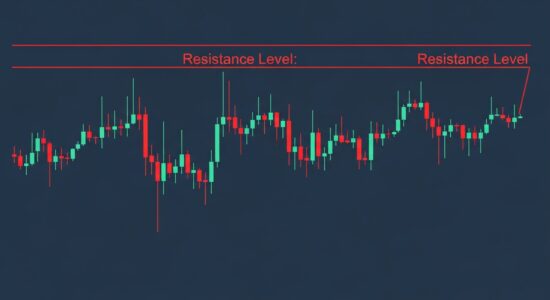
Resistance levels are prices where selling pressure historically overwhelmed buying pressure, preventing further advances. Bearish candlestick patterns (shooting stars, bearish engulfing, evening stars) appearing at resistance offer strong reversal opportunities.
To identify these levels, examine your charts for horizontal zones where prices repeatedly bounced or reversed. Previous swing highs often become resistance, while previous swing lows typically act as support. Round numbers (like 1.1000 in EUR/USD) also frequently serve as psychological support and resistance levels.
Candlestick Confirmation of Breakouts
When prices break through established support or resistance levels, candlestick patterns help confirm whether the breakout is genuine or a false break.
A valid breakout often features a strong marubozu or long-bodied candlestick closing well beyond the broken level, demonstrating conviction. The breakout candlestick should show minimal shadow on the breakout side and substantial volume.
False breakouts frequently display long shadows that pierce the support or resistance level but close back within the previous range. Doji patterns or small-bodied candlesticks at potential breakout levels suggest insufficient momentum and often precede failed breakout attempts.
After a valid breakout, the broken level often reverses its role (broken resistance becomes new support, and broken support becomes new resistance). Bullish candlestick patterns forming at former resistance (now support) or bearish patterns at former support (now resistance) provide high-probability trade setups.
Volume Considerations with Candlestick Patterns
Why Volume Matters
While traditional Japanese candlestick analysis didn’t incorporate volume, modern traders enhance pattern reliability by considering trading volume. Volume represents the number of currency units traded during a specific period and helps confirm the strength of price movements.
High volume during a candlestick pattern formation suggests strong conviction behind the move. When bullish reversal patterns appear with increasing volume, it indicates substantial buying interest supporting the reversal. Similarly, bearish reversals with expanding volume show serious selling pressure.
Low volume during pattern formation raises questions about the move’s sustainability. Reversal patterns forming on light volume may lack follow-through, as they don’t reflect broad market participation.
In forex, measuring true volume is challenging since the market is decentralized. Most retail platforms display “tick volume” (the number of price changes) rather than actual traded volume. While not perfect, tick volume still provides valuable insights into market activity and interest.
Volume Confirmation Techniques
For maximum reliability, combine candlestick patterns with volume analysis:
Bullish reversal patterns (hammers, morning stars, bullish engulfing) gain credibility when the bullish candlestick shows expanding volume compared to previous bearish candlesticks. This confirms that buyers entered aggressively to create the reversal.
Bearish reversal patterns (shooting stars, evening stars, bearish engulfing) become more trustworthy when the bearish candlestick displays increasing volume relative to previous bullish candlesticks, indicating strong seller commitment.
Continuation patterns should show decreasing volume during the consolidation phase and expanding volume when the trend resumes, confirming the continuation.
Breakouts require substantial volume expansion to validate the move. Breakouts on declining volume frequently fail and reverse quickly.
Common Mistakes When Reading Candlestick Charts
Trading Patterns in Isolation
One of the biggest errors novice traders make is trading candlestick patterns without considering broader market context. A bullish hammer appearing during a strong downtrend might fail if the overall trend remains powerfully bearish. Always examine the bigger picture using higher timeframes and trend analysis.
Candlestick patterns work best when aligned with the dominant trend. Bullish patterns in uptrends and bearish patterns in downtrends offer higher success rates than counter-trend signals. When trading reversals, ensure sufficient evidence suggests the trend is actually exhausting rather than just pausing.
Ignoring Confirmation
Many traders enter positions immediately when they spot a candlestick pattern without waiting for confirmation. This premature entry often results in losses when the pattern fails to follow through.
Confirmation means the candlestick following the pattern should move in the anticipated direction. For bullish patterns, the next candlestick should be bullish and close higher. For bearish patterns, the subsequent candlestick should be bearish and close lower.
Waiting for confirmation might mean missing the absolute best entry price, but it significantly improves your win rate by filtering out failed patterns. The slightly worse entry price is a worthwhile trade-off for increased probability of success.
Overcomplicating the Analysis
While it’s important to consider multiple factors, some traders overcomplicate their analysis by waiting for perfect setups that rarely occur. They might require a specific pattern, at a particular support level, with exact volume characteristics, confirmed by three indicators, during certain market hours.
This over-optimization leads to analysis paralysis and missed opportunities. Focus on high-probability setups that combine a few key elements: a clear pattern, an important chart level, and basic confirmation. Simple, repeatable strategies typically outperform complex systems that demand too many conditions.
Neglecting Risk Management
Even the most reliable candlestick patterns fail occasionally. Traders who risk too much capital on individual trades can suffer significant losses when patterns don’t work as expected.
Always use stop-loss orders to limit potential losses. Position your stops just beyond the pattern’s invalidation point. For bullish patterns, place stops below the pattern’s low. For bearish patterns, set stops above the pattern’s high.
Calculate position sizes based on your stop-loss distance to ensure each trade risks only a small percentage of your trading capital (typically 1-2%). This approach allows you to survive the inevitable losing trades while capitalizing on winners.
Practical Application: Trading Strategy Development
Building a Candlestick-Based Trading System
To create an effective trading strategy using candlestick patterns, follow this systematic approach:
Step 1: Choose Your Timeframe Select a primary timeframe that matches your trading style and available time. Day traders might use 15-minute or 1-hour charts, while swing traders prefer 4-hour or daily charts. Also select a higher timeframe (4x your primary) for trend analysis.
Step 2: Identify the Trend Use your higher timeframe to determine the dominant trend direction. Draw trendlines and identify whether the market is trending up, trending down, or ranging. This becomes your directional bias.
Step 3: Mark Key Levels On your primary timeframe, mark significant support and resistance levels where price reactions historically occurred. These become your zones of interest for pattern formation.
Step 4: Wait for Patterns at Key Levels Monitor price action as it approaches your marked levels. Look for high-probability candlestick patterns forming at these zones, especially patterns aligned with your higher timeframe trend.
Step 5: Confirm and Enter Wait for the candlestick following the pattern to confirm the expected direction. Enter your trade with a stop-loss just beyond the pattern’s invalidation point.
Step 6: Manage the Trade Set profit targets at logical levels (next support/resistance zone) or use trailing stops to maximize gains from strong trends.
Sample Trading Scenarios
Scenario 1: Bullish Engulfing at Support in Uptrend
You’re analyzing EUR/USD on the 4-hour chart, which shows a clear uptrend over the past two weeks. Price pulls back to a support level at 1.0850, which previously acted as resistance before breaking higher. A bearish candlestick forms, taking price just below 1.0850, followed by a large bullish candlestick that completely engulfs the previous bearish candlestick and closes at 1.0875.
Analysis: This bullish engulfing pattern forms at a key support level (previous resistance) within an established uptrend. The setup aligns with the trend and occurs at a logical chart level.
Confirmation: The next candlestick opens higher and closes at 1.0890, confirming bullish momentum.
Entry: Enter long at 1.0892 on the close of the confirmation candlestick.
Stop-Loss: Place stop at 1.0835, just below the engulfing pattern’s low.
Target: Target the previous swing high at 1.0950, or use a trailing stop to capture extended moves.
Risk-Reward: Risking 57 pips to potentially gain 58+ pips (1:1 or better).
Scenario 2: Evening Star at Resistance in Downtrend
You’re trading GBP/USD on the daily chart, which shows a downtrend over the past month. Price rallies to resistance at 1.2750, a level that rejected price three times previously. A long bullish candlestick forms, closing at 1.2755. The next day produces a small doji with the high at 1.2765. The third day creates a long bearish candlestick closing at 1.2710.
Analysis: This evening star pattern forms at strong resistance during an established downtrend. The doji middle candlestick shows indecision after the upward move, and the bearish third candlestick confirms the reversal.
Entry: Enter short at 1.2708 on the close of the third candlestick.
Stop-Loss: Place stop at 1.2775, just above the pattern’s high.
Target: Target the previous swing low at 1.2640, or trail stops if momentum continues.
Risk-Reward: Risking 67 pips to potentially gain 68+ pips (1:1 or better).
Advanced Candlestick Analysis Techniques
Reading Candlestick Bodies and Shadows for Market Sentiment
Body-to-Shadow Ratio: Candlesticks with large bodies and small shadows indicate strong directional conviction. When you see consistent large-bodied candlesticks in one direction, expect the trend to continue. Conversely, increasing shadows and shrinking bodies suggest weakening momentum and potential reversals.
Shadow Analysis: Long upper shadows at resistance indicate selling pressure and potential bearish reversals. Long lower shadows at support demonstrate buying interest and possible bullish reversals. When you see consecutive candlesticks with long shadows in the same direction, they create a “shadow wall” showing strong support or resistance.
Opening Gaps: Though less common in 24-hour forex markets, gaps between consecutive candlesticks’ opens and closes signal significant shifts in sentiment. A gap up shows urgent buying pressure, while a gap down indicates panic selling. Monitor whether subsequent price action fills these gaps or continues in the gap direction.
Price Rejection and Reversal Zones
Price rejection occurs when the market briefly touches a level but quickly reverses, leaving long shadows. Multiple rejections create “rejection zones” that act as strong support or resistance.
When candlesticks show consistent rejection at a specific price level across different time periods, that level becomes increasingly significant. A breakthrough of such a level, confirmed by a strong candlestick close beyond it, often triggers substantial moves as stop-losses are triggered and new positions are established.
Look for clusters of shadows all reaching similar price points. These clusters create visual barriers on your chart and represent zones where the balance between buyers and sellers repeatedly shifted.
Frequently Asked Questions
Q1: What timeframe is best for reading candlestick patterns in forex?
The optimal timeframe depends on your trading style. Day traders typically use 5-minute to 1-hour charts for frequent trading opportunities. Swing traders prefer 4-hour to daily charts for positions held several days. Position traders analyze daily and weekly charts for long-term trends. The most effective approach uses multiple timeframe analysis: identify the trend on higher timeframes (4x your trading timeframe) and find entry points using candlestick patterns on your primary trading timeframe. This combination provides both context and precision. Beginners should start with daily charts, as they filter out market noise and require less screen time.
Q2: Do candlestick patterns work equally well for all currency pairs?
Candlestick patterns work across all currency pairs, but effectiveness varies based on liquidity and volatility. Major pairs (EUR/USD, GBP/USD, USD/JPY) show the most reliable patterns due to high liquidity and participation. These pairs generate cleaner candlesticks with less noise and more consistent pattern follow-through. Exotic pairs may produce patterns less frequently and with less reliability due to lower liquidity and wider spreads. Currency pairs with strong trending characteristics (like USD/JPY) often display excellent continuation patterns, while range-bound pairs (like EUR/CHF historically) show more reversal patterns. Focus on majors when learning candlestick analysis, then expand to minors as your experience grows.
Q3: How many candlestick patterns should I master as a beginner?
Start with 5-7 core patterns rather than trying to memorize dozens. Focus on single candlestick patterns (hammer, shooting star, doji) and key reversal patterns (engulfing, morning/evening star). These appear frequently and offer high probability when combined with support/resistance. Master these completely, including understanding the market psychology behind them, before expanding your pattern library. Quality recognition of a few patterns beats superficial knowledge of many. As you gain experience, gradually add continuation patterns and more complex formations. Most professional traders rely on a core set of 10-15 patterns rather than attempting to trade every pattern they see.
Q4: Can I trade profitably using only candlestick patterns without indicators?
Yes, many successful traders use only price action and candlestick patterns without any indicators. Candlesticks display all essential information—price movement, momentum, and market sentiment—making additional indicators optional rather than necessary. This approach, called “naked chart” or “pure price action” trading, reduces chart clutter and eliminates indicator lag. However, success requires deep understanding of patterns, strict discipline regarding chart levels, and solid risk management. Some traders enhance candlestick analysis with simple moving averages or volume, but avoid overcrowding charts with multiple indicators. The cleanest strategies often prove most effective. Start with pure candlestick analysis, then add indicators
For a complete overview of technical analysis and how this indicator fits into a broader trading strategy, see our Technical Analysis Complete Guide