Learn How to Make Fast Money by Learning diffrent Strategies in Forex Trading and Different Investment Options
How to Buy Cryptocurrency: Complete Beginner’s Guide
Disclosure: This article contains informational links to third-party platforms. No affiliate relationships are currently in place.
Buying cryptocurrency for the first time can feel confusing and risky, especially with so much conflicting information online. Many beginners worry about choosing the wrong platform, paying high fees, or making mistakes that could cost them money. This guide explains exactly how to buy cryptocurrency safely and step by step, whether you’re starting with Bitcoin, purchasing Ethereum, or exploring other digital assets.
The good news: buying cryptocurrency has become dramatically easier than just a few years ago. What once required technical knowledge and complicated processes now takes as little as 10-15 minutes through user-friendly platforms designed specifically for beginners. Major cryptocurrency exchanges have streamlined account creation, identity verification, and purchasing to rival the simplicity of traditional stock brokerages.
This comprehensive guide walks you through the exact steps to buy your first cryptocurrency safely and efficiently. We’ll cover choosing the right exchange platform, creating and verifying your account, depositing funds using various payment methods, executing your first purchase, and most importantly—securing your cryptocurrency properly after buying.
By following this step-by-step process, you’ll go from complete beginner to proud cryptocurrency owner within hours, equipped with the knowledge to make informed decisions and avoid common costly mistakes that trip up new buyers.
The process breaks down into six straightforward steps that we’ll explore in detail:
Choose a cryptocurrency exchange
Create your account
Verify your identity
Deposit funds
Make your first purchase
Store your cryptocurrency safely
Let’s begin with the most important decision—selecting which platform to use for your purchase.
Cryptocurrency exchanges operate as digital marketplaces where you can buy, sell, and trade digital assets. Choosing the right exchange determines your entire experience, from fees paid to security protecting your assets to which cryptocurrencies you can access.
What Makes a Good Exchange for Beginners?
When evaluating exchanges for your first cryptocurrency purchase, prioritize these factors:
User-Friendly Interface: The platform should offer intuitive navigation with clear “Buy” buttons, simple menus, and minimal overwhelming complexity. Avoid exchanges designed for professional traders until you gain experience.
Strong Security: Look for platforms storing majority of user funds in offline cold storage, offering two-factor authentication, and maintaining clean security track records without major hacks.
Regulatory Compliance: Exchanges operating with proper licenses and regulatory oversight provide accountability and user protections often absent from unregulated platforms.
Reasonable Fees: While you’ll pay some fees everywhere, avoid platforms charging excessive costs (3-5%+ total fees). Reasonable beginner platforms charge 0.5-2% for simple purchases.
Good Customer Support: Responsive support through email, chat, or phone helps resolve issues quickly rather than leaving you stranded when problems occur.
Payment Method Flexibility: The best platforms accept multiple deposit methods including bank transfers, debit cards, and sometimes PayPal or other payment apps.
Our Top Exchange Recommendations for Beginners
Based on these criteria, we recommend these platforms for first-time buyers:
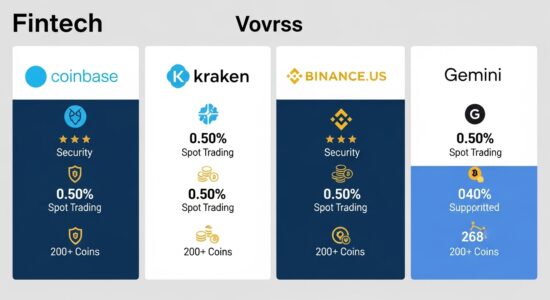
1. Coinbase – Best Overall for Beginners
Coinbase offers the simplest, most beginner-friendly cryptocurrency buying experience available. The platform’s clean interface, extensive educational resources through Coinbase Earn, strong security with insurance coverage, and availability in 100+ countries make it ideal for first purchases.
Fees: 0.99-1.99% for simple buy/sell plus small spread costs. Higher than competitors but worth it for ease-of-use while learning.
Pros: Easiest to use, excellent security, educational resources, 240+ cryptocurrencies, great mobile app.
Cons: Higher fees than alternatives, customer support can be slow during high-demand periods.
Best For: Complete beginners prioritizing simplicity and willing to pay slightly higher fees for user-friendly experience.
[Sign Up for Coinbase →]
2. Kraken – Best for Slightly Lower Fees
Kraken balances beginner accessibility with more advanced features and competitive fees. The platform offers excellent security (never hacked in 13+ years), responsive customer support, and reasonable costs making it perfect for users wanting to save on fees while still getting beginner-appropriate interfaces.
Fees: 0.16% maker / 0.26% taker on Kraken Pro, with simple buy option at higher fees similar to Coinbase.
Cons: Interface slightly more complex than Coinbase, ACH deposits have 3-day hold before withdrawal.
Best For: Beginners willing to navigate moderate complexity for lower fees and professional-grade security.
[Sign Up for Kraken →]
3. Gemini – Best for Security-Conscious Buyers
Gemini emphasizes security and regulatory compliance above all else, operating under New York’s stringent BitLicense requirements. The platform provides insurance coverage, institutional-grade security, and clean professional interfaces for security-conscious first-time buyers.
Fees: 0.50% convenience fees for simple buys, 0.20-0.35% on ActiveTrader interface.
Pros: Highest regulatory standards, excellent security with insurance, available in all 50 U.S. states, professional interface.
Cons: Smaller cryptocurrency selection than Coinbase or Kraken, slightly higher fees than Kraken.
Best For: Security-focused beginners wanting maximum regulatory protection and willing to pay moderate premium.
Choose Coinbase if: You’re a complete beginner wanting the easiest experience regardless of slightly higher fees.
Choose Kraken if: You want good beginner features with lower fees and don’t mind moderate complexity.
Choose Gemini if: Security and regulatory compliance matter more than lowest fees or maximum coin selection.
Once you’ve selected your preferred exchange, you’re ready to create your account.
Step 2: Create Your Account
Creating a cryptocurrency exchange account follows a straightforward process similar to opening traditional financial accounts. Allow 10-15 minutes for this step.
Account Creation Process
Visit the Exchange Website: Navigate directly to your chosen exchange’s official website by typing the URL manually or using our provided links. Never click links in emails claiming to be from exchanges, as phishing sites commonly steal credentials.
Click “Sign Up” or “Get Started”: Look for prominent signup buttons typically displayed in the header or homepage.
Provide Basic Information: Enter required details:
Email address (use a secure email you check regularly)
Password (create a strong, unique password using password manager)
Country of residence
Sometimes phone number for verification
Create a Strong Password: Your exchange account controls your money—treat password security seriously:
Minimum 12+ characters
Mix of uppercase, lowercase, numbers, and symbols
Completely unique to this exchange (never reuse passwords)
Store in password manager (1Password, Bitwarden, LastPass)
Verify Your Email Address: The exchange sends a verification email to confirm ownership. Click the verification link (after confirming it’s legitimately from the exchange) to activate your email.
Set Up Two-Factor Authentication (2FA): This critical security step protects your account even if someone steals your password:
Download an authenticator app (Google Authenticator, Authy, or similar)
Scan the QR code provided by the exchange
Enter the 6-digit code generated by your app
Save backup codes in secure location
Important: Use authenticator apps rather than SMS-based 2FA. SMS codes face SIM-swapping attacks that authenticator apps prevent.
What Happens Next
After completing basic account creation, exchanges require identity verification before allowing cryptocurrency purchases. This Know Your Customer (KYC) process complies with financial regulations and anti-money laundering laws.
You can typically begin the verification process immediately or return later. However, completing verification quickly enables faster account activation and cryptocurrency purchasing.
Step 3: Verify Your Identity (KYC Process)
Know Your Customer (KYC) verification confirms your identity to comply with financial regulations. All legitimate cryptocurrency exchanges require this process—if a platform doesn’t, it’s either operating illegally or located in high-risk jurisdictions.
Why Identity Verification Matters
Exchanges verify users to:
Comply with anti-money laundering regulations
Prevent fraud and identity theft
Enable proper tax reporting
Provide account recovery if you lose access
While KYC requires providing personal information, reputable exchanges protect this data through encryption and secure storage.
Documents You’ll Need
Prepare these items before starting verification:
Government-Issued Photo ID: One of:
Driver’s license
Passport
State ID card
National ID card (for international users)
Proof of Address (Sometimes Required): Recent document showing your name and address:
Utility bill (electric, water, gas) from last 3 months
Bank statement from last 3 months
Government correspondence
Lease agreement
Selfie/Photo Verification: Most exchanges require real-time selfie holding your ID or following specific instructions to prevent fake identity submissions.
Verification Process Steps
Navigate to Verification Section: Look for “Verify Identity,” “KYC,” or “Account Verification” in account settings or prompted notification.
Select Document Type: Choose which government ID you’re providing (driver’s license, passport, etc.).
Upload Documents: Follow instructions to:
Photograph front and back of ID clearly
Ensure all text is readable
Avoid glare, shadows, or blurry images
Submit proof of address if requested
Complete Selfie Verification: Follow prompts to take real-time selfie or video:
Ensure good lighting
Hold ID next to face if requested
Follow any specific instructions (turn head, blink, etc.)
Submit and Wait: After submitting documents, verification typically completes within:
Minutes to hours for major exchanges during normal periods
1-3 days during high-demand periods
Sometimes longer for manual review cases
Verification Approval: You’ll receive email notification when verification completes. Check the exchange platform for updated account status.
Verification Tips
High-Quality Photos: Clear, well-lit images speed up verification. Blurry or dark photos trigger rejections requiring resubmission.
Match Information Exactly: Ensure the name on your ID exactly matches the name provided during signup. Mismatches cause delays or rejections.
Be Patient: During busy periods (crypto bull markets), verification can take several days. Avoid submitting multiple applications as this creates confusion and delays.
Contact Support if Delayed: If verification exceeds 7 days, contact customer support with your application reference number.
Once verified, you can deposit funds and purchase cryptocurrency immediately.
Step 4: Deposit Funds Into Your Account
With your verified account ready, you need to deposit traditional currency (USD, EUR, etc.) or transfer existing cryptocurrency from another platform to fund purchases.
Choosing Your Deposit Method
Different deposit methods offer trade-offs between speed, fees, and convenience:
Bank Transfer (ACH) – Best for Most Users
How It Works: Link your bank account and transfer funds electronically.
Pros:
Usually free or very low fees ($0-2)
Good for larger amounts ($500+)
Widely available
Cons:
Slower (2-5 business days to clear)
May have holding period before withdrawing crypto
Best For: Planned purchases where you can wait a few days for funds to clear.
Debit Card – Best for Immediate Purchases
How It Works: Add debit card and make instant purchases.
Pros:
Instant availability
Convenient for small amounts
No waiting period
Cons:
Higher fees (typically 3-5%)
Lower purchase limits
Some banks block crypto purchases
Best For: Immediate buying opportunities or small amounts where convenience outweighs fees.
Wire Transfer – Best for Large Amounts
How It Works: Wire funds from bank to exchange account.
Pros:
Available for very large amounts ($10,000+)
Clears faster than ACH (1-2 days)
Reliable for substantial deposits
Cons:
Expensive ($10-30+ fees)
Requires bank visit or online wire setup
Overkill for small amounts
Best For: Large purchases where wire fees represent small percentage of total.
PayPal / Payment Apps (Limited Availability)
How It Works: Some exchanges accept PayPal, Cash App, or similar.
Pros:
Instant or very fast
Convenient if you already use these services
Familiar interface
Cons:
Higher fees (2-4%)
Limited exchange support
Lower limits
Best For: Users comfortable with these platforms for small-to-medium purchases.
How to Deposit Funds (Step-by-Step)
Navigate to Deposit Section: Look for “Deposit,” “Add Funds,” “Buy Crypto,” or similar option in your account menu.
Select Currency and Payment Method: Choose:
Currency (USD, EUR, GBP, etc.)
Payment method (bank transfer, debit card, etc.)
For Bank Transfers (ACH):
Select “Bank Account” or “ACH Transfer”
Link your bank account by providing:
Bank name
Account number
Routing number
Or login credentials for instant verification
Confirm micro-deposits if required (small amounts the exchange sends to verify ownership)
Enter deposit amount
Confirm transaction
Wait 2-5 business days for funds to appear
For Debit Card:
Select “Debit Card” or “Credit/Debit Card”
Enter card information:
Card number
Expiration date
CVV security code
Billing address
Enter purchase amount
Review fees (usually 3-5%)
Confirm transaction
Funds available immediately
For Wire Transfers:
Select “Wire Transfer”
Note exchange’s bank account details:
Bank name and address
Account number
Routing number (domestic) or SWIFT code (international)
Reference number (important—include this!)
Initiate wire through your bank
Include reference number in wire details
Wait 1-2 days for deposit to credit
Deposit Limits and Verification Levels
Most exchanges impose limits based on verification level:
Unverified: Usually cannot deposit fiat currency at all
Basic Verification: Typical limits of $1,000-10,000 daily
Enhanced Verification: Higher limits ($50,000-100,000+) for users providing additional documentation
Institutional: Custom limits for business accounts
Start with amounts you’re comfortable with ($50-500) for first deposits until you gain confidence in the process.
Step 5: Make Your First Cryptocurrency Purchase
With funds deposited, you’re ready to buy your first cryptocurrency. We’ll walk through the exact steps using Coinbase as an example (process is similar across exchanges with minor variations).
Choosing Which Cryptocurrency to Buy
For your first purchase, consider starting with established cryptocurrencies rather than obscure altcoins:
Bitcoin (BTC): The original and largest cryptocurrency, widely considered the safest and most established. Good first purchase for learning process and long-term holding. Ethereum (ETH): Second-largest cryptocurrency powering smart contracts and DeFi. Offers different technology and use case than Bitcoin.
Mixed Portfolio: Some buyers start with $100 BTC and $100 ETH to gain exposure to both major cryptocurrencies.
Avoid purchasing unknown small-cap altcoins for first transactions—learn the process with established assets before exploring higher-risk opportunities.
Step-by-Step Buying Process
Log Into Your Account: Enter credentials and 2FA code to access your verified, funded account.
Navigate to Buy Section: Look for “Buy,” “Buy Crypto,” “Trade,” or similar option. Coinbase has prominent “Buy & Sell” button on main page.
Select Cryptocurrency: Choose which cryptocurrency to purchase from dropdown menu:
Bitcoin (BTC)
Ethereum (ETH)
Others as desired
Enter Purchase Amount: Specify how much to buy using either:
Fiat currency amount (example: $100)
Cryptocurrency amount (example: 0.002 BTC)
The exchange automatically calculates the other value based on current prices.
Review Transaction Details: Before confirming, review carefully:
Exact cryptocurrency amount you’ll receive
Total cost including fees
Effective price per coin
Payment method being used
Confirm Purchase: Click “Buy,” “Confirm,” or similar button to execute transaction.
Transaction Confirmation: The exchange processes your purchase and displays confirmation showing:
Transaction ID
Amount purchased
Price paid
Fees charged
Cryptocurrency now in your account
Understanding the Purchase Interface
Market Price vs. Limit Orders:
Market Order (Simple Buy): Purchases immediately at current market price. Use this for first purchases—simple and executes instantly.
Limit Order (Advanced): Sets maximum price you’re willing to pay. Purchase executes only if market reaches your price. Useful for experienced traders but unnecessary for beginners.
Total Cost Breakdown:
When reviewing purchase, watch for:
Base Cost: Cryptocurrency amount × current price
Exchange Fee: Percentage fee (0.5-2% typical)
Spread Cost: Difference between buy and sell price (can be 1-3%)
Total: Final amount charged to your account
Always check the total cost, not just the stated fee percentage.
After Your Purchase
View Your Holdings: Navigate to “Portfolio,” “Wallet,” or “Assets” to see your cryptocurrency balance.
Transaction History: Review completed purchase in transaction history showing exact details and timestamp.
Receipt/Confirmation: Most exchanges email confirmation receipts—save these for tax records.
Next Steps: Your cryptocurrency now sits in your exchange account. Important decision: leave it there for active trading or move to secure wallet for long-term holding (covered in next section).
Congratulations—you now own cryptocurrency! But ownership means nothing without proper security and storage.
Step 6: Store Your Cryptocurrency Safely
After purchasing cryptocurrency, you face a critical decision: leave your assets on the exchange or transfer them to a wallet you control. This choice dramatically impacts security and access.
Understanding Cryptocurrency Storage
Exchange Wallets (Custodial): When you buy cryptocurrency on an exchange, it initially stays in an exchange-provided wallet. The exchange controls the private keys (the passwords proving ownership).
Pros:
Convenient for active trading
Easy access for selling
No additional setup required
Cons:
Exchange hacks can result in losses
You don’t truly control the cryptocurrency
Exchange bankruptcies or account freezes leave you without access
“Not your keys, not your coins” principle applies
Personal Wallets (Non-Custodial): Transfer cryptocurrency to wallets where you control the private keys, truly owning your assets.
Pros:
Complete control and ownership
Protection from exchange hacks
Can’t be frozen or seized (except physically)
Cons:
You’re responsible for security
Losing private keys means permanent loss
Less convenient for frequent trading
The Right Approach for Different Holdings
Small Amounts for Active Trading: Keep amounts you plan to trade actively ($100-1,000) on exchanges for convenience. The risk of exchange issues is acceptable for these amounts given the convenience benefit.
Long-Term Holdings: Move cryptocurrency you plan to hold long-term (months to years) to personal wallets you control. The inconvenience of transfers is worthwhile for security of significant amounts.
General Rule: If losing the amount would significantly impact your finances, move it to a wallet you control.
Types of Personal Wallets
Hot Wallets (Software/Mobile):
What They Are: Apps on your phone or computer storing cryptocurrency while connected to the internet.
Examples: Trust Wallet, MetaMask, Exodus
Pros:
Free to use
Convenient for regular access
Easy setup
Cons:
Vulnerable to malware and hacking
Risk if device is lost/stolen/broken
Best For: Medium amounts ($500-5,000) and cryptocurrency you need semi-regular access to.
Cold Wallets (Hardware):
What They Are: Physical devices (like USB drives) storing private keys completely offline.
Examples: Ledger Nano X, Trezor Model T
Pros:
Highest security level
Protected from online hacking
Best for large amounts
Cons:
Cost $60-200
Less convenient for frequent access
Can be lost or damaged (though recoverable with seed phrase)
Best For: Significant amounts ($5,000+) and long-term holdings you rarely access.
How to Transfer to Personal Wallet
For Hardware Wallet:
Purchase hardware wallet from official source (Ledger, Trezor)
Set up device following included instructions
Record seed phrase (12-24 words) on paper and store securely
Install wallet’s software on computer
Generate receiving address for desired cryptocurrency
On exchange, navigate to “Withdraw” or “Send”
Paste receiving address from hardware wallet
Enter amount to transfer
Review carefully (wrong address = permanent loss)
Confirm withdrawal
Wait for blockchain confirmation (10 minutes to 1 hour)
Verify cryptocurrency arrived in hardware wallet
Important Warnings:
Test with Small Amounts First: Send $10-20 test transaction before transferring large amounts. Confirm it arrives successfully before sending remainder.
Triple-Check Addresses: Cryptocurrency transactions are irreversible. Sending to wrong address means permanent loss. Always triple-check receiving addresses.
Save Seed Phrases Securely: Your 12-24 word seed phrase is the master key to your cryptocurrency. Anyone with these words controls your funds. Write on paper (never digital storage), store in secure location, never share with anyone.
Beware of Scams: Never enter seed phrases into websites or give them to “support” representatives. Legitimate services never ask for seed phrases.
When to Use Each Storage Method
Leave on Exchange:
Amounts under $500
Cryptocurrency you actively trade
Assets you plan to sell soon
Hot Wallet (Software):
Amounts $500-5,000
Cryptocurrency you use occasionally
When you want control without hardware cost
Cold Wallet (Hardware):
Amounts over $5,000
Long-term holdings (1+ years)
When security matters most
Many successful investors use combinations: active trading amounts on exchanges, medium holdings in hot wallets, and long-term significant amounts in hardware wallets.
Understanding Payment Methods in Detail
Selecting the right payment method for your purchase affects costs, speed, and convenience. Let’s explore each option comprehensively.
Bank Transfer (ACH) – The Standard Choice
How ACH Works: Electronic transfer from your bank account to the exchange, processed through the Automated Clearing House network.
Setup Process:
Link bank account through exchange interface
Verify ownership via micro-deposits (two small deposits you confirm) or instant verification (provide login credentials)
Initiate transfer for desired amount
Wait 2-5 business days for funds to clear
Cryptocurrency purchases available when funds settle
Typical Fees: $0-2 per transfer
Limits: $1,000-25,000 daily depending on account level
Pros:
Very low or no fees
Good for substantial amounts
Simple setup
Cons:
Slow (multi-day wait)
Holding period before withdrawing crypto (common)
Requires bank account
Best For: Planned purchases where you can wait several days. If you want to buy Bitcoin next week anyway, ACH transfer today costs almost nothing.
Debit Card – The Convenience Option
How Debit Cards Work: Instant purchase using linked debit card, processing similar to online shopping.
Setup Process:
Add debit card to exchange account
Enter card details (number, expiration, CVV)
Sometimes verify with small charge
Make instant purchases up to card limits
Typical Fees: 2.99-4.99% per transaction
Limits: $500-5,000 daily depending on exchange and bank
Pros:
Instant purchases
Available immediately
Good for taking advantage of price dips
Cons:
Significantly higher fees
Lower limits than bank transfers
Some banks block crypto purchases
Can trigger fraud alerts
Best For: Immediate small purchases, urgent buying opportunities, or when convenience outweighs 3-5% fee cost. If Bitcoin drops 10% and you want to buy immediately, debit card enables instant action despite fees.
Important: Use debit cards, not credit cards. Credit card purchases often get treated as cash advances with immediate interest charges and additional fees.
Wire Transfer – The Big Money Option
How Wires Work: Direct bank-to-bank transfer, typically used for large amounts.
Setup Process:
Get exchange’s bank account details from deposit section
Initiate domestic or international wire at your bank
Include reference number (critical!)
Funds typically available in 1-2 business days
Typical Fees: $10-30 domestic, $40-75 international
Limits: Usually $50,000-1,000,000+ depending on bank and verification
Pros:
Available for very large amounts
Faster than ACH
Reliable for substantial transfers
Cons:
Expensive fees
Requires bank visit or online wire capability
Wasteful for small amounts
Best For: Large purchases ($10,000+) where wire fees represent small percentage. $25 wire fee on $50,000 purchase equals 0.05%—negligible compared to debit card’s 3-5%.
PayPal and Payment Apps
Availability: Limited to specific exchanges (Coinbase supports PayPal, some others accept Cash App or Venmo).
How It Works:
Link PayPal/payment app account to exchange
Select as payment method
Confirm purchase through payment app
Typical Fees: 2-4% plus any payment app fees
Limits: Vary widely by platform
Pros:
Instant or very fast
Familiar interfaces
Convenient if already using these services
Cons:
Higher fees
Limited exchange support
Often lower limits
May require additional verification
Best For: Users already comfortable with these payment platforms making small-to-medium purchases.
Cryptocurrency Deposits (Already Own Crypto)
How It Works: Transfer cryptocurrency from other wallets or exchanges to your new exchange account.
Process:
Get deposit address from new exchange for specific cryptocurrency
Send from old wallet/exchange to new address
Wait for blockchain confirmations (10 minutes to 1 hour)
Cryptocurrency available for trading
Fees: Blockchain network fees only (typically $1-10)
Best For:
Moving between exchanges for better features
Consolidating holdings
Accessing different cryptocurrencies
Important: Always send test transaction first with small amount. Wrong network selection (sending BTC on ETH network, etc.) can result in permanent loss.
Common Mistakes When Buying Cryptocurrency
Avoiding these frequent errors saves money, stress, and prevents costly losses:
Mistake 1: Using Credit Cards Instead of Debit
Problem: Many people use credit cards thinking they’re the same as debit. Credit card cryptocurrency purchases get treated as cash advances with immediate interest (often 20%+ APR) and additional fees.
Solution: Only use debit cards linked to checking accounts. Verify with your bank that your card is debit, not credit. Never purchase cryptocurrency with borrowed money.
Mistake 2: Sending to Wrong Address or Network
Problem: Cryptocurrency transactions are irreversible. Sending Bitcoin to an Ethereum address, or using wrong network, results in permanent loss.
Problem: Cryptocurrency sales, trades, and sometimes even purchases create taxable events. Ignoring taxes leads to IRS problems and penalties.
Solution:
Track all transactions with dates and amounts
Use cryptocurrency tax software (CoinTracker, TaxBit)
Consult tax professional about crypto-specific rules
Set aside money for tax obligations
Don’t spend all profits without considering taxes
Mistake 9: Using Unregulated or Sketchy Platforms
Problem: Attracted by lower fees or exotic coins, beginners sometimes use unregulated exchanges that later exit scam or freeze withdrawals.
Solution:
Stick with our recommended regulated exchanges for first purchases
Research any platform thoroughly before depositing funds
Verify regulatory licenses and compliance
Read independent reviews from multiple sources
Mistake 10: Buying More Than You Can Afford to Lose
Problem: Cryptocurrency remains highly volatile and speculative. Investing money needed for bills, emergency funds, or short-term goals creates financial stress and forced selling at losses.
Solution:
Only invest disposable income
Maintain 3-6 months emergency fund separately
Never invest borrowed money
Start with small amounts ($100-500) while learning
Buying your first cryptocurrency might seem complicated initially, but the process boils down to six straightforward steps: choose a reputable exchange, create and verify your account, deposit funds using your preferred payment method, make your purchase, and secure your cryptocurrency properly.
The entire process from account creation to owning cryptocurrency takes as little as 1-2 hours if using instant verification and debit card purchases, or 3-5 days if using bank transfers and standard verification timelines.
Key Takeaways for First-Time Buyers:
Start with Reputable Exchanges: Coinbase, Kraken, and Gemini offer the best beginner experiences with strong security and regulatory compliance.
Begin with Small Amounts: Your first purchase should be an amount you’re comfortable potentially losing while learning ($50-500 common for first-timers).
Prioritize Security: Set up 2FA immediately, use strong unique passwords, and move significant holdings to hardware wallets.
Be Patient: Use low-cost bank transfers for planned purchases rather than paying 3-5% debit card fees for immediate buying. Patience saves substantial money.
Keep Learning: Cryptocurrency evolves constantly. Continue educating yourself through our guides on Bitcoin, Ethereum, and other topics.
The cryptocurrency journey begins with that first purchase, but real success comes from continued education, disciplined investing, proper security practices, and avoiding the common mistakes that destroy many beginners’ accounts.
Remember that cryptocurrency represents speculative, high-risk investments. Only invest amounts you can afford to lose without impacting your financial security. Start small, learn continuously, and scale up as your knowledge and confidence grow.
Ready to Buy Your First Cryptocurrency?
Get started today with our top exchange recommendations:
For Easiest Experience: [Sign Up for Coinbase →] Best for complete beginners, simple interface, strong security
For Lower Fees: [Sign Up for Kraken →] Great balance of beginner-friendly features and competitive costs
For Maximum Security: [Sign Up for Gemini →] Highest regulatory standards and institutional-grade protection
After making your first purchase, explore our complete cryptocurrency education resources:
The cryptocurrency journey begins with that first purchase, but real success comes from continued education, disciplined investing, proper security practices, and avoiding the common mistakes that destroy many beginners’ accounts.
Remember that cryptocurrency represents speculative, high-risk investments. Only invest amounts you can afford to lose without impacting your financial security. Start small, learn continuously, and scale up as your knowledge and confidence grow.
Ready to Buy Your First Cryptocurrency?
Get started today with our top exchange recommendations:
For Easiest Experience: [Sign Up for Coinbase →] Best for complete beginners, simple interface, strong security
For Lower Fees: [Sign Up for Kraken →] Great balance of beginner-friendly features and competitive costs
For Maximum Security: [Sign Up for Gemini →] Highest regulatory standards and institutional-grade protection
After making your first purchase, explore our complete cryptocurrency education resources: