Becoming a forex scalping expert goes far beyond opening dozens of trades and hoping small profits accumulate. Professional scalpers operate with a systematic edge — defined entry criteria, disciplined risk management, and deep understanding of market microstructure. This guide covers the advanced techniques, mindset, and tools that separate expert scalpers from beginners who burn through accounts chasing quick gains.
Whether you are moving up from basic scalping or looking to sharpen a professional approach, this guide gives you the framework that experienced traders use to extract consistent profits from short-term price action.
What Makes an Expert Scalper Different
Most retail traders approach forex scalping by watching 1-minute charts and firing trades based on gut feel. Expert scalpers do the opposite — they reduce discretion and increase process.
The defining characteristics of an expert scalper include:
- A written trading plan with specific, repeatable entry and exit rules
- Session specialization — focusing on one or two sessions where their pairs behave predictably
- Pair specialization — mastering EUR/USD or GBP/USD rather than jumping across ten pairs
- Consistent position sizing based on defined risk percentage, not arbitrary lot sizes
- A daily loss limit that forces a stop when conditions turn adverse
The Commodity Futures Trading Commission (CFTC) consistently notes that retail forex traders who lack structured risk management are the most vulnerable to rapid capital loss. Expert scalpers treat their operation as a business, not a game.
The Core Expert Scalping Setups
1. The London Open Momentum Play
The London open (8:00 AM GMT) is the single best scalping window of the trading day for EUR/USD and GBP/USD. As European institutional traders enter the market, overnight range boundaries frequently break with conviction.
Setup rules:
- Identify the overnight Asian session high and low (roughly 12:00 AM – 7:00 AM GMT)
- Wait for a clean break above resistance or below support at the London open
- Enter on the first 1-minute candle close beyond the broken level
- Stop loss: 8–10 pips beyond the breakout candle
- Target: 15–20 pips, or the next significant intraday level
Expert scalpers do not enter at the exact open — they wait for the first 5–10 minutes to establish direction, then trade the momentum rather than guessing which way the break will go.
2. The Pullback to EMA Scalp
This setup uses the 20-period EMA on the 5-minute chart as a dynamic support/resistance level during trending conditions.
Setup rules:
- Confirm trend direction on the 15-minute chart (price above 20 EMA = uptrend)
- Wait for price to pull back to the 5-minute 20 EMA during a trending move
- Look for a bullish rejection candle (pin bar, engulfing) at the EMA
- Enter on the next candle open
- Stop: 8–12 pips below the rejection candle low
- Target: 15–20 pips toward the trend high
This setup has a high win rate in strongly trending conditions because you are entering with institutional momentum rather than fighting it. Avoid it during sideways, low-volatility markets.
3. The Support/Resistance Flip Scalp
When a key support level breaks, it often becomes resistance — and vice versa. Expert scalpers watch for price to return and test the flipped level, then fade the test.
Setup rules:
- Identify a clear support or resistance level on the 15-minute chart
- Wait for a clean break and hold below (or above) for at least 2–3 candles
- When price returns to retest the broken level from the other side, look for rejection
- Enter on rejection confirmation
- Stop: 8–10 pips beyond the level being retested
- Target: 12–18 pips in the direction of the original break
This setup works because large traders who were stopped out of positions at the broken level often re-enter at the retest, creating the rejection that powers the trade.
Risk Management at the Expert Level
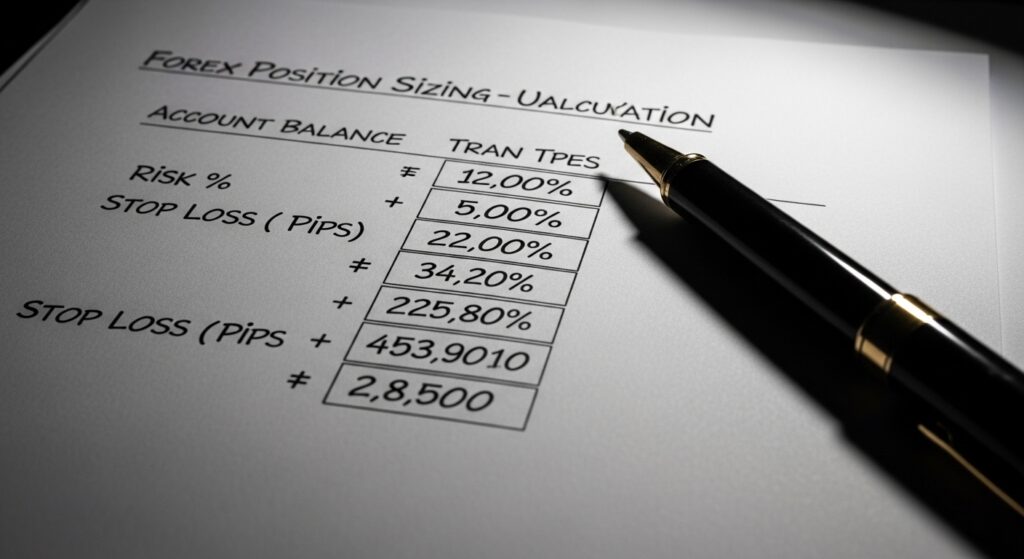
The 1% Per Trade Rule
Expert scalpers never risk more than 1% of account equity on a single trade — regardless of how strong the setup looks. For a $5,000 account, that means maximum $50 at risk per trade.
This is not optional. The National Futures Association (NFA) requires registered forex firms to clearly disclose that the majority of retail traders lose money — and the primary reason is inadequate risk management, not bad strategy.
Position Sizing Formula
Lot Size = (Account Equity × Risk %) ÷ (Stop Loss in Pips × Pip Value)
Example: $10,000 account, 1% risk, 10-pip stop on EUR/USD (pip value ~$1 per micro lot):
- Risk amount = $100
- Lot size = $100 ÷ (10 × $1) = 1 mini lot (0.1 standard lot)
Recalculate for every trade. Do not use a fixed lot size across different stop distances.
Daily Loss Limit
Set a hard daily loss limit of 2–3% of account equity. When you hit it, close the platform and stop trading. Expert scalpers accept that some days the market simply does not cooperate — protecting capital for better conditions is the professional response.
Session Timing for Expert Scalpers
Not all trading hours are equal. Expert scalpers concentrate activity during the two windows that provide optimal conditions:
London Open (8:00–10:00 AM GMT) — Highest momentum, fresh breakouts, tight spreads. Best for momentum and breakout setups.
London/New York Overlap (1:00–5:00 PM GMT) — Highest liquidity of the day. Best for EMA pullback and S/R flip setups on EUR/USD and GBP/USD.
Avoid scalping during the Asian session (except for JPY pairs), during the 30 minutes before and after high-impact news from the Financial Conduct Authority (FCA) calendar or equivalent economic releases, and during the hour before the New York close (4:00–5:00 PM EST) when liquidity drops sharply.
Platform and Execution Requirements
Expert scalping requires infrastructure that matches the strategy’s demands.
Broker requirements:
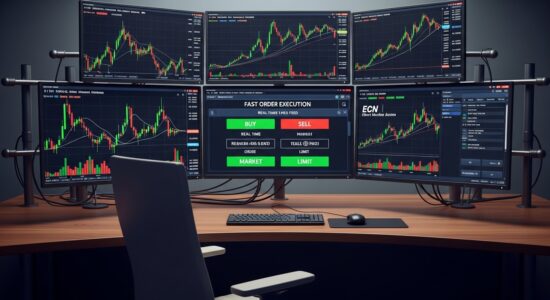
- ECN or STP execution — no dealing desk intervention
- Raw spreads on EUR/USD below 0.5 pips during peak sessions
- No restrictions on scalping in the broker’s terms of service
- Execution speeds under 50 milliseconds
Platform requirements:
- MetaTrader 4/5 or cTrader with 1-minute and 5-minute chart capability
- One-click trading enabled
- Economic calendar visible or open in a second window at all times
Hardware:
- Wired internet connection — not WiFi
- VPS hosting if running automated strategies or if local internet is unreliable
- Dual monitor setup recommended for simultaneous chart and order management
Expert Advisor Scalping: What Works and What Does Not
Expert Advisors (EAs) can execute scalping strategies automatically, but expert traders approach them carefully.
What works:
- EAs executing a manual strategy you have already proven profitable — removing emotional hesitation on entries
- Semi-automated EAs that alert on setups and let you confirm execution
- EAs used on a VPS for 24/7 operation of specific Asian session strategies
What does not work:
- Purchased commercial EAs with no verified live track record
- EAs optimized on historical data with no forward-testing period
- High-frequency scalping EAs with more than 50 trades per day on retail accounts
Expert scalpers who use EAs spend as much time monitoring and maintaining them as they would trading manually. Automation eliminates emotion — it does not eliminate the need for judgment.
Common Expert-Level Mistakes
Even experienced scalpers fall into patterns that erode profitability:
Overtrading after a winning streak. A series of wins triggers overconfidence and looser entry criteria. Expert scalpers track their trade quality metrics weekly and tighten standards when they notice setup quality declining.
Widening stops to avoid losses. Moving a stop further away after entering a trade is a cardinal rule violation. If the original stop placement was correct, it stays there.
Ignoring spread during news events. A broker offering 0.3-pip spreads during normal conditions may widen to 3–5 pips during NFP or central bank announcements. Expert scalpers either step aside entirely or account for widened costs in their target calculations.
Neglecting the trading journal. Professionals track every trade with entry reason, outcome, and market conditions. Without data, patterns — both good and bad — remain invisible.
Building a Consistent Scalping Edge
An edge in scalping is not a secret indicator or a purchased system. It is the combination of:
- A setup with a positive expected value confirmed through at least 100 demo trades
- Execution discipline that replicates demo performance in live markets
- Risk management that protects capital during inevitable losing streaks
- Session and pair specialization that builds genuine pattern recognition
The Bank for International Settlements reports that the forex market trades over $7.5 trillion daily — providing more than enough liquidity for disciplined scalpers to operate without market impact. The edge does not come from finding something others have missed; it comes from executing a sound process better than most participants manage their emotions and risk.
Next Steps
If you are building or refining a scalping approach, these related guides provide the supporting knowledge:
- Forex Scalping: Complete Guide for Day Traders
- Forex Risk Management: Complete Guide
- Technical Analysis in Forex: Complete Guide
- Automated Forex Trading and Expert Advisors
- How to Choose a Forex Broker
- Forex Trading Strategies: Complete Guide
Legal Disclaimer: Forex trading involves substantial risk of loss and is not suitable for all investors. The information in this article is for educational purposes only and does not constitute investment advice. Always trade with capital you can afford to lose.