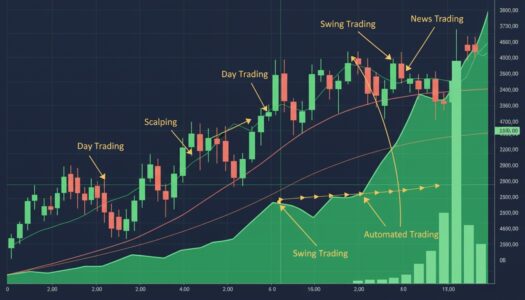
Learn How to Make Fast Money by Learning diffrent Strategies in Forex Trading and Different Investment Options
Complete Forex Scalping Guide for Day Traders
Forex scalping represents one of the most dynamic and fast-paced trading strategies in the currency markets. Unlike swing traders who hold positions for days or weeks, scalpers operate in the trenches of minute-by-minute price action, seeking to capture small profits from dozens or even hundreds of trades throughout a single trading session. This comprehensive guide explores everything you need to know about forex scalping, from fundamental concepts to advanced strategies and practical implementation.
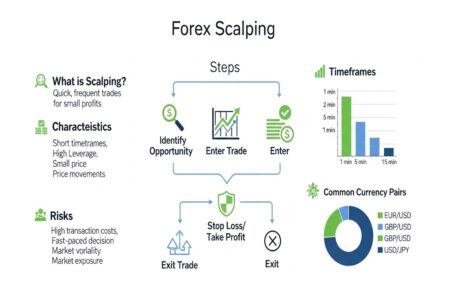
Scalping is a trading strategy that aims to profit from small price changes, with positions typically held for seconds to minutes rather than hours or days. The term “scalping” derives from the practice of “taking a small piece” off the top of each price movement, much like skimming cream from milk.
The Bank for International Settlements (https://www.bis.org) reports that the forex market trades over $7 trillion daily, providing the liquidity necessary for scalping strategies to thrive. This immense volume ensures tight spreads and reliable execution—two critical requirements for successful scalping.
Scalpers make numerous trades daily, often executing 10 to 100+ positions depending on market conditions and opportunity availability. Each trade targets modest profit goals, typically 5 to 15 pips, with the cumulative effect of many small wins building substantial returns over time. This approach requires intense focus, quick decision-making, and disciplined risk management, as detailed in our Risk Management guide.
The psychological profile of successful scalpers differs markedly from longer-term traders. Scalpers must tolerate rapid-fire decision-making, handle frequent small losses without emotional disruption, and maintain concentration for extended periods. These demands make scalping unsuitable for every trader, regardless of their technical knowledge or market understanding.
The Mechanics of Scalping
Scalping operates on the principle that small price movements occur more frequently and predictably than large moves. While predicting whether EUR/USD will rise 200 pips this week involves numerous variables and uncertainties, anticipating a 10-pip move in the next few minutes based on immediate technical factors becomes more manageable.
Scalpers focus on the most liquid currency pairs—primarily EUR/USD, GBP/USD, USD/JPY, and USD/CHF—where tight spreads and high volume ensure efficient execution. These pairs typically offer 0.5 to 2.0 pip spreads with quality brokers, making it economically viable to capture small profit targets. Exotic pairs with 10+ pip spreads make scalping nearly impossible, as the spread alone consumes most potential profits.
Timeframe selection proves crucial for scalping success. Most scalpers operate on 1-minute to 5-minute charts, with some using tick charts or even sub-minute timeframes. However, successful scalpers always maintain awareness of higher timeframes—15-minute, hourly, and 4-hour charts—to understand the broader market context. Trading with the trend on higher time frames while scalping on lower timeframes significantly improves success rates, as covered in our Multiple Timeframe Analysis guide.
Leverage amplifies both gains and losses in scalping. While high leverage (50:1 to 500:1) allows traders to control substantial positions with limited capital, it also increases risk proportionally. Regulatory bodies like the Commodity Futures Trading Commission (CFTC) (https://www.cftc.gov) in the United States limit leverage to 50:1 for major currency pairs specifically to protect retail traders from excessive risk. Our Understanding Leverage guide provides detailed analysis of leverage management.
Essential Requirements for Scalping
Technology forms the foundation of successful scalping. Unlike position traders who can check their trades occasionally throughout the day, scalpers need real-time data feeds, lightning-fast execution, and reliable platform stability. A one-second delay in execution can transform a profitable scalp into a loss, particularly during volatile market conditions.
Internet connectivity must be rock-solid. Wireless connections, while convenient, introduce latency and potential disconnections that prove disastrous for scalpers. Professional scalpers use wired connections and often employ Virtual Private Server (VPS) hosting located near their broker’s servers to minimize execution delays. Studies by the International Organization of Securities Commissions (IOSCO) (https://www.iosco.org) show that milliseconds matter in high-frequency trading environments.
Hardware requirements extend beyond basic computing. Scalpers benefit from dual or triple monitor setups allowing simultaneous chart monitoring, order execution windows, and economic calendar tracking. Processing speed matters—laggy computers cost money when markets move quickly. Modern solid-state drives and adequate RAM (16GB minimum) ensure platform responsiveness during critical moments.
Platform selection significantly impacts scalping success. MetaTrader 4 and MetaTrader 5 dominate retail forex scalping due to their advanced charting capabilities, extensive indicator libraries, and expert advisor support. However, some professional scalpers prefer platforms like cTrader or proprietary broker platforms offering faster execution and more sophisticated order types.
Broker selection deserves careful consideration, as outlined in our How to Choose a Forex Broker guide. Not all brokers welcome scalpers—some impose restrictions or widen spreads during volatile periods specifically to discourage scalping. Look for brokers explicitly allowing scalping in their terms, offering ECN or STP execution, providing raw spreads with transparent commission structures, and demonstrating consistently fast execution without artificial delays.
Scalping Strategies: From Basic to Advanced
The Price Action Scalping Strategy
Price action scalping requires no indicators, relying instead on pure price movement analysis. This approach proves particularly effective because price action represents the ultimate indicator—it shows precisely what the market is doing rather than a mathematical interpretation of past price behavior.
The strategy focuses on identifying key support and resistance levels on 15-minute or hourly charts, then watching for price reactions at these levels on 1-minute or 5-minute charts. When price approaches significant support, scalpers look for bullish rejection signals—pin bars, engulfing patterns, or failed breakdowns—to enter long positions. The inverse applies at resistance levels for short entries.
Entry timing is critical. Rather than entering immediately when price reaches a support level, skilled scalpers wait for confirmation that the level is holding. This might appear as a sharp rejection wick, a bullish engulfing candle, or a rapid bounce accompanied by increased volume. This patience prevents entries during support breaks that would result in immediate losses.
Exit strategies for price action scalping typically target the next minor resistance level or a predetermined pip target, usually 10-15 pips. Stop losses place just beyond the support or resistance level being traded, generally 8-12 pips. This creates favorable risk-reward ratios of 1:1.5 or better. Our Support and Resistance Trading guide provides detailed analysis of these concepts.
The Moving Average Scalping Strategy
Moving average scalping capitalizes on short-term momentum when faster-moving averages cross slower ones. The most popular configuration uses the 5-period, 10-period, and 20-period exponential moving averages (EMAs) on 1-minute or 5-minute charts.
Long entries occur when the 5 EMA crosses above the 10 EMA while both remain above the 20 EMA, indicating strengthening upward momentum. Short entries trigger when the 5 EMA crosses below the 10 EMA with both beneath the 20 EMA. The 20 EMA serves as a trend filter—traders only take long trades when price remains above it and shorts when price stays below it.
The strategy’s effectiveness stems from its ability to capture mini-trends—brief periods of directional movement lasting minutes rather than hours. These mini-trends occur regularly throughout trading sessions, providing numerous opportunities. However, ranging markets produce frequent false signals as moving averages whipsaw back and forth. Experienced scalpers avoid trading this strategy during obvious consolidation periods.
Position management involves taking profits when moving averages cross in the opposite direction or when a predetermined profit target is reached (typically 10-15 pips). Stop losses usually place 10 pips from entry or just beyond the 20 EMA. Trailing stops work well with this strategy during strong trending periods, allowing profits to run while protecting against reversals.
The Bollinger Band Scalping Strategy
Bollinger Bands, developed by technical analyst John Bollinger, consist of a moving average with standard deviation bands above and below. The bands expand during volatility and contract during consolidation, providing visual representation of market conditions and potential reversal points.
This scalping strategy operates on the mean reversion principle—prices that move to extreme levels (touching or exceeding the outer bands) tend to revert toward the average (middle band). When price touches or slightly penetrates the lower Bollinger Band on a 1-minute or 5-minute chart, scalpers look for long entries anticipating a bounce back toward the middle band. Conversely, touches of the upper band signal potential short entries.
Confirmation improves entry reliability. Rather than entering immediately when price touches a band, successful scalpers wait for reversal signals—a bullish candle close after touching the lower band or a bearish close after touching the upper band. The Relative Strength Index (RSI) provides additional confirmation, with oversold readings (below 30) supporting long entries at the lower band and overbought readings (above 70) confirming shorts at the upper band. Our Forex Indicators Guide covers these tools comprehensively.
Profit targets typically aim for the middle Bollinger Band, as price frequently returns to this average after extreme moves. Stop losses place just beyond the outer band being traded, usually 10-12 pips. Some scalpers modify the strategy by taking partial profits at the middle band and letting a portion run toward the opposite band during strong trending conditions.
The Stochastic Oscillator Strategy
The Stochastic Oscillator identifies overbought and oversold conditions by comparing recent closing prices to the price range over a specific period. Values above 80 indicate overbought conditions where downward corrections become likely, while readings below 20 suggest oversold conditions favoring upward bounces.
For scalping, traders typically use a 5,3,3 Stochastic configuration on 1-minute or 5-minute charts. Entry signals occur when the Stochastic lines cross in oversold or overbought territory. A bullish crossover below 20 (fast line crossing above slow line) generates long signals, while a bearish crossover above 80 triggers short entries.
The most reliable signals occur when Stochastic readings match the broader trend direction on higher timeframes. If the 15-minute and hourly charts show uptrends, focus on long signals from oversold Stochastic crossovers while ignoring shorts from overbought readings. This trend filtering dramatically improves success rates by aligning scalps with dominant market direction.
Position management involves taking profits when the Stochastic reaches the opposite extreme—closing longs when readings exceed 80 or shorts when they fall below 20. Stop losses typically place 8-12 pips from entry. Many scalpers combine Stochastic signals with simple moving averages or trendlines for additional confirmation, reducing false signals during choppy markets.
Trading Sessions and Timing
Market timing significantly impacts scalping success. The forex market operates 24 hours weekdays, but liquidity and volatility vary dramatically across trading sessions. Understanding these patterns helps scalpers maximize opportunities while avoiding problematic periods.
The Asian session (Tokyo hours from 12 AM to 9 AM GMT) generally exhibits lower volatility and tighter ranges, particularly for European and American currency pairs. However, pairs involving Asian currencies like USD/JPY, AUD/USD, and NZD/USD often show good movement during these hours. Asian session scalping works best with range-trading strategies rather than breakout approaches.
The London session (8 AM to 5 PM GMT) brings the day’s first significant volatility increase as European traders enter markets. This session accounts for approximately 35% of daily forex volume according to the Bank of England (https://www.bankofengland.co.uk), creating excellent scalping conditions. The London open (8 AM GMT) often produces strong directional moves as overnight ranges break and new trends establish.
The New York session (1 PM to 10 PM GMT) overlaps with London from 1 PM to 5 PM GMT, creating the day’s most liquid and volatile period. This overlap generates ideal scalping conditions with tight spreads, abundant opportunities, and strong trending potential. Major US economic releases from the Bureau of Labor Statistics (https://www.bls.gov) typically occur at 8:30 AM EST (1:30 PM GMT), often triggering substantial immediate volatility.
The Sydney session (10 PM to 7 AM GMT) marks the forex week’s beginning Sunday evening. While generally quiet, this session can produce notable moves as traders react to weekend news and position for the upcoming week. Experienced scalpers often avoid trading the first hour as spreads widen and liquidity remains thin.
Certain times require particular caution or avoidance. Major economic announcements—Non-Farm Payrolls, central bank decisions, GDP releases—create violent volatility that can blow through stop losses before execution. Many scalpers simply step aside during these events, as captured in our Economic Indicators and Forex guide. Similarly, the transition periods between sessions (approximately 5 PM to 8 PM GMT) often lack directional conviction, producing choppy, difficult-to-scalp conditions.
Scalping During High Impact News Events
Let me be straight with you — most scalpers should stay away from high impact news. The volatility can wreck your account in seconds and spreads often go crazy.
But if you have a solid plan and the right setup, news scalping can deliver some of the quickest profits of the week.
Here’s exactly how I do it:
1. Preparation Before the Release
Use a broker known for tight news spreads (IC Markets, Pepperstone, or TMGM).
Switch to the 5-minute chart. The 1-minute chart is usually too choppy.
Reduce your risk to 0.25% per trade or lower.
Mark key support and resistance levels 15 minutes before the release.
2. Best News Events for Scalping
NFP (Non-Farm Payrolls)
CPI and Core CPI
FOMC Rate Decisions
ECB, BoE, and RBA decisions
3. Two Main Strategies I Use
Strategy A: The Straddle
Place a buy stop 12–15 pips above current price
Place a sell stop 12–15 pips below current price
Cancel the losing side immediately after one triggers
Target 25–40 pips
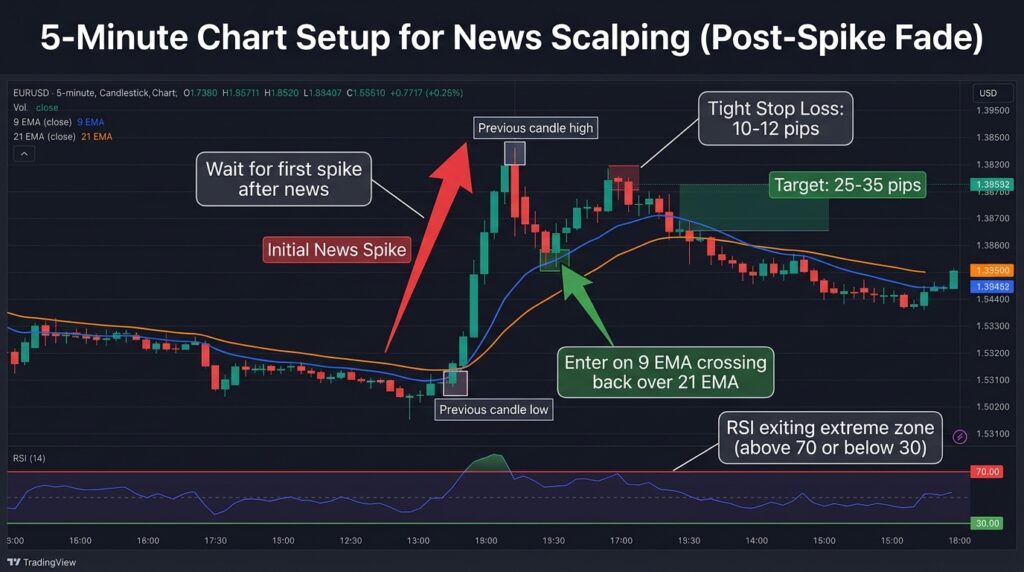
Strategy B: Post-Spike Fade (My favorite)
Chart Setup Example: On the 5-minute chart, I use:
9 EMA and 21 EMA (for direction)
RSI (14) — look for overbought/oversold extremes after the spike
Previous candle highs/lows as reference
How it works: After the news comes out, wait for the first big spike. If price starts reversing and the 9 EMA crosses back over the 21 EMA, I enter in the fade direction. I look for RSI coming out of extreme territory (above 70 or below 30) as extra confirmation.
Stop loss goes 10–12 pips behind the entry candle. First target is 25–35 pips.
Risk Management (Must Follow)
Never risk more than 0.25% on any single news trade.
Maximum of one news trade per event. No second chances.
If you get stopped out, stop trading for the day — no revenge trades.
Always use a demo account first when testing new news setups.
Keep your total daily risk below 1% even on news days.
My Personal Experience
I only scalp news about 15-20% of the time. The moves are fast and the wins can be very good, but I’ve also had some painful losses when I got greedy. Over time I’ve learned to be extremely picky — I only take these trades when the setup is very clean.
Risk Management for Scalpers
Risk management becomes even more critical for scalpers than longer-term traders due to the high trade frequency and smaller margin for error. A few oversized losses can quickly erase dozens of small wins, making disciplined risk control non-negotiable for sustainable scalping success.
The fundamental rule limits risk to 1-2% of account equity per trade maximum. For a $10,000 account, this means risking no more than $100-200 per position regardless of how confident the setup appears. This conservative approach ensures that even a string of consecutive losses—which inevitably occurs—won’t significantly damage the account. The mathematics of drawdown recovery demonstrates why this matters: a 50% account loss requires 100% gains just to break even.
Position sizing calculations must account for the specific stop loss distance on each trade. Using a fixed 10-pip stop loss on EUR/USD with a $10,000 account risking 1% ($100) allows approximately 10,000 units (0.1 standard lots) since each pip equals roughly $1. However, if a particular setup requires a 20-pip stop for proper placement beyond nearby support, position size must reduce to 5,000 units to maintain the same $100 risk.
Stop loss placement follows technical logic rather than arbitrary pip distances. Effective stops place just beyond key support or resistance levels, recent swing highs or lows, or volatility-based measures like Average True Range. Stops placed randomly or too close get triggered by normal market noise, while stops too far away accept excessive risk for the potential reward. Our Forex Risk Management guide provides detailed stop loss strategies.
The risk-reward ratio determines whether a scalping strategy can remain profitable long-term. Even with a 50% win rate, traders need average wins exceeding average losses to profit after spreads and commissions. Most successful scalpers target minimum 1:1.5 risk-reward ratios, meaning a 10-pip stop loss requires at least a 15-pip profit target. This provides adequate cushion to remain profitable despite inevitable losing trades.
Daily loss limits prevent emotional spiral and protect capital during difficult periods. Setting a maximum daily loss—perhaps 3% of account equity—forces traders to stop when markets aren’t cooperating rather than revenge trading to recover losses. This discipline separates consistently profitable scalpers from those who experience periodic account blow-ups.
Common Scalping Mistakes
Overtrading represents the most frequent scalping mistake. The fast-paced nature and numerous opportunities can seduce traders into taking marginal setups that don’t meet their criteria. Quality always trumps quantity—five high-probability trades daily typically outperform twenty mediocre ones. Each trade should meet specific entry criteria rather than being forced because “it’s been a while since the last trade.”
Ignoring spread costs destroys many scalping accounts gradually. A 2-pip spread on EUR/USD might seem negligible, but it represents 20% of a 10-pip profit target. Making 50 trades weekly means paying 100 pips in spreads—substantial leakage that requires above-average win rates to overcome. Scalpers must select brokers offering the tightest possible spreads and consider commission-based accounts where total costs may prove lower.
Using inadequate stop losses invites disaster. Some scalpers employ extremely tight stops (3-5 pips) hoping to minimize risk, but normal market volatility triggers these stops regularly, resulting in death by a thousand cuts. While scalping targets small profits, stops must place at technically logical levels that give trades room to breathe. The Average True Range indicator helps determine appropriate stop distances based on current volatility, as discussed in our Forex Indicators Guide.
Revenge trading—attempting to immediately recover losses with larger positions or lower-quality setups—accelerates account destruction. Every trader experiences losing streaks; the difference between success and failure lies in how these streaks are handled. Successful scalpers accept losses as business costs, maintaining their process regardless of recent results. When losses mount, the proper response involves reviewing what went wrong and potentially stepping away rather than increasing risk.
Neglecting trading psychology undermines technical skill. Scalping’s intensity amplifies emotional responses—the adrenaline of quick wins and frustration of sudden losses. Maintaining emotional equilibrium through proper position sizing, regular breaks, and realistic expectations prevents the psychological deterioration that leads to poor decisions. Our Trading Psychology guide addresses these mental challenges comprehensively.
Trading during unfavorable market conditions wastes capital and opportunity. Not every market environment suits scalping. During obvious consolidation with no clear direction, spreads widen and price action becomes choppy and unpredictable. Recognizing when to step aside—during major news events, extremely low volume periods, or grinding consolidations—preserves capital for better opportunities.
Technology and Tools for Scalpers
Platform selection significantly impacts scalping efficiency. MetaTrader 4 and MetaTrader 5 dominate retail forex due to their comprehensive charting, extensive indicator libraries, and support for automated trading systems. However, some traders prefer cTrader for its cleaner interface and faster execution, or proprietary platforms offered by certain brokers designed specifically for scalping.
Economic calendars prove essential for avoiding adverse news events. Services like those provided by central banks and financial institutions list scheduled releases with expected impact levels. Scalpers typically avoid trading in the minutes surrounding high-impact events—Non-Farm Payrolls, central bank rate decisions, GDP releases—when volatility spikes unpredictably. Our News Trading Guide covers trading economic releases for those who prefer this approach.
Virtual Private Server (VPS) hosting ensures consistent platform operation and execution speed. VPS places your trading platform on remote servers located near broker data centers, minimizing latency and preventing interruptions from local computer or internet issues. For serious scalpers, the monthly VPS cost ($20-50) represents essential business infrastructure rather than optional expense.
Trading journals track performance metrics essential for improvement. Successful scalpers meticulously record entry reasons, exit results, market conditions, and emotional states for every trade. This data reveals patterns—perhaps certain setups work better during specific sessions, or particular market conditions produce more losses. Without detailed records, traders repeat mistakes rather than learning from them.
Some scalpers develop or purchase automated trading systems (Expert Advisors in MetaTrader) to execute strategies consistently without emotional interference. However, automated systems require sophisticated programming, extensive backtesting, and constant monitoring. Most beginning scalpers should master manual trading before considering automation, as premature automation often means automating bad habits.
Developing Your Scalping Edge
Creating a personal trading edge—a sustainable advantage over other market participants—represents the ultimate goal for any scalper. This edge doesn’t come from discovering secret indicators or buying expensive systems; it develops through deep market understanding, rigorous strategy testing, and disciplined execution.
Specialization enhances edge development. Rather than trading every currency pair and every setup type, successful scalpers typically focus on one or two pairs and specific strategy patterns. This focused approach builds intimate familiarity with how particular pairs behave under different conditions. A scalper specializing in EUR/USD during London hours develops nuanced understanding that generalists never achieve.
Backtesting validates strategy profitability before risking real capital. Historical price data allows testing how a strategy would have performed across various market conditions. While past performance doesn’t guarantee future results, consistent profitability across different market environments builds confidence in a strategy’s edge. Software like Forex Tester enables detailed backtesting and strategy refinement.
Forward testing in demo accounts bridges the gap between backtesting and live trading. Paper trading with real-time data tests strategy execution under actual market conditions without financial risk. This phase reveals practical challenges—execution delays, emotional responses, platform issues—that backtesting can’t capture. Successful demo trading for at least three months demonstrates readiness for live trading.
Continuous learning distinguishes improving traders from stagnant ones. Market dynamics evolve, new participants enter with different behaviors, and technological changes affect execution and available strategies. Reading trading literature, analyzing successful traders’ approaches, and regularly reviewing personal performance maintains and enhances competitive advantage. Resources from institutions like the CFA Institute (https://www.cfainstitute.org) provide ongoing professional development.
Transitioning from Demo to Live Trading
The psychological shift from demo to live trading challenges even experienced traders. Demo trading eliminates fear and greed—the two emotions that destroy trading accounts—creating an unrealistic environment that doesn’t prepare traders for live market pressure. Understanding this transition improves adaptation speed and reduces costly mistakes.
Start with small position sizes regardless of account size. A trader with $10,000 should begin live scalping with position sizes appropriate for a $1,000 account, risking perhaps $10-20 per trade rather than $100-200. This conservative approach allows psychological adjustment to real money risk before scaling to full-size positions. Many traders discover their demo success doesn’t immediately translate to live markets due to emotional interference.
Maintain identical execution to demo trading. The tendency to modify strategies when real money is involved—tightening stops, taking profits earlier, skipping valid setups from fear—destroys the edge demonstrated in demo testing. The strategy that worked in simulation should be executed identically in live markets. Deviations introduce unknown variables that prevent learning what actually works.
Accept initial struggles as normal. Most traders experience decreased performance when first transitioning to live trading despite solid demo results. This temporary regression occurs universally as emotional regulation develops. Rather than abandoning strategies during this phase, maintain discipline and small position sizes while psychological adaptation occurs. Performance typically improves within weeks as confidence builds.
Track emotional responses as carefully as trade results. Note when fear prevented taking valid setups, when greed led to holding winners too long, when frustration after losses triggered revenge trades. These psychological patterns reveal areas requiring work and awareness. Over time, emotional responses moderate as live trading becomes familiar rather than frightening.
Advanced Scalping Concepts
Order flow analysis provides insights beyond simple price charts by revealing market participant behavior. While retail traders typically lack direct access to true order flow data, tools like volume analysis, time and sales data, and Level II pricing (available with certain brokers) offer glimpses into supply and demand dynamics. Significant buying or selling pressure often precedes price moves, giving attentive scalpers early warning of potential opportunities.
Correlation awareness prevents overexposure and identifies high-probability setups. EUR/USD and GBP/USD typically move in the same direction due to the shared dollar component and geographic proximity. When these pairs diverge significantly—one rising while the other falls—it often signals a temporary imbalance likely to correct. Scalpers can exploit these divergences by trading the pair expected to realign. Our Understanding Currency Pairs guide explores these relationships.
Central bank policy understanding improves directional bias and risk assessment. Interest rate differentials between currencies drive medium-term trends that create favorable or unfavorable conditions for scalping particular pairs. When the Federal Reserve (https://www.federalreserve.gov) maintains significantly higher rates than the European Central Bank (https://www.ecb.europa.eu), for example, this generally supports dollar strength and creates a tailwind for scalping USD pairs from the long side.
Spread dynamics change throughout the day, affecting scalping profitability. Spreads widen during low liquidity periods and around major news events, sometimes doubling or tripling normal levels. Scalpers must monitor spread behavior and avoid trading when costs become prohibitive. Some brokers offer variable spreads that fluctuate with market conditions, while others provide fixed spreads that remain constant. Each model has advantages depending on trading style and timing.
Building a Sustainable Scalping Career
Scalping as a primary income source requires realistic expectations and solid financial planning. While stories of traders turning small accounts into fortunes exist, they represent rare exceptions rather than typical outcomes. Most professional scalpers earn consistent but modest returns—perhaps 5-15% monthly—through disciplined execution and proper risk management rather than explosive growth.
Capital requirements depend on income goals and expected returns. To generate $5,000 monthly income with 10% average monthly returns requires approximately $50,000 in trading capital. Lower capital necessitates either accepting lower income, pursuing higher-risk approaches (usually leading to account loss), or supplementing trading income with other revenue sources during account growth phases.
Tax and regulatory compliance vary significantly by jurisdiction. In the United States, the Internal Revenue Service (IRS) (https://www.irs.gov) treats forex profits as capital gains subject to specific tax rules. Some countries offer more favorable forex taxation, while others impose significant burdens. Consulting with tax professionals familiar with trading ensures compliance and optimizes tax efficiency.
Record keeping extends beyond trade journals to include detailed financial records for tax purposes. Maintaining organized records of all trading activity, account statements, business expenses (platform fees, data subscriptions, education costs), and related documentation simplifies tax preparation and provides legal protection if questions arise.
Business structure decisions—whether to trade as an individual, form an LLC, or incorporate—involve complex considerations including tax treatment, liability protection, and regulatory requirements. These decisions should be made with guidance from qualified accountants and attorneys familiar with trading businesses in your specific jurisdiction.
Conclusion
Forex scalping offers an exciting, potentially profitable trading approach for those with the right temperament, discipline, and dedication to mastery. Success requires much more than technical knowledge—it demands psychological resilience, technological infrastructure, rigorous risk management, and continuous learning. The scalpers who thrive treat trading as a serious profession requiring professional preparation and execution.
The journey from beginning scalper to consistently profitable trader typically spans months or years rather than weeks. This timeline shouldn’t discourage but rather encourage proper preparation. Rushing the learning process by trading large positions before achieving consistent demo profitability leads to predictable account depletion. Those who invest time in education, practice, and gradual skill development position themselves for long-term success.
Start your scalping education by mastering one simple strategy—perhaps price action scalping or moving average crossovers—on a single currency pair during a specific session. Achieve consistent profitability in demo trading for at least three months before transitioning to small live positions. Gradually expand to additional strategies and pairs only after demonstrating mastery of initial approaches.
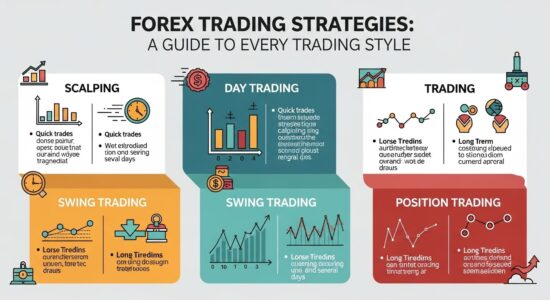
Remember that scalping represents just one of many forex trading styles covered in our Forex Trading Strategies guide. Some traders discover that other approaches—swing trading, position trading, or trend following—better match their personality and lifestyle. The goal is finding what works for you rather than forcing a particular style because it seems exciting or lucrative.
With proper preparation, realistic expectations, and unwavering discipline, scalping can provide both financial rewards and the satisfaction of mastering a challenging skill. Approach it with the seriousness it deserves, commit to continuous improvement, and the probability of success increases dramatically.