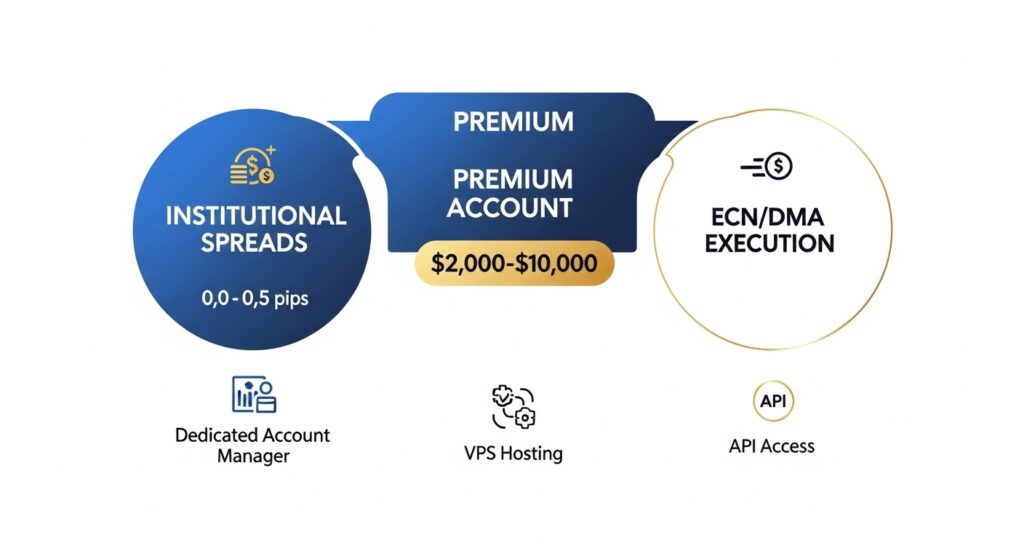
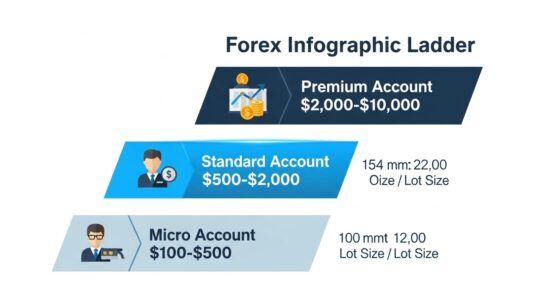
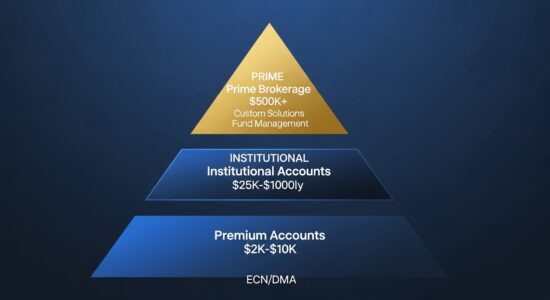
Premium forex accounts represent the transition from retail trading to professional-grade execution. With minimum deposits of $2,000-$10,000, premium accounts provide institutional-quality spreads, direct market access, dedicated support, and the advanced tools needed by experienced traders managing substantial capital with proven strategies.

This guide explains what premium accounts are, when to upgrade from standard accounts, and how to leverage premium features to maximize trading performance.
What Are Premium Forex Accounts
Premium forex accounts are advanced retail trading accounts designed for experienced traders with substantial capital and proven track records. Unlike standard accounts that serve beginner and intermediate traders, premium accounts provide institutional-grade execution, tighter spreads, advanced order routing, and personalized service typically requiring $2,000-$10,000 minimum deposits.
The term “premium account” encompasses several specialized account types including ECN (Electronic Communication Network), DMA (Direct Market Access), and VIP accounts. These accounts prioritize execution quality, pricing transparency, and professional-grade infrastructure over the simplified retail experience of standard accounts.
Premium accounts serve as the bridge between retail standard accounts and true institutional accounts, providing access to professional trading conditions at capital levels accessible to serious retail traders who have proven consistent profitability.
According to the National Futures Association, traders should select account types that match their experience level, trading volume, and capital requirements to ensure appropriate risk management and platform capabilities.
Key Features of Premium Forex Accounts
Minimum Deposit Requirements
Typical minimum deposits:
- $2,000: Entry-level premium accounts at many brokers
- $5,000: Standard premium tier with full feature access
- $10,000: Elite premium accounts with maximum benefits
Some brokers offer graduated premium tiers—Silver, Gold, Platinum—with increasing benefits at higher deposit levels. The $5,000-$10,000 range typically unlocks all premium features without requiring institutional-level capital.
Superior Spreads and Pricing
Premium accounts offer institutional-quality spreads:
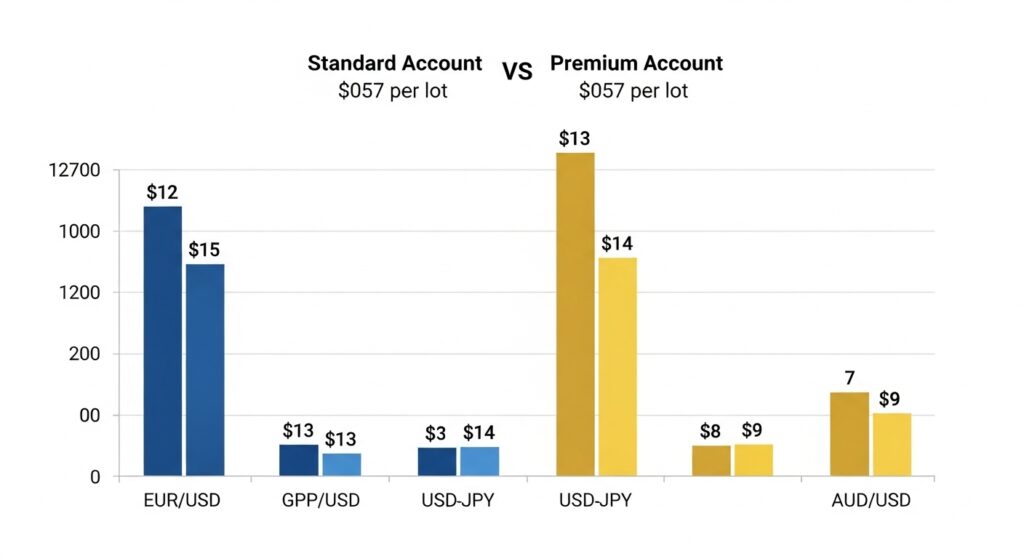
- EUR/USD: 0.0-0.5 pips (vs 0.8-1.5 pips standard accounts)
- GBP/USD: 0.3-0.8 pips (vs 1.0-2.0 pips standard accounts)
- USD/JPY: 0.0-0.5 pips (vs 0.8-1.5 pips standard accounts)
- AUD/USD: 0.3-0.8 pips (vs 1.0-2.0 pips standard accounts)
These tighter spreads significantly reduce transaction costs. A trader executing 100 standard lots monthly on EUR/USD saves $300-$500 monthly with premium vs standard spreads (0.5 pip difference × 100 lots × $10 per pip = $500).
The Commodity Futures Trading Commission regulates forex broker pricing transparency, ensuring premium account holders receive the advertised execution quality and spread conditions.
Commission-Based Pricing Models
Most premium accounts use raw spread + commission pricing:
Commission Structure:
- $2-$7 per round turn (per 100,000 units traded)
- Volume discounts for high-frequency traders
- Lower total cost than spread-only pricing for active traders
Example Cost Comparison:
Standard Account (EUR/USD):
- Spread: 1.2 pips × $10 = $12 per standard lot
- Commission: $0
- Total cost: $12 per round turn
Premium Account (EUR/USD):
- Spread: 0.2 pips × $10 = $2 per standard lot
- Commission: $5 per round turn
- Total cost: $7 per round turn
Premium accounts save $5 per standard lot, creating $500 monthly savings for traders executing 100 lots.
Direct Market Access (DMA) and ECN Execution
Premium accounts typically offer superior execution models:
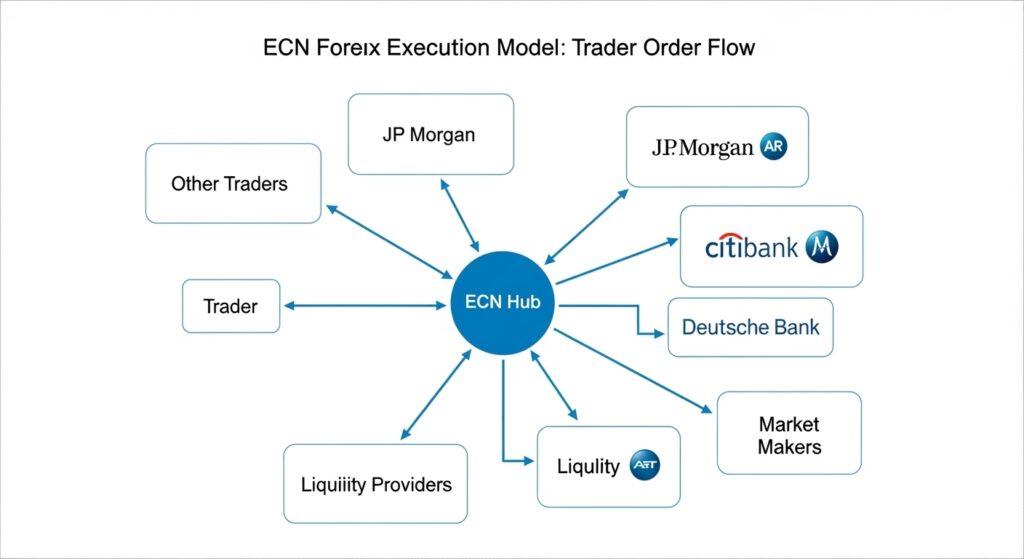
ECN (Electronic Communication Network):
- Orders routed directly to liquidity providers
- No dealing desk intervention
- Market depth visibility (Level II pricing)
- Anonymous order matching
DMA (Direct Market Access):
- Direct access to interbank market
- Ultra-fast execution (milliseconds)
- No requotes during volatile periods
- True institutional-grade fills
STP (Straight Through Processing):
- Automated order routing
- No manual intervention
- Faster execution than standard accounts
- Better fill quality during news events
These execution models eliminate conflicts of interest present in market maker models, ensuring premium traders receive best available prices.

Dedicated Account Management
Premium account holders receive priority support:
- Dedicated account manager: Single point of contact for all issues
- Priority phone/email support: Faster response times (minutes vs hours)
- Custom solutions: Tailored platform setups, API access, custom reporting
- VIP treatment: Early access to new features, special promotions
A dedicated manager becomes invaluable when troubleshooting complex issues, negotiating custom conditions, or implementing advanced strategies requiring broker coordination.
Advanced Trading Tools
Premium accounts include professional-grade infrastructure:
Platform Features:
- Full API access for algorithmic trading
- Advanced charting with premium indicators
- Multi-account management tools
- Custom reporting and analytics
VPS Hosting:
- Free or discounted Virtual Private Server hosting
- Low-latency server locations near broker data centers
- 24/7 uptime for automated strategies
- Remote desktop access from anywhere
Research and Analysis:
- Premium market research reports
- Institutional-grade news feeds (Reuters, Bloomberg)
- Advanced technical analysis tools
- Custom trade journal software
For automated trading requirements, see our Setting Up Automated Trading guide.
Who Should Use Premium Accounts
Experienced Traders with $5,000+ Capital
Traders who have:
- Demonstrated 6-12+ months consistent profitability on standard accounts
- Accumulated $5,000+ through trading profits and capital additions
- Proven ability to manage larger position sizes responsibly
- Trading volume justifying premium account cost savings
Capital alone doesn’t qualify you for premium accounts—you need proven skill managing that capital profitably.
For complete details on standard accounts and graduation criteria, see our Standard Forex Accounts: Complete Guide.
High-Volume Traders
Traders executing:
- 20+ standard lots monthly (200,000+ units daily average)
- 50+ round turns monthly across all pairs
- Multiple simultaneous positions requiring tight spreads
High volume makes premium spreads financially mandatory. Spread savings exceed premium account fees and higher minimums within the first month.
Algorithmic and Automated Traders
Traders running Expert Advisors benefit from premium accounts because:
- Ultra-fast execution prevents slippage on automated orders
- API access enables custom algorithm implementation
- VPS hosting ensures 24/7 uptime for strategies
- Better fill quality improves backtest-to-live performance correlation
Many profitable EAs become unprofitable on standard accounts due to wider spreads and slower execution degrading edge.
Scalpers and Day Traders
Short-timeframe traders require premium accounts because:
- Small profit targets (5-15 pips) make spread costs critical
- High trade frequency amplifies spread impact
- Fast execution prevents missed entries during rapid moves
- Level II pricing enables advanced entry/exit techniques
A scalper targeting 8 pips on EUR/USD needs 0.5 pip spreads maximum. Standard 1.5 pip spreads consume nearly 20% of profit target before the trade begins.
Swing and Position Traders with Large Accounts
Longer-term traders benefit from premium accounts when:
- Position sizes exceed 1-2 standard lots
- Multiple simultaneous positions across pairs
- Overnight and weekend gap concerns require best execution
- Portfolio approach demands diverse position management
A swing trader holding 5 positions of 2 standard lots each needs reliable execution, minimal slippage, and institutional-grade fills that premium accounts provide.
Premium vs Standard vs Institutional Accounts
| Feature | Standard Account | Premium Account | Institutional Account |
|---|---|---|---|
| Minimum Deposit | $500-$2,000 | $2,000-$10,000 | $25,000-$100,000+ |
| Typical Balance | $500-$5,000 | $5,000-$50,000 | $50,000-$1,000,000+ |
| EUR/USD Spread | 0.8-1.5 pips | 0.0-0.5 pips | 0.0-0.3 pips |
| Commission | Usually $0 | $2-$7 per lot | $1-$5 per lot |
| Execution Type | Market maker/STP | ECN/DMA | Prime brokerage/DMA |
| Order Fill Speed | Good (100-300ms) | Excellent (10-50ms) | Best (1-10ms) |
| Leverage (US) | 50:1 majors | 50:1 majors | 50:1 majors |
| Leverage (International) | 100:1-500:1 | 100:1-500:1 | 50:1-200:1 |
| Account Manager | No | Yes (dedicated) | Yes (institutional team) |
| VPS Hosting | Pay separately | Often included | Always included |
| API Access | Limited | Full | Full + custom solutions |
| Reporting | Standard | Advanced | Custom institutional |
| Ideal Monthly Volume | 0-20 lots | 20-200 lots | 200+ lots |
The Financial Conduct Authority requires brokers to ensure account types match trader sophistication and capital, preventing undercapitalized traders from accessing inappropriate leverage or execution models.
Choosing a Premium Account Broker
Regulatory Credentials
Premium account capital deserves maximum regulatory protection:
Top-Tier Regulators:
- FCA (UK): Strongest retail forex regulation globally
- ASIC (Australia): Comprehensive investor protections
- CFTC/NFA (US): Strictest capital and disclosure requirements
- CySEC (Cyprus): EU-level investor compensation schemes
Verification Steps:
- Confirm broker registration number on regulatory websites
- Verify segregated client fund requirements
- Check financial compensation schemes (FSCS, ASIC compensation)
- Review regulatory history for violations or sanctions
For comprehensive broker evaluation criteria, see our How to Choose a Forex Broker guide.
Execution Quality Testing
Demo accounts reveal execution reality:
Test Factors:
- Order execution speed during normal hours
- Slippage during high-volatility events (NFP, central bank announcements)
- Requote frequency on limit orders
- Stop loss fill quality during gaps
- Weekend gap handling on Monday opens
Execute 50+ demo trades during various market conditions before committing premium capital. Poor execution quality negates spread advantages.
Technology Infrastructure
Evaluate platform stability and features:
Platform Assessment:
- MetaTrader 4/5 availability (industry standard)
- Proprietary platform quality (cTrader, broker-specific)
- Mobile platform feature parity with desktop
- API documentation and support
- Historical data quality for backtesting
Infrastructure Verification:
- Server locations (closer = lower latency)
- Uptime statistics (99.9%+ required)
- Redundancy and failover systems
- DDoS protection during major events
Pricing Transparency
Understand total trading costs:
Spread Verification:
- Real-time spread monitoring during various sessions
- Spread widening during news releases
- Average spreads vs advertised minimums
- Spread consistency across account sizes
Commission Structure:
- Fixed vs tiered commission rates
- Volume discounts and rebates
- Additional fees (overnight, inactivity, withdrawal)
- Hidden costs (conversion fees, data fees)
Calculate total cost per trade including spreads, commissions, and ancillary fees for fair broker comparison.
Liquidity Providers
Premium accounts benefit from deep liquidity:
- Number of liquidity providers (10+ ideal)
- Tier-1 bank participation (JP Morgan, Citi, Deutsche Bank)
- Market depth visibility
- Order fill statistics (percentage filled at requested price)
More liquidity providers = tighter spreads and better fills during volatile periods.
Effective Premium Account Strategies
Optimal Position Sizing
Premium accounts allow larger positions while maintaining risk discipline:
$5,000 Account:
- Risk 1-2% per trade = $50-$100
- Typical position: 0.5-1.0 standard lots
- 50-100 pip stop losses
- Can hold 2-3 positions simultaneously
$10,000 Account:
- Risk 1-2% per trade = $100-$200
- Typical position: 1.0-2.0 standard lots
- 50-100 pip stop losses
- Can hold 3-5 positions simultaneously
For detailed position sizing calculations appropriate to larger capital, see our How to Calculate Position Size guide.

Advanced Risk Management
Premium capital demands professional risk management:
Portfolio Risk Management:
- Maximum 2% risk per trade
- Maximum 5% total risk across all positions
- Correlation analysis to prevent concentrated exposure
- Position sizing based on volatility (ATR-based stops)
Stop Loss Sophistication:
- ATR-based dynamic stops adjusting to volatility
- Trailing stops to protect profits on trending positions
- Time-based stops for failed setups
- Guaranteed stops for overnight positions (if offered)
For comprehensive risk management frameworks, review our Forex Risk Management Guide.
Leveraging Premium Features
Maximize value from premium account capabilities:
API Integration:
- Develop custom trading algorithms
- Automate position management and risk controls
- Implement advanced order types unavailable in standard platforms
- Create custom reporting and performance analytics
VPS Utilization:
- Run Expert Advisors 24/7 with minimal latency
- Eliminate home internet and power disruptions
- Access trading platform from any device globally
- Test multiple strategies simultaneously
Account Manager Relationship:
- Negotiate custom spreads for high-volume trading
- Request custom leverage for specific strategies
- Solve technical issues immediately during critical trades
- Access institutional research and analysis
Strategy Refinement for Tighter Spreads
Premium spreads enable strategies impossible on standard accounts:
Scalping Viability:
- 5-10 pip targets become profitable with 0.3 pip spreads
- High-frequency trading (30-50 trades daily) economically sustainable
- News trading during announcements (fast execution critical)
Range Trading Precision:
- Tighter spreads allow entries closer to support/resistance
- Better risk-reward ratios on small ranges
- Multiple small profits accumulate meaningfully
Arbitrage Opportunities:
- Cross-broker arbitrage (premium vs standard account spreads)
- Synthetic pair arbitrage (EUR/GBP vs EUR/USD + GBP/USD)
- Statistical arbitrage on correlated pairs
Position Sizing Examples
Example 1: $2,000 Premium Account
Setup: EUR/USD long at 1.1000
- Entry: 1.1000
- Stop loss: 1.0950 (50 pips)
- Target: 1.1100 (100 pips, 2:1 risk-reward)
- Risk amount: $40 (2% of $2,000)
Position size calculation:
- Risk per pip needed: $40 ÷ 50 pips = $0.80 per pip
- Standard lots: $0.80 ÷ $10 = 0.08 standard lots (8 mini lots)
Cost comparison:

Standard account (1.2 pip spread):
- Spread cost: 1.2 pips × $0.80 = $0.96
- Percentage of risk: 2.4%
Premium account (0.4 pip spread + $6 commission):
- Spread cost: 0.4 pips × $0.80 = $0.32
- Commission: $6 × 0.08 = $0.48
- Total: $0.80
- Percentage of risk: 2.0%
Premium account saves $0.16 per trade (17% cost reduction).
Example 2: $5,000 Premium Account
Setup: GBP/USD short at 1.3000
- Entry: 1.3000
- Stop loss: 1.3060 (60 pips)
- Target: 1.2880 (120 pips, 2:1 risk-reward)
- Risk amount: $100 (2% of $5,000)
Position size calculation:
- Risk per pip needed: $100 ÷ 60 pips = $1.67 per pip
- Standard lots: $1.67 ÷ $10 = 0.167 standard lots (1.67 mini lots)
Trade outcome if successful:
- Profit: 120 pips × $1.67 = $200.40
- Commission cost: $6 × 0.167 = $1.00
- Net profit: $199.40
- New balance: $5,199.40 (4% gain)
Trade outcome if stopped out:
- Loss: 60 pips × $1.67 = $100.20
- Commission cost: $1.00
- Net loss: $101.20
- New balance: $4,898.80 (2% loss)
Example 3: $10,000 Premium Account
Setup: USD/JPY range trade at 110.00
- Entry: 110.00 (support bounce)
- Stop loss: 109.25 (75 pips)
- Target: 111.50 (150 pips, 2:1 risk-reward)
- Risk amount: $200 (2% of $10,000)
Position size calculation:
- Risk per pip needed: $200 ÷ 75 pips = $2.67 per pip
- Standard lots: $2.67 ÷ $9.09 = ~0.29 standard lots
Trade outcome if successful:
- Profit: 150 pips × $2.64 = $396
- Commission cost: $6 × 0.29 = $1.74
- Net profit: $394.26
- New balance: $10,394.26 (3.9% gain)
Trade outcome if stopped out:
- Loss: 75 pips × $2.64 = $198
- Commission cost: $1.74
- Net loss: $199.74
- New balance: $9,800.26 (2% loss)
Example 4: Portfolio Management ($10,000 Account)
Five simultaneous positions with 5% total risk distributed:
Position 1 – EUR/USD Long (1% risk):
- Risk: $100 on 60-pip stop = 0.167 standard lots
Position 2 – GBP/JPY Short (1% risk):
- Risk: $100 on 80-pip stop = 0.125 standard lots
Position 3 – AUD/USD Long (1% risk):
- Risk: $100 on 50-pip stop = 0.20 standard lots
Position 4 – USD/CAD Short (1% risk):
- Risk: $100 on 70-pip stop = 0.143 standard lots
Position 5 – NZD/USD Long (1% risk):
- Risk: $100 on 55-pip stop = 0.182 standard lots
Total risk across all positions: $500 (5% of $10,000)
This diversification reduces single-pair exposure while maintaining professional risk management across a currency portfolio.
When to Graduate to Institutional Accounts
Consider upgrading when you meet these criteria:
Consistent Profitability Over 12-24 Months
Premium account success requires:
- Minimum 12 months documented profitability on premium account
- Positive expectancy across 200+ trades
- Monthly returns averaging 3-8% consistently
- Maximum drawdown under 15%
Twelve months on a premium account demonstrates you can manage larger capital and institutional-quality conditions profitably.
Account Growth to $25,000-$50,000+
Natural capital accumulation signals readiness:
- Starting $5,000 grown to $15,000+ = 200% gain demonstrates exceptional skill
- Starting $10,000 grown to $30,000+ = 200% gain shows professional-level management
- Growth should come primarily from trading profits, not just capital additions
If you can’t profitably grow a premium account, institutional accounts won’t improve results.
Trading Volume Justifies Institutional Pricing
Calculate whether institutional spread discounts create meaningful savings:
- Trading 200+ standard lots monthly
- Spread difference (0.3 pip premium vs 0.1 pip institutional) × volume
- Example: 300 lots × 0.2 pip savings × $10 = $600 monthly
If savings exceed institutional account minimums and any additional fees, upgrade makes financial sense.
Need for Prime Brokerage Services
You might outgrow premium accounts when:
- Multi-broker arbitrage strategies require prime brokerage aggregation
- Require custom liquidity pools or dark pool access
- Need for institutional credit lines and leverage
- Custom reporting and compliance requirements for fund management
Realistic Profit Expectations
Monthly Return Targets
Premium accounts enable professional-grade performance:
Conservative targets (2-5% monthly):
- $5,000 account: $100-$250 monthly
- $10,000 account: $200-$500 monthly
- Focus on capital preservation and consistent compounding
Moderate targets (5-8% monthly):
- $5,000 account: $250-$400 monthly
- $10,000 account: $500-$800 monthly
- Sustainable for experienced traders with proven edges
Aggressive targets (8-12% monthly):
- $5,000 account: $400-$600 monthly
- $10,000 account: $800-$1,200 monthly
- Requires exceptional skill and favorable market conditions
Premium traders should target 3-8% monthly as sustainable long-term performance. Higher returns require proportionally higher risk-taking.
Compounding Growth Potential
Premium accounts benefit from substantial compound growth:
$5,000 starting capital at 6% monthly:
- Month 6: $7,092
- Month 12: $10,061
- Month 24: $20,241
$10,000 starting capital at 5% monthly:
- Month 6: $13,401
- Month 12: $17,959
- Month 24: $32,251
Add $500-$1,000 monthly from outside income and growth accelerates significantly.
Income Progression Timeline
Realistic progression for premium account traders:
Months 1-6 (Adaptation Phase):
- Target: 2-5% monthly
- Goal: Adjust to premium execution and larger position sizes
- Reality: Performance may initially decline as you adapt to new conditions
Months 7-12 (Optimization Phase):
- Target: 5-8% monthly
- Goal: Leverage premium features for improved performance
- Reality: Consistent returns as strategies optimize for tighter spreads
Months 13-24 (Scaling Phase):
- Target: 5-10% monthly on growing capital
- Goal: Build account to $25,000-$50,000 for institutional transition
- Reality: $500-$2,000+ monthly income as account grows
Months 25+ (Professional Phase):
- Target: 3-8% monthly on $50,000+ capital
- Goal: Transition toward institutional accounts and full-time trading
- Reality: $1,500-$4,000+ monthly income on institutional-level capital
For comprehensive capital requirements and growth strategies appropriate to larger accounts, see our How Much Money to Start Forex Trading guide.
Common Premium Account Mistakes
Overleveraging Larger Capital
The biggest mistake: assuming larger capital justifies larger risk percentages.
The Trap:
- $10,000 account “allows” risking $500 per trade (5%)
- Temptation to increase risk percentage to “grow faster”
- Larger absolute losses ($500 vs $50) create psychological damage
The Solution:
- Maintain 1-2% risk regardless of account size
- Larger capital creates larger absolute profits at same percentages
- Professional traders reduce risk percentage as capital grows
Chasing Premium Features Without Strategy
Premium accounts provide tools, not trading edges.
The Trap:
- Believing tight spreads alone improve profitability
- Using API access without proven algorithmic strategy
- Over-optimizing execution speed for non-scalping strategies
The Solution:
- Prove strategy profitability on standard account first
- Premium features enhance existing edges, don’t create new ones
- Match premium features to specific strategy requirements
Neglecting Commission Impact
Commission-based pricing requires different cost calculations:
The Trap:
- Focusing only on tight spreads, ignoring commission costs
- Over-trading because “spreads are so tight”
- Not calculating total cost per trade
The Solution:
- Calculate: spread cost + commission = total transaction cost
- Track monthly commission totals
- Reduce trade frequency if total costs exceed 3-5% of monthly profits
Maintaining Retail Trading Habits
Premium accounts demand professional discipline:
The Trap:
- Continuing discretionary, unplanned trading
- Inconsistent position sizing
- Emotional decision-making despite larger capital
The Solution:
- Implement systematic trading plans
- Document every trade with detailed reasoning
- Professional-grade record keeping and performance analysis
Frequently Asked Questions
How much trading volume justifies a premium account?
20+ standard lots monthly minimum. Calculate your monthly volume, then compare costs:
- Standard account: volume × average spread × $10 per pip
- Premium account: (volume × raw spread × $10) + (volume × commission)
If premium saves $100+ monthly, upgrade makes financial sense. Below 20 lots monthly, standard account costs may be lower.
Can I negotiate better spreads or commission rates?
Yes, especially with high trading volume. Account managers can:
- Reduce commission rates for volume over 100 lots monthly
- Offer spread rebates for consistent trading
- Provide custom pricing for specific pairs
- Waive monthly fees or VPS costs
Document your trading volume and initiate negotiation once you demonstrate 3+ months of consistent activity.
Do I need programming knowledge for premium accounts?
No, but it helps. Premium accounts benefit traders who:
- Understand basic algorithmic concepts
- Can configure existing Expert Advisors
- Want to develop custom automation eventually
Many premium traders succeed using standard platforms without API access. Programming skills maximize premium features but aren’t required for profitability.
Are premium accounts worth it for swing traders?
Yes, if your position sizes and volume justify the costs. Swing traders benefit from:
- Better overnight gap handling
- Reduced spread costs accumulate over larger positions
- Dedicated support for weekend concerns
- Advanced order types (trailing stops, OCO orders)
A swing trader holding 2-3 standard lot positions for 5-7 days benefits from premium execution quality and spread savings.
How do I test execution quality before committing capital?
Use broker demo accounts, but recognize demo doesn’t replicate real execution:
- Execute 50+ demo trades during various market conditions
- Test during high-volatility events (NFP, central bank meetings)
- Compare demo fills to real account reviews on forums
- Request trial period on real account with minimum deposit
Some brokers offer 30-day trial periods at reduced minimums for traders evaluating premium accounts.
Can I downgrade back to a standard account?
Most brokers allow account type changes:
- Contact account manager to initiate downgrade
- May require withdrawing capital below premium minimum
- Usually no penalties for downgrading
- Consider maintaining premium account even during trading breaks
Downgrading means losing dedicated manager, tighter spreads, and premium features. Only downgrade if premium costs exceed value received.
Do premium accounts guarantee no slippage?
No, but slippage is minimized:
- ECN/DMA execution reduces slippage vs market maker models
- Faster execution speeds limit price movement during order processing
- Deep liquidity from multiple providers improves fill quality
- Slippage still occurs during extremely volatile events
Premium accounts significantly reduce slippage but can’t eliminate it entirely during major news events or gaps.
Related Resources
- Standard Forex Accounts: Complete Guide
- Forex Micro Accounts: Complete Guide
- Forex Cent Accounts: Complete Guide
- How Much Money to Start Forex Trading
- How to Calculate Position Size
- Forex Risk Management: Complete Guide
- How to Choose a Forex Broker
- Setting Up Automated Trading
Premium forex accounts bridge the gap between retail standard accounts and institutional prime brokerage. With $2,000-$10,000 capital, institutional-quality spreads, advanced execution, and dedicated support, premium accounts provide the professional infrastructure needed by serious traders to scale from supplemental income to full-time trading careers. Use them to prove professional-level performance over 12-24 months before transitioning to institutional accounts and true professional capital management.