How to create a forex trading plan is one of the most important skills for trading success. The difference between gambling and trading is a plan. Professional traders operate with detailed trading plans that define their strategy, risk management, trade selection criteria, and performance evaluation. Amateurs trade on impulse, emotion, and hope
A trading plan is your comprehensive blueprint for approaching the forex market. It documents your trading strategy, risk management rules, entry and exit criteria, psychological guidelines, and methods for tracking and improving performance. Most importantly, it provides a framework for making objective decisions when emotions run high.
This guide walks you through creating a complete, personalized forex trading plan that matches your goals, risk tolerance, time availability, and trading style. We’ll cover every essential component and provide a template you can customize for your needs.
Why You Need a Trading Plan
The Statistics Are Clear
95% of forex traders lose money according to research from the Commodity Futures Trading Commission (CFTC). The primary difference between the 5% who succeed and the 95% who fail isn’t intelligence, capital, or even strategy—it’s discipline and planning.
Traders with written, detailed trading plans:
Achieve more consistent results
Make fewer emotional decisions
Recover faster from losses
Improve systematically over time
Experience less stress and anxiety
Traders without plans:
React emotionally to market moves
Overtrade and revenge trade
Ignore risk management when winning
Abandon strategies after small losing streaks
Eventually blow up accounts
What a Trading Plan Prevents
Emotional Trading: When you have predetermined rules, you don’t need to make decisions based on fear or greed in the moment.
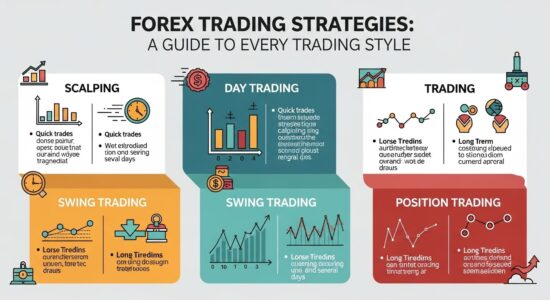
Inconsistency: Without a plan, you might trade scalping on Monday, swing trading on Tuesday, and position trading on Wednesday—never giving any approach enough time to prove itself.
Overtrading: A plan specifies exactly when you trade and when you don’t, preventing the impulse to force trades when no quality setups exist.
Reckless Risk-Taking: Defined risk management rules prevent the temptation to “go big” on a trade you’re excited about.
Analysis Paralysis: A plan eliminates endless second-guessing by establishing clear criteria for trade entry and exit.
Components of a Complete Trading Plan
A comprehensive trading plan contains ten essential components:
Goals and Objectives
Trading Strategy and Style
Markets and Instruments
Risk Management Rules
Trade Entry Criteria
Trade Exit Criteria
Trade Management Guidelines
Trading Schedule and Routine
Performance Tracking and Review
Psychological Guidelines
We’ll cover each component in detail, providing examples and templates you can adapt.
1. Goals and Objectives
Define what you want to achieve through forex trading and establish realistic expectations.
Financial Goals
Example Structure:
Long-term goal (1-3 years): Build trading account from $5,000 to $25,000
Example: “I am a swing trader using the 4-hour and daily charts. I hold positions for 3-10 days on average, targeting 80-150 pip moves. This style suits my full-time job schedule and allows me to check charts 2-3 times daily rather than continuously monitoring price action.”
“I trade trend-following setups on the 4-hour chart using a combination of moving averages and price action. My strategy:
1. Identify overall trend using 200 EMA (price above = uptrend, below = downtrend)2. Wait for pullback to 20 or 50 EMA in trending market3. Look for bullish/bearish engulfing or pin bar at EMA support/resistance4. Enter on next candle open after pattern confirmation5. Stop loss beyond pattern high/low6. Initial target: 2x risk; trail stop using 20 EMA for runners
I only trade this setup when 4-hour and daily trends align. I avoid trading 1 hour before and after major news releases.”
3. Markets and Instruments
Specify which currency pairs you trade and why.
Selecting Your Pairs
Considerations:
Liquidity: Tight spreads, good execution
Volatility: Enough movement for profit, but manageable
Correlation: Avoid over-concentration in correlated pairs
Trading sessions: Match pairs to your available trading hours
Rationale: “I focus on 2-4 major pairs to develop deep familiarity with their behavior. I avoid overtrading by only taking setups on these pairs rather than scanning 20+ pairs looking for marginal trades.”
4. Risk Management Rules
This section is arguably the most important part of your trading plan. The Financial Industry Regulatory Authority (FINRA) emphasizes that proper risk management is essential for long-term trading success.
Position Sizing Rules
Per-Trade Risk:
Conservative: 0.5-1% of account per trade
Moderate: 1-2% of account per trade
Aggressive: 2-3% of account per trade (not recommended for beginners)
Example Rule: “I risk 1% of my account balance per trade. With a $10,000 account, I risk $100 per trade maximum.”
Position Size Calculation:
Formula: Position Size = (Account Balance × Risk %) / Stop Loss in Pips
Example:
Account: $10,000
Risk per trade: 1% = $100
Stop loss: 50 pips
Pip value needed: $100 / 50 pips = $2 per pip
Position size: 0.2 standard lots (mini account) or 20,000 units
Daily Loss Limit: “If I lose 2% of my account in a single day, I stop trading for that day immediately. No exceptions.”
Weekly Loss Limit: “If I lose 5% of my account in a single week, I stop trading for the remainder of the week and review what went wrong.”
Rationale: Prevents emotional spiral, revenge trading, and catastrophic losses.
Maximum Concurrent Positions
Example Rules:
“I hold maximum 3 positions simultaneously”
“I never risk more than 3% of my account across all open positions combined”
“I avoid holding multiple correlated positions (e.g., won’t simultaneously hold long EUR/USD and short USD/CHF)”
Stop Loss Requirements
Mandatory Stop Loss: “Every trade must have a stop loss placed before entry. No mental stops. No moving stops further away to avoid being stopped out.”
Stop Loss Placement Guidelines:
Swing traders: Beyond recent swing high/low
Trend traders: Beyond key support/resistance or moving average
Pattern traders: Beyond pattern invalidation point
Typical range: 30-80 pips depending on pair and timeframe
Risk-Reward Requirements
Minimum Risk-Reward Ratio: “I only take trades with minimum 1:2 risk-reward ratio. If my stop is 40 pips, my initial target must be at least 80 pips.”
Exception Clause: “For very high probability setups (>70% win rate based on historical data), I may accept 1:1.5 risk-reward.”
5. Trade Entry Criteria
Define exactly what conditions must exist before you enter a trade.
Entry Checklist
Create a checklist that must be satisfied before entry. All conditions must be met—no exceptions.
Wait for confirmation: Candle pattern or indicator signal
Complete entry checklist: Verify all conditions met
Calculate position size: Based on stop loss distance
Place stop loss: Before entering position
Execute entry: Market or limit order
Set initial target: Based on risk-reward and key levels
Log trade: Record entry details in journal immediately
What NOT to Trade
Be explicit about setups and conditions you avoid:
Example Exclusions:
“I don’t trade during major news events (NFP, FOMC, etc.)”
“I don’t trade during the Asian session (low liquidity when I trade)”
“I don’t take counter-trend trades”
“I don’t trade setups that don’t match my documented strategy, even if they ‘look good'”
“I don’t trade when I’m emotional, tired, or distracted”
“I don’t take revenge trades after losses”
“I don’t ‘just try’ different strategies without testing them first”
6. Trade Exit Criteria
Define your rules for exiting winning and losing trades.
Stop Loss Management
Initial Stop Loss: “I place stop loss at [specific location based on strategy—e.g., 5 pips beyond candle low for bullish setup]. Once placed, I never move my stop further away from entry.”
Breakeven Rule: “When price moves 50% toward my target (1:1 risk-reward), I move stop to breakeven. This protects capital while allowing room for trade to develop.”
Trailing Stop: “For trend-following trades, once price reaches 2:1 risk-reward, I activate trailing stop 20 pips below the 20 EMA on 4-hour chart. Stop trails as trade progresses.”
Profit Taking Strategy
Partial Profit Taking: “At 1:1 risk-reward (first target), I close 50% of position and move stop to breakeven on remainder. At 2:1 risk-reward (second target), I close another 30% and trail final 20% with trailing stop.”
Full Exit: “I take full profit when price hits my predetermined target, shows clear reversal signal (opposite engulfing pattern), or hits major resistance/support level.”
Time-Based Exits
Example Rules:
“Day trades must be closed by 4:00 PM ET (no overnight holds for day trading strategy)”
“If swing trade hasn’t moved toward target after 3 days, I reassess and consider exit”
“I close all positions before major news events if holding shorter-term trades”
Emergency Exit Criteria
Exit Immediately If:
Fundamental landscape changes dramatically (unexpected central bank action, geopolitical crisis)
Technical setup invalidates (key support/resistance breaks in wrong direction)
I made an error in trade entry or position sizing
I realize I’m in a trade for emotional reasons, not plan-based reasons
7. Trade Management Guidelines
Define how you manage open positions.
Monitoring Frequency
Example Schedule:
“I check open positions every 4 hours during my swing trading approach”
“I review daily charts each evening for any changes to thesis”
“I don’t constantly watch price tick-by-tick (leads to emotional decisions)”
Adding to Positions (Pyramiding)
Scaling In Rules: “I may add to winning positions if:
Original position profitable by at least 1:1 risk-reward
New entry still meets all my strategy criteria
Combined risk of original + new position doesn’t exceed 2% of account
Clear confirmation of trend continuation”
Forbidden: “I never add to losing positions (averaging down). This violates the trend-following principle and significantly increases risk.”
Correlation Management
“If I’m holding EUR/USD long, I avoid simultaneously taking GBP/USD long (high correlation). If I absolutely must trade correlated pair, I reduce position size on second trade to avoid excessive exposure to same directional bet.”
Weekend and Holiday Management
Friday Afternoon: “I close all day trades by 4:00 PM ET Friday. Swing trades may be held over weekend if:
Position profitable
Stop loss at breakeven or better
No major news expected over weekend
I’m comfortable with weekend gap risk”
Major Holidays: “I close positions before Christmas, New Year, and other major holidays due to low liquidity and unpredictable gaps.”
8. Trading Schedule and Routine
Establish consistent routines for optimal performance. According to behavioral finance research, routines significantly improve trading discipline.
Adherence to plan % (how many trades followed all rules)
Monthly Metrics:
Net profit/loss ($)
Return on account %
Maximum drawdown
Best trade / Worst trade
Most profitable pair
Highest-performing setup type
Regular Review Schedule
Daily Review (5 minutes):
Did I follow my plan today?
What went well?
What could improve?
Weekly Review (30-60 minutes):
Calculate weekly metrics
Review all trades from past week
Identify patterns in winners and losers
Assess emotional state throughout week
One concrete improvement for next week
Monthly Review (1-2 hours):
Comprehensive performance analysis
Compare results to goals
Identify strategy strengths and weaknesses
Determine if any plan adjustments needed
Celebrate progress and learn from setbacks
Quarterly Review (2-3 hours):
Deep dive into 3 months of data
Is current strategy working? Should it be modified or replaced?
Have I outgrown my current goals? Need new ones?
Am I ready to increase position size or leverage?
What are my biggest obstacles to consistent profitability?
10. Psychological Guidelines
Trading psychology often determines success more than strategy. The American Psychological Association has published research on decision-making under stress that applies directly to trading.
Mental State Requirements
I Only Trade When:
I am well-rested (minimum 7 hours sleep)
I am calm and focused
I have no major personal stressors distracting me
I am sober and unmedicated (no alcohol, no drugs affecting judgment)
I have time to properly analyze and execute
I Do NOT Trade When:
I am angry, frustrated, or euphoric
I am experiencing “revenge trading” urges after losses
I am distracted by work, family, or personal issues
I feel “I need to make money today”
I am rushing (not enough time to properly analyze)
If plan was followed: loss is simply probability (no concern)
If plan was violated: identify why and commit to improvement
Take break before next trade (minimum 30 minutes)
No revenge trading—if tempted, close platform for rest of day
After Wins:
Celebrate discipline, not just profit
Don’t become overconfident or invincible
Avoid “house money” effect (risking more because “it’s profit”)
Stick to position sizing rules
Don’t force trades looking to continue streak
During Drawdowns:
Drawdowns are normal and inevitable
Review recent trades: Following plan or violating rules?
If following plan: Continue executing, drawdown will end
If violating rules: Take break, return to demo trading until confidence restored
Consider reducing position size temporarily (by 50%) to rebuild confidence
Never increase position size trying to “make it back quickly”
Discipline Reinforcement
Trading Affirmations (read daily):
“I follow my plan consistently”
“I accept that losses are part of trading”
“I only take trades that meet all my criteria”
“My success comes from discipline, not from perfect prediction”
“I am a process-focused trader”
“I don’t need to trade every day to be successful”
Accountability Mechanisms:
Review plan weekly
Share goals with mentor or trading buddy
Track plan adherence % (goal: 95%+)
Reward consistency (not profits): “30 days of perfect plan execution = [reward]”
Creating Your Personal Trading Plan
Step-by-Step Process
Step 1 – Self-Assessment (1-2 hours):
What is my risk tolerance?
How much time can I dedicate to trading?
What is my personality type? (patient vs. action-oriented)
What are my financial goals?
What are my greatest strengths and weaknesses?
Step 2 – Strategy Selection (Research phase):
Test 2-3 strategies on demo account (minimum 30 trades each)
Identify which matches your personality and schedule
Backtest chosen strategy on historical data
Document strategy completely
Step 3 – Write Your Plan (3-4 hours):
Use template below
Be specific, not vague
Include all 10 components
Make it realistic (a plan you can actually follow)
Step 4 – Demo Test Your Plan (2-3 months):
Trade your plan on demo account
Track all trades in journal
Calculate statistics
Refine plan based on results
Don’t go live until consistently profitable on demo
Step 5 – Live Implementation (Start small):
Begin with minimum position sizes
Focus on perfect execution, not profits
Track adherence to plan
Gradually increase size as confidence and consistency build
Step 6 – Ongoing Refinement (Continuous):
Review plan monthly
Update based on experience
Add/remove rules as needed
Never abandon plan impulsively (only after thorough analysis)
Trading Plan Template
Complete Trading Plan Template
Sections to complete:
SECTION 1: GOALS
Long-term financial goals (1-3 years)
Medium-term goals (6-12 months)
Short-term goals (1-3 months)
Personal development goals
Lifestyle/time goals
SECTION 2: TRADING STYLE & STRATEGY
Trading style (scalping/day/swing/position)
Complete strategy description
Key indicators/tools used
Setup identification criteria
SECTION 3: MARKETS
Primary pairs (with rationale)
Secondary pairs
Avoided pairs
Trading sessions
SECTION 4: RISK MANAGEMENT
Risk per trade (%)
Daily loss limit
Weekly loss limit
Maximum concurrent positions
Stop loss requirements
Risk-reward requirements
Position sizing formula
SECTION 5: ENTRY CRITERIA
Entry checklist (all conditions)
Confirmation requirements
What NOT to trade
SECTION 6: EXIT CRITERIA
Stop loss placement rules
Breakeven rules
Trailing stop rules
Profit target rules
Time-based exit rules
Emergency exit criteria
SECTION 7: TRADE MANAGEMENT
Monitoring schedule
Scaling in rules
Scaling out rules
Correlation management
Weekend/holiday guidelines
SECTION 8: SCHEDULE & ROUTINE
Weekly trading schedule
Daily routine
Pre-trading checklist
Post-trading checklist
SECTION 9: PERFORMANCE TRACKING
Journal requirements
Metrics to track
Review schedule (daily/weekly/monthly)
SECTION 10: PSYCHOLOGY
Mental state requirements
Emotional management strategies
Trading affirmations
Discipline reinforcement
Common Trading Plan Mistakes
Mistake 1: Making It Too Complex
Problem: 50-page plan with hundreds of rules
Solution: Start simple, add rules only when needed. 5-10 page plan is sufficient initially.
Mistake 2: Making It Too Vague
Problem: “I will manage risk carefully” (What does this mean specifically?)
Solution: Be precise: “I risk 1% per trade with stop loss placed before entry”
Mistake 3: Never Following It
Problem: Creating plan but ignoring it when trading
Solution: Review plan before every trading session, track adherence percentage
Mistake 4: Abandoning It After First Loss
Problem: Plan works on demo, first live losing trade → immediately change everything
Solution: Judge plan over minimum 30-100 trades, not individual results
Mistake 5: No Accountability
Problem: Writing plan but never reviewing or updating it
Solution: Schedule regular reviews, track metrics, hold yourself accountable
Mistake 6: Copying Someone Else’s Plan
Problem: Using a plan designed for different personality, goals, risk tolerance
Solution: Use templates/examples as inspiration, but customize to YOUR situation
Mistake 7: Ignoring the Psychological Component
Problem: Focusing only on strategy and risk, ignoring mental/emotional aspects
Solution: Include psychological guidelines and emotional management strategies. Review our Trading Psychology Guide for comprehensive mental frameworks.
Conclusion
A trading plan is not optional for serious forex traders—it’s essential. The plan serves as your operational manual, decision-making framework, and accountability system all in one.
Creating a comprehensive trading plan requires significant upfront effort, but this investment pays dividends through improved discipline, consistency, and ultimately profitability. The process of writing your plan forces you to think deeply about your approach, identify potential problems before they occur, and establish clear standards for success.
Remember that your trading plan is a living document. It should evolve as you gain experience, but changes should be deliberate and data-driven, not impulsive reactions to individual wins or losses. Review your plan regularly, track your adherence, and refine it based on empirical evidence from your trading journal.
The most successful traders don’t have perfect plans—they have plans they follow consistently. Start with the template provided, customize it to your situation, test it thoroughly on a demo account, and then commit to following it with discipline when you trade live.
Your trading plan is your competitive edge in a market where 95% of participants trade without one. Use it, trust it, and let it guide you toward consistent, professional-level trading performance.