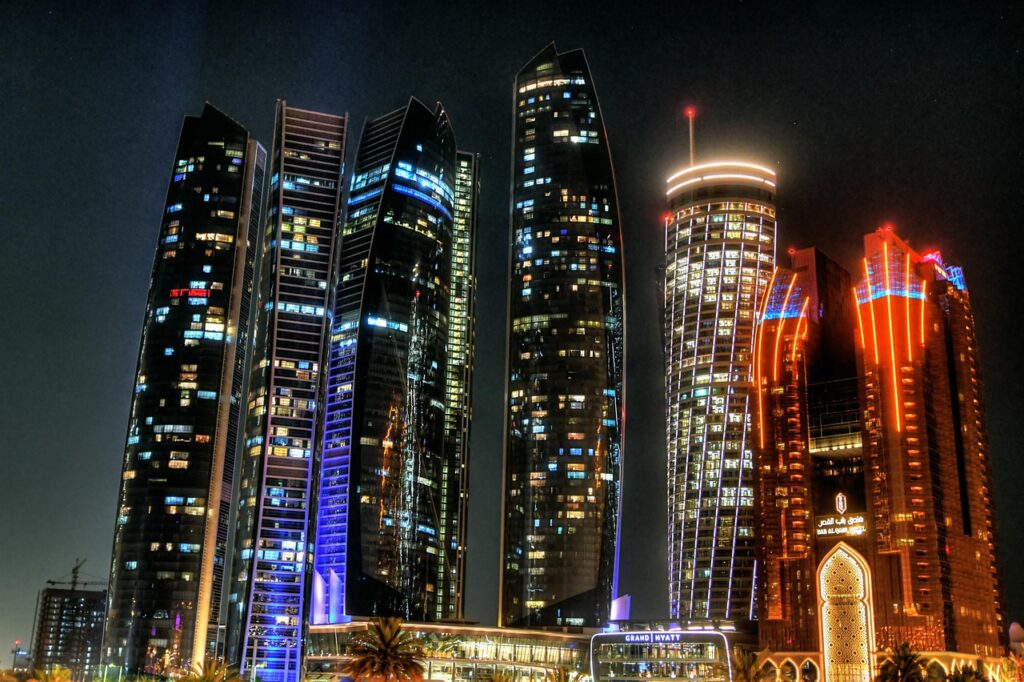
Investing in Abu Dhabi, The Government of Abu Dhabi continues to anchor the industrial sector as a pioneering economic pillar, driving the country’s long-term prosperity and achieving the goals set out in the Abu Dhabi Economic Vision 2030 like investing in Abu-Dhabi’s Real Estate, Technology, Innovation and Creativity, Renewable energy, Health care and opening a Business!
This commitment to economic diversification has enabled dramatic, sustained growth in manufacturing, logistics, heavy industry, and specialized sectors. Key industrial areas—such as aluminum, steel, petrochemicals, advanced materials, and food technology—are identified as primary catalysts for growth, creating high-value employment opportunities and strengthening non-oil GDP.
The UAE’s proactive economic agenda, coupled with liberalization efforts and a growing role for the private sector, continues to attract significant foreign direct investment (FDI). According to recent estimates, the UAE maintains a strong FDI inflow, cementing its status as a top global destination for capital, with a significant share directed toward Abu Dhabi’s industrial ecosystem.
Why Investing in Abu Dhabi’s Industrial Sector?
The foundation for a solid investment outlook in the UAE’s capital is based on robust, enduring advantages:
Strategic Geographic Location: Situated at the crossroads of East and West, providing efficient access to regional markets and serving over billion consumers.
Robust GDP Growth: Continued state-led and private sector investment drives stable GDP growth, backed by vast, secure hydrocarbon wealth (accounting for a majority of the UAE’s oil and gas reserves).
World-Class Infrastructure: State-of-the-art multi-modal transportation network, including advanced deep-water ports and specialized logistics hubs managed by AD Ports Group.
Political and Economic Stability: The Emirate maintains a highly stable political environment and a strong commitment to long-term, structured investment programs.
Global Market Access: The UAE has an expanding network of Comprehensive Economic Partnership Agreements (CEPA) and Double Taxation Treaties, offering preferential access to crucial international markets.
Abundant Energy Supply: Reliable and cost-effective energy is readily available, a major advantage for energy-intensive manufacturing.
Key Industrial Zones and Management Entities
The establishment and management of most of Abu Dhabi’s industrial and economic zones are consolidated under the KEZAD Group (Khalifa Economic Zones Abu Dhabi), a part of AD Ports Group, which ensures streamlined services and specialized facilities.
1. KEZAD Group (Formerly ICAD, ZonesCorp, and KPIZ)
The KEZAD Group manages the majority of Abu Dhabi’s dedicated industrial land and offers free zone and non-free zone setups. The Group includes and oversees the areas previously known as ICAD (Industrial City of Abu Dhabi) and the now fully operational Khalifa Port.
Khalifa Industrial Zone (KEZAD): This massive, modern facility, which began operations in 2012 (completing the phased development that was projected to 2015), is now a highly successful, fully operational multi-purpose economic zone encompassing manufacturing, logistics, trade, and commercial activities.
Industrial City of Abu Dhabi (ICAD I, II, III): These specialized zones—now managed under the KEZAD umbrella—cater to diverse industries, including advanced machinery, chemicals, construction materials, and textiles.
Al Ain Industrial City (AAIC): A key hub for light and medium manufacturing, focused on serving the region’s agricultural and consumer demands.
2. Specialized Industrial Clusters
Al Ruwais Industrial Complex: Developed primarily by ADNOC Downstream, this complex remains the center for the Emirate’s huge oil refining, petrochemicals, and fertilizer industries. The focus is increasingly on high-value products and new energy solutions, such as blue ammonia and hydrogen.
Mussafah Industrial Area: Located near Abu Dhabi city, this area continues to serve as a vital industrial and commercial zone, managed by the Abu Dhabi Municipality, supporting smaller to mid-sized enterprises across various sectors like automotive services, engineering, and construction materials.
How to Establish an Industrial Project
Abu Dhabi has continually improved its regulatory environment to attract and retain investment.
To create a favorable climate for industrial development, the Emirate operates a modernized Single Window System (often referred to as the One Stop Shop or OSS).
Licensing: The primary industrial license is issued by the Department of Economic Development (ADDED), which is dedicated to streamlining the process.
Land Allocation and Management: For land within the specialized economic zones (KEZAD), all required services—including reserving land, obtaining utilities, and issuing facility permits—are managed directly by the KEZAD Group.
Modern Process: The current system leverages digital platforms to significantly reduce the time needed to establish an industrial project, moving away from fragmented, multi-entity approvals.
The government’s ongoing commitment to large-scale, structured investment and the consolidation of services under entities like KEZAD and ADDED ensure that the process of establishing and operating an industrial project in Abu Dhabi remains one of the most efficient in the Middle East.
[Editor’s Note: This article has been fully updated for 2025. All names, figures, and zone management entities (like KPIZ and ZonesCorp) have been replaced with the current, correct terminology and data to reflect Abu Dhabi’s modern investment landscape.]