Last Updated: January 2026
Understanding commodities Market exchange is essential for forex traders, even if you never directly trade commodities. Commodity prices have a direct impact on currency valuations, particularly for commodity-linked currencies like the Australian Dollar (AUD), Canadian Dollar (CAD), and Norwegian Krone (NOK). When oil prices rise, the Canadian Dollar often strengthens due to Canada’s oil exports. When gold prices surge, the Australian Dollar typically follows.
Commodity exchanges are where these price movements originate. These centralized marketplaces establish the benchmark prices that influence everything from your gas station purchases to forex market movements. For forex traders building comprehensive market analysis skills, understanding which exchanges trade which commodities—and where those price signals originate—provides crucial context for currency pair movements.
This guide provides a comprehensive reference to commodity exchanges worldwide, organized by region. Whether you’re researching the origins of oil price movements (NYMEX), gold trends (COMEX), or agricultural commodity impacts on emerging market currencies, this directory helps you understand the global commodity trading infrastructure.
What is a Commodity Market?
A commodity market is a marketplace where raw materials and primary goods are traded globally. These markets allow producers, consumers, traders, and investors to manage price risk, discover fair prices, and trade standardized contracts based on supply and demand.
Commodities are generally divided into two main categories:
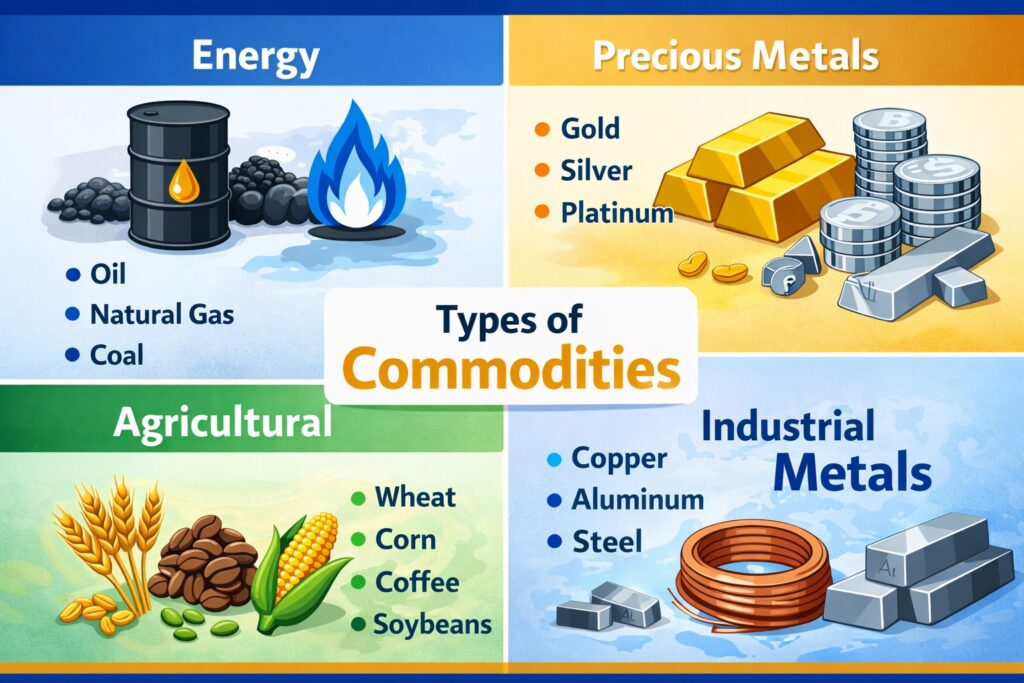
Soft Commodities: Renewable agricultural products including coffee, cocoa, sugar, rice, cotton, soybeans, wheat, corn, and lumber. These are grown or harvested and have seasonal production cycles that influence their pricing patterns.
Hard Commodities: Non-renewable resources extracted from the earth, including crude oil, natural gas, gold, silver, copper, platinum, and other industrial metals. These tend to have more stable supply patterns but are heavily influenced by geopolitical events and industrial demand.
Commodity markets serve several critical functions in the global economy. They provide price discovery, allowing the market to determine fair value based on current supply and demand. They enable risk management through futures contracts, allowing producers to lock in prices and buyers to hedge against price increases. They also provide liquidity, ensuring buyers and sellers can enter and exit positions efficiently.
What is a Commodity Exchange?
A commodity exchange is a centralized marketplace where various commodity derivatives, futures contracts, agricultural products, and raw materials are traded under standardized conditions. These exchanges operate under strict regulatory oversight to ensure fair trading, transparent pricing, and contract enforcement.
Most commodity exchanges trade standardized futures contracts rather than physical commodities. A futures contract is an agreement to buy or sell a specific quantity of a commodity at a predetermined price on a future date. This standardization allows contracts to be freely traded, creating the liquidity necessary for efficient price discovery.
The exchange acts as the central authority enforcing rules, regulations, and trading procedures. It maintains the physical or electronic trading infrastructure, clears and settles trades, and often acts as the counterparty to both buyers and sellers, reducing counterparty risk. While many exchanges historically operated from physical trading floors with open outcry systems, most have now transitioned to fully electronic trading platforms.
Commodities and Futures Contracts
The terms “commodities” and “futures” are often used interchangeably when discussing commodity trading, but they represent different concepts.
A commodity futures contract is an agreement to buy or sell a predetermined amount of a commodity at a specific price on a specific date in the future. Buyers use such contracts to avoid the risks associated with price fluctuations. Sellers use futures contracts to lock in guaranteed prices for their products.
For example, a coffee farmer expecting to harvest 10,000 pounds of coffee in six months might sell futures contracts today at $2 per pound. This locks in $20,000 in revenue regardless of where coffee prices move. If coffee drops to $1.50 per pound at harvest, the farmer still receives $2 per pound through the futures contract. Conversely, if coffee rises to $2.50, the farmer foregoes that additional profit but has eliminated price uncertainty.
Speculators and investors also buy and sell futures contracts in an attempt to profit from price movements. Their participation provides liquidity to the market, making it easier for commercial users (producers and consumers) to hedge their price risks. This speculation, while sometimes controversial, serves an important economic function by assuming the price risk that commercial users wish to transfer.
Commodities Market Exchange: What Types Traded
Commodity exchanges facilitate trading across several major categories:
Energy: Crude oil, heating oil, natural gas, gasoline, and increasingly, renewable energy certificates and carbon credits. Energy commodities represent the largest segment by trading volume.
Precious Metals: Gold, silver, platinum, and palladium. These serve both industrial purposes and as investment vehicles, with gold particularly serving as a store of value during economic uncertainty.
Base Metals: Copper, aluminum, zinc, nickel, and lead. These industrial metals are crucial for manufacturing, construction, and technology production.
Agricultural: Corn, wheat, soybeans, rice, coffee, cocoa, cotton, and sugar. These commodities are essential for food production and have significant geopolitical importance.
Livestock and Meat: Live cattle, feeder cattle, lean hogs. These markets allow producers and processors to manage price risk in meat production.
How Retail Traders Access Commodity Markets
While commodity exchanges were traditionally limited to institutional traders, retail traders now have multiple access points:
CFD Trading: Most forex brokers offer commodity CFDs (Contracts for Difference), allowing you to speculate on commodity price movements without owning the underlying asset or trading directly on exchanges. This provides leveraged exposure with lower capital requirements than futures contracts.
Commodity Futures: Through futures brokers, retail traders can access exchange-traded commodity futures contracts. These require larger capital commitments than CFDs and have specific expiration dates, but they trade on regulated exchanges with transparent pricing.
Commodity ETFs: Exchange-Traded Funds tracking commodity prices or commodity-producing companies offer an accessible way to gain commodity exposure through stock brokers. These trade like stocks and don’t require futures trading accounts.
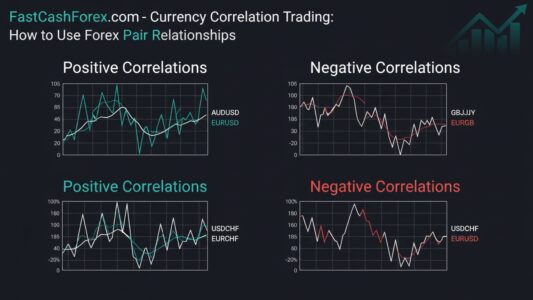
Forex Commodity Correlations: Many traders use commodity price movements as signals for trading commodity-linked currency pairs rather than trading commodities directly. For example, monitoring oil prices while trading USD/CAD or tracking gold prices when trading AUD/USD. This approach leverages commodity market information without directly entering commodity markets.
For most retail forex traders, monitoring commodity exchange prices through free market data sources and trading the correlated currency pairs provides the most practical approach to benefiting from commodity market knowledge.
Major Commodity Exchanges in the United States
The Chicago Mercantile Exchange (CME) Group
The Chicago Mercantile Exchange (often called “the Chicago Merc” or “the Merc”) is an American financial and commodity derivative exchange based in Chicago at 20 S. Wacker Drive. The CME was founded in 1898 as the Chicago Butter and Egg Board, an agricultural commodities exchange.
The CME Group now represents the world’s leading and most diverse derivatives marketplace, formed through mergers with the Chicago Board of Trade (CBOT), New York Mercantile Exchange (NYMEX), and COMEX. The group handles billions of contracts annually worth trillions of dollars, covering agricultural products, energy, metals, equity indices, interest rates, and foreign exchange.
The New York Mercantile Exchange (NYMEX)
NYMEX, now part of the CME Group, is the primary trading forum for energy and metals. It trades the benchmark West Texas Intermediate (WTI) crude oil contract, which serves as the global price reference for oil. NYMEX also trades natural gas, heating oil, gasoline, gold, silver, copper, and platinum contracts.
The exchange’s energy contracts particularly influence forex markets, as oil prices significantly impact currencies of major oil-producing nations (Canada, Norway, Russia) and oil-importing nations (Japan, India, China).
Global Commodity Exchanges by Region
Note: Commodity exchanges frequently merge, consolidate, or rebrand. This list represents major active exchanges. Some historical exchanges listed have been acquired or merged into larger exchange groups, as indicated in the tables.
Americas
The Americas host some of the world’s most influential commodity exchanges, particularly in the United States and Brazil.
| Exchange | Abbreviation | Location | Product Types |
|---|---|---|---|
| Brazilian Mercantile and Futures Exchange | BMF | São Paulo, Brazil | Agricultural, Biofuels, Precious Metals |
| Chicago Board of Trade (CME Group) | CBOT | Chicago, United States | Grains, Ethanol, Treasuries, Equity Index, Metals |
| Chicago Mercantile Exchange (CME Group) | CME | Chicago, United States | Meats, Currencies, Eurodollars, Equity Index |
| Chicago Climate Exchange | CCX | Chicago, United States | Emissions |
| Intercontinental Exchange | ICE | Atlanta, United States | Energy, Emissions, Agricultural, Biofuels |
| Kansas City Board of Trade | KCBT | Kansas City, United States | Agricultural |
| Minneapolis Grain Exchange | MGEX | Minneapolis, United States | Agricultural |
| New York Mercantile Exchange (CME Group) | NYMEX | New York, United States | Energy, Precious Metals, Industrial Metals |
| Winnipeg Commodity Exchange | ICE | Winnipeg, Canada | Agricultural |
Africa
African commodity exchanges primarily focus on agricultural products, reflecting the continent’s role in global agricultural production.
| Exchange | Abbreviation | Location | Product Types |
|---|---|---|---|
| Africa Mercantile Exchange | AfMX | Nairobi, Kenya | Agricultural, Energy |
| Egyptian Commodities Exchange | EGYCOMEX | Cairo, Egypt | Agricultural, Energy |
| Ethiopia Commodity Exchange | ECX | Addis Ababa, Ethiopia | Agricultural |
| South African Futures Exchange (JSE Limited) | JSE | Sandton, South Africa | Agricultural |
Europe
European exchanges have increasingly focused on energy products, emissions trading, and metals, alongside traditional agricultural commodities.
| Exchange | Abbreviation | Location | Product Types |
|---|---|---|---|
| Deutsche Börse/Eurex | DBAG/EUREX | Frankfurt, Germany | Agricultural, Metals, ETCs, Commodities Index |
| European Energy Exchange | EEX | Leipzig, Germany | Power, Natural Gas, Emissions, Coal |
| London Metal Exchange | LME | London, UK | Industrial Metals |
| Nasdaq Commodities | – | Oslo, Norway | Power, Natural Gas, Emissions, Freight, Iron Ore |
Note: The European Climate Exchange (ECX) was founded in 2005 and acquired by ICE in 2010, merging into ICE Futures Europe.
Asia
Asian exchanges reflect the region’s role as both a major consumer and producer of commodities, with particular strength in agricultural products and metals.
| Exchange | Abbreviation | Location | Product Types |
|---|---|---|---|
| Dalian Commodity Exchange | DCE | Dalian, China | Agricultural, Plastics, Energy |
| Dubai Mercantile Exchange | DME | Dubai | Energy |
| Dubai Gold & Commodities Exchange | DGCX | Dubai | Precious Metals |
| Multi Commodity Exchange | MCX | India | Precious Metals, Base Metals, Energy, Agricultural |
| Shanghai Futures Exchange | SHFE | Shanghai, China | Industrial Metals, Gold, Petrochemicals, Rubber |
| Shanghai Gold Exchange | SGE | Shanghai, China | Precious Metals |
| Singapore Mercantile Exchange | SMX | Singapore | Precious Metals, Base Metals, Agricultural, Energy |
| Tokyo Commodity Exchange | TOCOM | Tokyo, Japan | Energy, Precious Metals, Industrial Metals, Agricultural |
Why Forex Traders Should Understand Commodity Exchanges
Commodity prices and currency values maintain strong correlations, making commodity exchange knowledge valuable for forex traders:
Commodity Currencies: The Australian Dollar correlates with gold and iron ore prices (traded on Australian and Chinese exchanges). The Canadian Dollar follows crude oil prices (NYMEX WTI). The Norwegian Krone tracks North Sea oil prices. Understanding which exchanges set these benchmark prices helps forex traders anticipate currency movements.
Risk Sentiment: Commodity prices often reflect broader risk appetite in financial markets. Rising oil and copper prices typically indicate growing economic confidence, supporting risk currencies. Falling commodity prices suggest economic concerns, benefiting safe-haven currencies like the USD and JPY.
Economic Indicators: Commodity price movements provide early signals about economic trends. Rising agricultural commodity prices might precede inflation concerns. Falling base metal prices might indicate slowing industrial production. These signals help forex traders anticipate central bank policy responses.
Geopolitical Events: Commodity markets often react first to geopolitical developments affecting supply. Tensions in the Middle East immediately impact oil prices, which then influence currencies of oil-importing and oil-exporting nations. Understanding commodity exchange trading helps forex traders interpret these rapid price movements.
The Future of Commodity Trading
Commodity exchanges continue evolving with technology and changing market needs. Electronic trading now dominates, replacing traditional open outcry systems. Cryptocurrency futures have emerged on major exchanges like CME. Carbon credit and emissions trading expand as climate policy develops globally.
For forex traders, staying informed about major commodity exchanges and their price movements provides crucial context for understanding currency market dynamics. While you may never trade a single commodity contract, the prices discovered on these exchanges influence the currencies you trade every day.
For forex traders looking to incorporate commodity market analysis into their trading strategies, understanding technical analysis helps identify trends in both commodity and currency markets. Learn more about how commodity-currency relationships affect specific currency pairs in our comprehensive forex education guides.